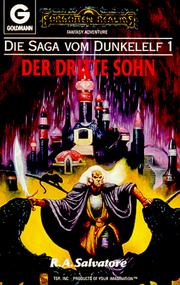
Start with Homeland. This is chronological order rather than publication order, and unlike most series where that choice is a matter of taste, here almost every experienced reader gives the same advice.
The history explains it. Salvatore wrote the Icewind Dale books first, and Drizzt was a supporting character in them. He went back afterwards and wrote the origin trilogy, which turned out to be considerably better than the books that introduced the character. Starting with The Crystal Shard, the first published, means opening with rougher early work in which your protagonist is not yet the protagonist.
The trade-off is real and worth naming: reading chronologically means the quality dips slightly at the second stage before recovering, because you meet the polished later work first. That is a known cost and it is worth paying for the origin story landing first.
The Dark Elf Trilogy
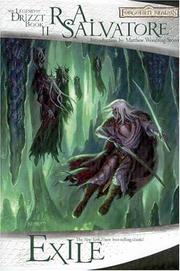
Homeland, Exile, Sojourn. Short, fast tie-in novels at 300 to 330 pages each; a book a week is a normal pace. Read them in immediate succession.
Menzoberranzan is the series' best piece of invention — a matriarchal drow theocracy where assassinating a rival house is an accepted route to advancement, which makes cruelty institutional rather than exceptional. Drizzt's conflict is not good against evil but whether an individual can reject the only morality he has ever been taught. Exile is the loneliest stretch of the whole series, years underground with almost no dialogue. Sojourn argues that reaching the surface solves nothing, because being visibly a dark elf is a second trap.
The Icewind Dale Trilogy
The Crystal Shard, Streams of Silver, The Halfling's Gem. Same length and pace, rougher prose.
This is where the Companions of the Hall assemble — Bruenor, Wulfgar, Regis and Catti-brie — and they carry the next twenty years of books. Bruenor is the second-best character in the series and the one whose arc most resembles a real life. Artemis Entreri gets his first full appearance in The Halfling's Gem, built as Drizzt's mirror and the most durable antagonist here.
These books read differently once you already know what Drizzt gave up to reach the surface, which is the whole argument for the order.
Legacy of the Drow
The Legacy, Starless Night, Siege of Darkness, Passage to Dawn. Most long-time readers rate this arc the series' peak, and it is where the chronological order pays its dividend: the drow assassins and house politics only carry weight because you have walked through Menzoberranzan already.
Starless Night deliberately inverts Exile by sending Drizzt back into the city he fled, this time by choice. Siege of Darkness is the largest-scale battle Salvatore had attempted and resolves the drow-politics thread opened in book one. Passage to Dawn closes the arc and resets the cast. Ten books in, this is a genuine stopping point: a complete story from Menzoberranzan to closure.
Paths of Darkness
The Silent Blade, The Spine of the World, Sea of Swords. Less questing, more character, and the middle volume has very little action by the series' standards.
The Spine of the World is almost entirely Wulfgar's book — post-captivity trauma, alcohol and failure rather than heroics — and it is the strongest argument for reading this arc rather than skipping it, because the series is rarely willing to let a hero be this diminished. The Silent Blade finally disposes of the artefact introduced in The Crystal Shard fourteen books earlier. Sea of Swords exists largely to reassemble what the first two scattered.
The Hunter's Blades Trilogy, and where to stop
The Thousand Orcs, The Lone Drow, The Two Swords, read together as one continuous war.
The freshest idea in the later books is here: an orc horde with an actual political strategy rather than a hunger for destruction, and a leader given a coherent point of view. The Lone Drow is the closest the series comes to questioning its own protagonist, through Drizzt's dissociated combat persona and a middle book driven by grief. The war ends with an orc kingdom left standing on the map, which is a genuinely unusual outcome.
Stop here. Sixteen books gives you a complete, coherent story: origin, fellowship, drow reckoning, dissolution, and a war that changes the world. Everything past The Two Swords runs to another twenty-plus novels across several relaunched series, with continuity resets, character resurrections and a shift in tone that not every reader follows. No path this length can cover them honestly, so the decision to continue should be made with open eyes rather than by momentum. Other series are mapped the same way here.
Follow the full ordered path here: The Legend of Drizzt Reading Order: Where to Start.