Leatherstocking Reading Order: Publication or Chronological?
Cooper wrote the five Leatherstocking Tales out of order, and the gap is unusually wide: The Deerslayer shows Natty Bumppo as a young man but was written last, while The Prairie kills him off and was written third. This path takes a position — begin with The Last of the Mohicans because it is the book that made the series famous and the one most likely to keep you reading, then take the remaining four in frontier chronology so Bumppo ages forward rather than lurching about. The final stage steps outside the Tales to Cooper's other founding American genres.
Start With the Famous One
IntermediateMeet Natty Bumppo at his most vivid and decide whether Cooper's prose is something you can live with for five novels.
▸ Study plan for this stage
Pace: 3–4 weeks for 418 pages, which is slower than the page count suggests and deliberately so. Two things to accept before you begin. First, the prose is genuinely hard going: Cooper wrote between 1823 and 1841, his sentences run long and subordinate, his dialogue is formal even in an ambush, and he exp
- The five Tales were written out of order across eighteen years, so 'reading order' is a genuine decision rather than a formality — and the internal chronology and the publication order disagree sharply
- The Last of the Mohicans is second both by publication and by frontier chronology, which is part of why it works as an entry point: nothing before it is required
- Fort William Henry is real, the siege is real, and the massacre after the surrender is real — the historical armature is what keeps this novel steadier than the others
- Natty Bumppo appears here as Hawkeye, a scout in his mid-thirties, and this is the version of him most readers carry: competent, verbose, and permanently between two worlds
- Chingachgook and Uncas are treated with respect and are still constructions — Cooper's 'good Indian' is as much a period type as Magua's villainy
- Cooper's doctrine of racial 'gifts' — that each race has its proper nature and skills — is voiced approvingly by his hero and is the book's most dated element
- The captivity-and-pursuit structure Cooper builds here became the template for the American adventure novel, and recognising it explains why so much later fiction feels familiar
- What actually happens at Fort William Henry in the novel, and how does Cooper's account differ in emphasis from a historical one?
- How does Cooper distinguish Hawkeye from both the British officers and the Delaware, and what is that in-between position for?
- What does Natty mean by a man's 'gifts', and where in the novel does that idea do work the plot depends on?
- Which characters are permitted interior lives and which are described only from outside — and does that split fall along the lines you would expect?
- Why does Cooper kill Uncas and Cora rather than marry them, and what does the novel appear to believe about that outcome?
- Having read 418 pages of it, can you describe what Cooper's sentences do that modern prose does not — and is there anything he gains by it?
- Read the first ten pages aloud. Cooper was writing for readers who read aloud in company, and the sentences that look impenetrable on the page resolve when they are spoken.
- Get an annotated edition or keep a reference open for the Seven Years' War in North America. Cooper assumes a reader who knows who the French, the British, the Huron and the Delaware were and what each wanted in 1757.
- Keep a short list of every passage where a character's race is offered as an explanation of their behaviour. You will use that list again in every remaining book, and compiling it is the honest way to read Cooper rather than either excusing or skipping him.
- After the massacre chapters, write two paragraphs on what the novel wants you to feel and about whom. It is the sharpest point in the book for testing where Cooper's sympathies actually sit.
- Time yourself on one chapter and use that to set a realistic daily target. Nearly everyone who abandons Cooper does so by trying to read him at the speed of a modern novel.
Next up: With Hawkeye in his thirties fixed in your mind and Cooper's sentence rhythm no longer a shock, you can go back to the beginning of the frontier chronology and watch the same man being assembled — which only works as backstory once you already know who he becomes.

Second written, second in the internal chronology, and by a distance the best entry point: the Fort William Henry massacre gives Cooper a real historical spine, and Chingachgook and Uncas are at the centre rather than the margins. If this does not hold you, the other four will not either.
Back to the Beginning
IntermediatePick up the frontier chronology at its start and watch Bumppo move from young hunter to seasoned guide.
▸ Study plan for this stage
Pace: 6–8 weeks for the two, around 520 and 498 pages. These are the slowest books in the path — The Deerslayer in particular spends its first hundred pages establishing a lake and a floating house before much happens. Fifteen to twenty pages a day, and read them in this order rather than by publication d
- The Deerslayer was written last and is set first, in the 1740s on Lake Otsego, with Bumppo young, untested and not yet called Hawkeye — Cooper writing backwards into a myth he had already made
- Because you have read The Last of the Mohicans, the young hunter's first kill and his first taking of a name land as origin rather than exposition, which is the whole argument for this ordering
- The Pathfinder is set on Lake Ontario between the two, and is the one book where Cooper gives Bumppo a love story — his failure with Mabel Dunham is what fixes him permanently as a solitary
- Cooper's women in both books are paired as types, one fair and conventional and one dark or wild, and the plots dispose of them accordingly; this is a convention, not characterisation
- The frontier itself changes across the two books, from an almost unpeopled lake to a garrisoned lake with forts, boats and a chain of command — the encroachment the whole series mourns is already visible
- The scalping-bounty plot of The Deerslayer is the series at its most morally explicit about what white settlement paid for
- Cooper's Native characters remain constructed from the same two moulds, and in these two books Hawkeye's speeches about racial 'gifts' become more frequent rather than less
- How does the young Deerslayer differ from the Hawkeye of The Last of the Mohicans, and which qualities does Cooper present as innate rather than learned?
- What does the naming scene in The Deerslayer establish about how the frontier confers identity?
- Why does the courtship in The Pathfinder have to fail, and what would the series lose if it succeeded?
- What is Cooper's attitude to Hurry Harry March and the scalp bounties, and how clearly does the novel condemn them?
- How does the presence of forts, garrisons and the British navy in The Pathfinder change the frontier from what you saw in The Deerslayer?
- Reading these after Mohicans rather than before it — what did that ordering give you, and what did it cost?
- Start a simple timeline as you go: Bumppo's approximate age, the decade, and who controls the territory in each book. By the end of the path it is the clearest map of the series' real subject.
- Skim-read Cooper's landscape set pieces once at speed and then reread one of them slowly. They are where his reputation as a describer was made and where most modern readers stall, and doing both shows you which he is which.
- Mark the scenes in The Pathfinder where Bumppo is shown as socially awkward rather than woodland-competent. Cooper is doing something deliberate there and it is easy to read past.
- Compare the first appearance of Chingachgook in The Deerslayer with his last in The Pioneers once you get there. Holding the two together is the strongest thing this reading order offers.
Next up: You have now watched Bumppo become the man Mohicans introduced, which is the setup the last two novels cash in: the same figure in old age, on land that has been surveyed, fenced and settled around him.

Chronologically first and written last, on Lake Otsego in the 1740s, with Bumppo young and untested. Cooper is writing backwards into his own myth here, which is exactly why it works better as your second book than your first — you already know who this young man becomes.
Set on Lake Ontario between Deerslayer and Mohicans, and the one book where Cooper gives Bumppo a love story. Read here for the chronology, and because it is the last of the Tales in which he is still a young man.
The Old Man and the Vanishing Frontier
IntermediateFollow Bumppo into old age and understand the elegy for a disappearing wilderness that is the real subject of the series.
▸ Study plan for this stage
Pace: 5–7 weeks for around 477 and 453 pages. The Pioneers is the most static novel of the five — a village, a season, a lot of talk — and rewards being read a chapter at a time rather than in long sittings. The Prairie moves more but is written in Cooper's most elevated register. Read them in this order
- The Pioneers was published first of all five and stands fourth in the chronology: Bumppo is in his seventies, living on the edge of a settlement built on land he once hunted alone
- The prosecution of an old hunter for killing a deer out of season is the whole series' argument compressed into a legal case — the law arrives, and the man who lived by an older code becomes a criminal
- Templeton is closely modelled on Cooperstown, the settlement Cooper's own father founded, which makes The Pioneers an unusually implicated book about who benefits from settlement
- The Prairie moves Bumppo west to the Great Plains as a trapper in his eighties and ends with his death, so it has to come last under any ordering
- Chingachgook's fate in The Pioneers and Bumppo's in The Prairie are the same argument told twice, and reading them close together is the point of this stage
- The elegy for a vanishing wilderness sits uneasily beside Cooper's acceptance that the vanishing was inevitable and largely deserved — the series mourns what it does not seriously oppose
- Cooper's treatment of the Pawnee and the Sioux in The Prairie repeats the noble/villainous split of the earlier books, now applied to peoples he had never seen
- What exactly is Bumppo convicted of in The Pioneers, and what does Cooper want you to think about the law that convicts him?
- How does Cooper handle the fact that Templeton's prosperity rests on the dispossession his hero laments?
- What has happened to Chingachgook by The Pioneers, and how does the novel account for it?
- Why does Cooper move the last book to the Great Plains rather than keep Bumppo in the forest, and what does the change of landscape do to the elegy?
- Is Bumppo's death scene earned by the four books before it, and which of them contributes most to that effect?
- Across all five, what does Cooper actually think the frontier was — and does the series ever settle on one answer?
- Read the deer-hunting prosecution chapters of The Pioneers twice. They are the thesis statement of the entire series and are easy to pass over as a plot incident.
- Return to the timeline you started earlier and fill in Bumppo's age, the decade and the state of the land for all five books. Seen whole, the sequence is a single life measured against a disappearing landscape.
- Read Bumppo's death scene aloud. Cooper's most elevated prose is written for the voice, and this passage is the one place where that pays off unambiguously.
- Write a short comparison of how each of the five books treats Native characters, using the list of racial passages you began in the first stage. Doing this at the end, with all five in view, gives a far more accurate account than judging any single book.
- Decide, in writing, whether you would recommend the frontier chronology or the publication order to the next reader, and give your reason. Having read both partially, you are now in an unusual position to answer it.
Next up: With the Leatherstocking sequence complete you can see how much of it was one obsession worked five times, which is the right moment to look at the two other American genres Cooper effectively founded.

The first written and the fourth chronologically: Bumppo in his seventies, prosecuted for killing a deer out of season in a settlement built on land he once hunted. This is where the whole series' argument about settlement and loss is stated plainly.
Bumppo at eighty-something, a trapper on the Great Plains, and his death scene. It has to come last regardless of which ordering you choose, and it lands far harder once you have watched him young in The Deerslayer.
Cooper Beyond Leatherstocking
IntermediateSee the other American genres Cooper effectively invented, and place the Tales inside his wider career.
▸ Study plan for this stage
Pace: 4–6 weeks for around 424 and 364 pages. Both are shorter and faster than the Tales, and by this point Cooper's prose will cost you far less effort than it did in the first stage. Read The Spy first, since it precedes everything else in his career.
- The Spy came out in 1821 and made Cooper's name — a Revolutionary War espionage story set in the contested 'neutral ground' of Westchester County, and a strong claim to being the first successful American novel
- Harvey Birch is a very different hero from Bumppo: a pedlar whose loyalty cannot be publicly proven and who is despised by both sides, which is a more sophisticated idea than anything in the Tales
- The Pilot was written partly to prove Cooper could handle a ship better than Walter Scott had, and it founded the American sea novel that Melville and Dana later worked in
- Cooper had been a merchant sailor and a naval midshipman, and the technical confidence of the shipboard scenes is the clearest evidence of what he wrote well when he knew the material
- Both books show the same temperament as the Tales — a competent solitary between two authorities — transplanted first to a civil war and then to water
- Seeing Cooper before Leatherstocking existed clarifies how much of the series was invention and how much was a set of habits he already had
- What makes Harvey Birch's position in The Spy harder than Natty Bumppo's, and why can it never be resolved in public?
- How does the 'neutral ground' function differently from the frontier as a setting for divided loyalty?
- What does The Pilot do with shipboard technical detail that the Tales never do with woodcraft, and why is the difference audible in the prose?
- Which of these two books is better written than the Leatherstocking novels, and what specifically is better about it?
- Having read seven Cooper novels, what would you now say his real subject was?
- Read the opening chapter of The Spy immediately after finishing The Prairie. The shift from elegy to intrigue is abrupt and shows how much range Cooper had before he narrowed onto Bumppo.
- Mark the passages in The Pilot where Cooper stops describing and starts sailing. The prose tightens noticeably, and it is the best evidence for the argument that his difficulty is habit rather than incapacity.
- Write one paragraph placing the Leatherstocking Tales inside Cooper's career rather than at the centre of it. It is a more accurate view than the one the series' fame produces.
- If you finished all seven, note which one you would give to a friend and what warning you would attach. The warning is not optional with Cooper, and being able to state it well is the mark of having read him properly.
Next up: This is the end of the path: you have the five Tales in an order that lets Bumppo age forward and two founding American genres besides, so the natural next step is outward — to Melville, who inherited Cooper's sea, or to modern historians and Native writers who answer the frontier story Cooper told.
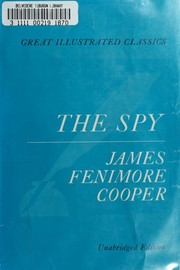
His 1821 breakthrough and arguably the first successful American novel — a Revolutionary War espionage story set in the neutral ground of Westchester County. It shows you the writer Cooper was before Bumppo arrived.
Written partly to prove he could out-sail Walter Scott, and the book that founded the American sea novel that Melville later inherited. A good closing stage because it shows the same frontier temperament transferred to water.
Discussion
Keep reading
Paths that share books, cover the same subject, or open a related topic.