Start with The Last of the Mohicans. It is not the first book Cooper published and it is not the first in the internal chronology, and it is still the right entry point, because it is the only one of the five with a real historical spine — the 1757 siege of Fort William Henry and the massacre that followed the surrender — and by a wide margin the most likely to keep you turning pages. It also sits second in both orders, which means nothing before it is required. If Cooper's sentences defeat you here, they will defeat you in the other four, and you will have found that out in 418 pages rather than 2,000.
Two things to accept before you open it. The prose is genuinely hard going. Cooper wrote between 1823 and 1841; his sentences run long and subordinate, his dialogue stays formal in the middle of an ambush, and he describes scenery at a length no modern editor would tolerate. Twenty pages a day is a respectable pace and a slow first week is not failure. Second, Cooper's portrayal of Native Americans is of its period and reads badly now. The idealisation of Chingachgook and Uncas and the flat villainy of Magua are two halves of one nineteenth-century convention, and the racial theorising Natty Bumppo delivers about the "gifts" proper to each race is presented in the book as wisdom. Read it as a document of how 1826 America narrated itself, not as observation.
The order question, settled
Publication order runs The pioneers (1823), The Last of the Mohicans (1826), The Prairie (1827), The Pathfinder (1840), The deerslayer (1841). Internal chronology runs the other way for the most part: The deerslayer has Natty young, The Last of the Mohicans has him in his mid-thirties as Hawkeye, The Pathfinder older, The pioneers old, The Prairie at the end of his life.
The case for publication order is that you watch Cooper's idea of his own character develop, and the late books are the ones where he is consciously mythologising. The case for chronology is that the five together make one life, and reading it forwards is the only way that life has a shape. Both cases are real. The recommendation here is a hybrid, and it is the one most experienced Cooper readers arrive at anyway: read the famous novel first as a test, then follow the chronology from the beginning. Straight publication order asks you to start with the slowest book in the sequence, which is why so many people abandon Cooper in chapter three.
After Mohicans: back to the beginning
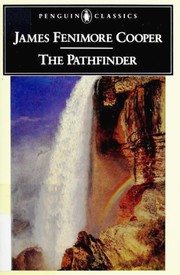
The deerslayer and The Pathfinder come next, in that order, and they are the slowest reading in the path — the first spends its opening hundred pages establishing a lake and a floating house before much happens. Fifteen to twenty pages a day. What you get for the patience is the young Natty, and the sense of a character being built backwards by a writer who has decided he matters.
The old man and the vanishing frontier
The pioneers and The Prairie close the sequence. The pioneers is the most static of the five — one village, one season, a great deal of talk about law, land and waste — and rewards being read a chapter at a time. The Prairie moves more and is written in Cooper's most elevated register. Finish with it whatever else you change about this order: it is where the frontier and the man both end, and it is the only ending Cooper wrote for him.
If you want more Cooper
The spy and The pilot are outside the Tales entirely, both shorter and faster, and by this point his prose will cost you far less effort. Read The spy first — it precedes everything else in his career and is the book that made him.
More reading orders for long series and single authors are on Discover.
Follow the full ordered path here: Leatherstocking Reading Order: Publication or Chronological?.
Ready to learn something deeply?
Build a reading path — free