The Laundry Files Reading Order and Guide
The Laundry Files is Charles Stross's long-running spy-horror-comedy series blending Lovecraftian cosmic horror with British bureaucracy and espionage. This curriculum reads the main novels in internal chronological/publication order first, then layers in the spin-off novellas and the related "New Management" sub-series, so each stage builds familiarity with the world, characters, and escalating stakes before tackling the more complex or tonally distinct entries.
Foundations: Bob Howard Begins
BeginnerGet introduced to the Laundry universe, its rules (applied computational demonology, CASE NIGHTMARE GREEN, the bureaucratic spy agency), and the voice of protagonist Bob Howard through the first two novels.
▸ Study plan for this stage
Pace: 4–5 weeks total: spend ~2.5 weeks on The Atrocity Archives (~20–25 pages/day, including the bonus novella "The Concrete Jungle"), then ~2.5 weeks on The Jennifer Morgue (~20–25 pages/day, including the bonus story "Pimpf"). Reading sessions of 30–45 minutes work well given the dense in-jokes and foo
- Applied Computational Demonology: the core premise that sufficiently complex mathematics can tear holes in spacetime and summon extradimensional entities — meaning computers are inherently occult tools and programmers are unwitting sorcerers.
- The Laundry (SOE/BSSS): the secret British bureaucratic agency that manages occult threats, portrayed as a dysfunctional civil-service nightmare of forms, audits, mandatory training courses, and interdepartmental politics — satire of both spy fiction and corporate IT culture.
- CASE NIGHTMARE GREEN: the slow-burn existential threat underpinning the entire series — a predicted convergence event where rising human population and computational density will thin the barriers between dimensions, risking mass incursion by hostile entities.
- The Basilisk/MEDUSA Effect (The Atrocity Archives): the concept that certain geometries or gazes can trigger lethal neurological feedback — introduced via the MEDUSA device and the Nazi occult program, establishing that the Laundry's threats have real-world historical roots.
- Bob Howard as Unreliable Everyman Narrator: Bob's voice — sardonic, self-deprecating, IT-nerd fluent — is the reader's lens. Understanding his position as a low-level tech support operative who keeps stumbling into field work is key to the series' tone.
- The Spy-Fiction Parody Layer (The Jennifer Morgue): Stross explicitly riffs on James Bond tropes — the geas/destiny-lock plot device forces Bob into a Bond-hero role, allowing the novel to simultaneously celebrate and deconstruct the genre.
- Geas and Compulsion Magic: introduced prominently in The Jennifer Morgue, a geas is a binding magical compulsion. The plot hinges on a destiny-lock geas that forces events to follow a Bond-narrative template, showing how the Laundry universe treats narrative structure as a magical force.
- Supporting Cast Foundations: Angleton (Bob's terrifying, enigmatic boss), Mo (Bob's love interest and fellow operative, introduced in The Atrocity Archives), and Pinky & Brains establish the ensemble that deepens across the series.
- In The Atrocity Archives, how does the MEDUSA device work, and what historical program does it connect to? What does this reveal about the Laundry universe's relationship with real-world history?
- What is CASE NIGHTMARE GREEN, and why does the Laundry treat it as an inevitability rather than a preventable event? What evidence from either novel hints at its slow approach?
- How does The Jennifer Morgue use the geas/destiny-lock as both a plot mechanism and a meta-fictional device? In what ways does it force Bob — and the reader — to engage with James Bond genre conventions?
- How does Stross use bureaucratic satire throughout both novels (mandatory HR forms, OPSEC violations, performance reviews) to comment on real institutions like intelligence agencies and corporate IT departments?
- Compare Bob Howard's competence and confidence between The Atrocity Archives and The Jennifer Morgue. How does he grow, and what limitations does Stross deliberately keep in place to maintain the everyman dynamic?
- What role does Mo play in each novel, and how does her relationship with Bob reflect the series' broader theme that personal life and occult duty are fundamentally incompatible?
- Concept Map — Build a one-page diagram connecting the series' core rules: Applied Computational Demonology → computers as occult tools → the Laundry's reason for existence → CASE NIGHTMARE GREEN. Add specific scenes from each novel as evidence nodes.
- Genre Deconstruction Log — While reading The Jennifer Morgue, keep a running list of every classic James Bond trope you spot (exotic location, femme fatale, villain monologue, gadgets). After finishing, annotate each entry: does Stross play it straight, subvert it, or use it as a plot-critical magical mechanism?
- Bob's Voice Imitation — Write a 300–500 word first-person journal entry in Bob Howard's voice describing a mundane IT task (e.g., filing an incident report after a routine summoning goes wrong). Focus on capturing his sardonic tone, nerd references, and bureaucratic frustration.
- Bureaucracy Audit — Identify every piece of Laundry paperwork, form, or procedure mentioned across both novels (e.g., the OFCUT forms, the mandatory health-and-safety briefings). Compile them into a mock 'Laundry Employee Handbook' table of contents and reflect on what each satirizes in real institutions.
- Comparative Tone Analysis — Select one action scene from The Atrocity Archives and one from The Jennifer Morgue. Write a short (200-word) comparison of how Stross balances horror, humor, and thriller tension differently in each book, and what that shift suggests about his growing confidence with the universe.
- Foreshadowing Hunt — Re-read the final chapters of The Jennifer Morgue with CASE NIGHTMARE GREEN in mind. Highlight any lines, character observations, or world details that feel like deliberate setup for larger threats. Write a brief paragraph predicting what the next stage of the series might escalate toward.
Next up: By completing these two novels the reader has internalized the Laundry's rules, Bob's voice, and the slow ticking clock of CASE NIGHTMARE GREEN — the exact foundation needed to appreciate how the stakes, horror register, and cast complexity escalate sharply in the next novels of the series.

The very first Laundry Files novel — start here. It establishes Bob Howard, the Laundry, and the core conceit of mathematics-as-magic, and sets the tone of Len Deighton spy thriller crossed with H.P. Lovecraft.
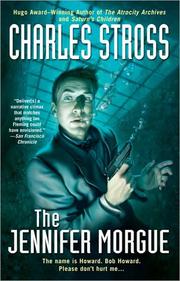
The second novel parodies James Bond while deepening the world's lore and Bob's role. Reading it second lets you appreciate how Stross plays with genre conventions now that you know the baseline.
Building the World: Mid-Series Novels
BeginnerFollow Bob through increasingly high-stakes missions as CASE NIGHTMARE GREEN approaches, learning the broader cast of characters and the Laundry's internal politics.
▸ Study plan for this stage
Pace: 8–10 weeks total; roughly 2–3 weeks per novel at ~25–35 pages/day. Suggested breakdown: "The Fuller Memorandum" (weeks 1–3), "The Apocalypse Codex" (weeks 4–6), "The Rhesus Chart" (weeks 7–10). Allow extra time on "The Rhesus Chart" as it introduces the largest cast expansion.
- CASE NIGHTMARE GREEN (CNG): The approaching cosmic event caused by humanity's growing population resonating with higher-dimensional entities, serving as the overarching existential threat across all three novels.
- The Laundry's internal bureaucracy and politics: How interdepartmental rivalry, OPSEC culture, and institutional inertia shape (and often hinder) field operations — especially visible in 'The Fuller Memorandum' and 'The Rhesus Chart'.
- The Eater of Souls and the Black Pharaoh: The escalating divine/demonic antagonists in 'The Fuller Memorandum', illustrating how elder entities can possess and act through human agents.
- External Assets and oversight: 'The Apocalypse Codex' introduces the concept of officially deniable external contractors (Persephone Hazard and Johnny McTavish), expanding the Laundry's operational model beyond staff agents.
- Vampire mythology recontextualized: 'The Rhesus Chart' deconstructs traditional vampire lore through a computational/PHANG lens — vampirism as a memetic-mathematical infection rather than supernatural curse.
- Bob's professional evolution: Tracking Bob Howard's arc from reluctant IT specialist/field agent in 'The Fuller Memorandum' to a manager with growing oversight responsibilities by 'The Rhesus Chart', including his relationship with the Laundry's power structures.
- Mo and the Violin: The role of the Erich Zann violin as a sentient, dangerous occult instrument and its psychological toll on Mo O'Brien, establishing her as a fully independent protagonist with her own burdens.
- Plausible deniability and institutional cover-ups: How the Laundry (and organizations like Externalities) manage public exposure of occult events, a recurring theme across all three books.
- By the end of 'The Fuller Memorandum', what is the significance of the Eater of Souls and how does its emergence connect to the broader threat of CASE NIGHTMARE GREEN?
- In 'The Apocalypse Codex', why does the Laundry use external contractors like Persephone Hazard rather than staff agents for the Golden Promise Ministries operation, and what does this reveal about the organization's limitations?
- How does 'The Rhesus Chart' redefine vampires within the Laundry universe's rules of computational demonology, and why had the Laundry previously believed vampires couldn't exist?
- How does Bob's role and attitude toward Laundry management change across these three novels, and what events in each book drive that shift?
- What is the significance of Mo's violin across these novels, and how does its influence on her character foreshadow potential future conflicts?
- How do all three novels use the approaching CASE NIGHTMARE GREEN as a background pressure that shapes character decisions, even when it is not the direct focus of the plot?
- Character relationship map: After each novel, draw a diagram connecting Bob, Mo, Angleton, Persephone Hazard, and the new characters introduced (e.g., the PHANG team in 'The Rhesus Chart'). Annotate each connection with the nature of the relationship and any power dynamics.
- Bureaucracy log: Keep a running list of every instance of Laundry red tape, interdepartmental conflict, or institutional failure across all three books. At the end of the stage, write a one-paragraph 'internal memo' in the Laundry's voice summarizing a fictional operational incident using the jargon and tone you've observed.
- Threat escalation timeline: Create a simple timeline marking each major occult/existential threat event across the three novels and annotate how each one moves the CNG countdown closer to crisis — use direct evidence from the texts.
- Recontextualization exercise for 'The Rhesus Chart': Before reading the vampire chapters, write down five 'classic' vampire traits. After finishing the novel, annotate each trait with how Stross's computational demonology explains, subverts, or discards it.
- Comparative character study: Write a one-page comparison of Persephone Hazard ('The Apocalypse Codex') and Mo O'Brien as two women operating in the Laundry's world — focusing on how each navigates institutional power and personal cost.
- Reading journal — Bob's voice: After each novel, write a short journal entry (200–300 words) in Bob's first-person voice summarizing the mission's outcome and his feelings about the Laundry. This builds sensitivity to Stross's narrative tone and Bob's evolving worldview.
Next up: By the end of 'The Rhesus Chart', Bob has been irrevocably changed by loss and institutional disillusionment, and CASE NIGHTMARE GREEN has shifted from background dread to imminent reality — setting the stage for the higher-stakes, perspective-shifting later novels where the Laundry itself begins to fracture.
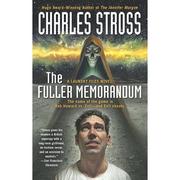
The third novel raises the personal and cosmic stakes considerably; reading it here lets the growing dread of CASE NIGHTMARE GREEN land with full weight after two books of setup.
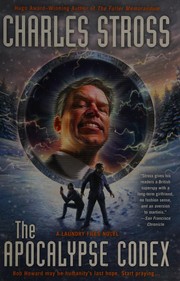
The fourth novel introduces key new characters and a dangerous American evangelical cult, expanding the series' geopolitical scope — best appreciated after the first three books establish the world.
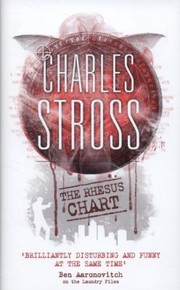
The fifth novel marks a major tonal and narrative shift as CASE NIGHTMARE GREEN begins in earnest; it delivers a gut-punch ending that only works if you've followed Bob's journey from the start.
Spin-Offs & Novellas: Expanding the Universe
IntermediateExplore the Laundry world through other characters' eyes via the official novellas and short fiction collections, which add depth and context without being required for the main plot.
▸ Study plan for this stage
Pace: 3–4 weeks total: Week 1–2 — Read *The Annihilation Score* (~400 pages) at roughly 25–30 pages/day, pausing mid-book to journal observations about Mo's perspective shift. Week 3 — Read *Equoid* (~80 pages) in 2–3 focused sittings, treating it as a close-reading exercise. Week 4 — Review, reflect, and
- Perspective shift from Bob Howard to Mo (Dr. Dominique O'Brien) as protagonist in *The Annihilation Score*, and what her viewpoint reveals that Bob's cannot
- The CASE NIGHTMARE GREEN escalation: how the thinning of dimensional barriers enables new threats like the Eater of Souls and the superhero/villain phenomenon
- Mo's violin (the Pale Violin / CANDID) as a sentient, corrupting occult instrument — the psychological and relational cost of wielding it
- Institutional politics and bureaucratic expansion: the formation of the Transhuman Police Coordination Force (TPCF) and what it says about the Laundry's evolving mandate
- Unicorns as apex predators in *Equoid*: Stross's systematic deconstruction of a fantasy trope using Laundry-universe biology and Lovecraftian horror logic
- The epistolary structure of *Equoid* (H.P. Lovecraft's in-universe letters) as a narrative device that layers unreliable historical testimony over Bob's present-day investigation
- The personal cost of operational secrecy: how both Mo and Bob experience isolation, marital strain, and identity erosion across these two works
- World-building through secondary characters: how *The Annihilation Score* uses its ensemble of 'superhumans' to explore how ordinary people are transformed — and consumed — by CASE NIGHTMARE GREEN
- In *The Annihilation Score*, how does Mo's professional and psychological relationship with the Pale Violin drive the central conflict, and what does this suggest about the Laundry's attitude toward its own operatives as 'instruments'?
- How does *The Annihilation Score* use the emergence of superhumans to comment on institutional responses to uncontrollable power — and which characters best illustrate the tension between utility and danger?
- In *Equoid*, what narrative purpose do the in-universe Lovecraft letters serve, and how does Stross use them to both homage and subvert Lovecraftian horror conventions?
- Both works feature protagonists operating under extreme psychological stress. Compare how Mo in *The Annihilation Score* and Bob in *Equoid* each cope — or fail to cope — with the horror they encounter.
- How does *Equoid* reframe the unicorn myth using the Laundry universe's rules of computational demonology and occult biology? What makes this reframing effective as horror?
- What do these two works, taken together, reveal about the Laundry as an institution — its blind spots, its expendability calculus, and its capacity (or incapacity) for protecting its own people?
- **Dual Diary Entry:** After finishing *The Annihilation Score*, write a one-page journal entry from Mo's perspective at the novel's end, then a second from Bob's imagined perspective on the same events. Compare what each 'sees' — this sharpens your grasp of how POV shapes meaning in the series.
- **Trope Autopsy for *Equoid*:** Before reading *Equoid*, write down five things you 'know' about unicorns from folklore or pop culture. After reading, annotate each point with how Stross inverts, weaponizes, or discards it. This makes the horror mechanics explicit and memorable.
- **Institutional Org-Chart:** Draw a rough diagram of the Transhuman Police Coordination Force as it forms in *The Annihilation Score* — who answers to whom, what each character's power/vulnerability is, and where the institutional fault lines lie. Annotate with post-it style notes on where the Laundry's bureaucratic logic succeeds or fails.
- **Epistolary Analysis:** Re-read the Lovecraft letters in *Equoid* as a standalone document. Write a half-page 'archivist's note' assessing their reliability as a historical source within the fiction. What does Lovecraft's in-universe narrator get wrong, and why does that matter to Bob's investigation?
- **Cost-Benefit Ledger:** For both Mo (in *The Annihilation Score*) and Bob (in *Equoid*), create a simple two-column ledger — 'What the mission costs them personally' vs. 'What the mission achieves operationally.' Reflect in writing on whether the Laundry's implicit bargain is ever fair.
- **Thematic Thread Tracker:** Keep a running list of recurring phrases, objects, or images that appear in *both* books (e.g., references to CASE NIGHTMARE GREEN, the cost of using occult instruments, institutional indifference). At the end of Stage, write a short paragraph on what these shared threads suggest about the series' central preoccupations.
Next up: By experiencing the Laundry universe through Mo's commanding perspective and Bob's field-level dread in these two works, the reader has now internalized the world's rules, costs, and tonal range well enough to engage confidently with the broader and more complex narrative arcs that the main-series novels develop further.

The sixth novel shifts perspective to Mo (Bob's wife) and her demonic violin — a deliberate change of narrator that rewards readers already comfortable with the world's rules and relationships.

This Hugo Award-winning novella (published as a standalone e-book) is a standalone Bob Howard story set between the main novels; reading it here gives a breather and showcases Stross's short-form horror at its best.
Endgame: The CASE NIGHTMARE GREEN Climax
IntermediateExperience the dramatic conclusion of the original Bob Howard arc as the apocalypse fully arrives, and witness the series' darkest and most ambitious storytelling.
▸ Study plan for this stage
Pace: 6–8 weeks total; ~25–30 pages/day. Spend weeks 1–3 on The Delirium Brief (roughly 400 pages), then weeks 4–6 on The Labyrnith Index (~350 pages), leaving weeks 7–8 for review, re-reading key chapters, and completing exercises.
- The public unmasking of the Laundry — The Delirium Brief pivots the entire series by stripping away institutional secrecy and forcing occult civil service into the open political arena, fundamentally changing the stakes
- The Faustian bargain and loss of institutional sovereignty — Bob's deal with an elder god and the Laundry's dismantling by a hostile government illustrate how bureaucratic and supernatural power can be weaponised against the very people meant to be protected
- CASE NIGHTMARE GREEN in full effect — both novels depict the Lovecraftian apocalypse not as a future threat but as an active, ongoing reality reshaping society, politics, and human cognition
- Mhari Murphy and the New Management — The Labyrnith Index shifts the POV to Mhari and introduces the New Management (the Mandate), showing how a vampire Prime Minister consolidates occult power under an authoritarian regime
- The Labyrnith Index's transatlantic conspiracy — the mission to rescue the US President's memory of Cthulhu represents a geopolitical dimension of CASE NIGHTMARE GREEN, expanding the apocalypse beyond Britain
- POV as ideological lens — the shift from Bob (insider bureaucrat) to Mhari (ambitious, morally compromised operative) forces the reader to question loyalty, complicity, and what 'the good guys' even means at the end of the world
- Stross's use of horror-comedy tonal collapse — as CASE NIGHTMARE GREEN peaks, the sardonic humor that defined earlier books gives way to genuine dread, marking a deliberate authorial shift in register
- Institutional death and rebirth — the destruction of the old Laundry and its replacement by the New Management's apparatus is a structural metaphor for how democracies can be hollowed out from within
- How does the public exposure of the Laundry in The Delirium Brief change the social contract between the occult civil service and the British public, and what political forces exploit that exposure?
- What is the nature of Bob's deal with an elder god, what does he sacrifice, and how does this reflect the series' recurring theme that survival always has a cost?
- In The Labyrnith Index, why is it significant that the American public has been made to forget Cthulhu exists, and what does the mission to reverse this reveal about the geopolitics of CASE NIGHTMARE GREEN?
- How does Mhari Murphy's perspective in The Labyrnith Index complicate the reader's moral alignment — is she a hero, a collaborator, or something more ambiguous?
- Trace the tonal arc across both books: where does Stross deploy dark humor, where does he abandon it entirely, and what does that shift signal about the state of the world within the narrative?
- By the end of The Labyrnith Index, what has been permanently lost from the world of the earlier Laundry Files novels, and what new and more dangerous status quo has replaced it?
- Institutional autopsy diagram: Draw a before/after org chart of the Laundry as it exists at the start of The Delirium Brief versus its state at the end of The Labyrnith Index. Annotate each change with the in-world cause (political, supernatural, or personal) to make the institutional collapse concrete and traceable.
- Bob's bargain cost-benefit analysis: Write a one-page in-character memo (in the style of a Laundry operational report) assessing the strategic pros and cons of Bob's deal with an elder god as documented in The Delirium Brief. Use the series' bureaucratic voice deliberately — the tension between dry format and horrific content is the point.
- Mhari POV rewrite: Choose one scene from The Delirium Brief that features Bob as POV character and rewrite a paragraph of it from Mhari's perspective as established in The Labyrnith Index. Reflect on how her vampiric nature, ambition, and relationship to the New Management would colour her interpretation of the same events.
- Tonal annotation exercise: As you read, flag 5 moments of dark humor and 5 moments of unambiguous horror in each book (10 pairs total). After finishing both novels, write a short paragraph explaining the pattern — does the humor disappear gradually or suddenly, and does it correlate with specific plot events?
- Geopolitical map of CASE NIGHTMARE GREEN: Create a annotated world map (hand-drawn or digital) marking every location referenced in both books, noting what supernatural or political event occurs there. Pay special attention to the US-focused plot of The Labyrnith Index to visualise how the apocalypse has gone global.
- New Management manifesto: Based solely on evidence in The Labyrnith Index, draft a one-page fictional 'policy platform' for the New Management as if it were a real political party. What does it promise? What does it conceal? This exercise forces close reading of how Stross embeds authoritarian logic in supernatural governance.
Next up: By witnessing the complete collapse of the old Laundry and the entrenchment of the New Management's authoritarian occult regime, the reader is now positioned to follow the next generation of characters who must navigate — or resist — a world where CASE NIGHTMARE GREEN is no longer a coming crisis but the permanent condition of existence.

The eighth novel is the series' political thriller peak — the Laundry is dismantled by the government just as the worst threats arrive. It pays off every thread built since book one.

Narrated by a vampire Prime Minister, this ninth novel is the wildest tonal leap in the series and works best read after The Delirium Brief has reset the board.
The New Management: A Transformed World
ExpertTransition into the 'New Management' sub-series, where the world has been openly transformed by the supernatural and the series reinvents itself with new protagonists and a darker, more overt horror register.
▸ Study plan for this stage
Pace: 3–4 weeks total; ~25–30 pages/day. Suggested split: Week 1–2 for Dead Lies Dreaming (≈320 pages), Week 3–4 for Quantum of Nightmares (≈340 pages). Reserve the final 2–3 days of each book for reflection, note-taking, and completing exercises before moving on.
- The Laundry Files' 'New Management' pivot: understanding how the series deliberately reinvents itself after the Lovecraftian apocalypse (the Nightmare becomes public reality) and what that means for tone, setting, and stakes
- Post-Continuity Britain: the sociopolitical landscape of a UK now openly governed by the New Management — a vampiric Prime Minister, overt supernatural bureaucracy, and a population adapting (or not) to monstrous normality
- New protagonists and ensemble casts: shifting away from Bob Howard as the sole POV to characters like Wendy Deere (a Laundry field agent) and the Starkey siblings (Imp, Doc, Game Boy, Becca) in Dead Lies Dreaming, and the cast of Quantum of Nightmares — understanding how Stross uses multiple close-t
- The Necronomicon MacGuffin and occult bibliophilia: in Dead Lies Dreaming, the quest for a supremely dangerous magical book serves as both plot engine and a meditation on the power and danger of forbidden knowledge
- Class, precarity, and late-capitalist horror: Quantum of Nightmares foregrounds economic exploitation — zero-hours contracts, food-service wage slavery, and corporate malfeasance — as a vehicle for supernatural horror, blending social realism with occult menace
- Darker horror register: both novels lean into body horror, predatory institutions, and existential dread more overtly than earlier Laundry books; recognizing the literary shift from spy-thriller pastiche toward contemporary horror fiction
- The role of the Laundry as background institution: the organization is now less a cozy workplace comedy and more a feared arm of an authoritarian supernatural state — tracking how reader sympathy and institutional trust have been deliberately eroded
- Continuity and change in the series' internal mythology: identifying which rules, entities, and lore from earlier books carry forward versus what Stross retcons or recontextualizes under the New Management framework
- How does the political and social world depicted in Dead Lies Dreaming and Quantum of Nightmares differ from the pre-Continuity Laundry of earlier books, and what specific details in each novel make the transformation feel lived-in rather than merely told?
- In Dead Lies Dreaming, what does the hunt for the Necronomicon reveal about power dynamics under the New Management — who wants it, why, and what does the novel ultimately say about the danger of occult knowledge in authoritarian hands?
- How does Stross use the ensemble cast structure (the Starkey siblings' crew, Wendy Deere) in Dead Lies Dreaming to explore different social strata of post-Continuity Britain, and which characters most effectively embody the series' new thematic concerns?
- Quantum of Nightmares uses a food-service corporation as its central horror vehicle. How does Stross map supernatural evil onto recognizable late-capitalist structures, and what is the novel arguing about complicity, survival, and resistance among precarious workers?
- Both novels feature protagonists who are outsiders to or disillusioned with the Laundry's institutional power. How does this outsider perspective change the reader's relationship to the supernatural bureaucracy compared to earlier Bob Howard-centric books?
- Identify at least two moments in each novel where the horror register shifts from the series' earlier 'Lovecraftian spy thriller' mode into something more viscerally disturbing. What narrative techniques does Stross use to achieve this tonal escalation?
- World-state audit: After finishing Dead Lies Dreaming, create a one-page 'New Management Britain' fact sheet — government structure, known supernatural factions in power, public knowledge of the occult, and the Laundry's new role. Update it after Quantum of Nightmares and annotate what changed or was added.
- Character web diagram: Map all major POV characters across both novels, noting their social class, relationship to institutional power (Laundry, New Management, corporate, criminal), and their moral trajectory by each book's end. Look for patterns in who survives, who is compromised, and who resists.
- Comparative tone analysis: Select one action or horror set-piece from Dead Lies Dreaming and one from Quantum of Nightmares. Write a 300-word close reading of each, focusing on sentence-level craft — pacing, diction, sensory detail — and how Stross signals the shift to a darker horror register.
- Thematic essay (500–700 words): Argue whether Quantum of Nightmares is more effective as a horror novel or as social satire, using specific scenes and character arcs as evidence. Force yourself to steelman the weaker case before landing on a conclusion.
- Lore continuity tracker: Keep a running list of any entities, rules, organizations, or events referenced in these two books that connect back to earlier Laundry lore. Note whether each reference is used for continuity comfort, ironic contrast, or as evidence of how the world has darkened.
- Reader-response journal: At the end of each major section or part-break in both novels, write 3–5 sentences answering: 'What am I most afraid of in this world right now, and is that fear supernatural, institutional, or economic?' Track how your answer evolves — this mirrors the books' own thematic escalation.
Next up: By establishing the New Management's overt supernatural authoritarianism and introducing a wider cast of vulnerable, non-institutional protagonists, these two novels lay the ideological and emotional groundwork for subsequent entries to escalate the stakes further — moving from adaptation and survival under the new order toward outright resistance, deeper horror, and the question of whether the tr
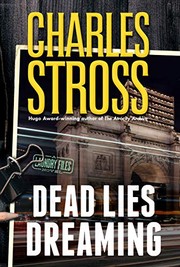
The first New Management novel introduces a new cast in a post-Laundry Britain ruled by the New Management; it's best read after completing the original arc so the changed world hits with full impact.

The second New Management novel deepens the new world and new characters; reading it here, after Dead Lies Dreaming, lets the expanded cast and darker corporate-horror themes build naturally.
Discussion
Keep reading
Paths that share books, cover the same subject, or open a related topic.