The Dresden Files Reading Order: Where to Start
The Dresden Files is a long-running urban fantasy series by Jim Butcher following Chicago wizard-for-hire Harry Dresden. This curriculum guides you through the novels in strict publication order — the only way the story's escalating stakes, character arcs, and lore payoffs make sense — with honest context about the famously rough early entries so you can push through to where the series truly ignites.
Getting Started — The Rough-But-Essential Opening
BeginnerMeet Harry Dresden, learn the rules of Butcher's magic system, and establish the Chicago setting and supporting cast. Be warned: Books 1–2 are widely considered the weakest in the series — written when Butcher was still a student. Push through anyway; the payoff is real.
▸ Study plan for this stage
Pace: 2–3 weeks total: Week 1 — Storm Front (~322 pages, ~45 pages/day); Weeks 2–3 — Fool Moon (~342 pages, ~35 pages/day, slightly slower to absorb the expanded lore). Read in one unbroken sequence without skipping.
- Harry Dresden as an archetype: the hard-boiled noir detective fused with a wizard — track how Butcher uses first-person narration to blend cynical detective voice with genuine magical wonder
- The Laws of Magic: Storm Front introduces the Seven Laws (especially the First Law — Thou Shalt Not Kill with Magic) and the White Council's role as magical law enforcement; understanding these rules is the backbone of every moral dilemma in the series
- The cost of magic: spellcasting is physically exhausting and emotionally taxing for Harry — note every scene where magic drains him and how that limitation drives plot decisions
- Chicago as a living character: Butcher grounds the supernatural in real Chicago geography (Michigan Avenue, Wacker Drive, the L train) — the mundane city and the magical underworld are inseparable
- The supporting cast foundation: Lt. Karrin Murphy (skeptical ally inside the law), Bob the Skull (exposition engine and comic relief), and Susan Rodriguez (romantic tension and journalistic pressure) are all introduced here — their relationships with Harry define his world
- Werewolf taxonomy in Fool Moon: Butcher deliberately introduces multiple, distinct werewolf types (hexenwolves, loup-garou, lycanthropes, and the Alphas) to show that his world resists simple monster-movie rules — each type has different origins, costs, and moral weight
- Trust and institutional friction: both books dramatize Harry's uneasy relationship with the Chicago PD and the White Council — he is simultaneously an insider and an outsider in every power structure he touches
- Accepting rough craft in service of world-building: Butcher himself has acknowledged these early books are unpolished — practice reading for lore and character seeds rather than prose perfection, identifying moments that clearly foreshadow later depth
- What are the Seven Laws of Magic, and which specific Law does the villain's crime in Storm Front violate — and why does that put Harry personally at risk of execution?
- In Fool Moon, what is the mechanical and moral difference between a hexenwolf (e.g., Denton's belt) and a loup-garou (Harley MacFinn) — and why does that distinction matter for how Harry chooses to handle each threat?
- How does Murphy's distrust of Harry in both books function as more than a plot obstacle — what does it reveal about the structural problem of a wizard working inside a mundane legal system?
- Bob the Skull is played largely for laughs in these two books — but what specific pieces of magical exposition does he deliver that are load-bearing for the plot, and what does his existence tell us about how magic is preserved and transmitted in Butcher's world?
- Harry repeatedly refuses to use his full power or cross certain lines even when lives are at stake — identify one moment from each book where this restraint costs him dearly, and articulate the in-world reason he gives for it
- By the end of Fool Moon, how has Harry's relationship with Murphy materially changed from where it began in Storm Front, and what single event in Fool Moon is most responsible for that shift?
- **Magic System Diagram:** After finishing Storm Front, draw a one-page map of the Laws of Magic as Harry explains them. Add a column for 'consequence of breaking this law' and a second column for 'moment in Storm Front where this law is relevant.' Revisit and expand the diagram after Fool Moon.
- **Werewolf Taxonomy Chart:** Fool Moon throws four werewolf types at you quickly. Build a simple comparison table with columns: Name | Origin/How Created | Weaknesses | Moral Status (innocent/guilty) | Fate in the book. This forces active reading and makes the distinctions stick.
- **Voice Imitation Exercise:** Choose any two-paragraph action or investigation scene from Storm Front and rewrite it in third-person limited. Then read both versions aloud. Reflect in a short paragraph: what does Butcher's first-person choice give the reader that third-person would lose?
- **Setting Walk:** Using Google Maps or a Chicago city guide, locate three real places Butcher names in either book (e.g., the Michigan Avenue bridge, a Chicago diner, the Cook County Morgue area). Screenshot or sketch a small map. Consider how anchoring fantasy in real geography affects your sense of immersion.
- **Character Relationship Web:** Draw a web with Harry at the center. Add Murphy, Bob, Susan, Morgan (the Warden), and the primary antagonist of each book. Draw a line between each pair that interacts, label it with one word describing the relationship (e.g., 'suspicion,' 'mentorship,' 'desire'), and note whether that relationship improved or worsened by each book's end.
- **'Rough Craft' Annotation:** Pick one chapter from each book that felt slow, clunky, or over-explained. Annotate it: mark one passage where the prose stumbles, but also mark one sentence or detail that clearly plants a seed for character or world depth. Practice separating craft-level weaknesses from lore-level value — a skill that will serve you through the entire series.
Next up: Storm Front and Fool Moon establish the rules of the world and the shape of Harry's character under pressure — the next stage builds directly on that foundation by introducing the series' larger mythological architecture (the vampire Courts, the Faerie realms, and the White Council in crisis), which only land with full weight because you already understand what Harry stands to lose.
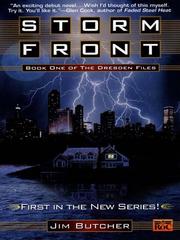
Book 1 and the necessary entry point. It introduces Harry Dresden, the White Council, and the basic world-building. It reads like a rough draft of something great — because it is — but you need it to understand everything that follows.

Book 2 is considered by most fans to be the low point of the entire series. It is werewolf-heavy and pacing-challenged, but it deepens Harry's relationship with Lt. Murphy and sets up threads that pay off much later. Skim if you must, but finish it.
The Series Finds Its Feet — Where It Gets Good
BeginnerExperience the dramatic quality jump that begins with Book 3. By the end of this stage you will understand why fans are so passionate about the series, as the humor, heart, and horror all click into place.
▸ Study plan for this stage
Pace: 6–8 weeks total (~25–35 pages/day, reading at a relaxed beginner pace): spend roughly 2–2.5 weeks on Grave Peril, 2 weeks on Summer Knight, and 2–2.5 weeks on Death Masks. Read each book to completion before moving on, and allow a 1–2 day reflection pause between books to process major events.
- The Nevernever & Spirit World Logic — Grave Peril introduces the spirit world (the Nevernever) as a fully realized parallel dimension with its own geography, politics, and dangers, establishing rules Harry must navigate rather than simply overpower.
- Emotional Stakes & Personal Cost — Across all three books, Harry's victories come at devastating personal prices (Susan's transformation, his debt to the Summer Court, his confrontation with the Shroud), teaching readers that the series rewards emotional investment, not just action.
- The White Council & Wizard Politics — Summer Knight pulls back the curtain on the White Council, showing that Harry's greatest threats are sometimes bureaucratic and political rather than supernatural, and that wizard society is as flawed as human society.
- The Faerie Courts (Summer & Winter) — Summer Knight establishes the two Faerie Courts as major power factions with their own cold-war dynamics, introducing Titania, Mab, and the concept of the Sidhe as genuinely alien intelligences bound by ancient law.
- The Denarians & the Fallen — Death Masks introduces the Order of the Blackened Denarius, 30 fallen angels bound to silver coins, raising the series' cosmic stakes from street-level magic to a conflict touching Heaven and Hell.
- Harry as a Tragic Hero — By Death Masks, the pattern is clear: Harry's defining trait is not power but stubborn moral courage in the face of impossible odds, and his relationships (with Susan, Michael, Murphy) are the emotional engine of the series.
- The Knights of the Cross — Death Masks properly introduces the Knights of the Cross (particularly Michael Carpenter), whose faith-based power contrasts sharply with Harry's scholarly magic and deepens the series' theology and moral framework.
- Series Serialization vs. Stand-Alone Plotting — These three books demonstrate how Butcher balances self-contained mysteries with long-running arcs (the vampire war, Harry's love life, his standing with the Council), a key reason the series sustains reader loyalty across many volumes.
- In Grave Peril, what event triggers the war between the Red Court vampires and the White Council, and how is Harry personally responsible for it?
- How does Summer Knight reframe Harry's relationship with the White Council — what is he accused of, and what is the deal he strikes with Mab to save himself?
- Who are the Denarians in Death Masks, and why does the Shroud of Turin matter to both them and the Knights of the Cross?
- How does Susan Rodriguez's fate at the end of Grave Peril change Harry's emotional arc across the remainder of the stage, particularly in Death Masks?
- What does the murder mystery at the heart of Summer Knight reveal about the balance of power between the Summer and Winter Courts, and who is ultimately behind the plot?
- By the end of Death Masks, how has Harry's understanding of the supernatural world's cosmic scale (angels, fallen, divine artifacts) expanded beyond what was established in Grave Peril?
- Relationship Web: After finishing each book, draw a diagram mapping Harry's key relationships (Susan, Murphy, Michael, Thomas, the Council, the Faerie Courts). Add arrows showing how each relationship changed by the book's end — this makes the serialized emotional arcs visible at a glance.
- Rule-Book for the Nevernever: While reading Grave Peril, keep a running list of every rule, limitation, or law governing the spirit world that Harry mentions. After finishing, write a one-page 'traveler's guide' to the Nevernever in your own words.
- Faerie Court Comparison Chart: After Summer Knight, create a two-column chart contrasting the Summer Court and Winter Court — their rulers, motivations, aesthetic tone, and what each represents thematically. Consider what the balance between them might symbolize.
- Moral Dilemma Journal: Each book puts Harry in at least one situation where every option is wrong. Pick one dilemma per book (e.g., the party in Grave Peril, the Council vote in Summer Knight, the Shroud exchange in Death Masks) and write a short paragraph arguing for the choice Harry made — then write one arguing against it.
- Tone Tracker: Re-read the opening chapter of Grave Peril and the opening chapter of Death Masks back-to-back. Write 3–5 sentences describing how Butcher's narrative voice, pacing, and Harry's internal monologue have evolved between the two books.
- Fan Perspective Reflection: After completing all three books, write a short paragraph answering the question: 'Why do fans say the series truly begins with Book 3?' Use specific scenes or moments from Grave Peril, Summer Knight, and Death Masks as evidence.
Next up: These three books establish the series' emotional and political architecture — the vampire war, Harry's Faerie entanglements, and the cosmic threat of the Fallen — which the next stage will push to their breaking points as the consequences of Harry's choices in Grave Peril and Death Masks come fully due.
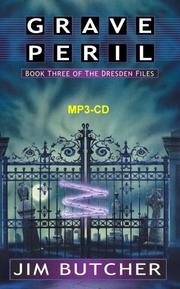
Book 3 is where the series genuinely begins. Butcher introduces the vampire Courts and a major new character, and the emotional stakes rise sharply. Most fans cite this as the turning point.
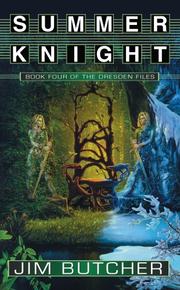
Book 4 expands the world into Faerie politics and introduces the Sidhe Courts, lore that becomes central to the entire series. Harry's character also deepens considerably here.
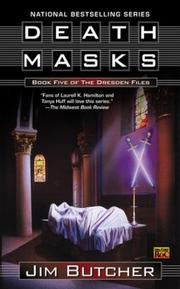
Book 5 brings in the Denarians — fallen-angel-powered villains who become series-long antagonists — and delivers one of the tightest, most satisfying plots in the run so far.
Building Toward the Big Picture
IntermediateRecognize the long-game narrative Butcher has been constructing. The standalone cases begin weaving into a single, massive overarching conspiracy, and the supporting cast becomes as compelling as Harry himself.
▸ Study plan for this stage
Pace: 6–8 weeks total (~25–30 pages/day): spend roughly 2 weeks on Blood Rites, 2–3 weeks on Dead Beat, and 2–3 weeks on Proven Guilty. Read each book in a single sustained push before moving to the next to preserve narrative momentum and make cross-book pattern recognition easier.
- The Black Court / White Court vampire distinction and how Blood Rites deepens the mythology of the White Court, revealing that Thomas Raith is Harry's half-brother and permanently reshaping Harry's personal stakes in the supernatural world.
- Escalating personal cost — Blood Rites forces Harry to confront family, loyalty, and the price of his power, establishing that the series will hurt its protagonist in lasting, non-reversible ways.
- The Darkhallow and necromantic mega-ritual in Dead Beat as the first truly world-threatening event Harry faces largely alone, signaling Butcher's shift from 'case of the week' to 'civilization-level stakes'.
- Cowl and the shadowy senior Council-level conspirators introduced in Dead Beat — the first clear evidence of a long-running, organized enemy operating inside and around the White Council itself.
- Sue the T-Rex as a narrative landmark: Dead Beat's climax is Butcher's declaration that the series will embrace operatic, mythic-scale set pieces without apology.
- The Wardens and the White Council's internal politics, fully dramatized across Dead Beat and Proven Guilty, showing the Council as a flawed institution capable of injustice — not simply Harry's bureaucratic annoyance.
- Fear as a supernatural weapon and the Scarecrow/phobophage fetch monsters in Proven Guilty, tying pop-culture horror directly into the series' metaphysical rules about belief and emotion.
- The revelation in Proven Guilty that the Black Council's reach extends into the White Council's own ranks, and that Molly Carpenter's fate is being used as a political chess piece — cementing the overarching conspiracy as the true engine of the series.
- How does the revelation of Thomas's true identity in Blood Rites change the emotional architecture of the series, and what obligations does it create for Harry going forward?
- In Dead Beat, why is the Darkhallow uniquely catastrophic compared to threats in earlier books, and what does Harry's willingness to ride a zombie T-Rex tell us about his evolution as a protagonist?
- Who is Cowl, what do we actually know about him by the end of Dead Beat, and why does Butcher deliberately leave his identity unresolved?
- How do the White Council's actions in Proven Guilty — particularly regarding Molly — illustrate the theme that institutions meant to protect can themselves become instruments of oppression?
- Trace the thread of the Black Council across all three books: what evidence accumulates in Blood Rites, Dead Beat, and Proven Guilty that a hidden faction is manipulating events from behind the scenes?
- By the end of Proven Guilty, how has Harry's supporting cast (Thomas, Murphy, Molly, the Carpenters) been transformed from helpers into characters with fully independent arcs and vulnerabilities of their own?
- Family tree & faction map: After Blood Rites, draw a diagram of the Raith family, the White Court power structure, and Harry's new familial connections. Update it after each subsequent book to track how personal relationships intersect with political factions.
- Conspiracy evidence log: Keep a running document as you read Dead Beat and Proven Guilty. Each time you spot a clue, anomaly, or suspicious character action that hints at a larger hidden plot, log the book, chapter, and a one-sentence note. Review the full log after Proven Guilty and write a paragraph summarizing what the Black Council appears to want.
- Stakes escalation chart: Create a simple three-column table (one column per book). For each book record: the primary threat, the largest geographic/population scale of that threat, and what Harry personally stands to lose. Analyze how all three dimensions grow across the stage.
- Character-arc spotlight: Choose one supporting character (Thomas, Murphy, or Molly) and write a 300–400 word character study tracing how their role, agency, and personal stakes evolve specifically across these three books — using only scenes and dialogue from the listed texts.
- Reread the climax of Dead Beat (the battle of Wrigley Field / Sue sequence) and the trial scene in Proven Guilty back-to-back. Write a short compare-and-contrast (200–300 words) on how Butcher uses spectacle differently in each: one is physical/external, one is institutional/internal. What does each reveal about where the real danger in the series now lives?
- Predict forward: Before moving to the next stage, write down three specific unresolved threads from these three books (character fates, villain identities, political tensions) and your prediction for how each will pay off. Seal the document and revisit it after completing the next stage.
Next up: By the end of Proven Guilty the reader understands that Harry is no longer just a detective solving cases — he is an unwilling piece on a board controlled by forces inside and outside the White Council — which makes the next stage's deeper dives into Senior Council secrets, the Faerie Courts, and the full unmasking of the Black Council feel like inevitable, earned escalation rather than sudden plo
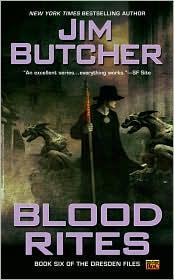
Book 6 delivers major revelations about Harry's family history and introduces Thomas Raith as a fully fleshed-out character. It also has a monkey on fire in the first sentence — tone perfectly set.

Book 7 is the fan-favorite turning point where the series goes truly epic. It ends with one of the most celebrated sequences in the entire run and permanently raises the ceiling on what these books can do.
Book 8 deepens the White Council politics and the Black Council conspiracy while giving Molly Carpenter — a character who will matter enormously — her proper introduction.
The Long Escalation — Endgame Approaches
IntermediateFollow the series through its most ambitious stretch, where every book raises the stakes higher and the consequences of earlier choices come crashing back. By the end of this stage you will be fully invested in the series' climactic arc.
▸ Study plan for this stage
Pace: 6–8 weeks total; roughly 2–2.5 weeks per book. White Night (~400 pp): ~25 pages/day. Small Favor (~450 pp): ~25 pages/day. Changes (~430 pp): ~30 pages/day — accelerate here, as the pacing demands it. Reserve 2–3 days between each book for reflection and journaling.
- The Escalating War of the White Court: White Night exposes the internal power struggle within House Raith and forces Harry to confront Lara Raith as both adversary and reluctant ally, cementing the White Court as a long-term political force rather than a simple villain faction.
- The Denarian Endgame: Small Favor brings the Fallen Angels of the Denarian Order to their most dangerous and coordinated assault yet, revealing that Nicodemus has been playing a multi-book long game — tying threads from Dead Beat and earlier entries into a single, terrifying plan.
- The Paranet and the Vulnerable: White Night introduces the Paranet, Harry's grassroots network protecting minor talents, which reframes his role from lone hero to reluctant community leader responsible for many lives.
- The Archive (Ivy) and Kincaid: Small Favor places the Archive — the living repository of all human knowledge — at the center of the conflict, forcing the reader to grapple with what it means to weaponize innocence and knowledge.
- The Gruff Escalation and Faerie Politics: Small Favor's escalating series of Gruff assassins sent by Titania illustrates how Faerie debts and favors operate as a lethal, bureaucratic system — and how Harry's outstanding debt to Mab is a ticking clock.
- Changes as a Structural Rupture: Changes is not a normal Dresden Files novel — it deliberately dismantles Harry's status quo (his apartment, his office, his car, his health, his moral lines) chapter by chapter, functioning as a controlled demolition of everything built across the prior books.
- The Red Court's Total War and the Blood Curse: The revelation that Harry has a daughter, Maggie, and the Red Court's use of her as leverage escalates the conflict from a supernatural cold war to a deeply personal, no-holds-barred confrontation with genocide-level consequences.
- Moral Cost and the Mantle of the Winter Knight: Harry's acceptance of Mab's offer at the end of Changes is the series' most consequential character decision — it must be read as the culmination of every compromise, debt, and desperate choice Harry has made since book one.
- By the end of White Night, how has Harry's understanding of the White Court — and specifically Lara Raith — shifted from earlier books, and what does the Paranet's founding reveal about Harry's evolving sense of responsibility?
- In Small Favor, what is Nicodemus's actual objective, and how does the involvement of the Archive (Ivy) raise the moral and strategic stakes beyond a simple kidnapping plot?
- How does Jim Butcher use the escalating Gruff encounters in Small Favor as both comic relief and a serious illustration of how Faerie obligations function as a binding, dangerous system?
- Changes strips Harry of his apartment, his office, his car, and ultimately his mortality in sequence — what is the thematic argument Butcher is making by systematically removing each of these anchors, and in what order do they fall?
- How does the revelation of Maggie's existence recontextualize Harry's history with Susan Rodriguez, and what does Harry's willingness to invoke the Bloodline Curse say about where his moral lines now sit?
- Across all three books, how does Harry's relationship with the various power factions (White Court, Denarians, Red Court, Winter Court) shift from reactive to increasingly entangled — and what does that trajectory suggest about his agency as a protagonist?
- Faction Map Update: After each book, draw or update a visual 'power map' showing the major supernatural factions (White Court, Red Court, Winter/Summer Fae, Denarians, White Council, Paranet). Draw arrows for alliances, debts, and conflicts, and annotate what changed in that book. By the end of Changes, your map should look dramatically different from where it started in White Night.
- The Debt Ledger: Keep a running written list of every favor, debt, and obligation Harry incurs or calls in across all three books. Note who is owed, what the terms are, and whether it is resolved. Pay special attention to his debt to Mab — trace every mention of it through Small Favor and into Changes.
- Chapter-by-Chapter Loss Tracker for Changes: As you read Changes, keep a simple two-column log: 'What Harry Loses' and 'What He Gains in Exchange.' At the end of the book, review the list and write a short paragraph arguing whether Harry's final choice was inevitable given the losses, or whether a different path existed.
- Comparative Character Essay (500–700 words): Choose one supporting character who appears in at least two of the three books (Thomas, Murphy, Molly, Susan, or Lara Raith) and write a short essay tracing how their relationship with Harry evolves across White Night, Small Favor, and/or Changes. Focus on one specific scene from each book they appear in.
- The 'Point of No Return' Scene Analysis: Identify what you believe is the single scene in each book where Harry crosses a line he cannot uncross. Write 2–3 sentences per book explaining your choice and why that moment is structurally irreversible.
- Reread the Final Chapter of Changes, Then Write Harry's Internal Monologue: After finishing the book, reread the last 10 pages. Then write a 200–300 word first-person internal monologue from Harry's perspective in the moment just before the final scene — what is he thinking, what does he believe he has saved, and what does he know he has lost?
Next up: By the end of Changes, Harry has been stripped of his old life and crossed into entirely new moral and physical territory — the next stage must grapple with the consequences of the Winter Knight mantle and how the series rebuilds (or refuses to rebuild) the world it just destroyed.
Book 9 resolves major threads in the vampire war storyline and contains some of the best action set-pieces in the series to this point.

Book 10 brings back the Denarians in a much larger way and begins the final push toward the series' first true climax. The Gruff scenes alone are worth the price of admission.
Book 12 is the series' watershed moment — Butcher burns everything down. Read Books 11 (Turn Coat) immediately before this one; Changes only lands as hard as it does because of what Turn Coat sets up. This is the book the whole series was building toward.
The New Era — Post-Changes Dresden
ExpertEngage with a fundamentally changed Harry Dresden and a restructured world. These books reward every hour invested in the earlier volumes and set the stage for the planned grand finale trilogy.
▸ Study plan for this stage
Pace: 6–8 weeks total (~25–30 pages/day): spend roughly 2 weeks on Ghost Story (slow, reflective pacing rewards careful reading), 2 weeks on Cold Days (dense mythology; re-read the Outsider/Nemesis chapters), and 2–3 weeks on Skin Game (heist structure is fast but thematically layered — pause after each "
- Harry's death and disembodied perspective in Ghost Story reframe everything the reader thought they knew about his identity, power, and relationships — mortality is no longer abstract.
- The consequences of 'Changes' ripple through all three books: the destruction of the Red Court created a power vacuum that reshapes supernatural politics across Ghost Story, Cold Days, and Skin Game.
- The Mantle of the Winter Knight — accepted at the end of Changes — is explored in full in Cold Days; Harry must navigate how an externally imposed supernatural role reshapes his will, instincts, and morality.
- Nemesis (the Adversary) is introduced in Cold Days as a long-game infiltration threat capable of corrupting even trusted allies, raising the series' stakes from street-level to cosmic.
- The Outsiders and the nature of the Outer Gates reveal that the Winter Court's true purpose is defensive rather than simply villainous, fundamentally recontextualizing every prior Winter Court encounter.
- Skin Game operates as a heist narrative that doubles as a theological and philosophical meditation: the Vault of Hades, the nature of faith (Michael Carpenter's arc), and the meaning of trust after betrayal.
- Harry's relationships are stress-tested across all three books — with Murphy, Molly, Bob, Mab, Nicodemus, and Michael — illustrating how power, death, and obligation transform personal bonds.
- Free will vs. compulsion is the thematic spine of the New Era: Harry constantly interrogates whether his choices are truly his own given the Winter Mantle, Mab's commands, and Lasciel's lingering shadow.
- In Ghost Story, Harry observes Chicago as a ghost and witnesses the fallout of his absence — what does this reveal about his self-perception versus how others actually depended on him, and how does Butcher use the ghost POV as a narrative device to force that reckoning?
- Cold Days reveals that Maeve has been infected by Nemesis and that even Mab may not be fully trustworthy — how does this reframe Mab's actions in Ghost Story and earlier books, and what does it suggest about who Harry can rely on going forward?
- How does the Winter Knight Mantle function as both a gift and a cage in Cold Days and Skin Game? Cite specific moments where Harry's instincts or desires feel alien to him, and explain how he resists or accommodates them.
- Skin Game is structured around a classic heist with Nicodemus Archleone as the architect — how does Butcher use the genre conventions of a heist story to explore themes of deception, loyalty, and the cost of working with evil for ostensibly good ends?
- Michael Carpenter's arc in Skin Game centers on faith maintained through suffering and uncertainty rather than miraculous proof — how does his relationship with Harry illustrate the book's argument about what it means to believe in something larger than yourself?
- Across all three books, how has Harry's relationship with power changed? Compare his attitude toward the Winter Mantle in Cold Days with his use of it in Skin Game — does he become more comfortable, more corrupted, or something more nuanced?
- **Ghost Story Identity Map:** After finishing Ghost Story, draw a two-column chart. Left column: how Harry perceives his own importance and relationships at the start of the book. Right column: what his ghostly observations actually reveal. Write a short paragraph on the gap between the two — this is Butcher's thesis for the entire New Era.
- **Winter Mantle Passage Tracking:** While reading Cold Days and Skin Game, flag (sticky note, highlight, or journal entry) every scene where Harry notices an intrusive thought, urge, or instinct he attributes to the Mantle. At the end of each book, review your flags and write a one-page analysis: is the Mantle making Harry more dangerous to enemies, to allies, or to himself?
- **Nemesis Threat Web:** Create a visual diagram of every character in Cold Days who is suspected of, confirmed as, or cleared of Nemesis infection. Draw lines showing how each suspicion affects Harry's decisions. Extend the diagram with a speculative column: which characters introduced in Skin Game could plausibly be vectors in future volumes?
- **Heist Beat Sheet for Skin Game:** Map Skin Game's plot onto the classic heist-film structure (assembly of the crew → planning the job → complications → the double-cross → the real play). For each beat, write one sentence on what the heist element accomplishes narratively and one sentence on what it accomplishes thematically. This exercise makes the craft of the novel visible.
- **Comparative Relationship Essay:** Choose one recurring character who appears in all three books (Murphy, Molly, or Bob are ideal choices). Write a 400–600 word essay tracing how that relationship evolves across Ghost Story, Cold Days, and Skin Game, using at least one specific scene from each book as evidence. Focus on how Harry's changed status — dead, then Winter Knight — alters the dynamic.
- **Recontextualization Re-read:** Pick any single scene from a pre-New Era book you remember well (from the earlier stages of the curriculum) that involves the Winter Court or Mab. Re-read just that scene, then write a paragraph explaining how the revelations of Cold Days (Outer Gates, Nemesis, Mab's true purpose) change its meaning. This trains the skill of retroactive re-interpretation that the s
Next up: By the end of Skin Game, Harry has survived death, accepted and partially mastered the Winter Mantle, and begun to understand the true cosmic scale of the conflict ahead — making the reader primed for the planned finale trilogy, where every thread of personal cost, political restructuring, and Outsider mythology is expected to converge.

Book 13 deals directly with the fallout of Changes in a structurally unique way. It is slower and more reflective by design — a necessary breath before the next phase.
Book 14 relaunches Harry in his new role with explosive energy, recontextualizes lore from as far back as Book 4, and makes clear that Butcher has been playing a very long game all along.
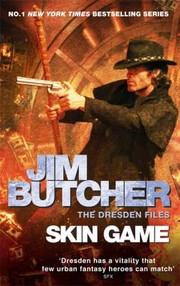
Book 15 is widely considered the series' best standalone entry — a heist novel inside an urban fantasy epic. It is the perfect reward for readers who have made it this far and a triumphant showcase of how far Butcher has grown as a writer since Storm Front.
Discussion
Keep reading
Paths that share books, cover the same subject, or open a related topic.