Start with The Atrocity Archives. It is book one and it is also the clearest possible test of whether the series is for you: a British civil servant in a secret agency discovers that higher mathematics is a form of summoning, and then has to fill in an expense claim about it. If the joke of Lovecraftian horror administered by a government IT department amuses you at page thirty, it will amuse you for a dozen books. If it does not, the series never becomes something else.
Read in publication order. There is no chronological alternative to argue about — the books run forward in time, the political situation escalates continuously, and each volume assumes the previous one happened. The only real complications are that the narrator changes partway through and that the series effectively restarts with a new cast near the end of the run.
The order
- The Atrocity Archives
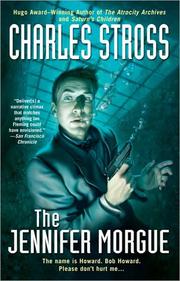
- The Jennifer Morgue
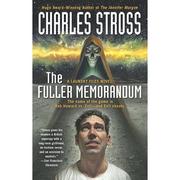
- The Fuller Memorandum
- Equoid, a novella, sits between books three and four
- The apocalypse codex
- The Rhesus Chart
- The Annihilation Score — narrated by Mo rather than Bob
- The Delirium Brief
- The labyrinth index
Then the New Management branch, which is a soft reboot with new protagonists in a transformed Britain:
9. Dead Lies Dreaming
10. Quantum of Nightmares
Later volumes — Escape from Yokai Land, Season of Skulls and A Conventional Boy — continue the sequence and are not currently in our catalogue.
The pastiche structure
The early books each parody a specific thriller writer, and knowing this in advance makes them much funnier. The Atrocity Archives runs on Len Deighton, The Jennifer Morgue on Ian Fleming, and The Fuller Memorandum on Anthony Price, with The apocalypse codex taking on Peter O'Donnell. You do not need to have read any of them; the joke works on the general shape of the genres. Stross drops the device gradually as the series darkens.
The honest warnings
The tone shifts substantially. The first three books are comedies with horror in them. By The Delirium Brief the horror has won: the jokes are still there but the situation is genuinely bleak, and the series turns into political apocalypse rather than office satire. Readers who came for the comedy sometimes feel the rug has been pulled.
The narrator changes are the other stall point. The Annihilation Score hands the book to Mo, Bob's wife, and does so at a moment when their marriage is failing. It is a divisive volume — some readers consider it the best-written in the series, others find that it swaps out the voice they came for at the worst moment. The Delirium Brief and The labyrinth index continue to distribute viewpoints among the supporting cast.
Then there is the technology problem, which Stross has acknowledged himself: the early books are full of specific mid-2000s computing detail, and it has aged into period furniture. It is charming rather than a barrier, but it dates the opening books noticeably.
Where to stop
The Delirium Brief is the strongest stopping point in the series. It resolves the central conflict of everything that came before, it does so decisively, and the aftermath changes the world so thoroughly that what follows is a different series wearing the same coat.
The New Management books, starting with Dead Lies Dreaming, are also a legitimate starting point if the civil-service comedy does not appeal — they follow new characters in the transformed Britain and require far less prior knowledge than their position in the sequence suggests. For a first-person occult detective series with a very different flavour, see The Dresden Files.
Follow the full ordered path here: The Laundry Files Reading Order and Guide.
Ready to learn something deeply?
Build a reading path — free