Most people meet the Khmer Rouge through a single number and a single image, and neither explains anything. Start with the analytical literature and the regime becomes an abstraction — a set of policies, a Maoist lineage, an argument about how much the American bombing mattered. Start with a survivor and everything that follows has a floor under it.
There is also a trap specific to this subject. The Khmer Rouge kept extraordinary bureaucratic records at the same time they abolished money, mail, and schooling, so the archive is both rich and monstrous. Historians disagree sharply about causation — how much came from Cambodian peasant radicalism, how much from Paris-educated theory, how much from the destabilization of the early 1970s. Read the debate after you know the events, not instead of them.
Begin with the people it happened to
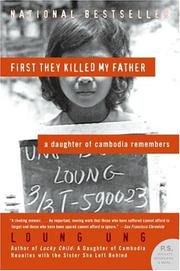
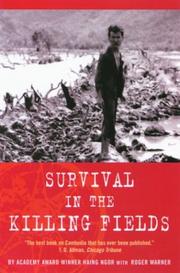
First They Killed My Father is Loung Ung's account of the evacuation of Phnom Penh and the years in the labor camps, told from the perspective she actually had at the time — a five-year-old's. It is the clearest possible answer to what "Year Zero" meant in practice. Follow it with Survival in the killing fields, Haing Ngor's memoir. Ngor was a physician who survived by hiding that fact, and later played Dith Pran on screen; his book is longer, angrier, and more clinically detailed about torture and starvation than Ung's, and the two complement rather than repeat each other.
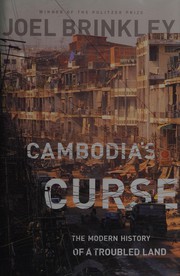
Then read Cambodia's curse by Joel Brinkley to see what the country became afterward. It is a reported book about the tribunal years, the aid economy, and Hun Sen's rule, and it prevents the neat ending where the Vietnamese arrive in 1979 and the story stops.
Understand who ran it
Brother number one is David Chandler's biography of Saloth Sar, better known as Pol Pot. Chandler is the dean of Cambodian historians and the book is careful about the limits of the evidence — much of Pol Pot's life is simply unrecoverable, and Chandler says so rather than filling the gaps.
The lost executioner takes the opposite approach, following the photojournalist Nic Dunlop's search for Comrade Duch, the commandant of the S-21 prison, whom he eventually found working under another name. It is the best single book on how ordinary people staff an extermination system.
Widen the frame
Sideshow is William Shawcross's argument that the secret American bombing and the 1970 coup created the conditions the Khmer Rouge exploited. It was contested from publication and remains so — Chandler and others accept it as a factor rather than the cause, and it is worth reading the disagreement rather than settling it. Close with Elizabeth Becker's When the war was over, the most complete narrative history of the revolution and its collapse, written by one of the very few Western journalists admitted to Democratic Kampuchea while it existed.
If the wider regional story is what you want next, the same period sits inside Cambodia's longer history, and the political science hub covers the comparative literature on revolutionary states.
Read these in order and the Khmer Rouge stops being an inexplicable eruption and becomes a sequence of decisions with names attached. Follow the full path to keep the books in that sequence.
Follow the full ordered path here: Best Books on the Khmer Rouge, in Reading Order.
Ready to learn something deeply?
Build a reading path — free