The Hungarian Revolution ran from 23 October to the second Soviet intervention on 4 November 1956, and its compression is the reason a day-by-day narrative works so well as an entry point. Almost nobody understands 1956 on the first pass, though, because the events are legible and the causes are not: eight years of Stalinist rule under Rákosi, a secret police apparatus, deportations and show trials, and a reform communist in Imre Nagy who was rehabilitated, sidelined, and then handed a revolution he had not asked for.
So read the narrative first, then go back for the country, then take up the two arguments that are still open — what Nagy could have done differently, and whether the West's rhetoric encouraged a rising it never intended to support.
The thirteen days
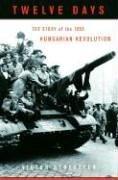
Twelve Days is the best narrative account: Victor Sebestyen writes the revolution hour by hour, from the students' march to the tanks returning, using Soviet Presidium records that only became available after 1991. Start here.
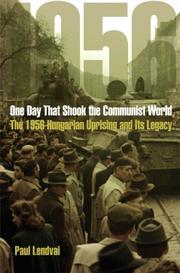
One day that shook the communist world is Paul Lendvai's shorter treatment, written by a journalist who was in Budapest as a young man and left afterwards. It is stronger than Sebestyen on the Hungarian communist party's own disintegration and on the long aftermath under Kádár.
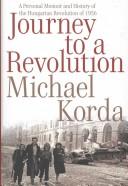
Journey to a Revolution is Michael Korda's memoir of driving to Budapest from Oxford as a student with a carload of medical supplies. It is slight as history and vivid as witness — a useful reminder that foreigners genuinely believed help was coming.
The country underneath
The Hungarians is Lendvai again, this time on a thousand years of national history, and it explains the thing outsiders find hardest: why Hungarian nationalism is shaped by defeat and dismemberment rather than by triumph. A concise history of Hungary by Miklós Molnár does the same job in a more conventional academic register; one of the two is enough.
Iron Curtain widens the frame. Anne Applebaum on how Soviet control was actually built across Eastern Europe between 1944 and 1956 — the youth organisations, the radio, the salami tactics — is the best explanation of what the Hungarians were rising against.
What it felt like
My happy days in hell is György Faludy's memoir, and the title is not ironic in the way you expect. His account of the Recsk labour camp is one of the great records of Stalinism in Eastern Europe, and it is the book that makes the ferocity of October comprehensible.
The Bridge at Andau is James A. Michener's contemporary reportage from the Austrian border as 200,000 refugees crossed. It is journalism with its thumb on the scale, written to move American readers in 1957, and it should be read as such.
On communism collects Imre Nagy's own writings, composed in disgrace before the revolution made him its prime minister. Reading his careful reform-communist prose against what he was executed for in 1958 is the sharpest available lesson in how little the distinction mattered to Moscow.
Under the frog is Tibor Fischer's novel about a Hungarian basketball team in the years before the rising. It is very funny, it is about ordinary life under an absurd regime, and it ends where the histories begin.
The arguments
The Hungarian Revolution of 1956 is the account by György Litván and the Hungarian scholars who worked on the newly opened archives after 1989 — the standard scholarly reference, and the book to consult rather than to read straight through.
Failed Illusions is Charles Gati's argument, and it is deliberately uncomfortable from several directions at once: that Nagy hesitated fatally, that the Hungarian reformers misread Moscow, and that American broadcasting encouraged expectations Washington had no intention of meeting.
Finally, Csaba Békés. The 1956 Hungarian Revolution and world politics is not a monograph — it is a thirty-one-page Cold War International History Project working paper, and knowing that before you order it saves disappointment. It is an article-length rejoinder to Gati on the international dimension, arguing from Soviet and Western diplomatic records that the superpowers had already settled the division of Europe and that no realistic Western action was available. Read the two together; the disagreement is the point.
Browse related reading paths on Discover.
Follow the full ordered path here: The Hungarian Revolution of 1956: Books to Read, in Order.