Best Books on the History of Singapore, in Order
This curriculum traces Singapore's story from its pre-colonial roots through British founding, the trauma of Japanese occupation, the towering figure of Lee Kuan Yew, and the remarkable construction of a modern city-state. Each stage builds conceptual and historical scaffolding for the next, moving from accessible narrative overviews to primary sources and analytical depth.
Foundations: The Big Picture
BeginnerGain a clear, chronological overview of Singapore's entire history — from fishing village to global city — so that later, deeper reading has a solid framework to attach to.
▸ Study plan for this stage
Pace: 4–5 weeks, ~25–30 pages/day (approximately 150–160 pages/week across both books)
- Singapore's transformation from a fishing village (pre-1819) to a major British colonial trading post under Stamford Raffles (1819 onwards)
- The role of geography, trade, and strategic location in Singapore's rise as a global entrepôt and port city
- Colonial administration, governance structures, and the development of Singapore as a Crown Colony
- The impact of World War II, Japanese occupation (1942–1945), and post-war decolonization on Singapore's trajectory
- Singapore's path to independence (1965) and the early challenges of nation-building under Lee Kuan Yew
- The relationship between Singapore's multicultural population (Chinese, Malay, Indian communities) and its political and social development
- Economic transformation: from colonial entrepôt to industrialization and modern financial hub
- The chronological arc from 1819 to 2005 as a coherent narrative of rapid modernization and state-building
- What were the key reasons Stamford Raffles chose Singapore as a British settlement in 1819, and how did its geographic location shape its early development?
- How did Singapore's role as a colonial trading port (entrepôt) differ from other British colonies, and what made it economically successful?
- What were the major political and social consequences of the Japanese occupation during World War II for Singapore?
- Describe Singapore's path to independence in 1965: What were the key political events and challenges that led to separation from Malaysia?
- How did Singapore's multicultural society (Chinese, Malay, Indian communities) influence its governance and nation-building policies after independence?
- What were the main economic strategies Singapore pursued from the 1960s onward to transform itself from a colonial port into a modern global city?
- Create a detailed timeline on paper or digitally spanning 1819–2005, marking major events (Raffles' arrival, WWII occupation, independence, key economic milestones). Annotate each with 1–2 sentences explaining its significance.
- Draw a map of Singapore showing its geographic position relative to the Strait of Malacca, Malaysia, and major sea routes. Annotate why this location was crucial to its colonial and modern success.
- Write a 500-word comparative essay: 'Why did Singapore succeed as a colonial entrepôt while other British colonies struggled?' Use specific examples from Turnbull's account.
- Create a visual chart or infographic showing Singapore's population composition (Chinese, Malay, Indian, others) across three time periods: 1819, 1945, and 2005. Research how these demographics shifted and why.
- Prepare a 10-minute oral summary of Singapore's independence crisis (1963–1965): Why did Singapore separate from Malaysia? What were the political tensions? Practice explaining this to someone unfamiliar with the topic.
- Identify and annotate 3–4 key passages from each book that best illustrate the 'big picture' narrative. Write a sentence explaining why each passage is pivotal to understanding Singapore's overall trajectory.
Next up: This stage establishes the chronological backbone and major turning points in Singapore's history, enabling the next stage to zoom in on specific themes (politics, economics, culture, society) with a clear sense of when and why they matter.

The definitive single-volume academic history of Singapore, written accessibly enough for beginners. Reading it first gives you the full chronological spine — founding, colonial era, war, independence, and development — that every other book in this curriculum assumes you know.

A richly illustrated, narrative-driven biography of the city itself, covering its multicultural port society and colonial layers. It complements Turnbull by bringing the streets, people, and cultures to life before you dive into political and wartime detail.
The Founding and the Port
BeginnerUnderstand why Singapore was founded, how Raffles and the British East India Company shaped its early identity, and how its role as a free port created the multicultural society that defines it today.
▸ Study plan for this stage
Pace: 2–3 weeks, ~40–50 pages/day
- Raffles' vision for Singapore as a free port and strategic trading hub in Southeast Asia
- The role of the British East India Company in establishing colonial authority and commercial dominance
- The founding of Singapore in 1819 as a deliberate act of imperial expansion and economic strategy
- How the free port policy attracted merchants and migrants from across Asia, creating early multicultural communities
- The relationship between Raffles' idealism and the practical realities of colonial exploitation and governance
- Singapore's transformation from a swampy, sparsely populated island to a thriving commercial center within years
- The legal and administrative frameworks Raffles established that shaped Singapore's identity as a cosmopolitan trading post
- Why did Raffles choose Singapore as the location for a British trading settlement, and what made it strategically superior to other potential sites in the region?
- How did the free port policy fundamentally change Singapore's economic trajectory and attract diverse populations?
- What was Raffles' personal vision for Singapore, and how did it differ from typical colonial governance models of his era?
- How did the British East India Company's commercial interests shape the founding and early development of Singapore?
- What role did Raffles' character, ambitions, and relationships play in overcoming obstacles to establishing the settlement?
- How did Singapore's multicultural society emerge directly from the free port policy and Raffles' governance choices?
- Create a timeline of key events from Raffles' arrival in Southeast Asia through Singapore's founding, noting how earlier experiences informed his vision for Singapore
- Compare Singapore's founding strategy with at least one other British colonial settlement of the period—what made Singapore's approach distinctive?
- Write a one-page character sketch of Raffles based on Glendinning's portrayal, identifying his strengths, contradictions, and motivations
- Map out the early communities that settled in Singapore (Chinese, Arab, Indian, European merchants) and research how the free port policy specifically attracted each group
- Analyze a primary source document (e.g., Raffles' letters or proclamations about Singapore) and explain how it reflects his vision for the settlement
- Create a visual diagram showing the relationship between the free port policy, merchant networks, and the emergence of Singapore's multicultural character
Next up: This stage establishes the foundational vision and structures that created Singapore, preparing you to explore how subsequent leaders, policies, and global events transformed this early trading post into a modern nation-state.

A highly readable, well-researched biography of Stamford Raffles that humanises the founder and explains the imperial logic behind Singapore's 1819 establishment. Start here to understand the man before examining the institution he created.
War, Fall, and Occupation
IntermediateGrasp the catastrophic fall of Singapore in 1942, the brutal Japanese Occupation, and how that trauma permanently shaped Singapore's postwar politics and national psyche.
▸ Study plan for this stage
Pace: 6–7 weeks, ~40–50 pages/day. Week 1–2: "The Fall of Singapore" (approx. 300 pages); Week 3–4: "Syonan" (approx. 250 pages); Week 5–7: Review, synthesis, and exercises.
- The military and strategic failures that led to Singapore's rapid collapse in February 1942, including overconfidence in British imperial defenses and Japanese tactical superiority
- The psychological shock of the 'impregnable fortress' falling to an Asian power, and how this shattered British prestige and colonial confidence
- The Japanese Occupation (1942–1945) as a period of systematic brutality, resource exploitation, and cultural suppression under the Syonan regime
- The experiences of different communities (Chinese, Malays, Indians, Europeans) under occupation and how trauma was distributed unequally across populations
- How the Fall and Occupation delegitimized British colonial rule and accelerated Singapore's path toward independence and self-determination
- The concept of national trauma and collective memory: how 1942 became a foundational wound in Singapore's national identity and postwar political consciousness
- The role of propaganda, censorship, and forced assimilation during the Occupation in reshaping social structures and identities
- What were the key military and strategic miscalculations that made Singapore's fall so rapid and catastrophic?
- How did the Japanese Occupation (as detailed in 'Syonan') differ from earlier colonial rule, and what new forms of control and violence did it introduce?
- Which communities suffered most acutely during the Occupation, and how did the trauma become embedded in different groups' postwar identities?
- How did the Fall of Singapore in 1942 fundamentally change the political consciousness of Singaporeans and undermine the legitimacy of British colonial governance?
- What psychological and cultural mechanisms did the Japanese employ to consolidate control during the Occupation, and how did resistance or adaptation occur?
- In what ways did the experience of 1942–1945 shape Singapore's postwar priorities around security, self-reliance, and national identity?
- Timeline exercise: Create a detailed chronology of key events from December 1941 to February 1942 (the fall) using 'The Fall of Singapore,' then extend it through 1945 using 'Syonan.' Annotate each entry with the human and strategic consequences.
- Comparative analysis: Write a 2–3 page essay comparing British colonial assumptions about Singapore's defensibility (from Owen) with the reality of Japanese occupation tactics (from Lee). How did ideology blind colonial planners?
- Primary source close reading: Select 2–3 passages from each book that capture the psychological shock of the fall or the brutality of occupation. Annotate them for tone, perspective, and what they reveal about collective trauma.
- Stakeholder perspective mapping: Create a matrix showing how the Fall and Occupation affected different communities (Chinese, Malays, Indians, Europeans, women, soldiers, civilians). Use evidence from both texts to populate it.
- Oral history reflection: Interview an older family member or community elder (if available) about family narratives of 1942–1945. How do personal memories align with or diverge from the historical accounts in Owen and Lee?
- Postwar legacy analysis: Identify 3–4 specific postwar Singapore policies or national narratives (e.g., around defense, multiracialism, or economic self-reliance) and trace them back to lessons or traumas from the Occupation period described in these texts.
Next up: This stage establishes the traumatic historical foundation—the catastrophic loss of colonial security and the brutal occupation—that will enable the next stage to explore how Singapore's postwar leaders (Lee Kuan Yew and others) deliberately constructed a new nation-state and political ideology in direct response to, and in defiance of, that trauma.
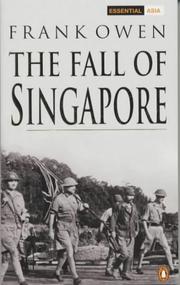
A clear, authoritative military account of the 1942 British defeat — one of the most shocking in imperial history. Reading it first gives you the military narrative before moving to the human experience of occupation.

Shifts from the battlefield to the lived experience of ordinary Singaporeans during the three-and-a-half-year occupation. Essential for understanding the fear, collaboration, resistance, and ethnic tensions that the war left behind.
Lee Kuan Yew and the Making of a Nation
IntermediateUnderstand Lee Kuan Yew's political genius, his role in independence and nation-building, and the ideological choices — pragmatism, authoritarianism, multiracialism — that shaped modern Singapore.
▸ Study plan for this stage
Pace: 8–10 weeks, ~40–50 pages/day. Allocate 3 weeks to "The Singapore Story," 3 weeks to "From Third World to First," and 2–3 weeks to "Lee Kuan Yew, the man and his ideas" to allow time for reflection and note-taking between volumes.
- Lee Kuan Yew's pragmatic philosophy: rejecting ideology in favor of what works, and how this shaped policy decisions from independence onward
- The role of authoritarian governance in rapid nation-building: trade-offs between civil liberties and economic/social development
- Multiracialism as a founding principle: how LKY navigated Singapore's ethnic and religious diversity to forge national identity
- The separation from Malaysia (1965) as a pivotal moment: how LKY transformed crisis into opportunity for nation-building
- Economic pragmatism and meritocracy: LKY's belief in talent-based advancement and foreign investment as engines of growth
- The concept of 'Asian values' and LKY's critique of Western liberal democracy as unsuitable for Singapore's context
- Lee's personal leadership style and decision-making: his willingness to make hard choices and his relationship with power
- Singapore's transformation from colonial trading post to First World nation: the strategic vision and policies that enabled it
- What were the key circumstances of Singapore's independence in 1965, and how did Lee Kuan Yew view the separation from Malaysia as both a crisis and an opportunity?
- How did Lee Kuan Yew's pragmatism differ from ideological approaches to governance, and what specific policies exemplify this pragmatic philosophy?
- What role did authoritarianism play in Singapore's rapid development, and what were the explicit trade-offs Lee accepted in pursuit of nation-building?
- How did Lee Kuan Yew approach the challenge of multiracialism, and what institutional or policy mechanisms did he use to maintain racial and religious harmony?
- What was Lee's vision of 'Asian values,' and how did he justify this vision as an alternative to Western liberal democratic models?
- According to the three books, what were Lee Kuan Yew's core beliefs about meritocracy, and how did these beliefs shape Singapore's education and civil service systems?
- Create a timeline of Singapore's major political and economic milestones from 1959–1990, annotating each with the ideological choice or pragmatic decision Lee made (e.g., separation from Malaysia, the creation of the CPF, the decision to attract foreign investment). Use all three books as sources.
- Write a comparative analysis (2,000–2,500 words) of Lee's own voice in 'The Singapore Story' and 'From Third World to First' versus Han Fook Kwang's external assessment in 'Lee Kuan Yew, the man and his ideas.' What does each perspective reveal about his leadership that the others do not?
- Select three major policy decisions from the books (e.g., language policy, housing, trade unions) and for each, identify: (a) the problem Lee faced, (b) the pragmatic solution he chose, (c) the ideological or democratic costs, and (d) the long-term outcome. Present findings in a structured table.
- Identify and analyze 3–4 quotes from the three books that best encapsulate Lee's philosophy on authoritarianism, multiracialism, or pragmatism. Explain why each quote is significant and what it reveals about his worldview.
- Conduct a 'decision-making case study': choose one major crisis or decision point (e.g., the 1965 separation, the 1969 racial riots, the decision to pursue industrialization) and trace how Lee's pragmatic approach, as described across the three books, shaped the outcome.
- Create a visual concept map or infographic showing the interconnections between Lee's core beliefs (pragmatism, meritocracy, multiracialism, authoritarianism) and the major policies or institutions they produced (e.g., the civil service, HDB housing, the PAP structure, education system).
Next up: This stage equips you with a deep understanding of Lee Kuan Yew's ideological foundations and decision-making logic, preparing you to examine how his successors navigated the tensions between his authoritarian pragmatism and Singapore's evolving society in the post-Lee era.
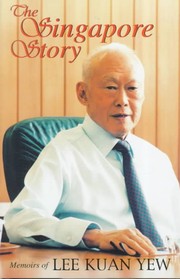
Lee's own memoir covering 1923–1965 — from his childhood through independence — is the essential primary source. Opinionated and self-serving in places, it is nonetheless indispensable for understanding how Singapore's founding leader saw himself and his mission.
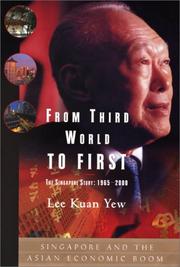
The sequel memoir, covering 1965–2000, details how Lee built the city-state's economy, housing, education, and foreign policy from scratch. Read after the first volume; together they form the definitive (if partisan) account of Singapore's transformation.

A critical but fair journalistic portrait drawing on extensive interviews, offering perspectives that balance Lee's own self-narrative. Placed last in this stage so readers can interrogate the memoirs with a more analytical lens.
Critical Perspectives and the City-State's Future
ExpertEngage with scholarly and critical analyses of Singapore's model — its trade-offs between development and civil liberties, its vulnerabilities, and debates about what kind of society it has become.
▸ Study plan for this stage
Pace: 4–5 weeks, ~40–50 pages/day (approximately 280–350 pages total)
- Singapore's development model as a trade-off between rapid economic growth and restricted civil liberties and political freedoms
- The role of Lee Kuan Yew's authoritarian governance in shaping the city-state's trajectory and its long-term institutional legacy
- Singapore's vulnerabilities as a small, resource-dependent nation-state reliant on global trade, foreign investment, and geopolitical stability
- The tension between meritocratic ideology and actual patterns of inequality, social stratification, and access to opportunity
- Singapore's approach to multiculturalism and religious harmony as a managed state project versus organic social cohesion
- Critiques of Singapore's model from human rights, democratic governance, and social welfare perspectives
- The sustainability and adaptability of Singapore's model in a changing global economy and geopolitical landscape
- What are the core trade-offs inherent in Singapore's development model, and how does Perry characterize them?
- How did Lee Kuan Yew's leadership style and political philosophy shape Singapore's institutions, and what are the long-term consequences of this concentration of power?
- What structural vulnerabilities does Singapore face as a small, open economy, and how has the state attempted to mitigate them?
- How does Perry examine the gap between Singapore's meritocratic ideology and the actual distribution of wealth, opportunity, and social mobility?
- What are the major scholarly critiques of Singapore's model regarding civil liberties, press freedom, and political participation?
- How has Singapore managed multiculturalism and religious diversity, and what tensions exist between state-managed harmony and genuine pluralism?
- Create a two-column comparison chart: list Singapore's economic/developmental achievements on one side and the civil liberties/democratic costs on the other; reflect on whether the trade-off is justified and for whom
- Write a 1,500-word critical essay analyzing one major vulnerability Perry identifies (e.g., economic dependence, demographic challenges, political succession) and propose alternative policy responses
- Conduct a close reading of Perry's treatment of Lee Kuan Yew's legacy: extract 3–4 key quotes that reveal Perry's critical perspective, then write a paragraph explaining how each quote reflects a broader scholarly debate
- Research and summarize 2–3 contemporary news articles (from 2020 onward) about Singapore's current challenges (e.g., inequality, press freedom, aging population); compare these to Perry's analysis to assess what has changed or remained constant
- Develop a hypothetical 'alternative Singapore' scenario: if different political or economic choices had been made at key junctures Perry identifies, how might the city-state have developed differently?
- Participate in or organize a structured debate: one side defends Singapore's model as necessary pragmatism for a small state; the other critiques it as overly restrictive—use Perry's evidence to support both positions
Next up: This stage equips you with a critical, nuanced understanding of Singapore's model and its contradictions, preparing you to evaluate how the city-state might adapt, reform, or face challenges in future stages that explore emerging issues, regional dynamics, or alternative visions for Singapore's development.

A concise, geopolitically focused analysis of how a tiny, resource-poor island became a global hub — examining trade, diplomacy, and strategic positioning. A fitting capstone that zooms out to ask why Singapore's model worked and whether it can endure.
Discussion
Keep reading
Paths that share books, cover the same subject, or open a related topic.