The real samurai: feudal Japan's history
This curriculum moves from vivid narrative introductions to rigorous historical analysis, ending with the transformation of samurai culture into modern Japan. Each stage builds the conceptual vocabulary — social structures, political institutions, and cultural mythology — needed to critically engage the next, so that by the final stage the reader can interrogate primary sources and scholarly debates with confidence.
Foundations: The World of Feudal Japan
BeginnerBuild a mental map of feudal Japan — its timeline, key players, social hierarchy, and the basic role of the samurai — through accessible, narrative-driven writing.
▸ Study plan for this stage
Pace: 10–13 weeks total. Week 1–3: "Japan" by Mikiso Hane (~25–30 pages/day, focusing on the medieval and Edo-period chapters). Weeks 4–7: "Taiko" by Eiji Yoshikawa (~40–50 pages/day — it's a long novel, so aim for daily momentum). Weeks 8–13: "Musashi" by Eiji Yoshikawa (~35–45 pages/day — savor it; jour
- The arc of Japanese feudal history: from the Heian court's decline through the Sengoku (Warring States) period to the Tokugawa unification, as outlined in Hane's 'Japan'
- The rigid four-tier social hierarchy (samurai → farmers → artisans → merchants) and how it shaped every character's choices in both Yoshikawa novels
- The three great unifiers — Nobunaga, Hideyoshi, and Ieyasu — brought to life through Hideyoshi's own rags-to-power story in 'Taiko'
- Bushido as a living code: loyalty, honor, self-discipline, and the acceptance of death, dramatized through Musashi's lifelong pursuit of 'the way of the sword' in 'Musashi'
- The distinction between the idealized samurai of legend and the pragmatic, often brutal reality of warfare and political survival shown in 'Taiko'
- The role of the dojo, the ronin (masterless samurai), and personal dueling culture as social institutions, central to Musashi's journey
- How geography and clan (han) loyalty structured political power, illustrated by the regional lords (daimyo) competing across both novels
- The tension between Zen Buddhist philosophy, Confucian ethics, and martial ambition as competing value systems shaping samurai identity
- After reading Hane's 'Japan,' can you sketch a rough timeline from the Kamakura shogunate through the Edo period, naming at least three turning-point events?
- How does Hideyoshi's rise in 'Taiko' illustrate both the permeability and the rigidity of the samurai social hierarchy — what does his story reveal about merit vs. birth?
- In 'Musashi,' what is the difference between Musashi at the novel's opening and at its close — and what experiences drive that transformation?
- How do 'Taiko' and 'Musashi' together show two different relationships a samurai could have with power: one who seeks to rule, and one who seeks to perfect himself?
- Using all three books, how would you explain the role of loyalty (to a lord, a cause, or a personal ideal) as the central moral currency of feudal Japanese society?
- What does Hane's historical framework add to your reading of the two Yoshikawa novels that you would have missed reading the fiction alone?
- Timeline wall: After finishing Hane's 'Japan,' draw a single-page visual timeline of feudal Japan. Pin the key events from 'Taiko' and 'Musashi' onto it as you read each novel — this turns abstract history into a living map.
- Character relationship web: While reading 'Taiko,' map Hideyoshi's relationships (Nobunaga, Nene, rival generals) as a web diagram. Note beside each connection whether it is driven by loyalty, ambition, affection, or fear.
- Bushido journal: Keep a running list of moments in 'Musashi' where a character faces a choice between personal desire and the samurai code. After finishing, write a one-page reflection: is Bushido liberating or imprisoning for Musashi?
- Compare & contrast essay (500 words): Using 'Taiko' and 'Musashi' as your sources, argue which protagonist — Hideyoshi or Musashi — better embodies the samurai ideal, and why. Use at least three specific scenes as evidence.
- Social hierarchy audit: Choose five secondary characters spread across both Yoshikawa novels (a farmer, a merchant, a low-ranking samurai, a monk, a woman). Write two to three sentences for each on how their social position limits or enables their agency.
- Fact-check a scene: Pick one dramatic battle or political event from 'Taiko' (e.g., the siege of Inabayama Castle or the death of Nobunaga), then cross-reference it with the relevant section of Hane's 'Japan.' Note what Yoshikawa dramatizes, compresses, or invents — and what that tells you about historical fiction as a genre.
Next up: By the end of this stage you will have a confident mental map of feudal Japan's people, power structures, and values — the essential scaffolding needed to engage with more specialized, analytically demanding works on samurai warfare, politics, and culture in the next stage.
A concise, chronological overview of all Japanese history that gives the beginner a reliable skeleton — dynasties, shogunates, and turning points — before diving into any single era.
This sweeping historical novel about Toyotomi Hideyoshi immerses the reader in the sights, loyalties, and daily logic of the Sengoku period, making abstract feudal structures feel lived-in and real.
Read after Taiko, this iconic novel follows the legendary swordsman Miyamoto Musashi and introduces the personal, philosophical, and martial dimensions of samurai life — a perfect bridge to more critical study.
The Real Samurai: History Behind the Myth
BeginnerReplace romanticized images with historically grounded understanding of who samurai actually were — their origins, economics, violence, and social function across different shogunates.
▸ Study plan for this stage
Pace: 6–8 weeks total: Weeks 1–3 on Kure's "Samurai" (~20–25 pages/day, treating each illustrated chapter as a self-contained unit); Weeks 4–7 on Turnbull's "The Samurai" (~25–30 pages/day, reading thematically alongside a timeline you build yourself); Week 8 reserved for review, comparison notes, and com
- Origins of the samurai class: how mounted provincial warriors of the Heian period evolved into a hereditary military elite — not a timeless warrior caste but a historically contingent social group
- The three shogunates (Kamakura, Muromachi, Edo) as distinct political contexts that reshaped samurai identity, loyalty structures, and economic roles in each era
- Economics of the samurai: the shift from land-holding warriors to stipend-dependent retainers under the Tokugawa, and how financial dependency changed their social function
- Violence as profession vs. philosophy: distinguishing the brutal, pragmatic battlefield reality documented in both Kure and Turnbull from the later, largely Edo-period romanticization of Bushido
- The role of clan loyalty (han) and the lord-retainer bond — how it worked in practice, when it broke down, and what happened to samurai who lost their lords (rōnin)
- Samurai as administrators and bureaucrats: especially under the Tokugawa peace, when most samurai never fought and instead managed domain finances, law, and record-keeping
- Armor, weapons, and tactics as historical evidence: using Kure's visual documentation to read material culture as a source for social and military change across centuries
- Myth vs. record: identifying where popular images of the samurai (Hollywood, manga, Bushido texts) diverge from the primary-source-grounded accounts in Turnbull's historical narrative
- According to Kure's visual and material evidence, how did samurai armor and weaponry change between the Heian and Edo periods, and what do those changes reveal about shifts in warfare and social status?
- Turnbull traces samurai across multiple shogunates — in what specific ways did the samurai's relationship to land, income, and political power differ between the Kamakura and Tokugawa periods?
- Both books touch on the rōnin phenomenon: what economic and political conditions produced masterless samurai, and why were they considered a social problem rather than romantic heroes in their own time?
- How did the prolonged peace of the Edo period functionally transform the samurai class, and what tensions did that transformation create between their warrior identity and their actual daily lives?
- Where do the accounts in Kure and Turnbull most clearly contradict common Western myths about samurai (e.g., universal adherence to a code of honor, the lone noble swordsman)? Cite specific examples from each book.
- What was the social and legal boundary between samurai and other classes in feudal Japan, and how rigid or permeable was that boundary in practice across different periods?
- Build a living timeline: as you read each book, add dated entries for major events, shogunates, and samurai-relevant laws (e.g., sword hunts, alternate attendance). Annotate each entry with which book supplied the information and whether it confirms or complicates the other.
- Myth-busting log: keep a two-column journal — 'Popular Image' vs. 'What Kure/Turnbull Actually Show.' After finishing both books, write a 300-word summary of the three most surprising myth-busters you encountered.
- Material culture analysis: choose three pieces of armor or weaponry illustrated in Kure's 'Samurai' and write a short paragraph for each explaining what that object tells you about the period's warfare, economy, or social hierarchy — go beyond description to interpretation.
- Comparative shogunate chart: create a simple table with rows for Kamakura, Muromachi, and Edo shogunates and columns for 'samurai economic base,' 'primary military role,' 'relationship to emperor/court,' and 'key internal tensions.' Fill it in using Turnbull as your primary source.
- Perspective exercise: using details from Turnbull's narrative, write a one-page first-person account of a single day in the life of an Edo-period samurai bureaucrat — someone who carries swords but has not fought and likely never will. Focus on the tension between identity and reality.
- Source-type reflection: both books are written by non-Japanese authors for Western audiences. Write a half-page note on what biases or gaps that might introduce, and what kinds of primary sources (diaries, legal codes, domain records) you would want to consult to go deeper.
Next up: By replacing myth with a historically grounded, period-specific understanding of who samurai were and how their world was organized, the reader is now equipped to engage with primary sources, literary accounts, and specialized scholarship — moving from the 'what' of samurai history to the 'how they thought and wrote about themselves.'
A richly illustrated, accessible survey of samurai arms, armor, tactics, and social evolution from the Heian period to the Edo era — ideal for building concrete visual and factual grounding.
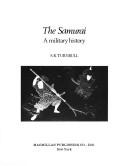
Turnbull is the foremost English-language military historian of Japan; this book systematically covers samurai warfare and organization, correcting Hollywood myths with documented campaigns and clan politics.
Power & Institutions: The Shogunates
IntermediateUnderstand how political power was actually organized and contested — the Kamakura, Ashikaga, and Tokugawa shogunates as governing systems, not just backdrops for sword fights.
▸ Study plan for this stage
Pace: 8–10 weeks total. Weeks 1–5: Mason & Caiger's "A History of Japan" — focus on the chapters covering the Kamakura, Ashikaga (Muromachi), and Tokugawa periods (~25–35 pages/day, 5 days/week). Read chronologically but pause at each shogunate transition to consolidate notes before moving on. Weeks 6–10:
- The structural logic of the shogunate (bakufu): how a military government legitimized itself alongside — and in tension with — the imperial court in Kyoto
- Kamakura shogunate (1185–1333): the jito/shugo system, the vassalage network (gokenin), and why the system collapsed under external pressure (Mongol invasions) and internal fragmentation
- Ashikaga (Muromachi) shogunate (1336–1573): the decentralization of power, the rise of the daimyo, and how the Ashikaga failure to control regional lords produced the Sengoku 'Warring States' era
- Tokugawa shogunate (1603–1868): the sankin-kōtai (alternate attendance) system, the han domain structure, and the deliberate engineering of political stability through institutional design
- Edo as a governing project: how Mason & Caiger's political narrative is given spatial and social texture in McClain's Edo and Paris — the city as an instrument of Tokugawa control
- The comparative urban lens in McClain: what contrasting Edo with Paris reveals about the Tokugawa state's relationship to commerce, population management, and social hierarchy
- Legitimacy vs. raw power: how each shogunate used different tools (land grants, hostage systems, religious patronage, urban planning) to manufacture consent and suppress dissent
- Continuity and rupture across the three shogunates: what institutional features persisted and what was genuinely reinvented each time power changed hands
- According to Mason & Caiger, what were the key structural differences between the Kamakura and Ashikaga shogunates — and why did each ultimately fail to hold power?
- How did the Tokugawa sankin-kōtai system function as a political tool, and what were its unintended economic and cultural consequences as described in Mason & Caiger?
- McClain argues that Edo's urban design and governance reflected Tokugawa political priorities. What specific mechanisms — spatial, administrative, or social — does he identify, and how do they compare to Parisian equivalents?
- How does reading Mason & Caiger alongside McClain change your understanding of the Tokugawa period — what does the political history miss that the urban history supplies, and vice versa?
- What role did the imperial court play under each of the three shogunates, and how did the shogunates manage the tension between military authority and imperial legitimacy?
- By the end of both books, can you articulate a definition of 'feudalism' as it actually operated in Japan — and identify where that concept fits imperfectly?
- **Shogunate comparison matrix:** Create a three-column table (Kamakura / Ashikaga / Tokugawa) with rows for: source of legitimacy, key administrative institutions, method of controlling regional lords, primary cause of instability, and ultimate fate. Fill it in using Mason & Caiger, then revisit and annotate it after finishing McClain.
- **Annotated timeline:** Build a single master timeline marking not just events but *institutional shifts* — when new offices were created, when land-distribution systems changed, when the balance of power between shogun and daimyo tipped. Use Mason & Caiger as your primary source and flag any events that McClain later recontextualizes.
- **McClain's comparative argument in your own words:** After finishing *Edo and Paris*, write a 400–600 word summary of McClain's central thesis. Then write one paragraph of pushback: what does the Paris comparison illuminate, and what might it distort about Edo's reality?
- **Map the power geography:** Sketch or annotate a blank map of Japan for each shogunate period, marking the location of the capital, major daimyo domains, and key contested regions. Note how the *geography* of power shifts across the three eras — this makes Mason & Caiger's narrative far more concrete.
- **'Who actually governs?' close-reading exercise:** Choose one chapter from Mason & Caiger on each shogunate and identify every actor mentioned who holds real decision-making power. Tally them by category (shogun, daimyo, court noble, religious institution, merchant, etc.). Compare the tallies across the three chapters — what does the pattern tell you about how power was distributed differently in
- **Cross-book dialogue journal:** Keep a running document as you read McClain where you note every moment his evidence *confirms*, *complicates*, or *contradicts* something you learned in Mason & Caiger. Aim for at least 10 entries. This trains the core skill of reading multiple sources in conversation.
Next up: By understanding the shogunates as governing *systems* — with specific institutions, social hierarchies, and built-in tensions — the reader is now equipped to zoom in on the human actors who lived inside those systems: the samurai class whose identity, culture, and ethics were shaped by (and sometimes in resistance to) the political structures just studied.
A thorough, mid-level academic history that gives serious attention to political institutions, economic change, and foreign relations, providing the structural context the earlier narrative books lacked.

A comparative urban history that illuminates how Tokugawa governance shaped daily life, class, commerce, and culture in Edo — showing the shogunate as a living administrative system rather than a static backdrop.
Bushido Deconstructed: Culture, Code & Invention
IntermediateCritically examine bushido — understanding it as a largely modern, constructed ideology rather than an ancient warrior code, and tracing how samurai identity was mythologized over time.
▸ Study plan for this stage
Pace: 6–8 weeks total: Weeks 1–2 read Nitobe's "Bushido, the Soul of Japan" (~20–25 pages/day, including re-reading key chapters); Weeks 3–6 read Benesch's "Inventing the Way of the Samurai" (~25–30 pages/day); Weeks 7–8 reserved for comparative reflection, note synthesis, and completing exercises.
- Bushido as modern construction: Nitobe wrote 'Bushido, the Soul of Japan' (1900) in English, for a Western audience, framing samurai ethics through the lens of Victorian chivalry, Christianity, and Social Darwinism — not as a faithful historical record.
- The eight 'virtues' of Nitobe's bushido (rectitude, courage, benevolence, politeness, sincerity, honor, loyalty, self-control) as a selective, romanticized synthesis rather than a codified feudal doctrine.
- Orientalism and self-Orientalism: Nitobe's text participates in a cross-cultural negotiation where Japanese elites adopted and adapted Western frameworks to assert civilizational equivalence and national prestige during the Meiji era.
- Benesch's core thesis — that 'bushido' as a unified, ancient warrior code is largely a late 19th–early 20th century invention, shaped by nationalism, militarism, and the anxieties of rapid modernization in Meiji and Taishō Japan.
- The role of institutional actors (the military, the state, schools, and the press) in propagating bushido ideology as a tool of social control and imperial mobilization, as traced by Benesch.
- Genealogy vs. mythology: Benesch's historical method of tracing the actual textual and political origins of bushido discourse contrasts sharply with Nitobe's essentialist, timeless framing — reading both together teaches source criticism.
- Samurai identity after the samurai: how the abolition of the samurai class (1871–1876) paradoxically intensified the cultural idealization of the warrior, as former elites and the state needed new narratives of national identity.
- The long afterlife of constructed bushido: how Nitobe's text and the ideology Benesch traces fed into 20th-century militarism, post-war nostalgia, and contemporary pop-culture samurai mythology.
- After reading Nitobe, what specific biographical, historical, and intellectual circumstances shaped his portrayal of bushido — and why does Benesch treat the book itself as a primary historical source rather than an authority on samurai culture?
- How does Benesch define the difference between pre-Meiji warrior ethics (actual historical conduct codes, domain regulations, texts like Hagakure) and the 'bushido' ideology that crystallized in the late 19th century?
- In what ways did Nitobe's 'Bushido, the Soul of Japan' serve political and diplomatic functions for Meiji Japan, and how does its intended Western readership shape its content and framing?
- What social and political pressures — industrialization, class dissolution, Western imperialism, and rising nationalism — does Benesch identify as the driving forces behind the invention of bushido as a national ideology?
- How did state institutions (military academies, public schools, government publications) operationalize bushido between the 1890s and 1940s, according to Benesch, and how does this differ from the personal, philosophical tone Nitobe adopts?
- Having read both books together, how would you explain the paradox that bushido became *more* culturally powerful precisely as the samurai class ceased to exist?
- Dual annotation exercise: As you read Nitobe, flag every claim he makes about bushido's ancient or timeless origins. Then, when reading Benesch, annotate those same claims with Benesch's historical counter-evidence. At the end, write a one-page 'fact-check' of Nitobe using Benesch as your source.
- Primary source comparison: Find and read a short excerpt from an actual pre-Meiji warrior text (e.g., the Hagakure or the Buke Shohatto — both are freely available online). Write 300–400 words comparing its tone, concerns, and content to Nitobe's 'virtues.' Does it resemble what Nitobe describes?
- Rhetorical analysis essay (500–700 words): Choose one chapter from Nitobe's 'Bushido' and analyze it as a piece of rhetoric rather than history. Who is the intended audience? What analogies does Nitobe use (e.g., comparisons to European chivalry or Christianity)? What does he leave out? What does this reveal about his goals?
- Timeline construction: Build a visual timeline (on paper or digitally) mapping the key events Benesch identifies in the invention of bushido — political milestones, key publications, institutional adoptions — alongside the dates of Nitobe's life and writing. This makes the constructed, contingent nature of the ideology visible at a glance.
- Perspective-swap reflection (400–500 words): Write a short response to Nitobe's 'Bushido' from the imagined perspective of a demobilized samurai in 1880s Tokyo who has lost his stipend and social status. How might such a person have received or rejected Nitobe's romanticized portrait of their class?
- Synthesis discussion or journal entry: After finishing both books, write or discuss: 'Is it possible to appreciate Nitobe's 'Bushido' as a literary and cultural artifact while fully accepting Benesch's critique of it as historical invention?' Argue both sides before reaching your own conclusion.
Next up: By dismantling the myth of bushido as an ancient, monolithic code, this stage equips the reader with the critical framework needed to engage the actual lived history of samurai — their warfare, governance, economics, and social roles — without the distorting lens of later romanticization.
Read this 1900 primary source first — not as truth, but as the most influential text in constructing the bushido myth; understanding its arguments is essential before reading the scholarly critique.
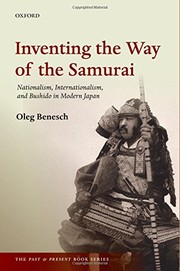
A rigorous scholarly deconstruction of bushido, demonstrating that the 'ancient code' was largely invented in the Meiji era for nationalist purposes — the essential corrective to Nitobe and to popular culture.
The End of the Samurai & Japan's Modern Transformation
ExpertUnderstand how feudal Japan collapsed, how the samurai class was abolished, and how samurai mythology was repurposed to drive Japan's modernization, militarism, and national identity into the 20th century.
▸ Study plan for this stage
Pace: 2–3 weeks, ~25–35 pages/day — Ravina's text is dense with political and biographical detail, so allow extra time to pause and cross-reference the three case-study figures (Shimazu Nariakira, Ii Naosuke, and Saigō Takamori) before moving forward.
- The structural collapse of the Tokugawa bakufu — how fiscal weakness, foreign pressure (Perry's 'Black Ships'), and han rivalries combined to make the old order untenable
- Sonnō jōi ('Revere the Emperor, Expel the Barbarians') as a transitional ideology — how anti-foreign sentiment paradoxically accelerated Japan's engagement with the West
- Domain (han) politics as the engine of the Meiji Restoration — Ravina's focus on Satsuma illustrates how regional lords, not just abstract forces, drove national change
- Saigō Takamori as a living contradiction — simultaneously the Restoration's greatest military hero and its most famous rebel, embodying the samurai's impossible position in a modernizing state
- The Satsuma Rebellion (1877) as the samurai class's last armed stand — its military, political, and symbolic dimensions
- State-sponsored samurai mythology after 1877 — how the Meiji government repackaged bushidō and the samurai image to legitimize conscript nationalism and imperial loyalty
- The invention of tradition — how 'timeless' samurai values were actively constructed in the late 19th century to serve modern political ends
- The tension between modernization and identity — Japan's selective adoption of Western institutions while insisting on a uniquely Japanese martial and moral spirit
- According to Ravina, in what specific ways did Saigō Takamori's career both enable and then threaten the Meiji state — and why did the government ultimately choose to memorialize rather than erase him?
- How does Ravina use domain-level (han) politics, particularly in Satsuma, to challenge the idea that the Meiji Restoration was a smooth, top-down nationalist revolution?
- What role did the ideology of sonnō jōi play in the transition from Tokugawa to Meiji rule, and how did its meaning shift as the political situation changed between the 1850s and 1870s?
- In what ways does the Satsuma Rebellion represent more than a military defeat — what did it settle, symbolically and politically, about the place of the samurai in modern Japan?
- How did the Meiji state transform the samurai from a hereditary ruling class into a cultural and moral symbol, and what were the consequences of that transformation for Japanese militarism in the 20th century?
- What does Ravina's biographical approach (focusing on individual daimyō and leaders) reveal about historical causation that a purely structural or economic account of the Restoration would miss?
- **Biographical timeline:** Build a detailed parallel timeline for Saigō Takamori and the Meiji state — marking his roles as ally, reformer, dissident, and rebel alongside key government decrees (e.g., the abolition of domains in 1871, the sword-prohibition edict of 1876). Identify the precise turning points where his relationship with the state shifted.
- **Close-reading annotation:** Select one chapter focused on Satsuma domain politics and annotate every instance where local (han) interests diverge from or shape national policy. Write a one-page synthesis arguing whether the Restoration was 'made from below' or 'imposed from above.'
- **Concept mapping — the samurai myth:** After finishing the book, draw a concept map tracing how specific samurai values described by Ravina (loyalty, self-sacrifice, martial honor) were re-routed from feudal service to imperial nationalism. Label each node with a concrete historical event or policy from the text.
- **Comparative essay (500–700 words):** Using only evidence from Ravina, argue for or against this claim: 'The Meiji government's memorialization of Saigō Takamori was more politically useful than his actual rebellion.' Force yourself to steelman both sides before concluding.
- **'Invention of tradition' audit:** List every practice, symbol, or value in the book that Ravina (explicitly or implicitly) identifies as a modern construction rather than an ancient custom. Reflect in writing on how this changes your understanding of 'traditional' Japan as presented in earlier stages of this curriculum.
- **Discussion or journal prompt:** Ravina's title, *The Last Samurai*, is deliberately provocative. After finishing, write a response to the question: Who — or what — is actually 'the last samurai'? Is it Saigō the man, the samurai class, a set of values, or a political myth? Use at least three specific passages from the book to support your answer.
Next up: By revealing how samurai identity was deliberately mythologized and weaponized by the modern Japanese state, this stage sets up a natural inquiry into how that mythology played out in 20th-century Japanese militarism, imperialism, and wartime culture — the logical next frontier for an advanced reader of this curriculum.
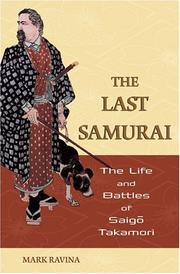
A scholarly biography of the real figure behind the 'last samurai' legend, showing the painful, contradictory transition from feudal warrior class to modern nation-state through one man's life.
Discussion
Keep reading
Paths that share books, cover the same subject, or open a related topic.