Gormenghast Reading Order and Reading Guide
This curriculum guides an expert reader through Mervyn Peake's Gormenghast sequence in its intended order, then contextualizes the anomalous third volume, and finally situates the trilogy within the broader Gothic and literary-fantasy tradition Peake was working in and against. Because the learner starts at expert level, the stages move quickly from primary texts into critical and contextual depth.
The Trilogy in Sequence
ExpertRead all three Gormenghast novels in publication order, experiencing the deliberate tonal and structural shift across the arc — from claustrophobic ritual to picaresque dissolution.
▸ Study plan for this stage
Pace: 10–12 weeks total: ~4 weeks for Titus Groan (~30 pages/day), ~4 weeks for Gormenghast (~30 pages/day), and ~2–3 weeks for Titus Alone (~20 pages/day, allowing extra time for reflection on its jarring tonal departure). Set aside one full rest/review day between each novel to journal and consolidate b
- Gormenghast as a living system: how Peake constructs the castle not merely as a setting but as a self-perpetuating organism of ritual, architecture, and social hierarchy in Titus Groan
- The function of ritual and ceremony: how the rites surrounding the Earldom (the Burning of the Books, the Hall of the Bright Carvings, etc.) encode power, identity, and stasis in Titus Groan and Gormenghast
- Character as archetype vs. individual: how figures like Steerpike, Fuchsia, the Countess, and Dr. Prunesquallor operate simultaneously as grotesque archetypes and psychologically credible individuals across the first two novels
- Steerpike's arc as an anti-Bildungsroman: tracing his rise from kitchen scullion to near-omnipotent schemer across Titus Groan and Gormenghast as a dark inversion of the coming-of-age story
- Titus's inheritance and rebellion: the tension between Titus as the 77th Earl — bound by birthright to Gormenghast — and his growing existential rejection of the castle's meaning, culminating in his departure at the end of Gormenghast
- The structural and tonal rupture of Titus Alone: how Peake deliberately dismantles the gothic-baroque world-building of the first two novels in favour of a fragmented, almost surrealist picaresque, and what this signals about Titus's (and Peake's own) psychological state
- Prose style as world-building: Peake's densely adjectival, painterly language in Titus Groan and Gormenghast versus the sparser, more disoriented syntax of Titus Alone, and how style itself carries thematic weight
- The trilogy as an arc of loss: reading all three novels together as a meditation on belonging, exile, and the impossibility of return — from the claustrophobic fullness of Gormenghast to the hollow freedom of the world outside
- How does Peake use the physical architecture of Gormenghast Castle in Titus Groan to establish the social and psychological world of the novel — and which specific spaces (the kitchens, the Tower of Flints, the Hall of the Bright Carvings) carry the most symbolic weight?
- Trace Steerpike's transformation across Titus Groan and Gormenghast: at what point does the reader's ambivalent sympathy for him collapse entirely, and how does Peake engineer that shift?
- How does Gormenghast (the novel) function as both a continuation and an escalation of Titus Groan — what new structural elements (the school sequences, the flood, the final chase) does Peake introduce, and how do they change the register of the story?
- In what ways does Titus Alone feel like a different kind of novel from its predecessors? Identify at least three specific formal or stylistic features that mark the rupture, and consider how much of this is intentional design versus the documented effect of Peake's illness.
- What does Titus ultimately lose by leaving Gormenghast, and what does the trilogy as a whole suggest about the relationship between identity and place?
- How does Peake's background as a visual artist manifest in the prose of all three novels — and does that visual quality change or diminish across the arc from Titus Groan to Titus Alone?
- Annotated character map: As you read Titus Groan, build a living diagram of Gormenghast's social hierarchy — update it at the end of each major section, noting who holds power, who is marginalised, and how Steerpike moves through the structure. Revisit and revise it as you progress through Gormenghast.
- Prose style comparison: Select one descriptive passage of roughly one page from each of the three novels (ideally describing a similar subject — a room, a character's face, a moment of violence). Write a 400–600 word close-reading analysis comparing Peake's sentence structure, diction, and imagery across the three extracts, arguing for what the stylistic differences reveal about each novel's world
- Steerpike villain essay: After finishing Gormenghast, write a 600–800 word essay arguing for the precise chapter or scene in which Steerpike crosses from 'compelling anti-hero' to 'irredeemable villain.' Use textual evidence from both novels and consider whether Peake ever fully closes the door on reader sympathy.
- Tonal rupture journal: Keep a dedicated reading journal for Titus Alone. After every 20–30 pages, write a short entry (150–200 words) noting moments where the novel feels continuous with the first two books and moments where it feels alien. At the end, synthesise your entries into a single paragraph that characterises the novel's relationship to the trilogy.
- Rewrite exercise: Choose any scene from Titus Alone that feels fragmentary or disorienting and rewrite it (300–400 words) in the dense, baroque style of Titus Groan. Then write a brief reflection on what is gained and what is lost in each version — what does this exercise reveal about the intentionality of Peake's late style?
- Culminating trilogy essay: After finishing all three novels, write a 1,000–1,200 word essay responding to the following prompt: 'The Gormenghast trilogy is ultimately a novel about the impossibility of freedom.' Draw on specific evidence from all three books, paying particular attention to how the meaning of 'Gormenghast' shifts for Titus between Titus Groan, Gormenghast, and Titus Alone.
Next up: Having experienced the full arc of the trilogy — from the suffocating richness of Gormenghast Castle to the fractured outside world of Titus Alone — the reader is now equipped to step back and engage with Peake's life, artistic context, and critical reception, understanding how biography, illness, and the post-war literary moment shaped the very ruptures and obsessions they have just lived through
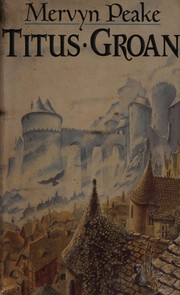
The first novel establishes the castle as a living organism of ritual and decay; read first to absorb Peake's dense, painterly prose style and the full cast before the world expands.
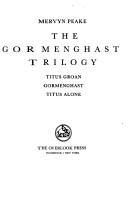
The acknowledged centrepiece of the trilogy — broader in scope, more dramatic in plot — and best appreciated immediately after Titus Groan so the stakes of Steerpike's rise feel earned.
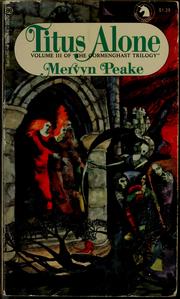
The jarring third volume: Titus leaves the castle entirely and enters a surreal, near-future world. Read last and with the knowledge that Peake was suffering from what is now understood to be a form of Parkinson's disease during composition — the fragmentation is partly intentional, partly biographical, and understanding that duality is essential to appreciating the book on its own terms.
Understanding Titus Alone — Context and Controversy
ExpertUnderstand the editorial history of Titus Alone, Peake's illness, and why the third book reads so differently — separating authorial intent from circumstance.
▸ Study plan for this stage
Pace: 4–5 weeks total: Week 1–2 — read Yorke's "Mervyn Peake" (~25–30 pages/day, focusing on the biographical chapters covering Peake's neurological decline and the composition/publication of Titus Alone); Week 3–4 — read Gilmore's "A World Away" (~15–20 pages/day, a more intimate memoir requiring slower,
- Peake's progressive neurological illness (likely post-encephalitic Parkinsonism) and its documented impact on his handwriting, concentration, and creative output during the writing of Titus Alone
- The editorial interventions made to the first (1959) edition of Titus Alone — cuts, alterations, and omissions — and how the 1970 restored edition by Langdon Jones attempted to recover Peake's original intentions
- The distinction between authorial intent and editorial circumstance: how to read a text knowing it was shaped by forces outside the author's control
- Malcolm Yorke's role as critical biographer — how he triangulates medical records, manuscripts, and literary analysis to construct an account of Peake's late creative life
- Maeve Gilmore's perspective as Peake's wife and primary caregiver — the memoir as an intimate counter-archive to the clinical or critical record
- The tonal and stylistic rupture between Titus Alone and the first two Gormenghast novels, and the competing explanations for it (deliberate artistic evolution vs. illness-induced fragmentation)
- The reliability and limitations of memoir as a source: Gilmore's emotional proximity as both an asset and a potential blind spot
- The broader question of how literary biography and personal memoir together construct — and sometimes contradict — an author's legacy
- According to Yorke's biography, at what stage of composition was Peake's illness most acutely affecting his work on Titus Alone, and what specific evidence does Yorke cite to support this?
- How does Gilmore's account in 'A World Away' portray the domestic and emotional reality of Peake's decline — and in what ways does her portrait complement or complicate Yorke's more clinical-biographical framing?
- What were the principal editorial changes made to the first edition of Titus Alone, and what does Yorke argue was lost or distorted by those interventions?
- Can the stylistic strangeness of Titus Alone — its science-fiction elements, fragmented prose, and tonal inconsistency — be convincingly attributed to illness alone, or do both books suggest a more complex picture of deliberate artistic choice?
- How does reading Gilmore's memoir alongside Yorke's biography change your understanding of the evidentiary challenges facing any scholar of Peake's late work?
- What does the editorial history of Titus Alone reveal about the power dynamics between a seriously ill author, his family, and his publishers?
- Comparative annotation: Select three passages from Titus Alone that feel stylistically anomalous. For each, write a short paragraph using evidence from Yorke and Gilmore to argue whether the passage is better explained by illness, editorial interference, or deliberate artistic intent — then write a counter-argument.
- Source mapping: Create a two-column table listing every specific claim Yorke makes about Peake's condition or the editorial history of Titus Alone, and note whether Gilmore's memoir corroborates, contradicts, or simply does not address each claim. Reflect on what the silences in Gilmore's account might mean.
- Close reading of voice: Choose one extended passage from Gilmore's 'A World Away' and analyze it as a literary text in its own right — examining her prose style, what she chooses to describe in detail vs. elide, and what this reveals about her own relationship to Peake's illness and legacy.
- Editorial reconstruction exercise: Using Yorke's account of the restored 1970 edition as a guide, identify at least two specific narrative or stylistic elements in Titus Alone that Langdon Jones restored. Write a 300-word argument for why those restorations matter to a reader's interpretation of the novel.
- Reliability audit: Write a one-page critical assessment of each book as a historical source — considering Yorke's methodology as a biographer and Gilmore's position as a bereaved spouse — and conclude with a paragraph on how you would weight them against each other when making an interpretive claim.
- Synthesis essay (600–800 words): Drawing only on Yorke and Gilmore, answer the question: 'Is Titus Alone the book Mervyn Peake intended to write?' Cite specific passages or claims from both books and acknowledge where the evidence is genuinely ambiguous.
Next up: By establishing a rigorous, evidence-based understanding of how illness and editorial history shaped Titus Alone, this stage equips the reader to engage the novel's text itself with calibrated critical judgment — ready to read it neither as pure artistic vision nor as mere symptom, but as a complex, layered document.
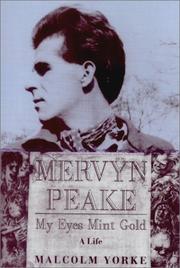
The standard literary biography; read here to understand the timeline of Peake's neurological decline during the writing of Titus Alone, which reframes every 'flaw' in the novel as a site of critical inquiry rather than mere failure.

Peake's widow's memoir of their life together; her intimate account of his illness and creative struggle is indispensable for reading Titus Alone with full biographical awareness.
Critical and Scholarly Depth
ExpertEngage with the serious literary criticism surrounding Peake's work, placing the trilogy within debates about genre, Modernism, and the Gothic tradition.
▸ Study plan for this stage
Pace: 8–10 weeks total: spend the first 4–5 weeks on "Peake's Progress" (a substantial miscellany — aim for ~25–30 pages/day, pausing to annotate poems, stories, and illustrations); then 3–4 weeks on "Mervyn Peake: The Man and His Art" (~15–20 pages/day, treating each plate and essay as a primary source r
- Peake as a total artist: the inseparability of his visual and verbal imagination, evidenced throughout 'Peake's Progress' and the plates in 'The Man and His Art'
- Generic hybridity: how the Gormenghast world resists stable classification as Gothic, Fantasy, Modernist prose-poetry, or Bildungsroman — a tension foregrounded by the range of forms collected in 'Peake's Progress'
- The Gothic tradition and Peake's relationship to it: grotesque characterisation, decaying architecture as psychological space, and the uncanny — traceable across the juvenilia, verse, and prose fragments in 'Peake's Progress'
- Modernist influences and techniques: stream-of-consciousness inflection, linguistic self-consciousness, and the rejection of realist convention, visible in the experimental pieces within 'Peake's Progress'
- Biographical-critical method: Sebastian Peake's curatorial choices in 'The Man and His Art' as an argument about how life, illness, and art intersect — and the scholarly risks of conflating biography with interpretation
- The illustration as critical text: how Peake's drawings (reproduced in 'The Man and His Art') function as commentary on, not merely decoration for, his literary world
- Reception and canonicity: why Peake remained a cult figure rather than a mainstream canonical author, and what the scholarly apparatus in both volumes reveals about ongoing efforts to reposition him
- The creative process and artistic development: tracing Peake's evolving aesthetic from early work to the Gormenghast trilogy through the chronological arc implied by both books
- After reading 'Peake's Progress', what evidence can you marshal for and against classifying Peake as a Modernist writer, drawing on at least three specific pieces (poems, stories, or prose fragments) from the collection?
- How does Sebastian Peake's editorial and curatorial perspective in 'The Man and His Art' shape — and potentially limit — the scholarly portrait of Mervyn Peake? What would a more detached critical biography emphasise differently?
- In what ways do the visual artworks reproduced in 'The Man and His Art' either reinforce or complicate the literary readings suggested by the written essays and commentary in the same volume?
- Using 'Peake's Progress' as your primary source, trace the development of Peake's Gothic sensibility: which recurring images, character types, or architectural motifs appear in early work and later resurface in the Gormenghast novels?
- Both books position Peake as an artist working across media. What does this intermediality — the crossing of word and image — contribute to debates about where his work belongs in twentieth-century literary history?
- How does Peake's biography (illness, war experience, artistic isolation), as presented in 'The Man and His Art', inform but also risk distorting a purely literary-critical reading of his fiction?
- Close-reading annotation sprint: Select five poems or prose fragments from 'Peake's Progress' and write a 200-word critical note on each, explicitly situating each piece within one of the following debates: Gothic, Modernism, or Fantasy — then justify why it resists a single label.
- Visual-verbal comparison: Choose three illustrations from 'The Man and His Art' that relate to characters or settings also described in the Gormenghast novels. Write a comparative analysis (500–700 words) arguing whether the image or the prose is the more 'primary' text, and why.
- Scholarly positioning essay: Draft a 750-word essay answering the question 'Is Peake a Modernist?' using only evidence from 'Peake's Progress' and 'The Man and His Art' — no outside sources. This forces you to treat these books as the critical apparatus themselves.
- Editorial audit: Map Sebastian Peake's organisational choices in 'The Man and His Art' (sequencing, selection of images, framing essays). Write a one-page critique of his editorial argument: what is he trying to prove, and what counter-evidence does he suppress or minimise?
- Genealogy of motifs: Create a two-column table — left column lists recurring motifs found in 'Peake's Progress' (e.g. towers, feasts, grotesque bodies, decay); right column maps each to a specific scene or character in the Gormenghast trilogy. Use this as a research tool for understanding Peake's imaginative consistency.
- Reception history reflection: Based on the framing, introductions, and editorial choices across both books, write a 400-word piece on why you think Peake has been treated as a 'cult' rather than 'canonical' author — and whether the scholarly apparatus in these volumes helps or hinders his wider recognition.
Next up: By synthesising Peake's own miscellaneous creative output ("Peake's Progress") with the biographical-critical framework of "The Man and His Art," the reader has now built the analytical vocabulary — genre, Modernism, the Gothic, intermediality — needed to engage confidently with external academic criticism and broader literary-historical debates in any subsequent stage of advanced study.
This posthumous collection of Peake's poetry, prose, and artwork reveals the aesthetic sensibility underlying the novels and is essential for understanding his visual-verbal imagination that makes Gormenghast so distinctive.
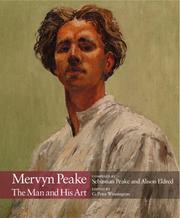
Winnington is the foremost Peake scholar; this critical study provides rigorous close reading of all three novels and directly addresses the contested status of Titus Alone within the sequence.
The Gothic and Grotesque Tradition
ExpertSituate Gormenghast within the English Gothic and European grotesque traditions that Peake was consciously drawing on and subverting.
▸ Study plan for this stage
Pace: 6–8 weeks total: Weeks 1–2, read The Castle of Otranto (~30 pages/day, including re-reading key passages); Weeks 3–6, read The Grotesque in Art and Literature by Kayser (~20 pages/day, pausing frequently to take analytical notes); Weeks 7–8, dedicated synthesis and exercise time — revisiting marked
- The founding conventions of English Gothic fiction as established by Walpole: the ancient crumbling edifice, tyrannical patriarchy, supernatural intrusion, and the weight of the past crushing the present
- Walpole's Castle of Otranto as a self-conscious literary invention — his preface strategy of framing the novel as a discovered medieval manuscript, and what this reveals about Gothic artifice and irony
- Kayser's taxonomy of the grotesque: the estrangement of the familiar world, the fusion of the comic and the terrifying, and the collapse of natural categories (human/animal, animate/inanimate)
- The grotesque as a structural principle rather than mere decoration — Kayser's argument that the grotesque is an expression of the 'It' (the alienated, ungovernable force) that destabilizes rational order
- The distinction Kayser draws between the Romantic grotesque (which retains a redemptive or ironic distance) and the modern grotesque (which offers no such escape), and where Gormenghast might sit on that spectrum
- The castle/edifice as a character: how Walpole's Otranto establishes the architectural setting as an active, meaning-laden presence — a template Peake radically extends
- Subversion vs. inheritance: how a later author can simultaneously depend on and undermine a tradition's conventions, using Walpole as the originating node of a tradition ripe for subversion
- The role of caricature, bodily exaggeration, and deformity in the grotesque tradition as theorized by Kayser, and their function in creating moral and aesthetic meaning
- According to Walpole's own prefaces to The Castle of Otranto, what dual literary aims was he trying to reconcile, and how does the castle itself serve both aims simultaneously?
- How does Kayser define the core experience of the grotesque, and what distinguishes it from the merely horrifying or the merely comic?
- Using Kayser's framework, how would you classify the grotesque elements in The Castle of Otranto — are they Romantic grotesque, modern grotesque, or something more ambiguous?
- Kayser argues that the grotesque world is 'our world which has been transformed.' How does Walpole's Otranto transform the familiar world, and what does that transformation reveal about the anxieties of its historical moment?
- What specific Gothic conventions does Walpole establish in Otranto that became codified tropes — and which of those does Kayser's theoretical framework help explain as expressions of deeper grotesque logic?
- How might Kayser's concept of the 'It' — the impersonal, alienating force at the heart of the grotesque — be applied to the castle structure itself in Otranto, and what does this suggest about how Peake might have inherited and transformed this idea in Gormenghast?
- Close-reading annotation: Re-read the two prefaces to The Castle of Otranto and annotate every moment where Walpole signals self-awareness about his own artifice. Then write a one-page note on how this ironic distance relates to Kayser's concept of the grotesque artist who 'summons the demons' while remaining their master.
- Kayser's taxonomy applied: Create a two-column reference sheet. In the left column, list at least eight specific scenes or images from Otranto (e.g., the giant helmet, the portrait that walks, Manfred's pursuit of Isabella). In the right column, map each to the precise Kayser category or grotesque mechanism it exemplifies, with a one-sentence justification.
- Architectural character essay: Write a 500-word analytical paragraph arguing that the Castle of Otranto is not a setting but a protagonist. Draw on at least two specific passages from Walpole and at least two theoretical concepts from Kayser to support the claim.
- Tradition-mapping diagram: Draw a visual 'genealogy of the grotesque' with Walpole's Otranto at the root. Using Kayser's historical survey of the grotesque in art and literature, add at least four other nodes from the traditions Kayser discusses, annotating each branch with the specific grotesque quality it contributes. Leave a clearly marked empty node labeled 'Gormenghast' and write brief predic
- Subversion inventory: Make a list of every Gothic convention introduced in Otranto. For each, write one sentence predicting — based on Kayser's theoretical framework — how a modernist author could subvert or defamiliarize it. This list will serve as a checklist to revisit when reading the Gormenghast novels.
- Comparative vocabulary glossary: Compile a personal glossary of 10–15 critical terms drawn from both books (e.g., 'the uncanny edifice,' 'estrangement,' 'the tyrannical patriarch,' 'carnivalesque deformity,' 'the abysmal'). For each term, write a definition in your own words, a citation from the relevant book, and a one-line hypothesis about its applicability to Gormenghast.
Next up: Having established the Gothic and grotesque traditions through Walpole's foundational text and Kayser's theoretical lens, the reader now possesses a precise critical vocabulary and a set of inherited conventions against which Peake's own work can be actively measured, enabling a far more analytically rigorous first encounter with the Gormenghast novels themselves.
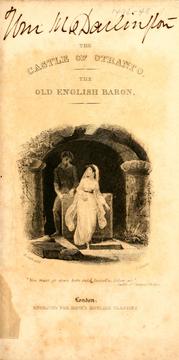
The founding text of the Gothic novel; reading it after the trilogy makes Peake's ironic, satirical relationship to the genre's conventions — the crumbling castle, the tyrannical patriarch, the oppressive inheritance — immediately legible.
The canonical theoretical account of the grotesque mode; Kayser's framework explains precisely why Peake's characters feel simultaneously comic and horrifying, and why Gormenghast resists easy genre classification.
Discussion
Keep reading
Paths that share books, cover the same subject, or open a related topic.