The Frankfurt School is the clearest case in modern philosophy where reading order determines whether you get anywhere at all. The obvious move is to start with the famous book, which is Dialectic of Enlightenment, and the obvious move fails: it is compressed, allusive, written in exile in a register deliberately hostile to summary, and it assumes Hegel, Marx, Freud and Weber. People who start there generally stop there.
There is also a vocabulary problem worth naming early. Critical theory in this sense means a specific research programme at the Institute for Social Research in Frankfurt from the 1920s onward. It is not the same thing as the term now used in general political argument, and conflating the two will make the primary texts unreadable. The books below are about the first thing.
Get the story first
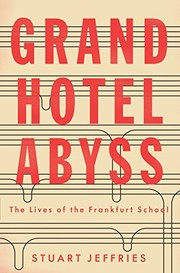
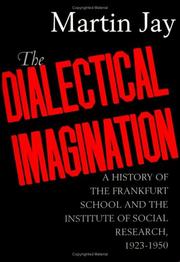
Grand Hotel Abyss: The Lives of the Frankfurt School by Stuart Jeffries is the best entry point available — a group biography that is genuinely funny about people who were not, and that explains the ideas through the lives and the exile. The Dialectical Imagination by Martin Jay is the scholarly standard, written with the surviving members' cooperation, and it covers the Institute from 1923 to 1950 with real precision about what each figure actually argued. The Frankfurt School by Rolf Wiggershaus is the exhaustive version at around eight hundred pages; treat it as a reference rather than a read-through unless you are committed.
The Idea of a Critical Theory by Raymond Geuss is short, analytic and unusually clear, and it does one specific job: it asks what a theory has to do to count as critical rather than merely descriptive. Read it before the primary sources and the primary sources become much easier to evaluate.
The primary texts that are actually readable
Escape from Freedom by Erich Fromm is the accessible entry to the Institute's own writing — an attempt to explain why people submit to authoritarian movements, written in 1941 with the obvious case in view. Fromm later broke with the group and is sometimes treated as peripheral to it, which is worth knowing but not a reason to skip him.
One-Dimensional Man by Herbert Marcuse is the book that made the school famous outside universities, arguing that advanced industrial society absorbs and neutralises opposition by satisfying it. It is polemical, dated in its examples, and still the most quotable thing anyone in the group wrote. Eros and Civilization, also Marcuse, attempts to reconcile Freud with Marx and is the more speculative of the two.
The difficult core
Dialectic of enlightenment by Theodor Adorno and Max Horkheimer is the central text and the hardest. Its argument — that enlightenment rationality contains the seed of the domination it promised to end — is stated in a form that resists paraphrase, and the culture-industry chapter is the only part most readers finish. Read it after Jeffries and Geuss, slowly, and expect to reread.
Minima moralia; reflections from damaged life is Adorno in aphorisms, and is paradoxically a better place to meet him: 153 fragments written in Californian exile, each self-contained. Illuminations collects Walter Benjamin's essays, including the work-of-art essay and the theses on history, and Benjamin sits at an angle to the rest of the group — more mystical, less systematic, and arguably the most influential of them now.
Finish with the successors. The Theory of Communicative Action, Volume 1 is Jürgen Habermas breaking with his teachers by arguing that reason has an emancipatory form they missed; our catalogue holds only the first volume, and the second exists. The struggle for recognition by Axel Honneth carries the programme into a third generation, replacing the critique of domination with a theory of recognition.
Work through the full path in order, or browse more reading paths for adjacent philosophy.
Follow the full ordered path here: How to Read the Frankfurt School and Critical Theory, in Order.