The Farseer Trilogy Reading Order and Guide
This curriculum guides a beginner through Robin Hobb's Farseer Trilogy in the correct sequence, building emotional and narrative familiarity with the world of the Six Duchies before expanding into the broader Realm of the Elderlings. Each stage deepens your investment in the characters and lore, ending with the natural next steps for readers who fall in love with Hobb's world.
The Farseer Trilogy — Read in Order
BeginnerExperience the complete arc of FitzChivalry Farseer's story from boyhood to its bittersweet conclusion, understanding Hobb's slow-burn, introspective style and the core magic systems (Skill and Wit).
▸ Study plan for this stage
Pace: 10–12 weeks total, reading all three books back-to-back with minimal breaks between them to preserve narrative momentum. Suggested pace: Assassin's Apprentice (~356 pages) over 3 weeks (~17 pages/day); L'Assassin royal tome 3 (~400 pages) over 3–4 weeks (~15–18 pages/day); Assassin's Quest (~560 pag
- FitzChivalry Farseer's identity and the burden of royal bastardry — how Fitz's illegitimate status shapes every relationship, loyalty, and choice across all three books
- The Skill: a telepathic/mind-linking magic tied to the Farseer bloodline, its seductive addictiveness, and the political power it grants or threatens
- The Wit: a forbidden bond-magic connecting a practitioner to animals, socially stigmatized yet central to Fitz's emotional survival and key plot resolutions
- Hobb's slow-burn, introspective first-person narration — the unreliable, emotionally guarded older Fitz recounting his past, and how this retrospective frame creates dramatic irony
- The Forging and the Red-Ship Raiders — the central external threat of Assassin's Apprentice and Royal Assassin, and what 'Forged' people reveal about the nature of humanity and the soul
- Loyalty, duty, and sacrifice as recurring moral tensions — Fitz's obligations to King Shrewd, Prince Verity, the Farseer throne, and his own desires are constantly in conflict
- The role of mentors and their costs — Chade, Burrich, Verity, and the Fool each shape Fitz differently, and each relationship carries a price
- The bittersweet, anti-heroic conclusion in Assassin's Quest — Hobb's refusal of conventional fantasy triumph and what it means for the reader's emotional contract with the story
- By the end of Assassin's Apprentice, what does Fitz understand about the Skill versus the Wit, and why does society treat these two magics so differently?
- How does the threat of the Forged ones in Assassin's Apprentice and Royal Assassin function as both a plot driver and a philosophical question about what makes a person human?
- In what ways does Hobb use the retrospective first-person narrator across all three books to create irony — what does the older Fitz know that the younger Fitz does not, and how does this affect your reading experience?
- Trace Fitz's relationship with the Fool across the trilogy: how does it evolve from Assassin's Apprentice through Assassin's Quest, and what does the Fool represent thematically?
- Assassin's Quest ends in a way that denies Fitz many conventional rewards. What does Hobb seem to be saying about heroism, sacrifice, and the cost of duty through this conclusion?
- How do the mentors in Fitz's life (Chade, Burrich, Verity, Patience) each represent a different philosophy of loyalty or survival, and which philosophy does Fitz ultimately embody?
- Keep a dual-entry reading journal: on the left, summarize what happens in each chapter; on the right, record Fitz's emotional state and any moment where his narration seems to be hiding, minimizing, or reframing painful truths — this trains you to read Hobb's unreliable narrator actively.
- Draw a simple 'Relationship Web' after finishing each book, mapping Fitz at the center and connecting him to every major character with a one-word label (e.g., 'mentor,' 'rival,' 'bond-animal'). Compare the three webs side by side to visualize how his world expands and contracts.
- Write a one-page 'Forging Report' from the perspective of a Six Duchies citizen who has encountered a Forged person — this forces you to engage with the horror and philosophical weight of Forging on a human level rather than a plot level.
- After finishing Assassin's Quest, write a 300-word letter from Fitz to Molly set ten years after the ending, in Fitz's voice. This exercise cements your understanding of his character, his regrets, and Hobb's emotional register.
- Create a two-column comparison chart of the Skill and the Wit: list their mechanics, social status, costs, benefits, and key scenes for each across all three books to consolidate your understanding of both magic systems.
- Before moving to the next stage, write a short (200-word) 'reader's verdict': Did Hobb earn the bittersweet ending of Assassin's Quest? Use at least two specific scenes from across the trilogy to defend your answer — this prepares you to discuss Hobb's authorial choices analytically.
Next up: Completing the Farseer Trilogy gives you a deep emotional and thematic baseline in Hobb's world — her magic systems, her narrative voice, and her willingness to deny heroes easy victories — which makes the next stage's exploration of the broader Realm of the Elderlings (whether the Liveship Traders or the Tawny Man trilogy) immediately richer, as recurring characters, unresolved mysteries, and the
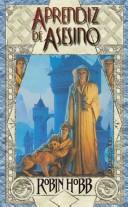
The first book in the trilogy — start here. It introduces Fitz, the Farseer court, and Hobb's deeply personal, first-person narrative voice at its most accessible entry point.
The second book, read immediately after. Stakes and emotional complexity escalate dramatically; the groundwork laid in book one pays off in full here.
The trilogy's conclusion — only meaningful after the first two books. It resolves Fitz's journey and plants seeds for the wider Realm of the Elderlings that later series explore.
Deepening the World — The Tawny Man Trilogy
BeginnerReunite with Fitz years later and understand how Hobb revisits and recontextualises the Farseer events, while introducing the character of the Fool in greater depth.
▸ Study plan for this stage
Pace: 8–10 weeks total; roughly 25–30 pages per day. Suggested pacing: Fool's Errand in weeks 1–3, Golden Fool in weeks 4–6, and Fool's Fate in weeks 7–10 (it is the longest and most emotionally dense volume). Allow yourself slower days during the climactic chapters of Fool's Fate — they reward careful, u
- Fitz's Retirement and Identity: How Fitz has rebuilt himself as 'Tom Badgerlock' in self-imposed exile, and what this reveals about trauma, grief, and the cost of his earlier sacrifices in the Farseer trilogy.
- The Fool's Evolution into Lord Golden: Understanding how the Fool's new persona layers ambiguity over his true nature, his prophetic role as the White Prophet, and the depth of his bond with Fitz as his 'Catalyst'.
- The Tawny Man — Dutiful's Arc: Prince Dutiful as a mirror of young Fitz, exploring themes of duty vs. desire, the burden of royal blood, and the Skill and Wit manifesting in a new generation.
- Recontextualisation of Farseer Events: Noticing how Hobb revisits characters (Chade, Kettricken, Burrich, Molly) and past tragedies through Fitz's older, wearier eyes, adding new meaning to events from the first trilogy.
- The Wit and Its Social Stigma: The deepened exploration of the Wit as a persecuted magic — the Witted brotherhood, political scapegoating, and Fitz's ongoing shame and secrecy around his bond with Nighteyes.
- Prophecy and Free Will: The White Prophet/Catalyst framework and the question of whether Fitz and the Fool are fulfilling a destiny or genuinely choosing their path, culminating in the quest to the Out Islands.
- Sacrifice and the Price of Magic: How the Skill and Wit continue to exact physical and emotional costs, and how Fool's Fate forces Fitz to confront the ultimate price of prophecy and love.
- Grief as a Structural Force: The death of Nighteyes and its aftermath as a turning point in Fool's Errand that reshapes Fitz's emotional landscape across all three books.
- By the end of Fool's Errand, how has Fitz's decade of isolation changed him, and what forces him to re-engage with the Farseer court — and what does his reluctance reveal about his character?
- What is the significance of the White Prophet and Catalyst relationship between the Fool and Fitz, and how does Golden Fool complicate or deepen your understanding of it compared to the hints given in the Farseer trilogy?
- How does Prince Dutiful's storyline in all three books function as both a parallel and a contrast to Fitz's own youth, and what does Hobb seem to be saying about inherited destiny?
- How does the death of Nighteyes in Fool's Errand affect Fitz's use of the Wit and his sense of self throughout Golden Fool and Fool's Fate — and how does Hobb use grief as a narrative engine?
- In Fool's Fate, what is the true nature of the Fool's sacrifice, and how does the resolution of the White Prophet's prophecy reframe everything Fitz (and the reader) understood about the Fool's motivations across both trilogies?
- How does Hobb use the political persecution of the Witted throughout the trilogy to comment on themes of prejudice, otherness, and the way societies scapegoat the vulnerable?
- Recontextualisation Journal: After finishing each book, write a short entry (one page) identifying one scene or revelation that changes how you now understand a specific moment from the Farseer trilogy. Track how Hobb deliberately reframes the past.
- Character Voice Comparison: Choose a chapter in Fool's Errand narrated by Fitz and rewrite a single paragraph as you imagine young Fitz from Assassin's Apprentice might have written it. Reflect on what has changed in his voice, priorities, and self-awareness.
- Prophecy Tracker: Create a simple running list as you read Golden Fool and Fool's Fate of every prophecy or vision mentioned. After finishing Fool's Fate, go back and annotate each one — fulfilled, subverted, or reinterpreted? What does the pattern tell you about Hobb's view of fate?
- The Fool's Mask Map: Draw or diagram the layers of the Fool's identity across the trilogy (Fool → Lord Golden → revealed self). For each layer, note what Fitz knows, what the court knows, and what the reader suspects. Use this to discuss: when is concealment protective and when is it harmful?
- Grief and Magic Essay: Write a 300–500 word reflection on how the loss of Nighteyes functions as both an emotional and a magical wound. How does Fitz's incomplete grieving shape his decisions in Golden Fool and Fool's Fate? Use specific scenes as evidence.
- Dutiful vs. Fitz Comparison Chart: Create a two-column chart listing key life events and choices for both Fitz and Dutiful across the trilogy. Identify three moments where their paths diverge meaningfully and hypothesise why Hobb constructed those divergences.
Next up: Completing the Tawny Man trilogy leaves several threads deliberately unresolved — particularly around the wider world of the Rain Wilds, the Elderlings, and the deeper history of the Skill-carved stone pillars — which makes the reader naturally hungry for the Liveship Traders and Rain Wild Chronicles, where Hobb expands the same world through entirely new eyes and reveals the ancient civilisation
The direct sequel to the Farseer Trilogy and the natural 'next step' — it rewards readers who bonded with Fitz and the Fool, and feels like coming home.

The second Tawny Man book, read in sequence. Political intrigue and the Fitz–Fool relationship reach new emotional heights, building on everything established so far.
The trilogy's conclusion — a sweeping, emotionally devastating payoff that closes the Fitz/Fool arc begun in the Farseer books.
A Parallel World — The Liveship Traders
IntermediateExplore the same world from a completely different angle — sea-faring merchants, living ships, and serpents — enriching your understanding of the Elderlings mythology that underpins all of Hobb's work.
▸ Study plan for this stage
Pace: 10–12 weeks total (~3–4 weeks per book): Ship of Magic at ~35 pages/day, Mad Ship at ~35 pages/day, Ship of Destiny at ~30 pages/day — allowing slower pacing for the denser mythological revelations in the final volume.
- Liveship sentience and the Elderlings connection: understanding how wizardwood liveships awaken through generational death and what this reveals about the Elderling civilization first hinted at in the Farseer trilogy
- The Vestrit family as a lens on merchant-class society: how debt, duty, gender roles, and inheritance shape the Bingtown Trader world and contrast with the royal/assassin perspective of the Farseer books
- Althea Vestrit's identity and agency: her struggle to reclaim the Vivacia mirrors themes of selfhood and legitimacy seen in Fitz, but through a radically different social position
- Kyle Haven as an antagonist of ideology: how his rigid patriarchal worldism and economic ruthlessness corrupt the Vivacia and drive the trilogy's central conflict
- Malta Vestrit's arc from self-absorbed girl to Elderling-touched leader: one of Hobb's most deliberate and rewarding coming-of-age transformations in the trilogy
- The serpents and sea-dragons as the missing link: the life cycle of serpents → cocoons → sea-dragons reframes the Elderlings mythology and retroactively enriches the ruins and artifacts encountered in the Farseer books
- Kennit's moral complexity: his manufactured heroism, his trauma, and the parasite-like charm on his wrist force the reader to interrogate how we construct and consume the idea of a 'hero'
- Bingtown, the Rain Wilds, and the Satrap's empire as a political ecosystem: the slave trade, the New Traders, and the Rain Wild Traders' secrets establish the broader geopolitical world that underlies all of Hobb's Realm of the Elderlings
- By the end of Ship of Destiny, what is the true biological and historical origin of liveships, and how does this recontextualize the Skill and Wit magic encountered in the Farseer trilogy?
- How does Kyle Haven's captaincy of the Vivacia function as a critique of patriarchal authority and economic exploitation, and what are the consequences for the ship's developing consciousness?
- Trace Malta Vestrit's transformation across all three books — what specific events force her growth, and what does her final state suggest about the cost of contact with Elderling magic?
- What does Kennit's backstory, revealed progressively across Mad Ship and Ship of Destiny, ask the reader to reconsider about heroism, victimhood, and self-mythology?
- How do the serpents' lost memories and degraded instincts serve as a metaphor within the trilogy, and what does their eventual cocooning and transformation mean for the future of the Elderlings world?
- In what ways does the Liveship Traders trilogy expand or complicate the geography, history, and magic system established in Assassin's Apprentice, Royal Assassin, and Assassin's Quest?
- Dual-perspective journal: After finishing Ship of Magic, write a 1–2 page entry from the Vivacia's point of view on her awakening, then write the same scene from Kyle Haven's perspective — compare how the same events produce entirely different moral realities.
- Mythology mapping: Create a visual diagram tracing the full life cycle of serpents → cocoons → sea-dragons → wizardwood → liveships. Annotate each stage with the specific chapters in Mad Ship and Ship of Destiny where it is revealed, and add a column noting any Farseer-trilogy artifacts or locations this retroactively explains.
- Character arc timeline for Malta: Build a chapter-by-chapter timeline of Malta's key decisions across all three books, labeling each as 'self-serving' or 'other-serving.' Chart how the ratio shifts and identify the precise turning-point chapter.
- Kennit essay: Write a structured 500-word argument either prosecuting or defending Kennit as a genuine hero, using only evidence from the three books. Then write a one-paragraph rebuttal from the opposing side — the tension between the two is the exercise.
- World-building comparison table: Draw a two-column table contrasting the Six Duchies (Farseer) with Bingtown/the Rain Wilds (Liveship Traders) across six categories: economy, magic, gender roles, political structure, relationship to Elderlings, and treatment of the non-human. Use specific scenes as evidence.
- Reread the serpent chapters in Ship of Destiny with a highlighter for sensory language — then write a short paragraph analyzing how Hobb uses the serpents' degraded senses to evoke the tragedy of cultural and biological memory loss.
Next up: Having established the full Elderlings mythological framework — the life cycle of sea-dragons, the nature of wizardwood, and the geopolitical reach of Bingtown — the reader is now equipped to return to Fitz and the Fool in the Tawny Man trilogy with dramatically richer context for every Elderling ruin, Skill-current vision, and dragon reference they will encounter.
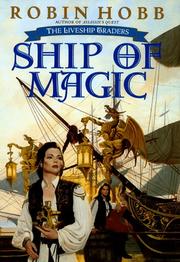
First in the Liveship Traders trilogy, best read after the Farseer books. It shares the same world but stands alone, and its revelations about Elderlings lore reframe what you already know.

The second Liveship book — read in order. The ensemble cast and maritime world deepen considerably, and connections to the wider Realm of the Elderlings become clearer.

Concludes the Liveship arc and directly sets up the Rain Wild Chronicles, making it essential reading before moving to Hobb's later, more advanced series.
Discussion
Keep reading
Paths that share books, cover the same subject, or open a related topic.