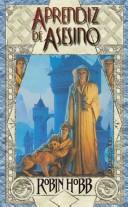
Start with Assassin's Apprentice. It is book one of the Farseer trilogy and book one of the whole Realm of the Elderlings sequence, and there is no alternative entry point worth considering. It opens with a six-year-old boy handed over at a castle gate because nobody knows what else to do with a king's bastard, and it is told in first person by that boy decades later, which gives the whole series its particular tone of quiet retrospective grief.
The real reading-order question with Hobb is not where to start — it is what to read second. After the Farseer trilogy, the tempting move is to go straight to the Tawny Man trilogy, because Fitz returns and the Liveship Traders books are about a completely different set of characters in a different part of the world. Resist. Publication order is the right order, and Liveship earns its place.
The Farseer trilogy
- Assassin's Apprentice
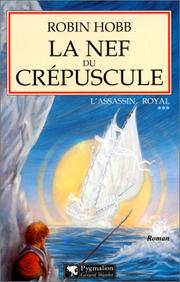
- Royal Assassin — our catalogue currently holds this only as the French edition, L'Assassin royal, tome 3, so the English volume is not on the shelf yet
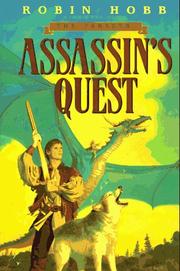
- Assassin's Quest
The Liveship Traders trilogy
- Ship of Magic
- Mad Ship
- Ship of Destiny
The Tawny Man trilogy
- Fool's Errand
- Golden Fool
- Fool's fate
Beyond that, the Rain Wild Chronicles and the concluding Fitz and the Fool trilogy continue the story; neither is in our catalogue yet.
Why you should not skip Liveship
This is the one genuine controversy in Hobb's reading order, and the case for skipping is real: Liveship has none of the Farseer cast, takes several hundred pages to get moving, and is told from multiple third-person viewpoints rather than Fitz's first person. Readers who came for Fitz often bounce hard.
The case against skipping is stronger. The Tawny Man trilogy is built directly on things established in Liveship — a species, a piece of history, and one revelation about a major character that is simply spoiled or meaningless if you have not read it. Beyond plot mechanics, Liveship contains Hobb's best-drawn antagonist and a redemption arc that most readers end up ranking above anything in Farseer. If you skip it, you are not saving time, you are removing the load-bearing middle of the structure. That is a judgement, but it is close to consensus among readers who have done both.
The honest warnings
Assassin's Quest has a long, punishing middle. Fitz spends a great deal of the book walking, cold, alone and making bad decisions, and it is the most commonly abandoned volume in the trilogy. It is also, arguably, the point — Hobb is unusually committed to showing the cost of what happens in book two rather than cutting to the recovery. Know that the slog is intentional and finite.
More generally: Hobb hurts her characters, particularly Fitz, and she does it repeatedly and without much mercy. Animals are not safe. If you need protagonists to catch a break on a reasonable schedule, this series will frustrate you. The compensation is that the emotional payoffs, when they come, are earned in a way very little epic fantasy manages.
Where to stop
The end of Farseer is a genuine stopping point — the trilogy resolves its plot and gives Fitz an ending. The end of the Tawny Man trilogy is a better one, and for years it was the intended end of the whole story. Many readers stop there deliberately, having heard that the final trilogy is bleaker still. If you want a companion series with the same appetite for long structures, the Wolf Hall trilogy works the same trick in a historical register.
Follow the full ordered path here: The Farseer Trilogy Reading Order and Guide.
Ready to learn something deeply?
Build a reading path — free