Realm of the Elderlings Reading Order
Robin Hobb's Realm of the Elderlings is a vast, interconnected epic best experienced in publication order, as each trilogy deepens your understanding of the world, its magic, and its characters. Beginning with the Farseer Trilogy introduces the core protagonist and the foundational magic systems, while each subsequent trilogy layers in new perspectives, locations, and lore that enrich everything that came before. By the final trilogy, Fitz and the Fool, the reader is rewarded with a profound, emotionally resonant payoff that only makes sense after walking the full path.
Foundations: The Farseer Trilogy
BeginnerMeet FitzChivalry Farseer, learn the world of the Six Duchies, and understand the two core magic systems — the Wit and the Skill — that underpin the entire saga.
▸ Study plan for this stage
Pace: 10–12 weeks total, roughly 25–30 pages per day. Suggested split: Assassin's Apprentice — weeks 1–3 (~356 pages); L'Assassin royal, tome 3 — weeks 4–7 (~400 pages); Assassin's Quest — weeks 8–12 (~560 pages). Allow extra buffer days after each book for reflection and exercises.
- FitzChivalry Farseer as an unreliable, emotionally guarded narrator — learn to read between the lines of his self-deprecating voice
- The Six Duchies: its feudal political structure, the coastal Duchies threatened by the Red-Ship Raiders, and the role of the Farseer monarchy
- The Wit: a wild, instinctual bond-magic connecting a practitioner to animals, socially stigmatized as 'beast-magic' and punishable by death
- The Skill: a royal telepathic/empathic magic used for communication, battle-coterie bonding, and potentially world-altering power — and the dangers of Skill-addiction
- The Forging of souls by Red-Ship Raiders — what it means to be Forged, why it is the saga's central horror, and its thematic link to identity and humanity
- Loyalty, duty, and sacrifice: Fitz's lifelong tension between his obligations to the crown and his personal desires and bonds
- Mentorship and its costs: the relationships with Burrich, Chade, Verity, and the Fool as formative but often painful guides
- The Fool as prophet and enigma — establishing his unique voice and his mysterious investment in Fitz's fate from the very first book
- How do the Wit and the Skill differ in their social perception within the Six Duchies, and why is one celebrated while the other is condemned?
- What does 'Forging' do to a person, and how does Robin Hobb use it to explore themes of identity, empathy, and what makes us human?
- Trace Fitz's primary loyalties across all three books — to whom does he feel most bound, and how does that shift by the end of Assassin's Quest?
- How does Fitz's role as a royal bastard shape both his access to power and his vulnerability throughout the trilogy?
- What is the significance of Fitz's Wit-bond with Nighteyes, and how does that relationship evolve from Assassin's Apprentice through Assassin's Quest?
- By the close of Assassin's Quest, what has Fitz lost, and what does the ending suggest about the cost of heroism in Hobb's world?
- Keep a 'Fitz Reliability Log': after each chapter, jot one thing Fitz admits about himself and one thing his actions reveal that he does NOT admit — practice spotting the gap between his self-image and his behavior.
- Draw or diagram the political map of the Six Duchies (the coastal vs. inland Duchies, Buckkeep, the Mountain Kingdom) using only details Hobb provides in the text — no outside sources. Revise it as new information appears.
- Write a one-page character profile for each mentor figure (Burrich, Chade, Verity, the Fool) after finishing Assassin's Apprentice, then annotate and update each profile as the trilogy progresses to track how your understanding deepens.
- After finishing L'Assassin royal tome 3, write a short scene (300–500 words) from Nighteyes' point of view during any moment in the book — this forces you to inhabit the Wit-bond and think about animal consciousness as Hobb frames it.
- Create a 'Cost Ledger' for both magic systems: every time a character uses the Wit or the Skill, note what it costs them physically, emotionally, or socially. Review the ledger at the end of each book and write two sentences on what pattern you see.
- After completing Assassin's Quest, write a one-page personal response to the ending: Do you find it satisfying, devastating, or both? Identify at least two specific scenes Hobb planted earlier in the trilogy that make the ending feel earned rather than arbitrary.
Next up: Completing the Farseer Trilogy establishes the emotional and magical grammar of the entire Realm of the Elderlings — the Wit, the Skill, Buckkeep, and Fitz's sacrificed life — so that when the next stage introduces new protagonists and corners of the world, readers can immediately recognize how those threads connect back to and expand upon this foundation.
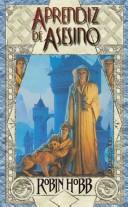
The entry point to the entire Realm of the Elderlings. It introduces Fitz, the Farseer royal line, the Red-Ship Raiders threat, and the foundational magic systems in an accessible, coming-of-age frame.
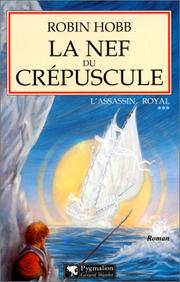
Raises the emotional and political stakes dramatically; deepens your bond with Fitz and the Fool and establishes the heartbreak and sacrifice that define Hobb's writing throughout the series.
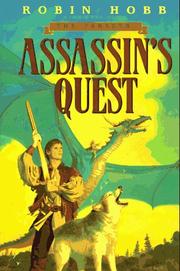
Concludes Fitz's first arc and expands the world map significantly, introducing the Elderlings and the dragons whose legacy will echo through every subsequent trilogy.
A New Perspective: The Liveship Traders Trilogy
BeginnerShift to the Trader city of Bingtown and the Rain Wild River, meeting living ships and serpents, and gaining crucial lore about dragons and Elderlings that recontextualises what you read in the Farseer books.
▸ Study plan for this stage
Pace: 10–12 weeks total (~25–30 pages/day): roughly 3–4 weeks per book. Ship of Magic (~880 pages): weeks 1–4; Mad Ship (~900 pages): weeks 5–8; Ship of Destiny (~790 pages): weeks 9–12. Allow extra buffer days after each book for reflection and journaling before moving on.
- Liveships and Wizardwood: Understanding that liveships are carved from wizardwood logs harvested in the Rain Wilds, and that they quicken — gain sentience — only after three generations of family deaths aboard them, making them simultaneously ships, family heirlooms, and living beings with their own
- The Vestrit Family and the Cost of Debt: The Vestrit family's financial and emotional entanglement with their liveship Vivacia drives the central plot of Ship of Magic and illustrates how liveships bind families to obligation, sacrifice, and identity.
- Kennit and the Nature of Villainy: Kennit, the pirate captain who covets a liveship, is one of Hobb's most complex antagonists — charming, ruthless, self-deceiving, and ultimately tragic. Tracking his rationalizations and the gap between his self-image and his actions is essential to understanding H
- The Rain Wild Traders and Hidden Costs of Magic: The Rain Wild Traders live along a river that physically mutates those born near it. Their society, secrets, and the price they pay for access to Elderling artifacts reveal that magic in this world always extracts a toll — on bodies, families, and fut
- Serpents, Cocooning, and the Dragon Life Cycle: Mad Ship and Ship of Destiny gradually reveal that sea serpents are the larval stage of dragons, and that they must reach the Rain Wild cocooning grounds to metamorphose. This biological and magical process is the key to understanding why dragons vanis
- Althea Vestrit's Arc — Agency and Gender: Althea's struggle to reclaim Vivacia by proving herself a competent sailor in a world that dismisses women at sea is one of the trilogy's central character studies. Her journey interrogates themes of identity, legitimacy, and what it means to truly 'own' som
- Paragon — the Mad Ship: The liveship Paragon, chained to a beach and considered mad and dangerous, holds secrets about the Ludluck family and about the true nature of wizardwood. His arc across all three books is the emotional and thematic heart of the trilogy.
- Elderling Lore as Retroactive Context: Details scattered across all three books — the nature of wizardwood as dragon cocoon material, the Elderlings as humans transformed by proximity to dragons, the Rain Wild ruins as dragon-city remnants — directly reframe events, magic, and architecture encounter
- By the end of Ship of Magic, what does Wintrow understand about the bond between a liveship and its family, and how does his forced role aboard Vivacia conflict with his priestly vocation?
- How does Robin Hobb use Kennit's internal monologue and the 'charm' on his wrist across Mad Ship and Ship of Destiny to show the gap between who Kennit believes himself to be and what he actually does?
- What is the biological truth about sea serpents revealed in Mad Ship and Ship of Destiny, and how does this recontextualise the near-extinction of dragons in the world?
- What is wizardwood actually made of, and what does this reveal about the liveships — particularly Paragon — as sentient beings with a prior identity before they were ships?
- How do the Rain Wild Traders' physical mutations and their society of secrets reflect the trilogy's broader theme that magic and power always come with a hidden, embodied cost?
- In Ship of Destiny, how is the resolution of Vivacia's identity crisis — torn between Wintrow, the Vestrit family, and the pirate crew — used to explore what it means to have a self shaped by trauma and competing loyalties?
- Family Tree & Debt Ledger: After finishing Ship of Magic, draw the Vestrit family tree and annotate it with each member's relationship to Vivacia — emotional, financial, and spiritual. Note who has 'died aboard' her and what that cost each person. This makes the liveship-quickening mechanic viscerally concrete.
- Kennit's Justification Log: While reading Mad Ship, keep a running log of every moment Kennit rationalises or reframes one of his actions. After finishing Ship of Destiny, review the log and write a short paragraph: does Hobb ever ask you to fully sympathise with him, or does she keep a moral distance? How?
- Serpent-to-Dragon Timeline: After the serpent/dragon life cycle is fully revealed in Ship of Destiny, draw a diagram tracing the full biological cycle (egg → serpent → cocoon → dragon) and annotate it with which characters or events in the trilogy correspond to each stage. Then write two or three sentences connecting this to what you remember about Elderlings from the Farseer books.
- Paragon Character Study: At the end of each of the three books, write a single paragraph describing Paragon's emotional state and what he knows about himself at that point. Compare all three paragraphs when you finish — what changed, what was revealed, and what does his arc say about memory and identity?
- Recontextualisation Journal: Keep a dedicated notebook page titled 'Things That Now Make Sense.' Each time you encounter a detail in the trilogy that reframes something from the Farseer books (e.g., Skill-carved stone, Elderling artifacts, dragon imagery), jot it down with a brief note. This list will be invaluable for the next stage.
- Bingtown Society Map: After finishing Mad Ship, sketch an informal social map of Bingtown — Old Traders, New Traders, Three Ships immigrants, slaves, and Rain Wild Traders. Draw lines showing alliances, tensions, and dependencies. Use this to track how the political upheaval in Ship of Destiny was seeded from the very first chapters of Ship of Magic.
Next up: By fully grasping that liveships are dragon cocoons, that Elderlings were humans transformed by dragon magic, and that the Rain Wilds sit atop the ruins of a dragon civilisation, the reader is now equipped to enter the Tawny Man Trilogy — where Fitz and the Fool's quest brings dragons, Elderlings, and the Skill into direct, urgent collision with everything the Liveship books have quietly been buil
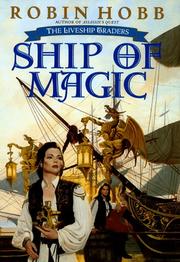
Opens a richly drawn mercantile world with a new cast; the liveships and sea-serpents begin to reveal the true nature of dragons, making this trilogy essential world-building for everything that follows.

Escalates the mysteries of the liveships and the serpents' desperate journey; the emotional depth rivals the Farseer books and the dragon lore becomes impossible to ignore.

Resolves the Liveship arc in a way that directly sets up the Rain Wilds Chronicles and provides the dragon backstory that gives the later trilogies their full meaning.
Reunion: The Tawny Man Trilogy
IntermediateReturn to Fitz and the Fool fifteen years later, now reading with the enriched world-knowledge from the Liveship books, and understand the full weight of the Fool's prophecies and the Skill-road network.
▸ Study plan for this stage
Pace: 10–12 weeks total (~25–30 pages/day): Weeks 1–3 for Fool's Errand, Weeks 4–7 for Golden Fool (the longest and densest book), Weeks 8–11 for Fool's Fate, with Week 12 reserved for reflection, re-reading key chapters, and completing exercises.
- The White Prophet and Catalyst dynamic: understanding the Fool's role as White Prophet and Fitz's as his Catalyst, and how their bond shapes the fate of the world rather than just their personal story
- The cost of the Skill and the Skill-road network: how the Skill-coterie system, stone pillars, and Skill-carved dragons represent a civilization-spanning magic with a price paid in identity and memory
- Fitz's retirement and re-entry: the psychological weight of Fitz's fifteen-year withdrawal into 'Tom Badgerlock' and what his reluctant return to royal service reveals about duty, identity, and self-deception
- The Wit as stigma vs. gift: how the Old Blood persecution subplot in Golden Fool reframes the Wit from a shameful secret into a cultural heritage with its own laws, community, and cost
- Prophecy, free will, and the Changing of the Prophecies: the tension between the Fool's fixed prophetic vision and Fitz's insistence on choosing his own path, culminating in the question of whether the Fool's death is inevitable
- The dragon Icefyre and the Skill-carved dragons: connecting the stone dragons of the Six Duchies to the living dragons of the Liveship world, revealing that both magic systems share a single deep history
- Grief, sacrifice, and the price of heroism: Fool's Fate forces a reckoning with what it truly costs to change the world, specifically through the Fool's apparent death and Fitz's choice on Aslevjal
- Dutiful's coming-of-age and the new coterie: how Prince Dutiful's arc mirrors and contrasts Fitz's own youth, showing how the cycle of the Farseer throne repeats — and how it might finally be broken
- By the end of Fool's Errand, what has Fitz sacrificed by choosing to live as Tom Badgerlock, and what does the retrieval of Prince Dutiful reveal about whether that sacrifice was ever truly complete?
- How does Golden Fool use the Old Blood subplot — including the secret meetings and the persecution of Witted ones — to reframe everything the reader understood about the Wit from the Farseer Trilogy?
- What is the significance of the Skill-pillars and the stone-carved dragons on Aslevjal in Fool's Fate, and how does the Liveship Traders' knowledge of living dragons enrich your understanding of what those carvings actually are?
- In what ways does the Fool's prophetic certainty about his own death function as both a plot driver and a philosophical argument about fate versus free will across all three books?
- How does Fitz's relationship with Dutiful differ from his relationship with Verity or Chade, and what does that difference suggest about whether Fitz has grown or merely repeated his patterns?
- What does the ending of Fool's Fate — including the Fool's fate, the freeing of Icefyre, and Fitz's final choices — resolve about the central question of whether a Catalyst can ever truly be free of his Prophet?
- Prophecy tracker: As you read, keep a running log of every prophecy or vision the Fool states or references. After finishing Fool's Fate, annotate each entry with how (or whether) it was fulfilled — note cases where Fitz's actions changed the outcome and cases where they didn't.
- Identity map: Draw a character web for Fitz listing every name/role he holds across the trilogy (FitzChivalry, Tom Badgerlock, the Witted Bastard, Catalyst, father, spy). After each book, add or cross out roles and write one sentence on which identity is 'winning' at that moment.
- Cross-trilogy connection journal: Each time the Tawny Man books reference dragons, Skill-stones, or the Elderlings, write a short paragraph connecting it explicitly to what you learned in the Liveship Traders books — note what new meaning the Liveship knowledge adds that a first-time reader would miss.
- Thematic debate: Write a one-page argument from the Fool's perspective defending the necessity of his plan, then write a one-page rebuttal from Fitz's perspective. Use specific scenes from Golden Fool and Fool's Fate as evidence.
- Chapter re-read: After finishing Fool's Fate, return to the opening chapters of Fool's Errand where Fitz describes his solitary life. Re-read them with full knowledge of the ending and write a paragraph on dramatic irony — what does Fitz not yet know about himself that the ending reveals?
- Timeline reconciliation: Create a side-by-side timeline of key events in the Tawny Man Trilogy and the Liveship Traders Trilogy (using only what is referenced or implied in the Tawny Man books). Identify at least three moments where the two timelines intersect or illuminate each other.
Next up: Fool's Fate leaves the world transformed — dragons are returning, the Skill-road network is reawakened, and Fitz is once again adrift — laying the exact foundation of unresolved longing and world-altering consequence that the next stage will demand the reader reckon with as the Realm of the Elderlings expands to its full, multi-threaded scope.
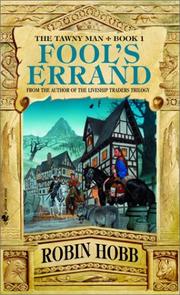
Reunites you with Fitz in middle age; the emotional reunion hits hardest after the Liveship detour, and the Wit-user persecution plot adds urgent new political texture.

Deepens the Fool's identity and the White Prophet mythology while weaving Liveship characters into the Six Duchies court, rewarding readers who have followed the full path.
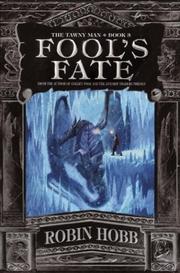
A sweeping, emotionally devastating conclusion to Fitz's second arc; the dragon and Elderling revelations here only fully land because of the Liveship trilogy's groundwork.
The Dragon Age: The Rain Wilds Chronicles
IntermediateFollow a new generation of characters and a flight of damaged dragons seeking their ancient city, consolidating all prior dragon and Elderling lore into a focused, adventurous arc.
▸ Study plan for this stage
Pace: 4–5 weeks total: Weeks 1–2 for Dragon Keeper (~30 pages/day), Weeks 3–4 for Dragon Haven (~30 pages/day), with Week 5 reserved for review, journaling, and reflection exercises. Both books are roughly 500 pages each, making for a comfortable but immersive pace.
- The Rain Wilds and its toxic environment — how the acidic river, the jungle, and the physical toll on Rain Wilders shape society, identity, and self-worth
- Damaged dragons and the cycle of decline — why the dragons hatched from the Elderling cocooned dead are stunted, discolored, and intellectually diminished, and what this means for the species' survival
- The Keeper-Dragon bond — how each dragon selects a keeper and how these asymmetrical relationships evolve from servitude toward genuine partnership and mutual transformation
- Elderling transformation — the physical and psychological changes the keepers begin to undergo as prolonged dragon contact triggers latent Elderling heritage, echoing the ancient symbiosis between the two species
- Kelsingra and the memory of the Elderlings — the lost city as both a literal destination and a symbolic repository of dragon and Elderling history encoded in stone memory
- Social marginalization as a narrative engine — how outcasts, the physically marked, and the 'unfit' (both human and dragon) are the true heroes, challenging Rain Wilds hierarchies and the Traders' Council's authority
- The Tarman and the living ship legacy — Tarman as the oldest liveship, his sentience, and his unique connection to the river and the expedition's fate
- Gender, agency, and voice — Thymara's arc as a young woman reclaiming bodily autonomy and social standing in a society that marked her for death at birth
- By the end of Dragon Haven, how have the physical transformations of the keepers (particularly Thymara, Alise, and Sintara's other keepers) reflected the ancient Elderling symbiosis, and what does this suggest about the original relationship between humans and dragons?
- How does the Traders' Council's treatment of the dragon keepers mirror the way Rain Wilds society treats its own marked and 'flawed' citizens, and why is this parallel central to both books' themes?
- What role does Tarman play beyond simple transport — how does his sentience and his bond with Leftrin influence the expedition's survival and the broader lore of liveships?
- How do the individual keeper-dragon pairings (e.g., Thymara and Sintara, Sedric and Relpda) differ in dynamic and development, and what does each pairing reveal about the nature of the bond?
- In what ways does Alise Finbok's journey from scholarly observer to active participant reframe the reader's understanding of Elderling history as it was recorded versus as it was lived?
- How does Dragon Haven resolve the tension between the dragons' arrogance and dependency, and what does the flight's arrival at — or approach to — Kelsingra promise for the restoration of dragon and Elderling civilization?
- Keeper-Dragon Bond Chart: Create a two-column chart for every keeper-dragon pair introduced in Dragon Keeper. Track how each relationship changes by the end of Dragon Haven — note shifts in power, affection, resentment, and physical transformation. Use direct quotes where possible.
- Transformation Journal: After finishing Dragon Haven, write a 1–2 page first-person journal entry from Thymara's perspective reflecting on her physical changes, her evolving sense of identity, and what it means to no longer fit neatly into Rain Wilds society.
- Lore Synthesis Map: Draw or diagram the chain of knowledge — from the Elderlings' original records, to Alise's scholarly research, to what the keepers discover firsthand — and annotate where the 'official' history diverges from lived reality as revealed in the two books.
- Rain Wilds Society Analysis: Write a short essay (300–500 words) arguing whether the Rain Wilds Traders' Council is portrayed as purely villainous or as a flawed institution with understandable (if cruel) logic. Use specific scenes from both books as evidence.
- Tarman Character Profile: Compile a profile of Tarman as a character — his age, his demonstrated sentience, his relationship with Leftrin, and the moments in both books where his agency visibly shapes events. Compare him briefly to the liveships encountered in earlier stages of the curriculum.
- Predict Kelsingra: Before moving to the next stage, write a half-page prediction of what the keepers and dragons will find in Kelsingra — what physical state it will be in, what memories it might hold, and what conflicts it might create. Seal it and revisit it after the next stage.
Next up: By ending with the expedition on the threshold of Kelsingra, Dragon Haven transforms the Rain Wilds Chronicles from a survival story into an archaeological and civilizational one, directly setting up the deeper exploration of Elderling memory, dragon restoration, and the political consequences of rediscovery that the next stage will pursue.
Directly continues the world established in Ship of Destiny; introduces Alise, Thymara, and the dragon Sintara, and begins the overland quest to Kelsingra.
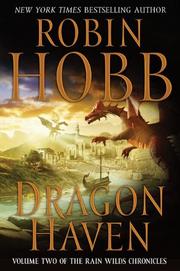
Completes the Rain Wilds arc, bringing the dragons into their full Elderling inheritance — a payoff that resonates deeply with everything learned across the prior six books.
The Final Reckoning: Fitz and the Fool Trilogy
ExpertExperience the culmination of every thread — Fitz, the Fool, the Skill, the Wit, the dragons, and the Elderlings — in a trilogy that demands and rewards the full emotional and lore investment of the entire journey.
▸ Study plan for this stage
Pace: 12–16 weeks total — roughly 4–5 weeks per book at ~25–35 pages/day. Fool's Assassin is a slow-burn re-entry; allow extra time for emotional adjustment. Fool's Quest accelerates dramatically; maintain pace. Assassin's Fate is the longest and most dense — budget at least 5 weeks, reading in longer ses
- The cost of love and chosen family: Fitz's late-life fatherhood of Bee and how her existence recontextualizes every sacrifice he has ever made
- Bee Badgerlock as a new kind of Catalyst — her Wit, her dreaming, and her role in the Fool's prophecies, challenging the reader to reassess what a 'White Prophet' and 'Catalyst' relationship can look like
- The Fool's physical and psychological destruction at the hands of the Servants, and what his suffering reveals about the machinery of prophecy and the price of being a tool of fate
- The Servants of the Pale Woman / the Four and their ideology: the belief that the future can be owned and controlled, set against Fitz and the Fool's chaotic, love-driven approach to changing the world
- Skill and Wit at their absolute limits — Fitz's use of both magics reaches its most dangerous and self-destructive extremes, culminating in Assassin's Fate's irreversible transformations
- The dragons and Elderlings as a fully realized civilization: Kelsingra, IceFyre, Tintaglia, and the Rain Wild dragons are no longer background mythology but active agents whose fates are intertwined with Fitz's
- Grief as a structural force — the trilogy is built around successive losses (Molly, Bee's apparent death, the Fool's near-death) that accumulate into Assassin's Fate's devastating and transcendent ending
- Resolution and transformation vs. conventional closure: Hobb's refusal to offer a 'happy ending' in the traditional sense, and how the ending of Assassin's Fate functions as both an ending and a beginning
- How does Bee's nature as a White Prophet — or something beyond one — complicate the prophecy system established across the entire series, and what does her relationship with the Fool's legacy mean for the future of the world?
- Trace Fitz's emotional arc across all three books: in what ways has he grown since Assassin's Apprentice, and in what ways is he still the same wounded, self-sabotaging person — and how does Hobb use this tension to make the ending land?
- What does the ideology of the Servants reveal about the nature of free will versus fate in the Realm of the Elderlings, and how does Fitz and the Fool's final act challenge or confirm that ideology?
- How does Assassin's Fate use the Skill-current and the stone dragons to resolve Fitz's story in a way that is simultaneously a death and a continuation — and what earlier books in the curriculum foreshadow this ending?
- In what ways does Bee's narrative voice in Fool's Assassin and Fool's Quest function differently from Fitz's first-person narration, and what does Hobb achieve by giving her a separate perspective?
- How does the trilogy bring together characters and threads from the Liveship Traders and Rain Wild Chronicles — specifically the dragons and Kelsingra — and why is it essential to have read those series before this stage?
- Prophecy audit: Before starting Fool's Quest, compile a written list of every prophecy or dream-vision Bee records in her journal in Fool's Assassin. Track each one through Fool's Quest and Assassin's Fate, noting which are fulfilled, which are subverted, and which remain open — then write a paragraph on what this pattern says about Hobb's philosophy of fate.
- Dual-narrator comparison journal: Each week, write one short entry (200–300 words) from Bee's perspective and one from Fitz's perspective on the same event — even if only Fitz 'witnesses' it. This exercise forces you to inhabit both voices and understand how Hobb uses dramatic irony between them.
- Loss timeline: Create a chronological map of every significant loss Fitz experiences across all three books. For each loss, note how he responds emotionally and what action (or inaction) it drives. At the end of Assassin's Fate, write a reflection: does his final transformation feel earned given this timeline?
- The Servants vs. the Catalyst debate: Write a 400-word argumentative piece from the perspective of a Servant defending their mission to control prophecy, then a 400-word rebuttal from the Fool. Use only evidence from the three books in this stage. This sharpens your grasp of the trilogy's central ideological conflict.
- Dragon continuity check: After finishing Assassin's Fate, write a one-page summary of each major dragon's arc (IceFyre, Tintaglia, Icingcleft/Rapskal's dragon, etc.) and how their storylines, seeded in the Liveship and Rain Wild books, reach resolution here. Note any threads Hobb leaves deliberately open.
- Final reflection essay (600–800 words): Answer the question — 'Is the ending of Assassin's Fate a tragedy, a triumph, or something that transcends both categories?' — using specific scenes, character decisions, and thematic patterns from all three books in this stage. This is your capstone for the entire curriculum.
Next up: By fully inhabiting the emotional and thematic resolution of Fitz's story — understanding how Hobb uses transformation, sacrifice, and open-ended transcendence rather than clean closure — the reader is now equipped to approach any remaining or supplementary works in the Realm of the Elderlings (such as the Wilful Princess and the Piebald Prince or future novellas) with the full lore, emotional lit

Opens Fitz's final chapter in quiet, domestic tragedy before exploding into crisis; the slow build is deliberate and devastating, and only works because of the decades of relationship built across prior books.

Raises the stakes to a world-threatening level, drawing on every corner of the Realm of the Elderlings; characters and plot threads from all previous trilogies converge here.
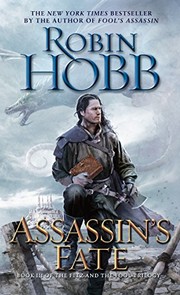
The grand finale of the entire saga — an emotionally overwhelming conclusion that closes arcs begun in Assassin's Apprentice and rewards every reader who has made the full journey.
Discussion
Keep reading
Paths that share books, cover the same subject, or open a related topic.