The Craft Sequence Reading Order: Where to Start
The Craft Sequence is a fantasy series about contract law, corporate restructuring and dead gods held together by debt, and its titles carry numbers that are deliberately not the reading order: Three Parts Dead came first, Two Serpents Rise second, Full Fathom Five third. The numbers encode internal chronology instead. Publication order is the right default because each book teaches you the piece of the world the next one assumes, and this path takes it, with a note on what changes if you go the other way.
Start here, and ignore the numbers
BeginnerLearn what Craft is — necromantic contract law practised by firms of undead partners — through the book written to introduce it.
▸ Study plan for this stage
Pace: 2-3 weeks. Three Parts Dead is around 340 pages and the first sixty are the steepest — Gladstone drops you into a working legal-necromantic system with no glossary and expects you to infer it. 25-30 pages a day through the opening, faster after. Before anything else, get the numbering straight: the
- Craft is contract law practised as necromancy: soulstuff is currency, obligations are literally binding, and a wizard is a lawyer with standing
- Gods in this world are counterparties — they take deposits of faith, incur liabilities, and can be restructured or foreclosed on when they default
- The God Wars: humans with Craft fought and killed most of the gods, and every book is set in the aftermath of that in some form
- Tara Abernathy as the deliberate entry-point protagonist — a junior associate learning the system on the job, which is how the reader learns it
- Kos Everburning's death as a corporate insolvency: the mystery is an audit, and the stakes are a city's water pressure and heat
- Alt Coulumb as the sequence's home city, and Justice as an institution built out of a dead goddess
- The house style: legalese, finance and theology used interchangeably, with jokes buried in the terminology
- Only this volume was written as an introduction to the system, which is the practical reason publication order is the default
- In plain terms, what is Craft and what does it cost the practitioner?
- How does a god in this world become insolvent, and what happens to its city when it does?
- What is Tara's actual job in the resurrection, and how is it different from a detective's?
- What did the God Wars settle, and what did they leave open?
- What is Justice, and what was she before?
- Why would starting with Last First Snow — the book numbered one — make this world harder rather than easier?
- Write down the reading order before you start and keep it visible: Three Parts Dead, Two Serpents Rise, Full Fathom Five, Last First Snow, Four Roads Cross, The Ruin of Angels.
- Keep a one-line glossary of Craft terms as you meet them — soulstuff, Concern, Deathless King. The books never define them formally.
- Restate the central mystery as an accounting problem in your own words. If you can, the system has landed.
- Note every joke that only works if you know how contracts or balance sheets behave; there are more than you will catch on a first pass.
Next up: With the system understood from inside a law firm, the next two books show the same machinery from the client side, in cities that solved the God Wars differently.

A junior associate at a necromantic law firm is sent to resurrect a dead god before his city loses water pressure. Despite the three in the title this is book one by publication, and it is the only volume written as an introduction to the system, which is why starting anywhere else makes the world harder than it needs to be.
The core
IntermediateSee the same legal-theological machinery applied to two completely different cities, and get used to the sequence's habit of changing protagonist every book.
▸ Study plan for this stage
Pace: 5-6 weeks for the two. Each is 300-380 pages and reads faster than the first — you already have the vocabulary. Expect a jolt at the start of each: the sequence changes protagonist, city and register every volume, and there is no returning cast to ease you in. Two Serpents Rise is the most thriller-
- Dresediel Lex as the counter-case to Alt Coulumb: a city that killed its own gods rather than banking with them, and now has to source water without divine intervention
- Human sacrifice presented as an infrastructure policy that was replaced by a different infrastructure policy, which is the sequence's characteristic move
- Caleb Altemoc as a risk manager — the protagonist's profession is always the lens, and here it is actuarial
- Two Serpents Rise happens to be second in both publication and chronology, which is a coincidence and not a rule; do not generalise from it
- Kavekana in Full Fathom Five as an offshore tax haven that manufactures idols — artificial godlets with no will, held for foreign clients
- The satire depends on the previous two books: soul-debt, faith as deposit, and the God Wars all have to be understood already for the joke to work
- Kai as a protagonist whose job is literally to be a fiduciary for something that cannot speak for itself
- The sequence's argument accumulating across cities: every theological arrangement is a financial arrangement and vice versa
- What did Dresediel Lex gain and lose by killing its gods, and who is paying for it now?
- How does Caleb's risk-management training shape what he notices that a lawyer would not?
- What exactly is an idol in Full Fathom Five, and why is it legally different from a god?
- Who are the clients of Kavekana, and what are they actually hiding?
- How does each book's city correspond to a real regulatory arrangement?
- Why does changing protagonist every volume strengthen the sequence rather than weaken it?
- For each city, write two sentences: what it did about its gods, and what that decision costs it now. Three cities in, the pattern is the series.
- Map Kavekana's idol business onto an offshore financial structure. The satire is precise enough to survive the exercise.
- Track how much of each book's plot could be resolved by a correctly drafted contract; the answer is usually most of it.
- Resist looking up the chronological ordering; you will meet it in the next stage where it matters.
Next up: With three cities and three professions behind you, the sequence goes back in time — and the two books that follow only hurt if you already know how things end.
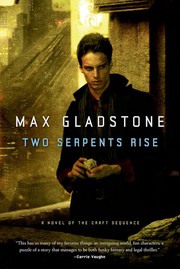
Dresediel Lex, a desert metropolis that overthrew its human-sacrificing gods and now has a water crisis. Numbered two but published second as well, so publication and chronology happen to agree here — do not take that as a general rule.

An island tax haven that manufactures artificial godlets for offshore clients. The satire is sharpest here, and it depends on you already understanding how soul-debt works from the two books before it.
The deeper cuts
IntermediateRead the two books that go back and fill in the God Wars, and see why they hit harder in publication order than in chronological order.
▸ Study plan for this stage
Pace: 5-6 weeks for the two. Last First Snow is around 350 pages and is the most emotionally punishing book of the six; Four Roads Cross is around 400 and the most plot-dense. This stage is where the ordering argument gets settled in practice. Last First Snow is chronologically the earliest book in the se
- Last First Snow covers the Dresediel Lex uprising decades before Two Serpents Rise, with Temoc as the last true priest and Elayne Kevarian as opposing counsel
- Dramatic irony as the book's engine: every hope a character holds has already been foreclosed in a book you have read
- A negotiation novel — the plot is a redevelopment deal, and the violence comes from the deal failing
- Elayne appearing across multiple books at different ages, which is how the sequence builds continuity without a fixed cast
- Four Roads Cross as the direct sequel to Three Parts Dead: Tara and Alt Coulumb again, several years on
- It pays off threads from all four preceding volumes at once, which makes it the clearest practical argument that publication order is doing something chronological order cannot
- Alt Coulumb's attempt to go public — a city as an entity facing a hostile market, with Justice and Kos as assets on the sheet
- Where the chronological path does help: on a reread, taking them by the numbers gives you the God Wars as continuous history
- What does Last First Snow gain from your knowing Dresediel Lex's future, and what would it lose read first?
- What is Temoc trying to preserve, and at what point does he stop being able to?
- What is Elayne's professional obligation in the negotiation, and where does it conflict with her judgement?
- In Four Roads Cross, which threads from each of the four earlier books are picked up?
- What is at stake in Alt Coulumb's market crisis in ordinary financial terms?
- Having read four, would you now recommend publication or chronological order to a new reader, and why?
- Before starting Last First Snow, write down what you already know about Dresediel Lex's future. Then read it and notice how often that knowledge is the source of the pain.
- List every character in Four Roads Cross who first appeared in an earlier volume and where. The list is long and it is the point.
- Sketch the chronological order by the title numbers and compare it to the publication order you have been reading. Decide which you would use on a reread.
- Reread the first chapter of Three Parts Dead after Four Roads Cross; Tara's arc across the two is one of the sequence's best.
Next up: The original run closes with a sixth book that breaks the standalone shape, after which the series turns into a directly serialised continuation.

Chronologically the earliest book in the sequence — the number one is not decorative — covering Temoc and Elayne during the Dresediel Lex uprising. Read fourth, as published: knowing where these characters end up is what makes it devastating, and reading it first reduces it to a competent riot novel.

A direct sequel to Three Parts Dead, returning to Tara Abernathy and Alt Coulumb. It pays off threads from all four preceding books, so it is the clearest argument for the publication path.
Where the sequence goes next
IntermediateContinue past the original six into the follow-on books, knowing that the series changes shape here.
▸ Study plan for this stage
Pace: 6-8 weeks for the two. The Ruin of Angels is by some distance the longest of the six at around 550 pages and the strangest structurally — allow 4-5 weeks and expect to work harder than in any previous volume. Dead Country is short, around 250 pages, and reads quickly, but it is the opening of a new
- The Ruin of Angels is set in Agdel Lex, an occupied city with a second, older city folded inside it and legally unmentionable
- It closes the original six-book run and is the point where Gladstone stops writing standalone-shaped novels
- Occupation, erasure and the legal fiction that a place does not exist — the sequence's politics at their most direct
- Kai from Full Fathom Five returns as a lead, so this volume assumes the third book specifically
- Dead Country opens the Craft Wars, a directly serialised continuation: Tara returns to the farming village she left, and the scale contracts before it expands
- The shift from one-book-one-city to serial continuation changes the reading contract — from here the books do not resolve independently
- Everything in Dead Country assumes all six earlier volumes, which is why it belongs at the end of the path rather than anywhere else
- What are the two cities of Agdel Lex, and what does the occupying power gain by denying one of them?
- How does The Ruin of Angels use Kai differently from Full Fathom Five, and what does it assume you remember?
- What is structurally different about this book compared with the first five, and is the difficulty earned?
- Why does Dead Country start small, and what does returning Tara to her origins let Gladstone do?
- What has changed about the world's economics by the time the Craft Wars begin?
- Note the title carefully when buying — The Ruin of Angels keeps its definite article, and searching without it turns up the wrong records.
- In The Ruin of Angels, keep a note of which city a scene is in. The book will not always tell you plainly and that is deliberate.
- After Dead Country, decide whether you want to follow an unfinished serial or stop with the complete six. Both are reasonable places to leave the sequence.
- Write a paragraph on what the Craft Sequence is arguing about debt. Six books in, you should be able to.
Next up: This is the end of the path — the original six plus the opening of the continuation, with the reading order settled and the numbers safely ignored.

The sixth book, longer and stranger than the rest, set in an occupied city with a second city folded inside it. It closes the original run and marks the point where Gladstone stops writing standalone-shaped novels.

The opening of the Craft Wars, a directly serialised continuation with Tara returning to the farm she came from. Only worth starting once the six above are behind you, since it assumes all of them.
Discussion
Keep reading
Paths that share books, cover the same subject, or open a related topic.