Best Books on the California Gold Rush, in Order
This four-stage curriculum takes a beginner from a vivid narrative introduction to the Gold Rush all the way through specialist histories of Native Californian genocide, labor, and long-term legacy. Each stage builds on the last: foundational storytelling first, then social depth, then the dark underside, and finally the big-picture reckoning with what the Rush made and unmade.
Foundations: The Story of '49
BeginnerGrasp the basic timeline, cast of characters, and human drama of the Gold Rush — who came, why, how they got there, and what daily life in the diggings actually looked like.
▸ Study plan for this stage
Pace: 4–5 weeks, ~40–50 pages/day. Start with "The Age of Gold" (2–3 weeks, ~450 pages), then move to "Eldorado" (2 weeks, ~300 pages). Allow 2–3 days between books for reflection and note consolidation.
- The 1848 discovery at Sutter's Mill and how news spread globally, triggering mass migration
- The diverse origins and motivations of forty-niners: fortune-seekers, adventurers, merchants, and those fleeing hardship
- The overland and sea routes to California: challenges, costs, and mortality rates of each journey
- Daily life in the mining camps: work routines, living conditions, gender dynamics, and social hierarchies
- The role of merchants, speculators, and service providers in profiting alongside (and often more than) miners
- Conflict and cooperation among miners: claim disputes, racial tensions, and the emergence of informal justice
- The environmental and social transformation of California: displacement of Native Americans, boom-and-bust cycles, and the shift from mining to settlement
- What triggered the California Gold Rush, and how did news of the discovery reach different parts of the world?
- What were the major routes to California in 1849–1850, and what were the key dangers and costs of each?
- Who were the forty-niners? What diverse backgrounds and motivations did they represent?
- What did daily life actually look like in a mining camp—how did miners work, live, eat, and interact?
- How did merchants and service providers often profit more reliably than miners themselves?
- What conflicts arose in the diggings, and how did miners attempt to govern themselves without formal law?
- Create a timeline of key events from discovery (1848) through the peak rush (1849–1851), using both books as sources. Mark major dates, routes opening, and population milestones.
- Compile character profiles of 4–5 memorable individuals from 'The Age of Gold' (e.g., miners, merchants, adventurers). For each, note their origin, motivation, route taken, and outcome.
- Map the major routes to California (Cape Horn, Overland, Nicaragua/Panama) and annotate each with journey length, typical costs, mortality rates, and hardships described in the books.
- Write a 500-word first-person diary entry from the perspective of a forty-niner during their journey or first month in the diggings, grounding it in details from both texts.
- Compare and contrast the experiences of miners versus merchants/service providers. Use specific examples from 'The Age of Gold' to show why merchants often accumulated wealth faster.
- Create a visual or written description of a typical mining camp based on Bayard Taylor's eyewitness observations in 'Eldorado'—include housing, work areas, social spaces, and daily routines.
Next up: This stage establishes the human and historical foundation of the Gold Rush—who came and why—preparing you to examine the next stage's focus on the economic, political, and social structures that emerged and the lasting consequences of the rush.
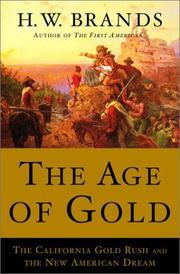
A propulsive, accessible narrative history written for general readers — the perfect entry point. Brands follows real participants from the 1848 discovery through the frenzy of 1849–1852, giving the reader a firm chronological backbone before anything else.

A firsthand account by a journalist who sailed to California in 1849 and reported back for the New York Tribune. Reading a primary voice immediately after Brands anchors the human texture — the smells, prices, and chaos — that secondary histories can only approximate.
Society in the Diggings: Camps, Boomtowns, and the People Who Built Them
BeginnerUnderstand the social world of Gold Rush California — the diversity of miners, the rise of San Francisco, gender dynamics, and the makeshift institutions that governed the camps.
▸ Study plan for this stage
Pace: 6–7 weeks, ~40–50 pages/day. Start with "The Shirley Letters" (4 weeks, ~25 pages/day for the epistolary narrative), then move to "The Barbary Coast" (2–3 weeks, ~50 pages/day for denser historical prose).
- The Shirley Letters as a primary source: how Louise Clappe's letters document daily life, social hierarchies, and gender roles in the mining camps from a woman's perspective
- Diversity of the Gold Rush population: miners from different nations, social classes, and backgrounds, and how they coexisted and competed in the diggings
- The role of women in mining camps: scarcity, economic opportunity, and social status as depicted in Clappe's observations
- San Francisco's transformation from settlement to boomtown: rapid urbanization, commerce, and the concentration of wealth and vice documented in Asbury's narrative
- Makeshift governance and law in the camps: vigilantism, informal justice, and the breakdown of traditional authority structures
- The Barbary Coast as a social microcosm: how San Francisco's waterfront reflected the chaos, criminality, and entrepreneurship of the Gold Rush era
- Class and morality in the Gold Rush: the contrast between respectable society and the underworld, as shown through Clappe's genteel perspective and Asbury's exposé
- What does Louise Clappe's perspective in the Shirley Letters reveal about gender, domesticity, and women's agency in the mining camps that a male observer might have missed?
- How did the diversity of miners—in nationality, class, and background—shape the social dynamics and conflicts Clappe witnessed in the diggings?
- What role did informal institutions (vigilante justice, miners' meetings, community norms) play in maintaining order in the camps, according to Clappe's accounts?
- How did San Francisco's rapid growth from a small settlement to a major port city create the conditions for the Barbary Coast's emergence as described by Asbury?
- What does Asbury's account of the Barbary Coast reveal about the relationship between legitimate commerce, crime, and social stratification in Gold Rush California?
- How do the Shirley Letters and The Barbary Coast together illustrate the contrast between the mining camps' social world and the urban chaos of San Francisco?
- Close-read 2–3 letters from the Shirley Letters and annotate them for: (a) Clappe's observations about gender roles, (b) her descriptions of specific miners and their origins, (c) her judgments about morality and respectability. Write a 1-page reflection on how her perspective shapes what she chooses to document.
- Create a character map of the mining camp based on the Shirley Letters, identifying at least 8–10 individuals by name, nationality, occupation, and social status. Note which characters Clappe portrays sympathetically and which critically, and hypothesize why.
- Compare Clappe's account of justice and law-keeping in the camps with Asbury's descriptions of San Francisco's vigilante movements and organized crime. Write a 2-page essay on how informal governance differed between the diggings and the city.
- Trace San Francisco's growth through Asbury's narrative: identify 3–4 key moments or developments that transformed it from a settlement into a boomtown, and note how each enabled the Barbary Coast's rise.
- Research one real historical figure mentioned in either text (e.g., a notorious criminal from Asbury or a miner from Clappe's letters) and write a 1-page biography that contextualizes them within the broader Gold Rush society.
- Create a visual timeline (digital or hand-drawn) spanning 1848–1860 that plots major events from both texts: the start of the Gold Rush, the rise of specific camps, San Francisco's growth, and key Barbary Coast episodes. Annotate with quotes from both sources.
Next up: This stage grounds you in the lived experience and social texture of Gold Rush society through primary and secondary sources; the next stage will likely deepen your understanding of the economic, political, and environmental consequences of the rush, or explore the impact on Native Americans and other marginalized groups.

Written by a woman living in the mining camps of the Feather River in 1851–52, these letters are the most celebrated eyewitness account of camp society. Reading them here adds a female perspective and vivid social detail that male-authored narratives miss.
Asbury's classic portrait of San Francisco's underworld — saloons, gambling dens, and vigilante justice — shows how the boomtown energy of the diggings concentrated into an urban pressure cooker, completing the picture of Gold Rush society.
The Dark Side: Violence, Race, and the Destruction of Native California
IntermediateConfront the Gold Rush's brutal racial hierarchies — the near-extermination of California's Indigenous peoples, the persecution of Chinese and Latin American miners, and the vigilante violence that enforced white supremacy.
▸ Study plan for this stage
Pace: 8–10 weeks, ~40–50 pages/day. "American Genocide" (approximately 400 pages) over 4–5 weeks, then "Roaring Camp" (approximately 400 pages) over 4–5 weeks. Allocate 1 week for synthesis and reflection between books.
- Madley's framework of genocide: how state-sanctioned violence, militia raids, and forced labor systematically decimated California's Indigenous population from 1846–1873
- The role of California's legal and political structures (scalp bounties, indenture laws, reservation policies) in enabling Indigenous dispossession and death
- Johnson's concept of 'cosmopolitan' mining camps: how multiethnic spaces were simultaneously sites of economic opportunity and rigid racial stratification
- The mechanisms of racial hierarchy in the Gold Rush: how white miners used violence, exclusion laws, and social custom to subordinate Chinese, Mexican, and Indigenous workers
- The gendered and sexual dimensions of racial violence: how Indigenous women and women of color were targeted for exploitation and abuse
- The environmental and social destruction wrought by mining: displacement, disease, starvation, and the collapse of Indigenous lifeways
- How narratives of the Gold Rush have obscured or romanticized these atrocities, and why confronting this history matters
- What specific mechanisms did California state and federal authorities use to facilitate the genocide of Indigenous peoples during and after the Gold Rush, according to Madley?
- How did scalp bounties, indenture systems, and reservation policies function as tools of Indigenous dispossession? What were their human consequences?
- In Johnson's account, how did mining camps operate as both cosmopolitan spaces and sites of racial hierarchy? What role did violence and exclusion play in maintaining white dominance?
- How did Chinese and Latin American miners experience discrimination in the Gold Rush, and how did their treatment differ from or parallel that of Indigenous peoples?
- What does Madley mean by 'American Genocide,' and how does his evidence support or challenge conventional narratives of the Gold Rush?
- How did the Gold Rush reshape gender relations and enable sexual violence against Indigenous women and women of color?
- Create a timeline of California state legislation (1846–1873) that Madley identifies as enabling genocide: note the scalp bounty laws, indenture acts, and reservation policies. Annotate each with its human impact.
- Map the geographic distribution of mining camps and militia violence in 'American Genocide.' Identify patterns: which regions saw the most intense violence? Why?
- Read and annotate 2–3 primary source documents from 'American Genocide' (e.g., militia reports, government correspondence, Indigenous testimonies). What perspectives are present or absent?
- Construct a comparative chart: for Chinese miners, Mexican miners, and Indigenous peoples in Johnson's 'Roaring Camp,' document the forms of violence, economic exclusion, and social marginalization each group faced.
- Write a 2–3 page analytical essay: 'How does Johnson's concept of cosmopolitanism complicate or support Madley's genocide framework?' Use specific examples from both texts.
- Identify and critique a popular Gold Rush narrative (film, textbook passage, museum exhibit, or historical novel). How does it obscure the violence Madley and Johnson document? What is omitted?
Next up: This stage establishes the brutal human and moral costs of the Gold Rush, providing essential context for the next stage's exploration of how survivors, descendants, and communities have resisted, remembered, and rebuilt in the aftermath of this violence.

The definitive scholarly account of the California genocide, meticulously documenting how the Gold Rush triggered state-sponsored and vigilante massacres of Native Californians. This is the essential corrective to celebratory Gold Rush narratives and should be read before lighter legacy books.
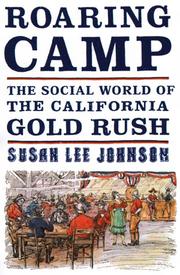
A cultural history of the southern mines that centers race, gender, and sexuality, examining how Chinese, Chilean, Mexican, and Black miners were systematically excluded or exploited. Johnson's analytical framework deepens Madley's focus on Indigenous peoples to cover the full racial landscape.
Legacy: What the Gold Rush Made of America
ExpertSynthesize the Gold Rush's long-term consequences — for California's economy and environment, for American capitalism and westward expansion, and for the national mythology of opportunity and reinvention.
▸ Study plan for this stage
Pace: 4–5 weeks, ~40–50 pages/day (approximately 200–250 pages total)
- Environmental degradation as a direct consequence of Gold Rush extraction: hydraulic mining, deforestation, water pollution, and soil erosion in California
- The transformation of California's landscape from a biodiverse ecosystem to an industrialized, resource-depleted region
- How Gold Rush capitalism established patterns of resource exploitation that became foundational to American economic expansion
- The disconnect between the mythology of opportunity and the material destruction left behind in Gold Rush regions
- Ecological imperialism: how American settlers imposed extractive economic systems on California's environment without regard for long-term sustainability
- The role of technological innovation (hydraulic mining, dams, railroads) in accelerating environmental destruction
- How California's environmental crisis became a model—both cautionary and instructive—for understanding American westward expansion's true costs
- What specific environmental damages did hydraulic mining and other Gold Rush extraction methods inflict on California's landscape, and how did these persist long after the Gold Rush ended?
- How did the Gold Rush establish a template for resource extraction and environmental exploitation that shaped American capitalism's approach to westward expansion?
- What is the relationship between the American mythology of unlimited opportunity and the material reality of ecological destruction documented by Dasmann?
- How did technological innovations during the Gold Rush era accelerate environmental degradation, and what does this reveal about the connection between industrial progress and ecological cost?
- What were the long-term consequences for California's economy, agriculture, and habitability as a result of Gold Rush-era environmental destruction?
- How does Dasmann's analysis of California's destruction serve as a lens for understanding the broader environmental legacy of American westward expansion?
- Create a detailed timeline mapping specific Gold Rush extraction methods (hydraulic mining, logging, water diversion) to their documented environmental impacts, using evidence from Dasmann's text
- Develop a comparative analysis: select one California region transformed by the Gold Rush and research its pre-1848 ecosystem versus its post-1900 state, then write a 2–3 page synthesis connecting Dasmann's arguments to your findings
- Construct a visual map or infographic showing the geographic spread of environmental damage across California caused by Gold Rush activities, annotated with Dasmann's key examples
- Write a critical reflection (1,500–2,000 words) examining how the Gold Rush mythology of 'opportunity' obscures or contradicts the environmental destruction Dasmann documents
- Debate exercise: prepare arguments for both 'the Gold Rush was an inevitable cost of American progress' and 'the Gold Rush represents a preventable ecological catastrophe,' grounding each position in Dasmann's evidence
- Research and present on one specific technology (hydraulic mining, dam construction, etc.) that Dasmann discusses, tracing how it was justified at the time versus how we understand its environmental impact today
Next up: This stage establishes that the Gold Rush's legacy is fundamentally one of environmental and economic transformation—setting the stage to explore how this model of extraction and reinvention shaped not just California, but American identity, policy, and subsequent resource frontiers across the continent.

An early and still powerful environmental reckoning with hydraulic mining's catastrophic impact on California's rivers, valleys, and ecosystems — the ecological bill that the Gold Rush left behind for future generations.
Discussion
Keep reading
Paths that share books, cover the same subject, or open a related topic.