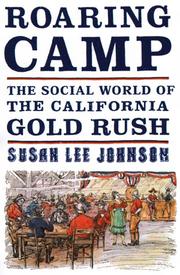
Roaring Camp
Susan Lee Johnson · 2000 · 464 pages
As an Amazon Associate we earn from qualifying purchases. Some book links are affiliate links; you pay the same price and we may earn a small commission.
About this book
"Susan Lee Johnson's Roaring Camp explores the dynamic social world created by the gold rush in the Sierra Nevada foothills east of Stockton. In it we find Mexican families like the Murrietas who worked the mines, did the wash, and rose up against Anglo rule. There are the California Indians who tried to maintain their customary practices even while helping to construct the sawmill at Sutter's fort where gold was discovered in 1848. We enter the all-male households of the diggings, the mines where the men worked, and the fandango houses where they played. At places like Casa de los Amigos in Stockton, the Long Tom Saloon in Sonora, and Madame Clement's in Mariposa, California, gold found its way out of the hands of men from around the world into the hands of women from Mexico, Chile, and France.". "Johnson charts the ways in which the conventions of identity were reshaped in the diggings. More explicitly than back home, where gender could be mapped predictably onto bodies understood as male and female, gender in California chased shamelessly after racial and cultural markers of difference, heedless of bodily configurations."--BOOK JACKET.
Appears in these reading paths


Best Books on the California Gold Rush, in Order
Related reading guides
Reader reviews
Ratings and notes from readers — tagged with how deep into the subject they were.
Loading reviews…