The California Gold Rush is one of the most heavily mythologised episodes in American history, and the myth is built into the sources. Contemporary accounts were often written for eastern readers who wanted adventure, and the twentieth-century retellings inherited that tone. Meanwhile the two things the rush did most decisively — the catastrophic violence against California's Native peoples and the physical destruction of the state's watersheds — sit outside the adventure story entirely.
So the order matters. Get the narrative and the eyewitnesses first, because you need to know what people believed they were doing. Then read the books that account for the cost, which land far harder once you have the romance in your head.
The narrative and the world it made
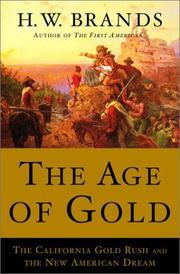
Start with The age of gold, H. W. Brands's history of the rush and its consequences. It covers the routes — around the Horn, across Panama, over the plains — the camps, the collapse of San Francisco into a boomtown, and the argument that the rush produced a distinctively American appetite for sudden wealth. It is a well-paced synthesis and the right first book.
Then go to the eyewitnesses. Eldorado Or Adventures In Path Of Empire is Bayard Taylor's dispatch-based account of travelling to California in 1849 as a correspondent, and it is the most vivid contemporary reporting available. Set against it The Shirley letters, written by Louise Clappe from the Feather River camps in 1851 and 1852 under a pen name — a doctor's wife with a sharp eye, writing to her sister about violence, sickness, boredom, and the actual economics of a claim. Clappe is the more reliable observer of daily life; Taylor is the better narrator of the journey.
The barbary coast, Herbert Asbury's 1933 informal history of San Francisco's vice districts, is the fun one and the least dependable. Asbury wrote colourful popular history from newspaper morgues, and modern historians treat many of his specifics with caution. Read it for atmosphere, not for citation.
What the rush actually cost
American Genocide is the book that reframes the whole subject. Benjamin Madley documents the killing of California Indians between 1846 and 1873 — state-funded militia campaigns, bounty payments, and a population collapse from roughly 150,000 to 30,000 — and argues from the legal definition that it constitutes genocide. His numbers are drawn from a painstaking record of individual killings. Some historians debate the framing and the terminology; almost none dispute the scale of the deaths. Read it slowly.
Roaring Camp approaches the same period through social history. Susan Lee Johnson looks at the southern mines and at who was actually there — Mexican, Chilean, Chinese, French, and Native workers alongside Anglo-Americans — and at how race, labour, and gender were negotiated in camps where the usual domestic order did not exist. It is the best correction to the image of the miner as a lone white prospector.
Close with The destruction of California, Raymond Dasmann's account of the environmental damage. Hydraulic mining alone stripped hillsides and dumped enough debris into the river systems to raise streambeds, flood farmland, and reshape the Bay — damage that outlasted the gold by more than a century. It extends the story past the 1850s into the ongoing consequences.
Read in that order and you will finish with the myth intact as an object of study and no longer mistaken for the history. Follow the full path to keep the sequence.
Follow the full ordered path here: How to Read About the California Gold Rush, in Order.