The Boer War: books to read, in order
The South African War of 1899-1902 was the largest and costliest war Britain fought between Waterloo and 1914, and the one that most damaged its idea of itself. This path opens with the gold and diamond economy that made the war worth fighting, takes the standard single-volume histories, then reads the war through the people who were in it, and finally turns to the guerrilla phase, the farm burnings and camps, and the black South African experience that both white sides' accounts long left out.
Gold, Diamonds and the Road to War
BeginnerUnderstand why the Witwatersrand goldfields made the Transvaal's independence intolerable to Britain, and how the Jameson Raid poisoned the politics four years before the shooting started.
▸ Study plan for this stage
Pace: 3 weeks, roughly 30 pages a day. The Randlords first, then Diamonds, Gold and War. Wheatcroft is a group portrait of the mining magnates and Meredith carries the same cast forward into the diplomatic collision, so the order is chronological as well as logical. Both are written from the imperial and
- The Kimberley diamond fields, De Beers, and the consolidation of an industry into a monopoly before the gold was found
- The Witwatersrand deep-level goldfields: the capital requirements, the labour requirements, and why deep mining made political control of the Transvaal a commercial question
- The uitlander franchise grievance as a genuine issue and as a manufactured pretext, and how to hold both at once
- Rhodes, Beit and Barnato as individuals with an interest in a particular outcome, and the overlap between Cape politics and mining capital
- The Jameson Raid of 1895-96, its failure, and the four years of poisoned politics that followed it
- Milner's role and the Bloemfontein conference, and the question of who wanted a war
- Kruger's Transvaal on its own terms — a republic whose independence rested on controlling an industry it could not run
- Why did deep-level mining, specifically, make the Transvaal's independence intolerable to British interests? Answer in terms of capital and labour, not sentiment.
- What did the Jameson Raid actually attempt, who authorised it, and what was the political effect of its failure on both sides?
- The uitlander franchise was the stated cause of the war. How good was the grievance, and what would have satisfied it?
- Both these books tell the story through a small number of British and British-colonial men. Whose account of the same decade is absent, and what would it change?
- Was this war made in Johannesburg, in Cape Town, or in London? Argue for one and say what evidence would settle it.
- Build a timeline from 1886 to October 1899 with two columns: mining and finance on one side, politics and diplomacy on the other. Mark every point where a commercial development is followed within months by a political one.
- Trace one claim about the uitlanders' numbers or their tax burden through both books to the source each cites. Write down how firm the figure actually is.
- Write the Transvaal government's case against the franchise demand in a paragraph, as Kruger's ministers would have made it, using only facts Meredith supplies.
- List the individuals who stood to gain financially from a British victory and note, for each, what Wheatcroft says they actually did in 1899.
Next up: The causes established, the next stage runs the whole war through twice — once from the British archive and once from a South African historian.
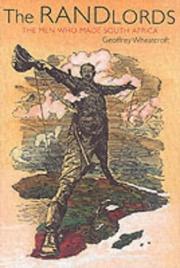
A group portrait of the mining magnates — Rhodes, Beit, Barnato — who turned Kimberley and the Rand into an imperial interest. Start here because the war's causes are financial before they are political.
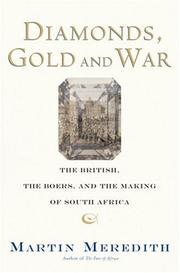
Carries the same story forward into the diplomatic collision, the Jameson Raid and the ultimatum. Read second: it turns Wheatcroft's cast into the sequence of events that produced a war.
The War in One Volume
BeginnerGet the full military and political narrative — Black Week, the relief of the sieges, the fall of Pretoria, and the two years of guerrilla war that everyone expected to be over by then.
▸ Study plan for this stage
Pace: 6 weeks — this is the longest stage on the path. Pakenham's The Boer War is around 700 pages and is the spine of everything that follows; give it four weeks at 30 pages a day. Then Nasson's The War for South Africa, a shorter modern account that is more interested in the war's social reach and in Af
- The republican offensive of late 1899 and the sieges of Ladysmith, Kimberley and Mafeking
- Black Week — Stormberg, Magersfontein, Colenso — and the collapse of British confidence in December 1899
- Roberts and Kitchener's reorganisation, the flank march, Paardeberg, and the fall of Bloemfontein and Pretoria
- The transition from a conventional war that Britain had won to a guerrilla war it could not end
- The scale of the mobilisation: nearly half a million imperial troops against two small republics, and what that ratio says about the difficulty
- The war's social reach into South African society, which is where Nasson departs from Pakenham
- Disease and logistics as the war's largest killers of soldiers
- Why did Britain lose three battles in a week in December 1899? Give a tactical answer and then a doctrinal one.
- At what point had Britain won the conventional war, and why did that not end it?
- Pakenham is working largely from British archives and private papers. Where does Nasson's account draw on evidence Pakenham did not use, and what does it change?
- Whose voices are absent from Pakenham's narrative? Name the categories, not just the individuals, and say what would be needed to include them.
- Nasson writes as a South African historian in the 2010s and Pakenham as a British one in 1979. Identify two judgements where the difference in standpoint is visible in the text.
- Draw the war in three maps — the republican offensive, the British advance, the guerrilla phase — with dates. Then mark on the third map where the first two would have told you the war was over.
- Take one battle covered by both authors and write their accounts in parallel columns. Note every fact that appears in only one of them, and what kind of source each fact came from.
- Trace a single figure — troops engaged, casualties, or cost — across both books and record the number each gives and its source. Write a paragraph on why they differ.
- List every group Nasson mentions that Pakenham does not treat as a participant. That list is your reading agenda for the final stage.
- Write the paragraph a Boer republican historian would write about Paardeberg. Then mark which of its claims you cannot check from anything on this path, and why that is.
Next up: Two narrative histories in hand, the next stage puts you in front of the participants' own words — and the problem of what to do with them.
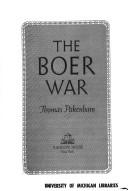
The standard narrative history and still the most compelling, based on wide archival work and unusually good on British political manoeuvring. Long, and worth it — this is the spine of the whole path.

A South African historian's shorter modern account, more interested than Pakenham in the war's social reach and in African participation. Read it directly after as the corrective from the other end of the empire.
Written From Inside the War
IntermediateRead the war as its participants and contemporaries described it, and learn to handle openly partisan primary sources — including how a first-rate eyewitness can be wrong about what the war meant.
▸ Study plan for this stage
Pace: 4 weeks. Commando first — Deneys Reitz's account of three years in the field, begun as a seventeen-year-old and the finest memoir of the war on either side, and the one substantial Boer voice on this path. Then Churchill's London to Ladysmith via Pretoria, published in 1900 while the war was still g
- The commando as a military institution — self-mounted, self-organised, elected officers, and no formal discipline
- Reitz's account of the guerrilla phase and the Cape invasion as the experience of exhaustion rather than of heroism
- The war correspondent as a participant with a career interest, and the armoured train episode as Churchill made it
- The difference between a memoir written thirty years later in exile (Reitz) and dispatches published while the events were current (Churchill)
- Conan Doyle's book as advocacy: what charges it is answering, and what it concedes
- How to read a partisan primary source — separating what the writer saw, what he was told, and what he needs to be true
- The absence, in all four of these books, of any account by the black South Africans present at nearly every event they describe
- What does Commando show about how the commandos actually fought and supplied themselves that neither narrative history conveys?
- Take Churchill's account of his capture and escape and Millard's reconstruction of the same days. List the specific differences and say what Churchill gained by each.
- Reitz is a first-rate eyewitness who was also wrong about what the war meant. Where in Commando can you see the difference between his observation and his politics?
- What atrocity charges is Conan Doyle answering in 1900? Write down what you can infer about them from his defence alone, before the next stage tells you.
- Every book in this stage was written by a white participant or partisan. Reitz's servant appears in Commando; so do African scouts, drivers and labourers across all four. What are they doing, and why does none of these books treat them as historical actors?
- Take one incident Reitz describes and try to locate it in Pakenham. Write down whether the memoir adds detail, contradicts the history, or describes something the history has no reason to record.
- Put London to Ladysmith and Hero of the Empire side by side on the armoured train and the escape, and mark every claim Churchill makes that Millard shows to be embellished, and every one she confirms.
- Read The Great Boer War with a pencil and list each charge Conan Doyle rebuts. Keep the list; you will check it against Judd and Warwick in the next stage.
- Go through Commando and mark every appearance of a black South African. Write a paragraph on what the cumulative picture implies about the war's actual population, and about what Reitz thought worth recording.
- Write the memoir paragraph that a Boer woman removed to a camp in 1901 would have written about the same months Reitz spent in the field. Then state honestly what on this reading list would let you check it — and note that the specialist camp scholarship is not here.
Next up: The participants have had their say; the last stage covers the half of the war they mostly did not write about.
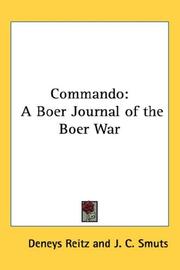
The finest memoir of the war on either side: a seventeen-year-old Boer's account of three years in the field, ending in the exhausted guerrilla campaign in the Cape. Read it first because it makes the Boer side a lived experience rather than a position.
Churchill's dispatches as a war correspondent, including his capture and escape, published in 1900 while the war was still on. A primary source and an exercise in self-promotion at the same time.

A modern narrative of the same episode, with the archival context Churchill left out. Reading it straight after his own version is the clearest demonstration on this path of what a memoir does to events.
Written by Conan Doyle in 1900 partly to defend the British army against charges of atrocity. Included as a document of imperial opinion, not as history — read it knowing what the last stage of this path will establish.
The Guerrilla War, the Camps, and the People Both Sides Ignored
IntermediateConfront the second half of the war on its own terms — scorched earth, the concentration camps and their death rates, and the roughly one hundred thousand black South Africans who served, laboured and died in a war fought over their country without them.
▸ Study plan for this stage
Pace: 5 weeks. Read Warwick's Black People and the South African War first, not last — it is the foundational study of African participation and the most important corrective on this path, and taking it first changes how you read the other three. Then Judd's The Boer War for the machinery of the guerrilla
- Kitchener's blockhouse-and-drive system, the farm burnings, and scorched earth as a deliberate counter-guerrilla method rather than an excess
- The concentration camps: how they came to exist, who was held in them, the death rates, and the causes of those deaths
- The separate camps for black South Africans, their death rates, and why they were left out of the accounting for eighty years
- Emily Hobhouse, the Fawcett Commission, and the point at which the camps became a British domestic political scandal
- The roughly one hundred thousand black South Africans who served as scouts, drivers, labourers and armed auxiliaries, and the war fought over their country without them
- The bittereinders, the hensoppers and the National Scouts — the Boer republics' own internal split, which is the part of the story this reading list is least equipped to tell
- Vereeniging, the deferral of the African franchise question, and the shape it gave to the next century of South African politics
- Set out the causal chain from the guerrilla phase to the camps, step by step. At which step, if any, was a different policy available?
- What were the death rates in the Boer camps and in the black camps, and why is the second figure so much less known? Who did the counting, and when?
- Warwick establishes that black South Africans participated on every side and in every role. Go back through the previous stages: how did Pakenham, Reitz, Churchill and Conan Doyle each handle their presence?
- Every account of the camps on this path is written from the British side, and the standard Afrikaner-side scholarship is not in this list. Name three specific things you would expect a Boer civilian source or an Afrikaner historian to tell you that these four books cannot.
- Pollock defends Kitchener; Judd and Warwick do not. On the evidence available to you here, what is your own judgement of his responsibility — and how confident can you be, given whose account you have read?
- The Peace of Vereeniging settled the African franchise by postponing it. Trace the consequence forward and say why this war is still argued about in South Africa.
- Build a table of camp mortality by year and by camp population — Boer camps and black camps in separate columns — from the figures Judd and Warwick give. Then note which of the two sets of figures required a historian to go and find, and how long that took.
- Go back to the list of charges you made from Conan Doyle in the last stage and check each one against Judd and Warwick. Mark each as substantiated, exaggerated or refuted, and cite the page.
- Take one operation of the blockhouse-and-drive system and map it: line, garrison, sweep, and the civilians displaced by it. Then write a paragraph on whether the system could have worked without the farm burnings.
- Read Pollock's defence of Kitchener on the camps and write out the rebuttal Warwick's and Judd's evidence supports, sentence by sentence. This is the exercise the stage exists for.
- Write down, in one paragraph each, the account of 1901 you would expect from a Boer bittereinder, from a woman in a camp, and from a black scout attached to a British column. Then mark which of the three you can actually source from the books on this path — the answer is one — and treat the other two as the reading you still owe the subject.
Next up: This closes the path: you can now read any account of the South African War and say whose war it is describing, and whose it has left out — including where this reading list itself falls short.

The foundational study of African participation, and the book that made it impossible to keep writing the war as a purely white conflict. The most important corrective on this path.
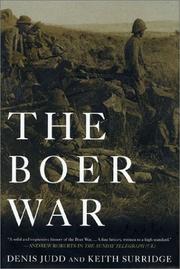
Judd's history is particularly clear on the guerrilla phase, Kitchener's blockhouse and drive system, and the farm burnings that produced the camps. Read it for the machinery of the war's second half.

An older narrative history, unusually attentive to the collapse of British public confidence and to the camp scandal as it broke at home. A useful account of how the war was received, not just fought.
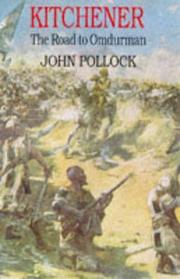
A biography of the commander who ran the scorched-earth campaign, sympathetic enough that reading it against Warwick and Judd forces you to make the judgement yourself. The right unresolved note to end on.
Discussion
Keep reading
Paths that share books, cover the same subject, or open a related topic.