The Black Company Reading Order and Guide
Glen Cook's mercenary chronicle is eleven novels grouped into named sub-series — the Books of the North, the Books of the South, the Books of the Glittering Stone — plus a late prequel. Publication order is the right order and there is no serious dispute about it; the confusion comes from bookshops, where the individual novels are usually sold inside three-in-one omnibuses with names that look like titles. This path lists the actual novels in sequence so you know what you are buying, and flags the two volumes that are genuinely optional.
The Books of the North
IntermediateRead the founding trilogy and learn Cook's method: no maps, no prophecy, no omniscience — just a company annalist writing down what he can see from inside the ranks.
▸ Study plan for this stage
Pace: 3 to 4 weeks for about 960 pages. The Black Company, Shadows Linger and The White Rose are short by fantasy standards and read fast once you adjust to the prose, but budget extra time for the first eighty pages of book one, which are genuinely disorienting. Read the three with no gap between them.
- Know what you are picking up: this is grim military fantasy about mercenaries who work for the villain. There is atrocity, torture, casual killing of civilians, and rape treated as an ordinary feature of warfare. Nothing is dwelt on lovingly, but nothing is softened either, and the Company are not g
- Croaker is the narrator, the Company physician and its official Annalist. Everything you get is his written record, which means you are reading a document produced inside the unit by a man with reasons to shade things
- He is unreliable in a specific and unusual way — not lying so much as limited. He records what he saw and heard, misses whole campaigns, forgets names, and openly says when he is guessing. If you find yourself confused about who did what, that confusion is the intended experience of a soldier in the
- Cook gives you no maps, no prophecy, no omniscient overview and no strategic summaries. Battles are frequently over before Croaker understands them and reported second-hand
- The prose is clipped, flat and deliberately unliterary — short sentences, army slang, jokes. It is a war memoir voice rather than an epic one, and Cook wrote much of it in short bursts while working shifts at a car plant
- The Lady and the Taken are the Company's employers and are unambiguously the dark side. The novels' actual question is what happens to people who do competent professional work for that side
- Names are a real obstacle. Half the Company go by trade nicknames — One-Eye, Goblin, Elmo, Silent — and Cook introduces them without ceremony. Keep a list for the first hundred pages
- This trilogy is widely credited with starting modern grimdark, and reading it shows how much of Erikson, Abercrombie and their descendants comes directly from here
- What can Croaker as Annalist see, and what is structurally invisible to him? List three things
- The Company knowingly serves the Lady. What justification does Croaker actually offer, and does the novel endorse it?
- Where does Croaker's account of an event conflict with what you can infer actually happened?
- The White Rose changes the Company's position considerably. What does that change cost, and who pays it?
- Cook refuses to describe most battles directly. What does that refusal do to how you read the violence?
- Croaker writes the Annals for future members of the Company. How does the intended audience shape what he includes?
- Keep a roster for the first hundred pages: nickname, job, one distinguishing detail. You will not need it after that and you will be lost without it
- Mark every point where Croaker admits he does not know something. The density of those admissions is the book's method in miniature
- After each novel, write two sentences on what the Company gained and what it lost. The ledger is the real plot
- Pick one scene and rewrite three sentences of it in standard epic-fantasy register. The difference explains why Cook's flatness is a choice
- Note where you started liking characters who do indefensible things, and do not talk yourself out of the observation
Next up: The founding trilogy taught you the Company's voice and its arithmetic of survival; the southern books take that voice into unfamiliar territory and start handing the pen to other people.
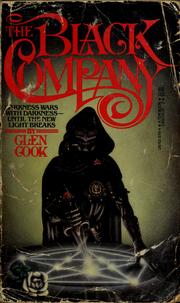
Croaker's first annal, in which the company signs with the wrong side and knows it. Start here, and give it fifty pages — the flat, clipped soldier's prose is the point, not a failure of style.
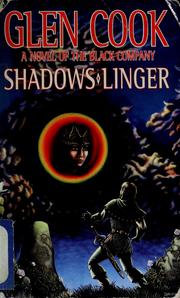
The company holed up in Juniper, told partly from outside the ranks for the first time. The book where the series proves it can do more than one voice.
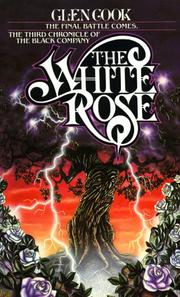
The rebellion finally arrives and the northern arc closes. A real ending — if you only ever read three Black Company books, these are the three.
The Books of the South
IntermediateFollow the survivors south toward Khatovar, and pick up the one side novel that fills in what happened to the people left behind.
▸ Study plan for this stage
Pace: 3 weeks for around 1,000 pages. Shadow games and Dreams of Steel back to back, then The Silver Spike. Dreams of Steel is the hardest tonal shift in the series and deserves a couple of days' pause before it. Do not read The Silver Spike first even though its events overlap.
- The Company marches south toward Khatovar, the city it claims to have come from four centuries ago, on the strength of records nobody can verify. The quest is documentary rather than prophetic, which is very much this series' idea of a quest
- Shadow games is the last comfortable book. It reads like a road novel with the surviving cast and it is where several long-serving characters run out of road
- Dreams of Steel changes narrator, and the change is the point of the volume. A different hand takes over the Annals and the register shifts from wry endurance to something much colder and more calculating
- That switch is the moment the series stops being Croaker's memoir and becomes a set of competing documents. From here on you should always be asking who is writing and what they want you to conclude
- The Silver Spike is a side novel that does not follow the Company at all. It picks up characters left behind in the north and runs concurrent with the southern books
- Its placement is the one genuine reading-order question in the series. Read it here, after Dreams of Steel, and it works as a coda to the northern trilogy; read it later and it feels stranded
- Bookshops sell these novels inside three-in-one omnibuses whose covers look like book titles. Chronicles of the Black Company, The Books of the South and similar names are collections, not novels — check the contents page before buying so you do not end up with a duplicate
- What does the new narrator of Dreams of Steel want the Annals to say, and how does that differ from what Croaker wanted?
- Khatovar is a destination nobody has evidence for. What does the Company get out of believing in it?
- The Silver Spike follows people who are not in the Company. What does the series look like from outside its own records?
- Compare a single act of violence in Shadow games with one in Dreams of Steel. What has changed in how it is reported?
- Which of these three books could be cut without damaging the sequence, and what would be lost anyway?
- Before buying, check whether your edition is an omnibus and note which three novels it contains. This trips up more readers than anything in the text
- When the narrator changes, stop and write down three things the new one notices that Croaker never did
- Track the Company's headcount across the three books. The number is a plot summary on its own
- Read The Silver Spike immediately after Dreams of Steel and note what it retroactively explains about the end of the northern trilogy
Next up: You now understand the Annals as a contested set of documents rather than one man's diary, which is the exact skill the Glittering Stone books demand from the first page.
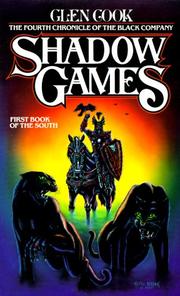
The company heads for its own origin city with a diminished roster. Read this before the side novel — it establishes the southern geography everything after depends on.
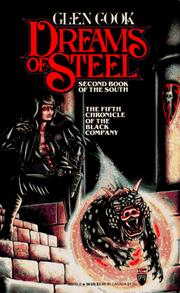
Lady takes the annals, and the series' voice changes completely. The strongest single volume after The White Rose, and the reason the southern books are worth the commitment.
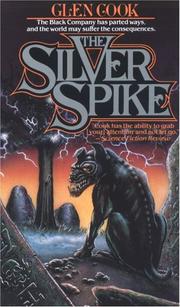
A standalone set back north with a cast the main line abandoned. The one genuinely skippable book on the path — read it here or not at all, but do not read it before Shadow Games.
The Books of the Glittering Stone
IntermediateFinish the main chronicle across four volumes that get stranger, slower and more structurally ambitious than anything in the early books.
▸ Study plan for this stage
Pace: 6 to 8 weeks for about 1,730 pages, and expect this to be the hardest stretch. Bleak Seasons alone deserves two weeks and a willingness to reread chapters. She Is the Darkness and Water Sleeps go faster. Soldiers Live is 566 pages and is the payoff — clear a week for it.
- Bleak Seasons is where most readers stall, and it is worth knowing why in advance. Murgen narrates while unstuck in time, drifting between years mid-chapter with no signposting, so the chronology has to be assembled by the reader. It is doing deliberately what a concussed man's memoir would do accid
- If you push through it, She Is the Darkness resolves a great deal of that disorientation and reads much more conventionally
- Water Sleeps hands the Annals to yet another narrator and is a patient, tightly controlled book about an occupation and a rescue. Many readers rate it the best in the series
- Soldiers Live returns the pen to Croaker, decades older, and closes the chronicle. Cook has been explicit that it is the end of the story proper
- The four books together get stranger and more structurally ambitious than anything in the north — buried cities, a plain of glittering stone, gates between worlds — while keeping the same flat soldier's diction
- The series-long theme finally lands here: the Annals are the only thing that outlives any of these people, and several characters make decisions specifically to control what the record will say
- The body count among long-serving characters is heavy and Cook does not stage deaths for maximum effect. People you have followed for eight books die in a paragraph
- What is Bleak Seasons doing with time, and at what point did you work out how to read it?
- Each of these four books has a different Annalist. What does each one systematically omit?
- The Glittering Stone plot introduces genuinely cosmic material into a series that had refused it. Does the flat narrative voice survive the scale-up?
- Water Sleeps is largely about waiting. How does Cook sustain a novel on that, and does it work?
- Soldiers Live ends the chronicle. Is the ending earned by the previous ten books, and what does it decline to resolve?
- By the end, what have the Annals been for?
- Keep a dated timeline while reading Bleak Seasons. Reconstructing the chronology is the intended labour, not a workaround
- If you stall in Bleak Seasons, read the first fifty pages of She Is the Darkness and then go back. This unsticks most readers
- Note who is holding the pen at the start of each book and what their stake in the record is
- List the characters who survive from the first novel to Soldiers Live. It is a very short list and the shortness is the argument
- After Soldiers Live, reread the opening chapter of The Black Company. It reads completely differently
Next up: The chronicle is finished and closed; the only thing left is a late-written book about the early days, and whether you want it depends entirely on how you feel now that it is over.
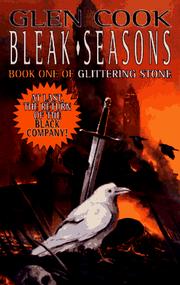
Murgen narrates out of chronological order because his mind is coming unstuck in time. The hardest book in the series and the one most readers stall on — know that going in, and push through.
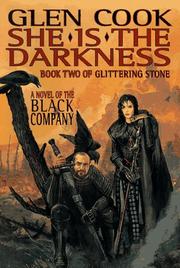
The siege arc and the long approach to the glittering plain. Clearer than Bleak Seasons and it pays off that book's disorientation directly.
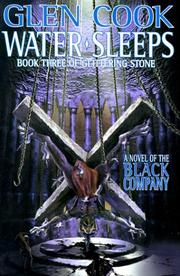
Sleepy takes the annals after a fifteen-year gap, with the company mostly gone. The best-plotted book of the later run.

The end of the chronicle, and an unusually unsentimental one. Read it last: it is the closing annal and everything it does depends on ten previous volumes of accumulated loss.
The Prequel, and Where to Stop
IntermediateAdd the late-written early-days novel, which is for people who already finished the chronicle and want more of the Forsberg-era company.
▸ Study plan for this stage
Pace: 1 to 2 weeks for 396 pages, and it is genuinely optional. Read it only if finishing Soldiers Live left you wanting more time with the Company rather than satisfied that it was over.
- Port of Shadows was published in 2018, eighteen years after Soldiers Live, and is set early — in the Company's first years working for the Lady, between the events of the founding novels
- It is the most divisive book in the series. A substantial part of the readership considers it not to fit the established chronology or the established voice, and that view is worth taking seriously before you buy
- Structurally it interleaves the Company material with a separate strand set much earlier, and the two do not join up as neatly as the older books would have insisted on
- It does not change anything you have already read. Nothing in the chronicle depends on it and no earlier book is retroactively altered by it
- The argument for reading it is simple: more Croaker, more One-Eye and Goblin, more of the Company at the height of its cohesion, written by the same man three decades later
- The argument against is equally simple: Soldiers Live is a real ending, and the best last impression of this series is the one the chronicle itself was built to leave
- This is the correct place to stop. Cook has written other work in the same world at various times, but the eleven-book chronicle is the complete artistic statement
- Does Port of Shadows sound like the Croaker of the founding trilogy, and where does the voice slip?
- What does the second narrative strand contribute, and could the book stand without it?
- Does anything here contradict the earlier books, and does a series told through unreliable documents actually have a problem with contradiction?
- Is a late prequel a gift to the reader or a tax on a finished story? Answer for this specific book
- Having read all eleven, what would you tell someone about where to stop?
- Decide before opening it whether you want more or want it to be over. Both answers are correct and the second one is more common
- Flag every point where the chronology feels off against the founding trilogy, then check the list against the objections other readers raise
- Write a short paragraph on what the Black Company chronicle did to the fantasy genre, using specific techniques rather than vibes — the unreliable annalist, the missing map, the flat soldier's diction
Next up: That is the whole Black Company, and the natural continuations are Malazan for the same military scale at ten times the length, or Abercrombie's First Law for the same cynicism at a much faster pace.

Written decades later and set between the first and second novels, with a fractured structure that assumes you know the whole arc. Absolutely not a starting point — read it only after Soldiers Live, as an epilogue rather than a prologue.
Discussion
Keep reading
Paths that share books, cover the same subject, or open a related topic.