Aubrey-Maturin Reading Order: Where to Start
The Aubrey-Maturin series is a single, continuous narrative — characters age, relationships deepen, and running jokes and tragedies accumulate across all twenty novels. Reading in publication order is therefore essential: each book assumes full knowledge of everything before it, and O'Brian deliberately withholds re-explanation. This curriculum groups the twenty novels into four stages that mirror the arc of the series: establishing the partnership, expanding the world, the long middle-sea of consequence, and the final, unfinished voyage.
The Foundation Voyage — Meeting Jack & Stephen
IntermediateEstablish the central friendship, master O'Brian's dense 18th-century register, and understand the Royal Navy's social and tactical world well enough to read the rest of the series without a glossary in hand.
▸ Study plan for this stage
Pace: 10–12 weeks total: ~3–4 weeks per novel at roughly 25–35 pages per day. Master and Commander (383 pp): weeks 1–3; Post Captain (525 pp): weeks 4–7; H.M.S. Surprise (351 pp): weeks 8–10. Allow one buffer week after each book for review and exercises. Reading sessions of 45–60 minutes work best to abs
- The Jack–Stephen friendship as the series' engine: their complementary natures (martial/musical, extrovert/introvert, Tory/radical) create dramatic and comedic tension that drives every plot
- O'Brian's 18th-century register: period-authentic diction, syntax, and irony drawn from Jane Austen and the Augustan essayists — reading slowly and aloud helps decode it
- Royal Navy social hierarchy: the rigid distinction between commissioned officers, warrant officers, and ratings; the meaning of 'post captain' vs. commander vs. lieutenant, and why Jack's promotions in these three books matter so much to him
- Naval tactics and ship-handling vocabulary: weather gauge, raking fire, boarding actions, the difference between a sloop, a frigate, and a ship of the line — Master and Commander and H.M.S. Surprise both hinge on tactical asymmetry
- Stephen Maturin as intelligence agent: Post Captain introduces the covert dimension of his character; his Catalan-Irish background and natural philosophy are not mere colour but plot machinery
- Prize money and the economics of sea-service: why captains chase prizes, how prize courts work, and how financial ruin (Jack's recurring problem in Post Captain) is as dangerous as enemy broadsides
- The shore world vs. the ship world: O'Brian contrasts the ordered, self-contained society of a man-of-war with the chaotic, morally ambiguous world ashore — Post Captain's long land sequences make this contrast explicit
- Diana Villiers and the love triangle: her relationship with Jack and Stephen in Post Captain and H.M.S. Surprise is not a subplot but a lens on class, freedom, and loyalty
- By the end of Master and Commander, what does Jack's command of the Sophie reveal about how O'Brian uses tactical detail to characterise — what does the Cacafuego action tell us about Jack as a captain and as a man?
- Post Captain spends nearly a third of its pages on land in England and France: what does this structural choice reveal about O'Brian's thematic concerns, and how does Jack's debt crisis mirror his professional precarity?
- How does Stephen's role shift between Master and Commander (ship's surgeon, naturalist) and H.M.S. Surprise (intelligence courier to India), and what does that shift cost him personally?
- Trace the evolution of the Jack–Stephen friendship across all three books: identify one moment in each novel where the friendship is seriously threatened and explain how O'Brian resolves the tension without sentimentality
- What is the significance of music — specifically the cello and violin duets — as a recurring motif, and how does O'Brian use it to signal the emotional state of the friendship?
- H.M.S. Surprise ends with a major personal loss for Stephen. How does O'Brian prepare the reader for this ending through foreshadowing in both Post Captain and H.M.S. Surprise itself?
- Keep a running 'Ship's Log' notebook: after each reading session jot down one unfamiliar nautical or period term, its definition (use Dean King's 'A Sea of Words' or the Aubrey-Maturin Lexicon online), and the sentence it appeared in — by the end of the stage you will have a personalised glossary of ~90 terms
- Draw a simple diagram of a Royal Navy sloop or frigate (the Sophie in Master and Commander is ideal) labelling the masts, key sails, and gun deck — refer to it whenever O'Brian describes a manoeuvre; redraw it from memory at the end of the stage
- Write a one-page 'character brief' on Jack Aubrey and a separate one on Stephen Maturin after finishing Master and Commander, then annotate and revise each brief after Post Captain and again after H.M.S. Surprise to track how your understanding deepens
- Re-read the opening concert scene in Master and Commander (Chapter 1) and the Cacafuego battle scene, then write two short paragraphs comparing O'Brian's prose rhythm in each — notice how sentence length and vocabulary shift between social comedy and violent action
- Map the geography of H.M.S. Surprise's voyage (Spithead → Madeira → Cape Verde → around the Cape → India) on a physical or digital map, noting which real historical events or figures O'Brian weaves in at each stop
- Host or simulate a 'wardroom discussion': write out three questions you would pose to a fellow reader about Post Captain's land sequences, then write the counter-arguments yourself — this forces engagement with the novel's most debated structural choice
Next up: Mastering O'Brian's register, the Jack–Stephen dynamic, and the Navy's social grammar in these three foundational novels gives the reader the fluency and emotional investment needed to follow the series into its more complex mid-period books, where longer voyages, deeper intelligence plots, and higher professional stakes build directly on everything established here.

The first novel and the only true entry point: it introduces Jack Aubrey and Stephen Maturin at the moment they meet, establishes O'Brian's voice, and sets every theme — friendship, prize money, music, intelligence work — that will run for nineteen more books.
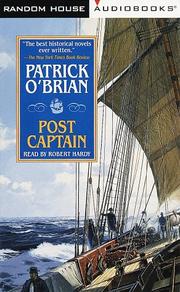
Longer and more novelistic than the first book, it deepens both men's characters on land as well as sea, introduces Diana Villiers, and shows O'Brian expanding his ambition; reading it second cements the vocabulary and social codes before the series accelerates.
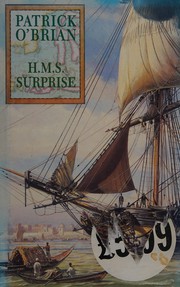
The third novel completes the 'first act' of the series — the Indian Ocean voyage crystallises the Aubrey-Maturin dynamic and ends on an emotional note that pays off only if the first two books are fresh in mind.
The Great Broadside — The Series Hits Its Stride
IntermediateFollow the series through its richest and most celebrated stretch, absorbing the full complexity of Stephen's intelligence career, Jack's professional rise and fall, and O'Brian's increasingly confident prose.
▸ Study plan for this stage
Pace: 6–8 weeks total; roughly 25–30 pages per day. Suggested pacing: Week 1–2 for The Mauritius Command (~280 pp), Week 3–4 for Desolation Island (~280 pp), Week 5–6 for The Fortune of War (~300 pp), with Week 7–8 reserved for review, re-reading key passages, and completing exercises.
- Command and responsibility: In The Mauritius Command, Jack is given his first broad pendant as commodore, forcing him to manage subordinate captains and weigh strategic objectives against personal loyalty — a new layer of leadership pressure beyond single-ship command.
- Colonial and geopolitical stakes: The Indian Ocean theater (Mauritius/Île de France, Réunion) introduces the reader to how Napoleonic warfare was truly global, with trade routes, colonial possessions, and naval supremacy intertwined.
- Stephen as intelligence operative: Desolation Island deepens Stephen's role as a secret agent — his courier mission, his complicated relationship with the American spy Louisa Wogan, and the moral ambiguity of espionage are foregrounded more explicitly than in earlier novels.
- Disease, addiction, and vulnerability: Stephen's laudanum dependency, introduced earlier, becomes a serious plot element in Desolation Island, humanizing him and complicating the heroic-naturalist image.
- The Leopard's chase and survival narrative: The prolonged pursuit by the Dutch 74-gun Waakzaamheid in Desolation Island strips the story to its essentials — seamanship, endurance, and the ship as a fragile living community under existential threat.
- Fortune of War and the laws of war: Capture, parole, prisoner exchange, and the ambiguous ethics of fighting while technically a prisoner-of-war are central to The Fortune of War, testing both Jack's honor and Stephen's espionage tradecraft in Boston.
- The American dimension: The Fortune of War is set against the outbreak of the War of 1812, introducing American naval power (USS Constitution vs. HMS Java) and forcing O'Brian to complicate the simple British-vs-French axis of earlier books.
- O'Brian's prose maturity: Across these three novels the author's narrative voice becomes more elliptical, ironic, and confident — less expository, more trusting of the reader — marking the transition from a good series to a great one.
- In The Mauritius Command, how does Jack's role as commodore differ from his previous commands, and what specific tensions arise from his authority over fellow captains such as Lord Clonfert? What does O'Brian suggest about the loneliness and moral cost of high command?
- How does Louisa Wogan function in Desolation Island both as a plot device and as a thematic counterweight to Stephen? What does their relationship reveal about the ethics and emotional toll of intelligence work?
- The chase sequence in Desolation Island is one of the most sustained pieces of nautical writing in the series. What seamanship techniques and improvisations does Jack employ, and how does O'Brian use the physical deterioration of the Leopard to mirror the crew's psychological state?
- In The Fortune of War, Jack and Stephen witness the engagement between HMS Java and USS Constitution. How does O'Brian handle the painful British defeat, and what does the scene reveal about his treatment of national pride versus honest historical record?
- How does Stephen's position as a prisoner (and covert agent) in Boston in The Fortune of War create moral and legal dilemmas that differ from anything he has faced in the previous two novels? How does he resolve — or fail to resolve — them?
- Tracking across all three novels: how does the friendship between Jack and Stephen evolve under the compounding pressures of commodore-level command, addiction, espionage exposure, and captivity? Identify at least one moment in each book where the friendship is tested or deepened.
- Mapwork — Indian Ocean to Boston: Draw or annotate a single map tracing the geographic arc of all three novels (Mauritius/Réunion → the South Atlantic/Desolation Island → the North Atlantic/Boston). Note the strategic significance of each location and how it connects to the broader Napoleonic and 1812 conflicts.
- Character command log: Keep a running journal entry for Jack after each novel, written in his voice, reflecting on one command decision he regrets and one he stands by. This forces close attention to his evolving leadership psychology across The Mauritius Command, Desolation Island, and The Fortune of War.
- Close-reading the chase: Re-read the Waakzaamheid pursuit chapters in Desolation Island and annotate every nautical maneuver mentioned. Cross-reference with a basic glossary of Age of Sail terms (Patrick O'Brian's own 'A Sea of Words' companion is ideal). Write a one-paragraph plain-English summary of how Jack ultimately escapes.
- Intelligence dossier on Stephen Maturin: After finishing The Fortune of War, compile a brief 'intelligence file' on Stephen as if you were a hostile analyst — his known covers, his contacts (Louisa Wogan, Diana Villiers), his vulnerabilities (laudanum, emotional attachments), and the operations he has run across all three books. This sharpens awareness of the spy-thriller subplot running beneath t
- Comparative defeat: Find a short primary or secondary account of the Java-Constitution engagement (December 1812). Compare the historical record with O'Brian's fictional rendering in The Fortune of War. Write 200–300 words on what O'Brian chose to change, omit, or emphasize, and why those choices serve his narrative.
- Prose style comparison: Select one paragraph of action writing and one paragraph of dinner-table conversation from each of the three novels. Arrange them chronologically and write a short note on how O'Brian's sentence rhythm, use of nautical jargon, and deployment of irony shift across the three books — evidence of his growing stylistic confidence.
Next up: These three novels leave Jack professionally humiliated (the loss of the Java, prize-money disputes) and Stephen dangerously exposed as an intelligence asset, creating precisely the unresolved tensions — financial ruin, espionage consequence, and the need for rehabilitation — that drive the next stage of the series.
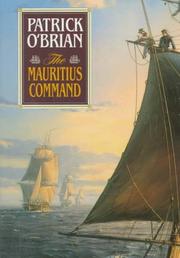
Book four gives Jack his first independent squadron command; reading it here lets the reader see how O'Brian escalates the tactical and political stakes now that the partnership is established.

Book five introduces the spy-thriller strand at full force and features one of the series' most celebrated chase sequences — its tension only lands if you already care deeply about the ship and crew.
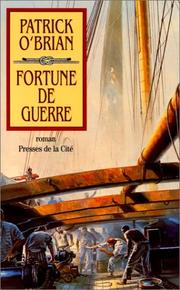
Set during the War of 1812 and widely considered one of the finest entries, book six puts both heroes in mortal danger on land; it is the payoff for five novels of accumulated loyalty and must be read in sequence.
The Long Commission — Consequence and Complexity
ExpertNavigate the middle and later novels where O'Brian trusts the reader completely, plotlines from earlier books return years later, and the emotional weight of the series — loss, aging, marriage, betrayal — accumulates to its heaviest point.
▸ Study plan for this stage
Pace: 8–10 weeks, roughly 25–35 pages per day (these four novels total ~1,400 pages in most editions). Suggested pacing: spend 2–2.5 weeks per novel, reading in daily sittings of 30–45 minutes. Reserve the final 3–4 days of each novel for re-reading key chapters, journaling, and completing exercises befor
- Accumulated consequence: O'Brian now relies on the reader's memory of earlier books — character decisions, debts, and relationships from prior novels resurface in The Surgeon's Mate (Diana's choices, Villiers's loyalties) and ripple forward, demanding active recall rather than passive reading.
- The spy world fully integrated: Treason's Harbour and The Surgeon's Mate bring Maturin's intelligence work to the foreground as a source of genuine moral peril, showing how his double life corrodes trust and places both men in life-threatening situations born of deception rather than battle.
- Marriage, domesticity, and their discontents: The Surgeon's Mate and The Ionian Mission explore what it means for men of action to be tethered — or to fail to be tethered — to home, wives, and civilian life, with Jack's financial ruin and marital strain forming a counterweight to shipboard freedom.
- The long commission as psychological state: The Ionian Mission introduces the grinding, unglamorous reality of a prolonged blockade commission — boredom, routine, and the slow erosion of morale — as a distinct kind of suffering separate from combat.
- Betrayal and its architecture: Treason's Harbour is structured almost entirely around the mechanics and emotional cost of betrayal — who is the double agent, who can be trusted, and what it costs Maturin to operate in a world where loyalty is a commodity.
- The Far Side of the World as mythic voyage: O'Brian consciously echoes the Odyssey in the Pacific chase, using extreme geographical displacement to strip the characters down to essentials and examine who Jack and Stephen are when all social context is removed.
- Aging, loss, and the passage of time: Across all four novels, O'Brian accumulates small but devastating markers of time passing — friends lost at sea, careers stalled, bodies failing — building an elegiac undertone that distinguishes this stage from the earlier, more adventurous novels.
- O'Brian's narrative trust in the reader: At this stage O'Brian drops exposition almost entirely, leaves plot threads deliberately unresolved across volumes, and embeds crucial information in dialogue subtext — rewarding close, patient reading and penalizing skimming.
- In The Surgeon's Mate, how does Diana Villiers's trajectory since her introduction in earlier novels reach a turning point, and what does O'Brian suggest about the cost of her independence in a Regency-era world?
- What does the prolonged blockade duty in The Ionian Mission reveal about Jack Aubrey's leadership style under conditions of tedium rather than crisis, and how does it differ from his conduct in battle?
- Treason's Harbour is built around the question of who is betraying whom — trace the layers of deception and identify the moment at which Maturin realizes the full extent of the threat. What does this cost him emotionally?
- How does The Far Side of the World use its extreme geographical setting — the Pacific, far from the Mediterranean and Atlantic theaters — to function as both a literal and symbolic voyage, and what Homeric or mythic echoes does O'Brian embed in the narrative?
- Across these four novels, how does Jack's financial and legal situation on land contrast with his authority and competence at sea? What does this contrast say about O'Brian's thematic argument regarding the nature of freedom?
- By the end of The Far Side of the World, how has the friendship between Aubrey and Maturin been tested and deepened compared to where it stood at the opening of The Surgeon's Mate? Identify specific scenes or exchanges that mark the shift.
- Betrayal map for Treason's Harbour: Draw a diagram of every character in the novel who holds or passes intelligence. Use arrows to show who reports to whom, and annotate each arrow with what the character believes versus what is actually true. Compare your map to the novel's resolution.
- Blockade journal: After finishing The Ionian Mission, write a one-page first-person journal entry from the perspective of a junior officer three months into the blockade duty — drawing only on details O'Brian provides. This forces close attention to the texture of shipboard routine O'Brian renders.
- Parallel timeline: Create a two-column timeline running across all four novels — one column for events at sea, one for events on land (Jack's legal troubles, Diana's movements, Maturin's intelligence assignments). Note where the two columns intersect or diverge, and where O'Brian withholds information from one column entirely.
- Homeric echo close-read: In The Far Side of the World, select two or three passages that most strongly evoke the Odyssey (storms, temptation, the longing for home, monstrous obstacles). Write a one-paragraph annotation for each explaining the parallel and what O'Brian gains — or deliberately subverts — by invoking it.
- Dialogue subtext exercise: Choose any scene of three or more pages in which Aubrey and Maturin speak to each other about a topic that is not the real topic (O'Brian is rich with these). Rewrite the scene with the subtext made explicit, then reflect in a paragraph on what is lost when the subtext is surfaced.
- Cumulative character arc essay: Write a 600–800 word essay tracing one character — Diana Villiers, Jack Aubrey, or Stephen Maturin — across all four novels of this stage. Argue for a specific claim about how that character has changed (or has refused to change) and what O'Brian seems to be saying through that arc.
Next up: These four novels establish the series' full emotional and moral weight — the losses, betrayals, and long silences between friends — so that the next stage can explore how O'Brian sustains, deepens, and ultimately begins to resolve those accumulated tensions across the final novels of the sequence.

Book seven resolves threads from The Fortune of War and deepens Stephen's intelligence work; it marks the point where O'Brian stops explaining anything and assumes a fully initiated reader.

Book eight returns to the Mediterranean and to a more reflective, autumnal mood — reading it after the American books shows how deliberately O'Brian varies geography and emotional register.
Book nine is the series' densest spy novel and only makes full sense with eight books of context; it rewards the advanced reader who has learned to track O'Brian's long-game plotting.
Book ten — the basis of the 2003 film — is often cited as the series' single greatest volume; arriving here after nine novels, the reader feels every nuance of the men's friendship and the ship's community.
The Final Horizon — Completion and the Unfinished Voyage
ExpertRead the last ten novels as a single sustained meditation on mortality, loyalty, and the passage of time, ending with the unfinished manuscript that O'Brian left at his death — a conclusion that is only moving because of everything that came before.
▸ Study plan for this stage
Pace: 8–10 weeks total, roughly one novel per 2 weeks; aim for 20–25 pages per sitting, 4–5 sittings per week — a slower, more contemplative pace befitting the elegiac tone of these final volumes. Reserve the last 3–4 days after Blue at the Mizzen for re-reading O'Brian's unfinished manuscript pages and w
- The Pillory and Public Shame (The Reverse of the Medal): How Jack Aubrey's court-martial and public humiliation reframe the series' entire meditation on honour, rank, and institutional loyalty — and how Stephen's underground network operates as a counter-institution of private loyalty.
- Restoration and Reinvention (The Letter of Marque): The symbolic weight of sailing under a letter of marque rather than the King's commission — Jack operating outside the Navy he has served his whole life — as a metaphor for identity stripped of its social scaffolding, and the question of what remai
- Napoleon's Hundred Days as Narrative Compression: O'Brian uses the historical urgency of 1815 to accelerate plot and force characters into irreversible choices; the novel asks how men who have lived by war make meaning when war is finally, definitively over.
- Blue at the Mizzen as Valediction: The promotion to Rear-Admiral and the voyage toward the Pacific as an open horizon — O'Brian's conscious structuring of an ending that refuses closure, mirroring his own death mid-manuscript.
- Mortality and the Body: Across all four novels, Stephen's medical practice, his own physical decline, and the deaths of secondary characters accumulate into a sustained reckoning with bodily fragility that the earlier, more adventure-driven novels held at bay.
- Loyalty as the Series' Deepest Theme: These final books strip away prize money, naval glory, and political intrigue to leave the Jack–Stephen friendship as the irreducible core — examine every scene of the two men together as a thesis statement on what endures.
- Time, Memory, and the Long Series: Reading these four books demands awareness of the entire preceding sequence; O'Brian rewards the long-term reader with callbacks, recurring minor characters, and tonal echoes that only land if you have travelled the full distance.
- The Unfinished Manuscript as Meaning: O'Brian's death mid-sentence is not merely biographical fact — it transforms Blue at the Mizzen's open ending into a literary event, and the reader's awareness of incompletion becomes part of the reading experience itself.
- In The Reverse of the Medal, how does Jack's experience of the pillory — a punishment designed to destroy social standing — paradoxically reinforce rather than sever his bond with Stephen and his crew, and what does O'Brian suggest about the relationship between public honour and private loyalty?
- The Letter of Marque restores Jack to active command but outside the Royal Navy's formal structure. How does O'Brian use this liminal status to interrogate what 'belonging' has meant to Jack across the entire series, and in what ways does the novel feel like a rebirth rather than merely a plot reset?
- How does The Hundred Days handle the end of the Napoleonic Wars — the very historical engine that has driven the entire series — and what emotional or thematic work does O'Brian do to prevent the peace from feeling like a deflation of the narrative?
- Blue at the Mizzen ends with Jack's promotion and a ship pointed toward an uncharted horizon. How does this image function simultaneously as a triumphant conclusion and a deliberate refusal of closure, and how does knowledge of O'Brian's death inflect your reading of that final voyage?
- Trace the arc of Stephen Maturin's intelligence work across these four novels. How does his role as a spy evolve — or diminish — as the Napoleonic context dissolves, and what does this say about the cost of living a double life over decades?
- Which recurring minor characters reappear in these final four novels, and how does O'Brian use their return to create a sense of accumulated time and community? Choose two specific examples and analyse what their presence adds that a new character could not.
- Shame and Honour Map (The Reverse of the Medal): After finishing the novel, draw a two-column chart listing every character who stands by Jack during his disgrace versus every character who distances themselves. Then write a one-paragraph argument about what O'Brian is saying about the nature of true loyalty versus institutional loyalty.
- Letter of Marque Close Reading: Select the scene in which Jack first reads or receives his letter of marque and annotate it in detail — word choice, nautical register, emotional subtext. Compare it to any earlier scene in the four books where Jack receives or loses a naval commission. What has changed in O'Brian's prose style and in Jack's interiority?
- Historical Interleaving Journal (The Hundred Days): Keep a reading journal that tracks, chapter by chapter, how O'Brian weaves the real historical timeline of Napoleon's return and defeat into the fictional plot. Note where he compresses, elides, or invents — and reflect on how historical inevitability creates or undermines narrative tension.
- Friendship Inventory: Compile a list of every scene in Blue at the Mizzen where Jack and Stephen are alone together. For each, write one sentence describing what is said and one sentence describing what is communicated beneath the words. At the end, write a short essay (300–500 words) arguing for the specific quality — not just 'friendship' — that defines their relationship by the novel's close.
- The Unfinished Manuscript Meditation: Read O'Brian's incomplete final pages (available in published editions of Blue at the Mizzen or as a standalone appendix) and write a 400-word reflection on the experience of reading an interrupted sentence from a dead author. How does incompletion function as a form of meaning? Compare this to the open horizon at the end of Blue at the Mizzen.
- Series Retrospective Essay: Now that you have read the entire curriculum, write a 600–800 word essay answering: 'What single image, scene, or sentence from these four final novels best serves as an epitaph for the entire Aubrey-Maturin series, and why?' Draw on specific textual evidence from at least three of the four books in this stage.
Next up: Having lived through the full arc of the series — from the first meeting in a Portsmouth music room to an unfinished sentence on the Pacific — the reader is now equipped to step back and engage with O'Brian's craft, biography, and critical reception as a whole, making this stage the natural gateway to comparative literary study, scholarly commentary, and the broader tradition of the sea novel.
Book eleven is the series' great tragedy — Jack's public disgrace — and is the emotional pivot of the entire sequence; its devastation depends entirely on the reader's decade-long investment in his career.
Book twelve begins Jack's long road back and introduces the privateer strand; reading it immediately after book eleven turns the page on the series' darkest moment with earned hope.
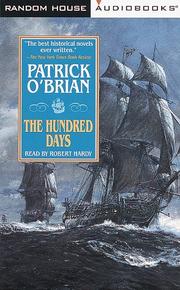
Book nineteen, set during Napoleon's final campaign, brings the historical world crashing back into the personal story and serves as the true emotional climax of the completed novels.
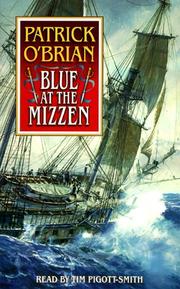
Book twenty, the last completed novel, resolves Jack's lifelong professional ambition in a quietly triumphant final chapter — its meaning is inseparable from the nineteen books that precede it.
Discussion
Keep reading
Paths that share books, cover the same subject, or open a related topic.