Temeraire Reading Order and Reading Guide
This curriculum guides you through Naomi Novik's nine-novel Temeraire series in strict publication order, the sequence Novik intended for readers to experience the world, characters, and escalating stakes. The stages group the novels into natural arcs — an introductory arc that establishes the world and core bond, a middle arc that expands the geopolitical scope, and a concluding arc that brings the series' grand themes to resolution — so each stage builds directly on the emotional and narrative groundwork of the last.
The Founding Arc — A Dragon and His Captain
BeginnerMeet Temeraire and Will Laurence, understand the alternate-history Napoleonic world where dragons serve as aerial cavalry, and get hooked on the central bond that drives the entire series.
▸ Study plan for this stage
Pace: 10–12 weeks total: ~3–4 weeks per book at a relaxed beginner pace of 20–25 pages/day. His Majesty's Dragon (~356 pp): weeks 1–3; Throne of Jade (~398 pp): weeks 4–7; Black Powder War (~356 pp): weeks 8–11, with a final review week for reflection and exercises.
- The Laurence–Temeraire bond: how a Celestial dragon's Harnessing creates a lifelong, mutual partnership rather than a one-sided ownership, and why this is socially radical in Regency England
- Alternate-history world-building: the Napoleonic Wars reimagined with dragon-based aerial corps (the Aerial Corps) as a fully integrated military branch, and how Novik weaves real history with fantasy logistics
- Class, duty, and identity: Laurence's transformation from Royal Navy captain to aviator and what that social demotion reveals about British class prejudice against the Corps
- Temeraire as a thinking, feeling agent: his curiosity, growing political consciousness, and the tension between his loyalty to Laurence and his desire for dragon rights
- Imperial politics and dragon diplomacy in Throne of Jade: China's claim on Temeraire as a Celestial, the Qing court's view of dragons as honored companions, and the contrast with European dragon treatment
- Supply chains, strategy, and the fog of war in Black Powder War: the overland journey from China through the Ottoman Empire and Prussia, showing how logistics and politics shape military outcomes
- Temeraire's evolving moral worldview: from obedient hatchling to a dragon who questions slavery, inequality, and the ethics of war across all three books
- Novik's narrative voice: close third-person limited through Laurence's perspective, and how his unreliable, honor-bound POV shapes (and sometimes limits) the reader's understanding
- How does Laurence's background as a Royal Navy officer shape his initial discomfort with the Aerial Corps, and how does his attitude shift across the three books?
- What makes Temeraire's breed — the Celestial — politically significant, and why does China send an embassy to reclaim him in Throne of Jade?
- How does Novik use the contrast between Chinese and British treatment of dragons to critique real-world attitudes toward sentient beings and social hierarchy?
- In Black Powder War, what strategic and personal consequences follow from the overland route through the Ottoman Empire and Prussia, and how do these events test Laurence and Temeraire's bond?
- By the end of Black Powder War, how has Temeraire's understanding of his own rights and freedoms changed, and what does this foreshadow for the series?
- How does Novik balance the intimate, character-driven story of one dragon and his captain with the large-scale alternate history of the Napoleonic Wars?
- Dragon Corps Field Journal: After finishing each book, write a 1-page in-character journal entry from Laurence's perspective capturing his emotional state, his chief loyalty conflict, and one thing Temeraire said or did that surprised him — track how both characters change across all three entries.
- Alternate-History Annotation: Choose one real Napoleonic battle or political event referenced in any of the three books (e.g., Trafalgar in HMD, or Jena-Auerstedt in BPW), look up the actual historical record, then write a short paragraph explaining what Novik changed and why that change serves her story.
- Dragon Rights Debate Prep: Using evidence from all three books, build a two-column argument chart — one column for why British society treats dragons as military equipment, one column for Temeraire's counter-arguments for dragon personhood. Use direct quotes or paraphrased scenes as evidence.
- Map the Journey: Draw or annotate a simple world map tracing the crew's route across all three books (English Channel theater → voyage to China → overland return through Ottoman lands and Prussia). Note one major plot event at each geographic stop to visualize how geography drives plot.
- Character Relationship Web: Create a diagram connecting Laurence and Temeraire to at least six supporting characters (e.g., Granby, Volly, Prince Yongxing, Tharkay). For each connection, write one sentence describing the nature of the relationship and one sentence on how it changes by the end of Black Powder War.
- Comparative Dragon Cultures Essay (300–400 words): Drawing only on Throne of Jade and Black Powder War, compare how at least two different cultures (British, Chinese, Ottoman, or Prussian) integrate dragons into their society. Argue which model Temeraire himself seems to prefer and why.
Next up: These three books establish the emotional and political foundation — Laurence's honor, Temeraire's awakening conscience, and the cracks forming in British dragon policy — that the next stage will push to a breaking point as the duo ventures into Africa and faces consequences that make their earlier adventures look like prologue.

The series opener: Laurence bonds with the rare Celestial dragon Temeraire and is thrust into Britain's Aerial Corps. Read first — it establishes every relationship, rule, and theme the later books build upon.
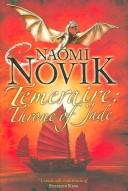
Temeraire's Chinese imperial heritage is revealed and the pair voyage to China, dramatically widening the world's scope. Reading it second deepens your understanding of Temeraire's identity just as it deepens his own.
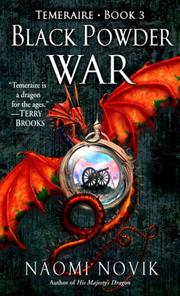
An overland journey through the Ottoman Empire and back into the Napoleonic Wars raises the military stakes and introduces new dragon breeds. It closes the opening trilogy and leaves the pair at a turning point.
The Expanding World — Empire, Plague, and Revolution
BeginnerWatch Novik broaden her alternate history dramatically — from Africa to South America — while Temeraire begins to develop political consciousness and advocate for dragon rights.
▸ Study plan for this stage
Pace: 5–6 weeks total: Weeks 1–3 cover Empire of Ivory (~30–35 pages/day, ~320 pages); Weeks 4–6 cover Victory of Eagles (~25–30 pages/day, ~340 pages). Allow extra days at the end of each book for reflection and journaling before moving on.
- Alternate-history world-building expansion: Novik stretches the Temeraire universe beyond Europe into Africa (Empire of Ivory) and then depicts a Napoleonic invasion of Britain (Victory of Eagles), showing how alternate history can reshape entire continents and geopolitical balances.
- The dragon plague as a moral and political catalyst: The mysterious illness decimating British dragons in Empire of Ivory forces Laurence and Temeraire into ethically fraught decisions — including biological warfare — that permanently alter their standing with the Crown.
- Temeraire's emerging political consciousness: Across both books Temeraire moves from curious observer to active advocate, articulating arguments for dragon rights, fair compensation, and legal personhood, drawing explicit parallels to real-world abolitionist rhetoric.
- Loyalty, treason, and moral courage: Laurence's decision at the climax of Empire of Ivory — and its devastating consequences in Victory of Eagles — is the stage's central moral drama, forcing the reader to weigh duty to one's nation against duty to one's conscience.
- Consequences and accountability in alternate history: Victory of Eagles shows that heroic choices carry real costs; Laurence is stripped of rank and faces execution, demonstrating that Novik refuses to let her protagonists escape the weight of their actions.
- Dragon society and autonomy: The feral dragon communities Temeraire encounters in Victory of Eagles reveal that dragons can self-organize, challenging the assumption that they need human handlers and strengthening Temeraire's rights arguments.
- The Napoleonic invasion as alternate-history pivot: Novik's imagining of a successful French landing in Britain is the boldest counterfactual yet in the series, and examining how she grounds it in plausible logistics teaches readers how good alternate history works.
- Shifting power dynamics between Laurence and Temeraire: By Victory of Eagles the partnership has inverted — Temeraire acts with independent agency while a disgraced Laurence depends on him — marking a key evolution in their relationship.
- What specific moral dilemma does Laurence face at the end of Empire of Ivory, what does he choose, and what does that choice cost him personally and professionally in Victory of Eagles?
- How does Novik use the African setting in Empire of Ivory to critique British imperial attitudes, and what do the healthy African dragons reveal about how Britain (and Europe generally) treats its own dragons?
- In what ways does Temeraire's advocacy for dragon rights echo real-world abolitionist arguments of the Napoleonic era, and why is that parallel significant for a beginner reader of alternate history?
- How does the Napoleonic invasion plot in Victory of Eagles function as an alternate-history 'what if,' and what real historical factors does Novik tweak to make it plausible within her world?
- How does the power dynamic between Laurence and Temeraire change across these two books, and what does that shift suggest about the series' larger themes of autonomy and partnership?
- What role do the feral dragon communities in Victory of Eagles play in advancing the dragon-rights argument, and how do they challenge the assumptions of both human characters and the reader?
- Moral-dilemma journal: After finishing Empire of Ivory, write a one-page personal response to Laurence's climactic choice. Argue both sides — why he was right, and why he was wrong — before stating your own verdict. Revisit and revise it after finishing Victory of Eagles to see if the consequences changed your mind.
- Alternate-history 'change log': Create a two-column chart listing (a) real Napoleonic-era historical facts and (b) how Novik has altered each one across both books. Focus especially on the African expedition and the French invasion of Britain. This builds the core skill of reading alternate history critically.
- Temeraire's rights speech: Find two or three passages in either book where Temeraire argues for dragon rights. Rewrite one passage as a formal petition or pamphlet in the style of a real Napoleonic-era abolitionist tract (e.g., modeled loosely on Wilberforce's rhetoric). This cements the thematic parallel.
- Character-arc timeline: Draw a simple visual timeline for both Laurence and Temeraire across the two books, marking at least four turning-point moments for each. Annotate each point with one word describing their emotional or social status (e.g., 'honored,' 'disgraced,' 'autonomous'). Compare the two timelines side by side.
- Map the world: Using a blank world map, trace the geographical journey of Empire of Ivory (Britain → Africa → Britain) and the battle movements of Victory of Eagles (French landing sites, key skirmishes). Annotate each location with one plot event. This grounds the expanded world-building in physical space.
- Discussion or review post: Write a 200–300 word spoiler-full review of Victory of Eagles aimed at a fellow beginner, explaining why the consequences Laurence faces matter for the series as a whole. Post it to a reading forum, a book-club group, or simply share it with a friend — articulating themes aloud (or in writing) solidifies comprehension.
Next up: Having witnessed Laurence and Temeraire hit their lowest point — disgraced, separated, and caught in a war-torn Britain — the reader is primed to follow them into entirely new continents and political arenas, where the dragon-rights cause and their restored (but changed) partnership will be tested on a truly global stage.

A plague devastating British dragons sends Laurence and Temeraire to Africa in search of a cure. This book raises the moral and political complexity of the series to a new level and ends on a shocking consequence.

The fallout from Empire of Ivory's ending forces Laurence and Temeraire apart, then reunites them amid Napoleon's invasion of Britain. It's the series' most intense military volume and a crucial emotional reset.
The Global Arc — New Continents, New Alliances
IntermediateFollow Laurence and Temeraire into exile and across the globe — Australia, the Americas, and beyond — as Novik interrogates colonialism, slavery, and dragon autonomy on a world stage.
▸ Study plan for this stage
Pace: 9–11 weeks total; roughly 25–30 pages/day. Suggested breakdown: Tongues of Serpents — weeks 1–3 (~280 pages); Crucible of Gold — weeks 4–6 (~340 pages); Blood of Tyrants — weeks 7–11 (~400 pages). Allow 1–2 buffer days between books for reflection journaling.
- Colonial critique and settler violence: Tongues of Serpents uses the Australian penal colony as a lens to expose how empire dispossesses indigenous peoples (the Eora and their dragon counterparts), forcing readers to see British 'civilisation' as coercion rather than gift.
- Dragon autonomy and personhood: Across all three books, Temeraire's push for dragon rights intensifies — from his frustration in the Australian wilderness to his encounters with the Incan Inca empire's radically different dragon-human compact in Crucible of Gold.
- Exile, identity, and loyalty: Laurence's ongoing status as a convicted traitor shapes every alliance and moral choice; Blood of Tyrants literalises this by stripping him of memory, asking what loyalty means when identity itself is erased.
- Slavery and abolition as active plot forces: Crucible of Gold places the transatlantic slave trade and Brazilian slavery at the centre of the narrative, making abolition not a background virtue but a strategic and moral battleground that directly drives plot decisions.
- Non-Western power structures and dragon societies: The Tswana in Crucible of Gold and the Chinese imperial court revisited in Blood of Tyrants present fully realised alternatives to the British aerial corps model, challenging Eurocentric assumptions about hierarchy and dragon use.
- Diplomatic complexity and moral compromise: All three books force Laurence and Temeraire into alliances with morally ambiguous parties — convict leaders, slave-holding empires, rival Napoleonic agents — illustrating that geopolitical survival rarely allows clean hands.
- Memory, trauma, and reconstructed self: Blood of Tyrants' amnesia arc is not merely a plot device; it functions as a meditation on how war, empire, and personal loss reshape a person, and whether the 'recovered' self is the same as the lost one.
- Novik's world-building methodology: Each new continent is rendered through meticulous historical research layered with the alternate-history dragon conceit, showing how the presence of dragons would have materially altered colonisation, trade routes, and indigenous resistance.
- In Tongues of Serpents, how does the Australian setting reframe the moral standing of the British Empire, and what role do the indigenous dragons play in challenging the colonists' sense of entitlement to the land?
- How does the Incan empire's treatment of dragons in Crucible of Gold differ structurally and philosophically from the British aerial corps system, and what does this contrast reveal about the relationship between dragon autonomy and political freedom?
- Crucible of Gold places Laurence and Temeraire in direct contact with the consequences of the slave trade. How does Novik use the Tswana dragon-riders' motivations to argue that the fight against slavery is inseparable from the broader struggle for dragon rights?
- In Blood of Tyrants, Laurence's amnesia causes him to temporarily revert to his pre-Temeraire values and worldview. What specific beliefs and prejudices resurface, and how does their reappearance function as a critique of the society that originally formed him?
- Across all three books, how does Temeraire's understanding of 'rights' evolve as he encounters radically different human-dragon relationships on multiple continents?
- How do all three novels collectively use the figure of the 'outsider' — whether Laurence the traitor, Temeraire the agitator, or the Tswana the colonised — to interrogate who gets to define legitimacy in war and governance?
- Comparative society chart: After finishing each book, fill in one row of a three-column table tracking (a) how dragons are legally/socially classified, (b) what rights or agency they possess, and (c) how humans justify their treatment of dragons — for Britain, the Incan empire, the Tswana, and China as encountered in Blood of Tyrants. Use only textual evidence.
- Colonial lens re-read: Select one scene from Tongues of Serpents in which a British character describes the Australian landscape or its peoples as 'empty,' 'wild,' or 'uncivilised.' Rewrite the same scene from the perspective of an indigenous dragon or person, staying faithful to details Novik provides. Reflect in 200 words on what the exercise reveals about narrative point of view.
- Abolition debate transcript: Using Crucible of Gold as your source, write a 400–500 word fictional transcript of a debate between Laurence, a Tswana dragon-rider, and a Brazilian colonial official over whether the alliance against Napoleon justifies tolerating slavery. Each speaker must use arguments grounded in the text.
- Amnesia identity map: For Blood of Tyrants, create a two-column character map of Laurence — 'Before Memory Returns' vs. 'After Memory Returns' — listing at least six specific attitudes, loyalties, or moral stances in each column. Write a short paragraph arguing whether the post-recovery Laurence is meaningfully different from the pre-amnesia Laurence.
- Thematic timeline: Build a single visual timeline spanning all three books that plots major geopolitical events alongside Temeraire's key speeches or demands for dragon rights. Annotate at least five points where an external world event directly catalyses a shift in Temeraire's political thinking.
- Reading journal — empire's double standard: After each book, write a 300-word journal entry answering: 'What does this book reveal about the gap between what Britain claims to stand for and what it actually does?' Track how your answer changes or deepens across the three entries.
Next up: Completing this stage leaves Laurence and Temeraire on the eve of Napoleon's final campaigns in Europe, priming readers to return to the continent where the series began — now with a globally-informed moral framework that makes the endgame's stakes about far more than military victory.

Exiled to Australia, Laurence and Temeraire encounter a raw colonial frontier. A quieter, exploratory novel that resets the pair's circumstances and introduces the Pacific theater of the alternate world.

A mission to the Incan Empire brings Novik's alternate history to the Americas and confronts themes of empire and indigenous sovereignty. It re-energizes the plot after Tongues of Serpents and sets up the endgame.

Laurence suffers amnesia after a shipwreck in Japan, and the story sweeps through Asia toward Napoleon's Russian campaign. A pivotal penultimate novel that reunites threads from across the whole series.
The Final Arc — Resolution and Legacy
IntermediateReach the series' conclusion: witness the climax of the Napoleonic Wars in this alternate world and see Temeraire's lifelong dream of dragon rights finally tested against the reality of a changing world.
▸ Study plan for this stage
Pace: 3–4 weeks, ~25–30 pages/day — League of Dragons runs approximately 380 pages; a measured pace allows time to reflect on the series' culmination, revisit earlier volumes for comparison, and complete the exercises without rushing the finale.
- The Napoleonic Wars' alternate-history conclusion — how Novik resolves the conflict between Napoleon and the allied powers when dragons are fully integrated into military strategy, and what this means for the 'real' historical outcome she has reimagined
- Temeraire's dragon-rights arc reaching its climax — the tension between Temeraire's idealism about dragon autonomy, pay, and legal recognition versus the institutional resistance of human governments and military hierarchies
- Laurence's dual loyalty resolved — the long-running conflict between Will Laurence's duty to Britain and his personal moral convictions finally finds a resting point, and readers should track how his character has transformed from the first book
- Coalition warfare and dragon diplomacy — League of Dragons features an unprecedented alliance of dragon breeds and nations; the politics of this coalition mirror and contrast with the dragon-rights movement
- The cost of war and survival — Novik does not shy away from attrition; key characters and dragons face loss, and the novel asks what victory actually costs the survivors
- Legacy and world-change — the ending gestures toward a fundamentally altered world order; readers should consider what the series argues about the pace and limits of social progress
- Thematic closure vs. open-endedness — Novik deliberately leaves some questions unanswered; identifying which threads are resolved and which are intentionally left open is central to understanding the series' final statement
- How does Novik use the Battle of Waterloo's alternate-history version in League of Dragons to comment on the role dragons have played throughout the entire series — and what is gained or lost by changing this iconic historical moment?
- By the end of League of Dragons, how much progress has actually been made on dragon rights, and does the resolution feel earned given the obstacles Temeraire faced across all nine books?
- How has Laurence's relationship with the British Crown and military establishment changed from his forced defection in earlier books to his standing at the series' conclusion?
- Which losses (of characters, dragons, or ideals) in League of Dragons carry the most thematic weight, and how do they shape the tone of the ending?
- In what ways does the multinational dragon coalition in this book reflect — or undermine — Temeraire's vision of a world where dragons are recognized as equal partners rather than tools of war?
- What does the final state of the world in League of Dragons suggest about Novik's broader argument regarding institutional change: is she optimistic, pessimistic, or deliberately ambiguous?
- Series-arc character map: Before finishing the book, draw a timeline of Laurence's moral decisions across the series (using League of Dragons as the endpoint). Annotate each major turning point and write one sentence on how each decision shaped the man he is at the novel's close.
- Alternate-history counterfactual journal: After reading the climactic battle sequence, write a 300–400 word entry from the perspective of a human historian in Novik's world, explaining how the presence of dragons changed the outcome of the Napoleonic Wars compared to our own timeline.
- Dragon-rights scorecard: Create a two-column table listing every concrete gain and every concrete setback for dragon rights that occurs in League of Dragons. After completing it, write a paragraph verdict: does the series end in genuine progress or in a compromise that preserves the status quo?
- Comparative passage analysis: Select one scene from League of Dragons that echoes or directly mirrors a scene from the first book, His Majesty's Dragon (referenced from memory or notes). Write a short comparative analysis (250–300 words) examining how Novik's prose, Temeraire's voice, and Laurence's reactions have evolved between the two moments.
- Thematic letter: Write a one-page letter from Temeraire to a young dragon hatching into the world at the novel's end, explaining what the world is like now and what still needs to change. This exercise forces engagement with both what was achieved and what remains unfinished.
- Series retrospective discussion or essay: Craft a 400–500 word reflection answering the question: 'Does League of Dragons succeed as a finale?' Evaluate it on three axes — emotional satisfaction, thematic coherence with the rest of the series, and historical imagination — then share or self-assess against your notes from earlier stages.
Next up: Completing League of Dragons and reflecting on its open-ended vision of dragon rights and world-change positions the reader to explore Novik's other works — particularly the Scholomance trilogy or standalone novels like Uprooted — where her recurring themes of institutional power, found family, and the cost of idealism appear in entirely new genre contexts, rewarding readers who now understand her

The ninth and final novel brings every major thread — the war, dragon rights, Laurence and Temeraire's bond — to a satisfying close. Reading it last, after all eight predecessors, gives every payoff its full emotional weight.
Discussion
Keep reading
Paths that share books, cover the same subject, or open a related topic.