Start with His Majesty's Dragon. It is book one, and there is genuinely nothing to argue about — Naomi Novik wrote the series in sequence, it is chronological, and each volume picks up almost immediately after the last. A Royal Navy captain named Will Laurence captures a French frigate, finds a dragon egg in the hold, and the egg hatches on him. From there it is the Napoleonic Wars with an aerial corps.
Because the order is settled, this guide is mostly about something more useful: where the series sags, which book most people quit on, and whether it is worth pushing through. It is a nine-book series with a real dip in the middle, and knowing where the dip is changes whether you finish.
The order
- His Majesty's Dragon (2006)
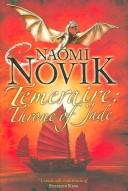
- Throne of Jade
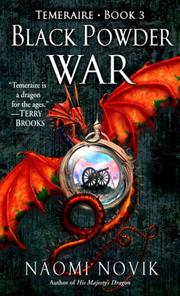
- Black Powder War (Temeraire, Book 3)
- Empire of Ivory (Temeraire, Book 4)
- Victory of Eagles
- Tongues of Serpents
- Crucible of gold
- Blood of tyrants
- League of dragons
All nine are here, which is unusual, and there is nothing else — no novellas, no side series, nothing to slot in.
The travelogue problem
Book one is a tight, contained, extremely charming story about a man and a dragon learning to be a crew. Books two and three then leave England: Throne of Jade is largely a sea voyage to China, and Black Powder War (Temeraire, Book 3) is largely an overland journey back through Istanbul and Prussia. Both are good. Both are also slow in a way book one is not, and a lot of readers who expected more aerial combat find the pace a shock.
Stay with it, because Empire of Ivory (Temeraire, Book 4) is where the series stops being a pleasant alternate-history romp and starts being about something. It ends on a decision by Laurence that reorders every relationship in the books, and the consequences drive the next several volumes.
The book people quit on
Tongues of Serpents is the sixth and it is the widely acknowledged low point. It relocates to the Australian penal colony and consists, to a considerable degree, of walking across the continent. Very little happens. The plot that does exist is thin, and it arrives directly after the best book in the series, which makes the drop feel steeper.
If you are going to abandon Temeraire, this is where it will happen. The honest recommendation is to read it quickly, skim if you must, and get to Crucible of gold, which restarts the momentum properly and pushes the war plot forward again.
Honest warnings
Blood of tyrants opens with an amnesia plot, which is a device that a lot of readers find lazy on principle. It resolves reasonably, but the first third asks you to watch established characters re-establish things you already know.
The other warning is tonal. Novik writes an early-nineteenth-century narrative voice — formal, mannered, close to Patrick O'Brian at times — and it is not decoration; it runs for nine books. Readers who want brisk modern fantasy prose will find it heavy. Readers who like it will like it a great deal.
Where to stop
There are two legitimate stopping points, and neither is the end.
After Empire of Ivory (Temeraire, Book 4): books one to four form a complete arc with a genuine gut-punch of an ending. Many readers stop here deliberately, and it works.
After Victory of Eagles: this is the better answer. Book five is the strongest in the series — the invasion of Britain, Temeraire given his own command, the moral consequences of book four fully paid — and it resolves enough to feel like an ending.
If you carry on past Tongues of Serpents, finish. Books seven through nine are a strong, coherent run and League of dragons lands the ending properly. Then find another reading path.
Follow the full ordered path here: Temeraire Reading Order and Reading Guide.