Sylvia Plath Reading Order: Where to Start
Plath wrote one novel, three or four books of poems, and a diary that turned out to be a major work in its own right, and the order matters more than with most poets because the late poems only detonate if you know the voice they broke away from. Start with the two books everyone actually finishes, then read the poetry roughly in the order she wrote it so you can hear the voice tighten, then go to the journals and letters, which are the closest thing to watching the poems being built. The completist tail is short: this is a small body of work, and that is part of the story.
Start Here
BeginnerMeet the two books that made Plath famous — a novel that reads like fiction and a collection that reads like nothing else — before working out how she got there.
▸ Study plan for this stage
Pace: 3 weeks. The Bell Jar (262pp) in about a week of ordinary evenings — it moves like a novel and you will not want to ration it. Then give Ariel two full weeks even though it is 96 pages, because poems are not measured in pages. Three or four poems a night, read ALOUD, then read the same ones again th
- A plain warning before you open either book: The Bell Jar narrates a suicide attempt in clinical detail, and the Ariel poems return repeatedly to dying and to attempted death. Plath died by suicide in February 1963, a month after The Bell Jar was published in London under the pseudonym Victoria Luca
- The Bell Jar is the easiest door into Plath because it supplies the biography in her own framing — the magazine internship, the breakdown, the hospital — so the poems do not have to carry that job as well
- Esther Greenwood is funny. New readers braced for a misery memoir are usually surprised by how much of the first half is comic social observation, and the comedy is what makes the collapse land
- The bell jar itself is the book's one sustained image: airless, transparent, distorting. Watch how rarely Plath explains it and how often she just lets it sit there
- Ariel is out of chronological order on purpose here. It is the last thing she wrote and the reason anyone comes to Plath at all, so meeting it second means you are never reading the early work as homework
- Ariel was assembled after her death by Ted Hughes, her husband, who as her legal spouse controlled her estate and her literary papers. He changed the order she had left and dropped some poems; her own arrangement has since been published separately as a restored edition. Which Ariel you are holding
- The Ariel voice is fast, short-lined, hammering, full of rhyme you hear rather than see — Lady Lazarus, Daddy, the five bee poems. It sounds nothing like the Plath of the next stage, which is the whole point of the order
- What does Esther find funny in the first sixty pages of The Bell Jar, and what has happened to that voice by the last sixty?
- The novel keeps refusing to give a single cause for Esther's breakdown. Which candidate causes does it offer, and why does it decline to choose?
- Read Daddy aloud twice. What is the nursery-rhyme rhythm doing to material that would be unbearable in plain speech?
- In Lady Lazarus the speaker addresses a crowd. Who is that crowd, and what is the poem accusing it of?
- The bee sequence is the last thing in Ariel's original ordering. What changes in a poem when the speaker is handling something that can sting her?
- Having read both, what does the novel let Plath do that the poems cannot, and the reverse?
- Read Daddy, Lady Lazarus and Ariel out loud at full volume with nobody in the room. These poems were written to be heard and they are close to inert on the page
- Copy out six lines from Ariel by hand. The line breaks are doing most of the work and you will not notice where they fall until you have to make them yourself
- Check which Ariel edition you own — Hughes's 1965 ordering or Plath's own restored ordering — and note where the collection starts and ends in yours. The first and last words differ between them
- After The Bell Jar, write down five facts you now believe about Plath's life. Keep the list; the journals in stage three will correct at least two of them
- Pick one poem you did not understand and reread it once a night for a week without looking anything up. Track what changes
Next up: You have now heard the voice at full stretch, which is the only condition under which the careful early work reads as a poet holding herself back rather than a poet with nothing yet to say.
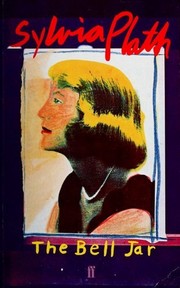
Her only novel, and the easiest door into her: a funny, cold, forensic account of a summer internship and the breakdown that followed. Read it first because it gives you the biography in Plath's own framing, so the poems do not have to carry that job.
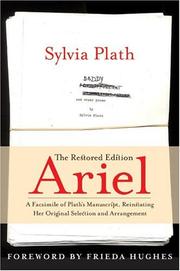
The late poems written in the last months of her life — Lady Lazarus, Daddy, the bee sequence — at a speed and pitch nothing in English quite matches. Read it second, out of chronological order, because it is the reason anyone comes to Plath at all.
The Poems, in the Order She Wrote Them
IntermediateHear the voice before and after the break — the formal, Yeats-and-Roethke-haunted early Plath, and the two posthumous collections that gather what Ariel left out.
▸ Study plan for this stage
Pace: 5 to 6 weeks for roughly 210 pages, which is deliberately slow. The Colossus and Other Poems over two weeks, Crossing the Water over two, Winter Trees over two. Four poems a night, aloud, and reread the previous night's four before starting the new ones. If you find yourself reading ten in a sitting
- The Colossus and Other Poems is the only collection Plath published in her lifetime, in 1960, and it is a book of exercises done in public: tight stanzas, borrowed music, syllabics counted out, the influence of Roethke and Yeats audible
- The contrast with Ariel does the teaching for you. Same poet, three years apart, and the difference is not subject matter but permission — line length, speed, and how long she is willing to stay on one image
- Crossing the Water gathers the transitional poems written between the two books and published after her death. This is the hinge, and you can watch the syntax start to snap mid-line
- Winter Trees holds late poems that did not go into Hughes's Ariel, plus the verse play Three Women, set in a maternity ward and written for radio
- Three Women is the one long piece in this stage and is the best argument that Plath was not only a lyric miniaturist. Three voices, no plot, spoken
- Both Crossing the Water and Winter Trees are posthumous gatherings, which means their shape was chosen by an editor rather than by Plath. Read them as collections of poems rather than as designed books
- Recurring machinery to track across all three: the moon, yew trees, bees, hospitals, whiteness, and a father figure who is sometimes a statue and sometimes a colossus
- What can the Ariel poems do that the Colossus poems cannot, and can you name the specific technical change rather than a mood?
- Pick one Colossus poem you like. What is holding it in — a rhyme scheme, a stanza shape, a syllable count — and what would happen if you removed it?
- In Crossing the Water, which poems sound like the earlier book and which already sound like Ariel? Where is the line?
- Three Women gives you three responses to birth and loss with no narrator to adjudicate. What does the form gain by refusing to choose between them?
- Winter Trees is the material Hughes kept out of Ariel. On the evidence of the poems, can you see a criterion at work, and do you agree with it?
- Across all three collections, does the recurring father figure change, or only the speaker's distance from him?
- Read The Colossus, the title poem, aloud immediately after Daddy. The same figure, two ways, and hearing them back to back is the single most useful five minutes in this stage
- Take one Colossus poem and count the syllables per line. Several are strict syllabics and you will not believe it until you have counted
- Read Three Women aloud with two other people, or record yourself reading each voice separately. It was written for broadcast and it collapses when read silently
- Keep a one-line note per poem: what is the image, and who is speaking. By Winter Trees you will have a map of her materials
- Order the three collections by how fast you had to read them. That ranking is a real measurement of the change in her line
Next up: You now know what the poems look like from the outside, and the journals let you watch the same poems being argued about, abandoned and rebuilt from the inside.
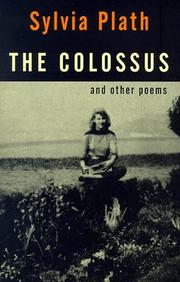
The only collection published in her lifetime, and deliberately controlled: tight forms, borrowed music, a poet doing her exercises in public. Read it after Ariel and the contrast does the teaching for you.
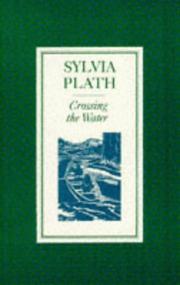
The transitional poems, written between The Colossus and Ariel and published posthumously. This is the hinge — you can watch the syntax start to snap in mid-line.
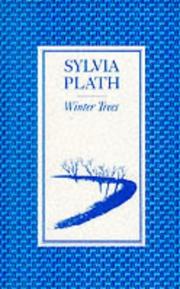
The other posthumous gathering, holding late poems Ted Hughes kept out of Ariel plus the verse play Three Women. Read it last of the collections: it is Ariel's offcuts, and offcuts only mean something once you know the cut.
The Life in Her Own Words
IntermediateMove from the poems to the prose record — the daily writing where the ambition, the reading list and the self-editing are all visible and undisguised.
▸ Study plan for this stage
Pace: 6 to 7 weeks for around 880 pages of prose. The Journals over four weeks, twenty or thirty pages at a sitting rather than in long stretches — it is daily writing and reads badly when binged. Letters Home over two to three weeks. Do not skip ahead to the final entries; the value is cumulative.
- The Journals are the single most useful book about Plath, and Plath wrote them. Ambition, reading lists, envy, self-flagellation, drafting, and the ordinary business of a working writer
- Read after the poetry, the journals function as a workshop rather than as a long suicide note. You will recognise images being assembled months before they surface in a poem
- The record is incomplete, and the incompleteness is documented. Hughes has stated that he destroyed the journal covering the last months of her life, saying he did not want their children to read it, and that another volume went missing. Those months therefore have no diary
- The first published journals in 1982 were edited and abridged under Hughes's control of the estate; a substantially fuller edition appeared later. Check which one you are reading, because the difference is large
- Letters Home is the letters to her mother, selected and edited by her mother, Aurelia Plath, and published in 1975. It is an argument as much as a document — an attempt to answer the version of Plath the poems had created
- The instructive move is to read the same months in both books. The journal entry and the letter home frequently describe the same week and are barely reconcilable
- Neither book is a neutral record. One is private writing that survives with a gap in it; the other is public writing curated by an interested party. Hold both facts while reading
- Which specific images in the journals turn up later as poems, and how long is the gap between the note and the finished piece?
- What does Plath say she is trying to learn from other writers, and does the poetry show her learning it?
- Where do the journal and the letter describing the same period contradict each other, and what does each version want from its reader?
- Letters Home was edited by Plath's mother. What kind of daughter does the selection produce, and what would have to be left out to produce her?
- The last months have no journal. How should a reader hold an absence like that without filling it in?
- Pick one month — say the autumn she was writing the Colossus poems — and read the journal entries and the letters from that month side by side in one sitting
- Keep a running list of every book Plath mentions reading. It is effectively her syllabus and explains most of the early style
- Mark every passage where she writes about money, teaching or housework. The practical constraints on her working time are more visible here than in any biography
- Note the entries where she describes a poem she has just finished, then go and read that poem. Do this three or four times
- Write half a page on what you can and cannot claim about her final months given that the journal for them does not exist
Next up: With the drafts and the daily record behind you, the last stage lets you see the whole career laid out chronologically without the biography stealing the reading.

The single most useful book about Plath, written by Plath. Read it after the poetry so that you recognise the images being assembled — and so the diary is a workshop rather than a suicide note.
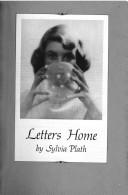
The letters to her mother, edited by her mother, and therefore an argument as much as a document. Read it directly after the journals: the same months in two incompatible registers is the most instructive thing in the whole shelf.
The Completist Tail
IntermediateFinish the shelf — the prose she published in magazines, and the complete poems that let you see the arc as one thing.
▸ Study plan for this stage
Pace: 4 to 5 weeks. Johnny Panic and the Bible of Dreams (313pp) over two weeks, dipping rather than reading straight through. The Collected Poems Of Sylvia Plath is a reference book you will keep — spend two or three weeks reading forward chronologically from 1956, and treat the juvenilia at the back as
- Johnny Panic and the Bible of Dreams collects the short stories and occasional prose, including magazine work written for money. It is minor, and knowing that in advance makes it enjoyable rather than disappointing
- The title story, drawn from her time as a hospital records clerk, is the one piece here that stands with the major work
- Several stories are visibly test runs for material she later used in verse or in The Bell Jar, which is why this book belongs last rather than first
- The Collected Poems Of Sylvia Plath is arranged chronologically and won the Pulitzer Prize in 1982, nineteen years after her death. It was edited by Ted Hughes, who wrote the introduction and the notes
- As a first purchase the Collected flattens everything into one undifferentiated mass; as a last one it lets you read the career as a single accelerating line, which is what it is
- The chronological arrangement makes the last four months visible as a block. Something like two-thirds of the poems people know were written in that period
- The whole shelf is small — one novel, a handful of collections, a diary, some stories. The size is part of the story rather than a gap in it
- Which stories in Johnny Panic are doing work that later reappears in The Bell Jar, and what did she change when she reused it?
- Reading the Collected forward, at what date does the voice you recognise from Ariel first appear, and can you point at the poem?
- How much of the work you now think of as central was written in the last six months, and what does that concentration do to how the career gets narrated?
- The Collected was edited by the executor of her estate, who was also her husband and a subject of the poems. What is the reader's obligation in that situation, if any?
- Having read everything, is the biography necessary to the poems, or has it been doing work the poems can do alone?
- Read the Collected strictly by date for one week and note where the line lengths change. The shift is visible before it is audible
- Take three poems you know from Ariel and find them in the Collected with their composition dates. Then read what she wrote either side of them that week
- Compare a story in Johnny Panic with the passage of The Bell Jar that reuses it, sentence by sentence
- Write two paragraphs on the whole shelf: what she had finished, what was posthumously assembled, and what is missing because it was destroyed or lost
- Reread Ariel one final time. Nothing else in this path will have changed it as much as the journals did
Next up: That is the complete Plath in English, and the obvious next move is the Ted Hughes path, where the same marriage and the same 1963 are told from the other side.
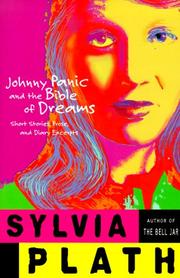
The short stories and occasional prose, including the title story and journalism she wrote for money. Minor, and worth it once you know the major work well enough to see her testing material she later used in verse.
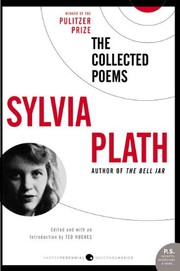
The Pulitzer-winning complete edition, arranged chronologically with the juvenilia at the back. Save it for last: as a first purchase it flattens everything, but as a final one it lets you read the whole career as a single accelerating line.
Discussion
Keep reading
Paths that share books, cover the same subject, or open a related topic.