Start with Ghibliotheque and watch alongside it. Jake Cunningham and Michael Leader take every Ghibli feature in turn with production background and honest judgement, including on the weaker films, and nothing else on this list works properly without the films already in your head.
A reading order helps here because four very different kinds of book get shelved together: film-by-film guides, Miyazaki's own essays and interviews, academic criticism, and art books that are mostly reproductions with very little text in them. Bought at random you can easily end up with three of the fourth kind. One limit to state at the outset: almost everything below was written before The Boy and the Heron, so that film and the studio's succession problem are covered by journalism rather than by any book here.
The films
Studio Ghibli — published as Studio Ghibli: The Films of Hayao Miyazaki and Isao Takahata — is a compact critical guide by Colin Odell, and it is much better than Ghibliotheque on Takahata, the studio's other major director, who is routinely flattened into a footnote. Read it second for that reason alone.
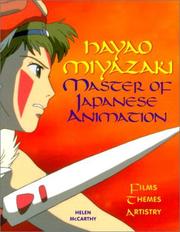
Hayao Miyazaki: Master of Japanese Animation is Helen McCarthy's 1999 study, the first serious one in English. It stops at Princess Mononoke, and that is the point: it covers the pre-Ghibli television work — Future Boy Conan, Lupin III, Sherlock Hound — that later books skip.
Miyazaki and Suzuki in their own words
Starting Point 19791996 is the single most important book here, and our catalogue mangles its title: it was published as Starting Point: 1979-1996, with the dates run together in the display record. Essays, interviews, memos and production notes from Nausicaä through Mononoke — Miyazaki arguing about animation, war, children and drawing rather than being written about.
Turning Point 19972008 is the sequel volume, catalogued the same way, covering Spirited Away, Howl's Moving Castle and Ponyo. It is noticeably darker about the state of the animation industry and about his own retirements. Read it straight after.
Mixing work with pleasure is Toshio Suzuki, Ghibli's producer, on how the studio was financed, marketed and held together, and how Miyazaki and Takahata were actually managed. The business half of a story every other book tells only as art.
The critical account
Miyazakiworld is the critical biography and the best book here for a general reader: Susan Napier reads the films through Miyazaki's wartime childhood, his mother's long illness, his union activism and his environmentalism. Read it after his own essays, so you can see what she is interpreting.
Hayao Miyazaki is Raz Greenberg on the television and pre-Ghibli work and the European sources Miyazaki drew on. Check the author before ordering: the Academy Museum's 2021 exhibition catalogue, edited by Jessica Niebel, carries the same bare title.
The animé art of Hayao Miyazaki is Dani Cavallaro's film-by-film academic study — drier than Napier and more systematic about visual motifs and where they recur. It is the closest thing here to a reference work on the imagery.
Inside the studio, and the source
Nausicaa of the Valley of the Wind, Vol. 1 opens a seven-volume manga that is longer, stranger and far more politically pessimistic than the 1984 film, and it is the primary text for everything Miyazaki later does with war and ecology. A two-volume boxed edition exists if you would rather buy it once.
The art of the Princess Mononoke is where to be clear about what the Art of series is: image boards, backgrounds and character sheets with limited commentary. Buy it for the production process, not for the writing. The Spirited Away and Howl's Moving Castle volumes are the same in kind.
Sharing a House with the Never-Ending Man is Steve Alpert, the only foreign executive at Ghibli, and the funniest and most specific account of the place from inside — Miyazaki's temperament, Suzuki's dealmaking, the Disney negotiation, the Berlin premiere.
Ghibli inside anime
Anime from Akira to Howl's moving castle is Napier's academic survey of the medium, with substantial Miyazaki chapters set beside Akira and Evangelion. It is the expanded edition of her earlier Anime from Akira to Princess Mononoke, and our catalogue holds both as separate records — buy one.
Close with Anime, Jonathan Clements's industrial history of the medium: studios, labour, television economics, technology. It explains what Ghibli's hand-drawn, director-led method actually cost and why almost nobody else worked that way. The films, the essays and the studio history are laid out stage by stage at /paths/pt_ai_studio-ghibli-and-hayao-miyazaki.