Nausicaa Reading Order and Reading Guide
Hayao Miyazaki drew Nausicaä of the Valley of the Wind as a manga over twelve years, and it is a far larger and darker work than the 1984 film, which adapts only the opening. The English edition runs to seven volumes, and this path stays in that seven-volume numbering throughout rather than the two-book deluxe boxed set, so the stages line up with the story's real turns. Read them straight through, then use the last stage for the surrounding Miyazaki material.
Start Here: The Part You May Already Know
BeginnerRead the material the film adapts, and see immediately how much more political and ecological the manga is about the same events.
▸ Study plan for this stage
Pace: About a week for volumes one and two, roughly 136 pages each. These are not fast pages: Miyazaki packs small dense panels with cross-hatched detail and unlabelled machinery, and a page can take a minute. Two hours per volume is realistic, and rereading volume one after volume two is time well spent.
- Most readers arrive from the 1984 film, which adapts only roughly the first two volumes of a seven-volume manga drawn over twelve years — the film is the opening act, not a summary
- The manga is markedly more political and more ecological: the Valley is a small state caught between empires from the first chapter, and the toxic jungle is a scientific problem before it is a symbol
- This path stays in the seven-volume English numbering throughout rather than the two-book deluxe boxed set, so the stages line up with the story's real turning points
- The visual grammar is dense — small panels, heavy hatching, aircraft and insects drawn with equal care — and Miyazaki rarely uses a caption to tell you where you are
- The Ohmu are not monsters and are not mascots; the manga treats them as a functioning part of an ecosystem whose purpose is not yet disclosed
- Nausicaä's empathy is presented as a political liability as much as a virtue, which is the first sign the manga will not run on the film's moral certainties
- Volume two is the decision point: everything after it is material no adaptation has ever covered
- What does the manga establish about Torumekia, the Dorok Empire and the Valley's obligations that the film omits entirely?
- How is the toxic jungle described mechanically — what does it do, and who has studied it?
- Where does the film's plot end relative to these two volumes, and what does the film change to give itself an ending?
- How does Miyazaki convey scale and geography without captions? Find two pages that do it purely with drawing.
- Is Nausicaä's empathy treated as effective? What has it actually achieved by the end of volume two?
- If you know the film, list its ending beats before starting volume three, and note which ones the manga has not reached and will not repeat.
- Spend ten minutes on the two most crowded pages of volume one, naming every object. The reading speed for the rest of the series calibrates from this.
- Keep a factions sheet — Valley, Torumekia, Dorok, the periphery states — and update it each volume. The war becomes hard to follow without one.
- Note every fact the book gives about how the jungle works. It is a running scientific argument and the ending depends on it.
Next up: Past the film's territory, the story leaves the Valley for a continental war in which Nausicaä stops being a princess with a duty and becomes a witness.

The Valley, the toxic jungle, the Ohmu and the crashed Torumekian ship. Start here even if you know the film; the world-building is denser on the page and the politics are present from the first chapter.
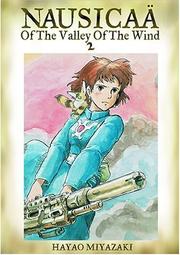
Roughly where the film stops. Volume two is the real decision point: everything after it is material no adaptation has ever covered.
The War Widens
BeginnerFollow the story out of the Valley into a full continental war between Torumekia and the Dorok Empire, where Nausicaä stops being a princess and becomes a witness.
▸ Study plan for this stage
Pace: 10 days for volumes three and four, 200 pages each. The pages get busier and the cast larger; one volume across two or three sittings is better than one long push. Roughly 20–25 pages a sitting is a reasonable pace for this art.
- The Dorok front turns the story into a full continental war, with logistics, refugees and command politics given real page space
- Kushana emerges as one of the great characters of the work: an imperial commander who is neither redeemed nor condemned, and whose competence is genuine
- Nausicaä's role shifts from protector of her Valley to a figure moving through other people's catastrophes with limited power to stop them
- Biological warfare and engineered mould introduce the possibility that the ecology has been tampered with, which is the first crack in the film's environmental reading
- The manga's treatment of religion and prophecy begins here, and it is ambivalent — Nausicaä is cast as a messianic figure by people whose motives are political
- Miyazaki's war scenes refuse spectacle: the aftermath is drawn at more length than the battle, consistently
- What does Kushana want, and at what point did you stop reading her as an antagonist?
- How does the manga depict the human cost of the war differently from how the film depicts threat?
- What is the first hard evidence that the jungle is not a natural phenomenon?
- Who benefits from Nausicaä being treated as a prophesied figure?
- Compare a battle sequence to its aftermath page-count. What is the ratio telling you?
- Update the factions sheet with commanders, aims and current position. From here the war has a geography and it matters.
- Track the mould and insect outbreaks as a chain of cause and effect rather than as set pieces.
- Mark every panel where Nausicaä fails to prevent something. The count rises sharply in these volumes and it is deliberate.
- Write one paragraph on Kushana as if you were her chronicler rather than Nausicaä's.
Next up: With the war established, the next two volumes abandon the adventure frame altogether for something closer to religious epic — and this is where most readers who wanted the film stop.
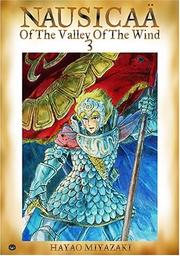
The Dorok front, and Kushana emerging as one of the great characters in the work rather than a villain. The book expands enormously in scope here.
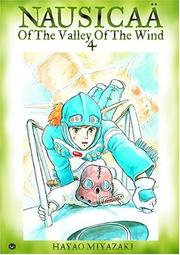
Biological warfare, engineered mould, and the first hard suggestion that the jungle is not what anyone thinks. The point where the ecology becomes the plot.
Beyond the Film
IntermediateRead the two volumes where Miyazaki abandons the adventure frame entirely for something closer to religious epic, and where his own environmentalism turns ambivalent.
▸ Study plan for this stage
Pace: 2 weeks for volumes five and six, 160 and 168 pages. Slow going and worth it — these are the densest volumes in the series, with long dialogue sequences and heavy underground panels. Read them as one movement, ideally within the same week.
- The Forest People and the true function of the Sea of Corruption reframe the entire ecological premise: the jungle is a purification system, and someone built it
- The descent to the Crypt of Shuwa turns the story into a confrontation with the civilisation that engineered the world's recovery in advance
- Miyazaki's own environmentalism becomes ambivalent here — the book stops celebrating nature and starts asking who designed it and with what authority
- The art becomes hardest to parse in these volumes; dark, crowded underground pages reward slower reading and occasionally require a second pass
- Nausicaä's messianic status is now a full political problem, used and resisted by several parties at once
- The philosophical argument arrives through long speeches, which is a genuine change of mode from volumes one to four
- This is where the manga becomes a major work rather than an expanded film, and where a reader who has stayed will be rewarded
- What is the Sea of Corruption actually for, and who decided?
- What claim does the Crypt make about how the world should be restored, and what does it require of the people alive now?
- Has Miyazaki's position on nature changed since volume one, or has the reader's information changed?
- Why does he switch to long argumentative dialogue at this point in the story?
- Which page in these two volumes did you have to reread, and what made it hard — the art or the argument?
- Write out the Crypt's argument in your own words as a single paragraph of plain prose. It is the thing the ending answers.
- Reread the jungle facts you collected in stage one against what is revealed here. Almost all of them change meaning.
- Compare the film's environmental message with what volume six asserts, in two columns. The distance is the reason this path exists.
- Identify each faction's position on restoration by the end of volume six.
Next up: Everything now rests on one decision, and it is the opposite of what the film's ending would lead you to expect.

The Forest People, the Sea of Corruption's true function, and the long descent underground. Densely drawn and slow going; this is where readers who wanted the film's tone usually stop, and where the work gets great.
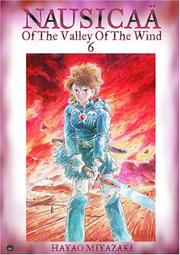
The Crypt of Shuwa and the revelation of who engineered the world's recovery. Read directly after volume five; the two are effectively one movement.
The Ending
IntermediateFinish with the choice Nausicaä makes about the world's restoration, which is the opposite of what the film's ending would lead you to expect.
▸ Study plan for this stage
Pace: Two or three sittings for volume seven, 232 pages — the longest volume. Do not read it in fragments. Set aside a clear evening, and leave time afterwards before reading anyone else's interpretation.
- Nausicaä's final choice about the world's restoration is deliberate, argued and morally costly, and it repudiates the reconciliation the film offers
- Miyazaki has said publicly that he does not fully endorse what his heroine decides, which is a rare and useful piece of authorial testimony to hold alongside the text
- The ending is one of the most argued-about in the medium, and the disagreements are substantive rather than about comprehension
- The volume closes plot threads from all six preceding volumes, so the factions sheet and the jungle notes both pay off here
- The question the ending poses — whether a designed, purified future is worth the erasure of the people alive now — is left standing rather than resolved
- Twelve years of drawing are visible in the last volume: the art and the politics are both far from where volume one started
- What exactly does Nausicaä decide, and what does she destroy or refuse in deciding it?
- What is the strongest argument against her choice, stated as fairly as the book states it?
- How does the ending differ from the film's, and is it a different message or a different scale?
- Miyazaki has distanced himself from the ending. Does that change how you read it?
- Does the manga end hopefully? Defend the answer from specific pages rather than from tone.
- Write your reading of the final decision in three sentences before searching for any commentary.
- Reread the first ten pages of volume one immediately after finishing. The distance travelled is the point.
- Argue the case against Nausicaä's choice in one paragraph. If you cannot make it convincing, reread the Crypt sequence.
- Summarise what the film would have to change to reach this ending. It is a longer list than expected.
Next up: With the story finished, the last stage looks at the material around it — the earlier picture-book that prefigures the whole thing.
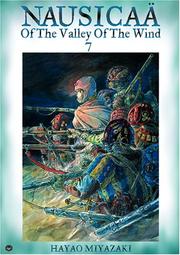
The final volume and one of the most argued-about endings in the medium. Miyazaki himself has said he does not fully endorse what his heroine decides; sit with it before reading anyone else's interpretation.
Around the Work
IntermediateExplore the material surrounding the manga — an earlier illustrated tale that prefigures it, the watercolours, and Miyazaki in his own words on why he drew it.
▸ Study plan for this stage
Pace: An hour. Shuna's Journey is a short watercolour picture-book and can be read in a single sitting. Read it only after volume seven, when you can see what it is a first attempt at.
- Shuna's Journey is a 1983 watercolour tale about a prince searching for golden grain, drawn the year before the Nausicaä film and translated into English only decades later
- It is the clearest ancestor of Nausicaä: the same journey structure, the same ambivalence about a ruined world, the same interest in seed and cultivation as the thing worth risking a life for
- The watercolour format shows Miyazaki working in continuous images rather than panel grids, which explains some of the compositional habits in the manga
- It is short and slight next to the seven volumes, and should be read as a study rather than a companion work
- Reading it last makes the twelve-year development of the same preoccupations legible in a single hour
- What does Shuna's Journey share with Nausicaä structurally, and what did the longer work have to add to make it a major book?
- How does the watercolour format change what the story can and cannot do?
- Is grain in Shuna's Journey doing the same work as the jungle in Nausicaä?
- What does an hour with this book tell you about how Miyazaki develops an idea over years?
- Put a page of Shuna's Journey beside a page of Nausicaä volume one and list the differences in how each conveys movement.
- Note which Nausicaä themes are already fully present in Shuna's Journey and which are not there at all.
- Write two sentences on what you would want from a Miyazaki work he has not made, based on the trajectory across these eight books.
Next up: This closes the path; readers wanting another long-form manga with a real historical and moral argument should go next to Naoki Urasawa's Monster.

A short watercolour picture-book from 1983, translated into English decades later, about a prince searching for golden grain. The clearest ancestor of Nausicaä and readable in an hour.
Discussion
Keep reading
Paths that share books, cover the same subject, or open a related topic.