Stephen Hawking in Order: Where to Start with His Books
A Brief History of Time sold ten million copies and was abandoned by a large fraction of the people who bought it, which makes it a poor place to start even though it is the famous one. This path opens with the short posthumous essays, works up through the cosmology books in order of difficulty rather than publication, then turns to the memoirs, and ends with the technical monograph and a rival popular account of the same physics for anyone who wants to see how much the popular books smooth over.
The easy door in
BeginnerGet Hawking's positions on the big questions in short, self-contained pieces before committing to a sustained argument.
▸ Study plan for this stage
Pace: One to two weeks. Brief Answers to the Big Questions is ten short chapters built around ten questions, and nothing in chapter seven depends on chapter three, so read a chapter a sitting in whatever order the questions interest you. If you find yourself skipping, that is information about which of th
- The ten questions as a map of what Hawking actually cared about: God, the beginning, other intelligent life, time travel, black-hole survival, the future of Earth, space colonisation, artificial intelligence
- Hawking's habit of answering a metaphysical question with a physical one — 'what came before the Big Bang' is refused rather than answered, and the refusal is the substance
- The no-boundary idea in its gentlest presentation, where the universe has no initial edge in the way a sphere's surface has no starting point
- Black holes as objects with temperature and a lifetime, which is the single result the rest of this path keeps returning to
- The register: this book was assembled from his archive and published posthumously, so it is a compilation of positions rather than a sustained argument, and reads accordingly
- Where he speaks as a physicist and where he speaks as a public figure — the chapters on AI and on leaving Earth are opinion, and he does not always mark the change
- What is Hawking's answer to whether there is a God, and which part of it is a physical claim and which part a philosophical one?
- Why does he treat 'what happened before the Big Bang' as a badly formed question rather than an unanswered one?
- What does he say happens to information that falls into a black hole, and does he present it as settled?
- Which chapters rest on physics he worked on himself, and which are the views of a well-informed citizen?
- After ten chapters, what is his actual position on whether the universe needs explaining from outside it?
- Write one sentence per chapter recording Hawking's answer, and a second sentence recording how confident he sounds. Keep the page — the cosmology stage will test several of these.
- Pick the chapter you found least convincing and write 200 words on why, distinguishing disagreement with the physics from disagreement with the opinion.
- Mark every place a metaphor is doing the explaining — imaginary time, the surface of the Earth, the shadow. These are the exact places A Briefer History of Time will slow down and unpack.
Next up: This gave you Hawking's conclusions in ten pieces; the next stage supplies the sustained argument those conclusions came out of, in the version most likely to be finished.
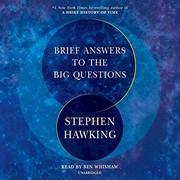
Assembled from his archive and published after his death in 2018, it answers ten questions in ten short chapters, so nothing depends on remembering chapter three. It is the gentlest introduction to his voice and his views, and because it is a compilation rather than a sustained argument, you can stop anywhere.
The cosmology, in order of difficulty
BeginnerUnderstand the standard picture — expanding universe, black holes, Hawking radiation, the arrow of time — and know which of the three versions of the famous book to actually read.
▸ Study plan for this stage
Pace: Five to seven weeks. Read A Briefer History of Time first and properly — three to four weeks at a chapter a sitting, rereading the chapters on the arrow of time and the origin of the universe. A Brief History of Time then takes a fortnight and can be read faster because you know the argument; you ar
- Why three versions of one book exist: the 1988 original defeated a very large share of its ten million buyers, and A Briefer History of Time is the rewrite with Leonard Mlodinow that adds illustrations and patience without changing the physics
- The expanding universe and Hubble's observation as the foundation everything else in the book is built on
- Singularity theorems in their popular form — the claim that general relativity predicts its own breakdown at the beginning
- Hawking radiation: black holes are not black, they have a temperature, and small ones evaporate. This is his own result and the one that made his name
- The three arrows of time — thermodynamic, cosmological, psychological — and Hawking's argument that they point the same way for a reason
- Imaginary time and the no-boundary proposal, which is where most first-time readers of the 1988 book stop, and which A Briefer History of Time handles with far more room
- The M-theory, brane and holography material in The Universe in a Nutshell, which postdates the first book and assumes its vocabulary
- The famous closing line about knowing the mind of God, and what it does and does not commit him to
- What is Hawking radiation, and why does it follow from putting quantum mechanics next to a black hole's event horizon?
- State the no-boundary proposal in your own words. What question is it trying to make unnecessary?
- Why does Hawking argue that the psychological arrow of time must agree with the thermodynamic one?
- What does The Universe in a Nutshell add that the earlier books do not have, and what changed in physics to make that possible?
- Compare the treatment of imaginary time in A Brief History of Time and A Briefer History of Time. What does the rewrite do differently?
- What is Hawking claiming, and not claiming, in the last paragraph of A Brief History of Time?
- Read the imaginary-time chapter in both versions back to back and write 200 words on exactly what the rewrite adds. This is the clearest demonstration in the path of what popularisation actually costs and buys.
- Draw the evaporation of a black hole as a sequence of four pictures with a caption each. If a step is hand-waving, mark it — Thorne's book in the final stage will fill several of them.
- Take the chapter summaries you wrote in stage one and correct them against the fuller treatment here. The corrections are the measure of what a compilation cannot do.
- List every point where Hawking says a result is not yet established. In the 1988 book there are fewer than you expect, and that observation matters for the next stage.
Next up: With the physics in hand you can tell the difference between Hawking reporting results and Hawking arguing a case, which is precisely what the next two books require.
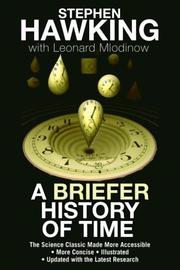
The 2005 rewrite with Leonard Mlodinow, which exists because the original defeated so many readers: the same material, more illustrations, more patience. If you want the argument rather than the trophy, read this one and skip the next entry.

The 1988 original, and still worth reading in its own right for its compression and its ending. Placed here rather than first because its famous difficulty is real: the chapters on imaginary time and the no-boundary proposal are where most readers stop.
The sequel, heavily illustrated and organised as branching essays rather than a single line of argument, covering the developments — M-theory, branes, holography — that postdate the first book. It assumes you already have the vocabulary the previous entries supply.
The contested Hawking
IntermediateRead the books where he moves from reporting physics to arguing philosophy, and understand why physicists and philosophers pushed back.
▸ Study plan for this stage
Pace: Three to four weeks. The Grand Design is short and reads quickly, but read it slowly and with a pen: it is a polemic in the shape of a survey and the argumentative moves are easy to swallow at speed. Black Holes and Baby Universes is a collection of essays and talks, so a few at a time over a fortni
- The Grand Design's central claim: that M-theory plus a multiverse of vacua makes an external creator unnecessary as an explanation of fine-tuning
- The opening declaration that philosophy is dead, which drew immediate and substantial objection from philosophers of science and which the book itself does not defend at length
- Model-dependent realism, the book's own epistemology, and the question of whether it is a novel position or a restatement of older ones
- The physicists' objection, distinct from the philosophers': how much M-theory can currently be said to predict, given that it is a framework whose full formulation does not yet exist
- The difference between 'the laws permit a universe to begin without external cause' and 'therefore there is no creator' — the step where readers on both sides locate the disagreement
- In Black Holes and Baby Universes, the black-hole information problem stated by the person who raised it, and the autobiographical essays on the disease and on the reception of A Brief History of Time
- That the essays include Hawking's own commentary on how his famous book was read, which is why they sit after the argument books rather than before
- Reconstruct the argument of The Grand Design in five numbered steps. Which step do its critics attack, and is it the same step in the philosophical and the physical objections?
- What is model-dependent realism as the book presents it, and what work does it do in the larger argument?
- The book opens by declaring philosophy dead and then argues a philosophical thesis. Is that a contradiction, or can the two be reconciled on the book's own terms?
- How much of the fine-tuning argument depends specifically on M-theory, and how much would survive if M-theory were abandoned?
- In Black Holes and Baby Universes, how does Hawking describe the information problem, and what does he then say about whether it is solved?
- The essays comment on the reception of A Brief History of Time. Do they suggest the difficulty was the reader's or the book's?
- Write the strongest one-page case against The Grand Design's central claim, using only material from Hawking's own earlier books. Then write the strongest one-page case for it. Do not decide — this is a live disagreement among physicists and philosophers and the reading is complete when you can state both sides fairly.
- Isolate every sentence in The Grand Design that asserts something about M-theory and mark whether it is presented as established, promising or speculative. The distribution is the substance of the physicists' complaint.
- Read the information-problem essay in Black Holes and Baby Universes and then note what The Grand Design does with the same issue. Whether the two are consistent is a real question.
- Pick one autobiographical essay and one physics essay from the collection and write 200 words on how differently Hawking hedges in each.
Next up: The autobiographical essays here are the hinge: they raise a life that Hawking narrates sparely, and the next stage puts his account beside two others.
Written with Mlodinow, this is where he argues that M-theory makes a creator unnecessary and opens by declaring philosophy dead. Both claims were disputed hard on publication, by philosophers of science over the dismissal and by physicists over how much M-theory can actually be said to predict. It is a polemic dressed as a survey, and worth reading as one.

A 1993 collection of essays and talks, including autobiographical pieces and his account of the black-hole information problem. It sits after the argument books because several essays are direct commentary on the reception of A Brief History of Time.
The life
IntermediateRead the man rather than the physics, from three quite different vantage points.
▸ Study plan for this stage
Pace: Four to five weeks, and read in the order given. My Brief History is barely 130 pages and takes an evening. Travelling to Infinity is far longer, close to five hundred pages, and needs three weeks. Mlodinow's memoir is short again. Read Hawking's own first specifically so that you notice what it omi
- The reticence of My Brief History as a fact about its author: the illness handled briskly, the marriages more briskly still, and the physics given the most room
- How much of a life a short memoir can carry, and what a reader is entitled to infer from the gaps
- Jane Hawking's account in Travelling to Infinity of twenty-five years of the marriage and of what sustaining that household required — testimony from one participant about a private life, and irreducibly one side of it
- That the two memoirs differ sharply on the cost of the marriage, and that neither is in a position to settle the matter for a reader; the honest posture is to hold both accounts rather than to pick
- The film The Theory of Everything as a further adaptation layered on top of Jane Hawking's book, and the compressions it introduces
- Mlodinow's vantage: a physicist who co-wrote two of the books in this path and watched Hawking work after the disease had taken his speech
- The mechanics of how Hawking actually did physics late in life — the cost of every sentence, and what that did to the shape of his arguments
- Mlodinow's book is affectionate rather than critical, which is worth knowing before you weigh it against Jane Hawking's
- What does My Brief History leave out, and what does Hawking give the most space to instead?
- Where do Hawking's account and Jane Hawking's account describe the same events differently — not who is right, but what each is attending to?
- What does Travelling to Infinity claim the household cost, and what kind of evidence is a memoir for such a claim?
- What does Mlodinow's book show about the practical process of Hawking's late work that neither memoir does?
- How should a reader hold three accounts of one marriage written by people with entirely different stakes in it?
- Does knowing how physically expensive each sentence was change how you read the compression of A Brief History of Time?
- Build a three-column timeline of the same twenty-five years from the three books, filling each column only with what that book actually asserts. The blank cells are the most informative part.
- Take one episode covered by both memoirs and write it twice, 200 words each, in each author's own emphasis. The exercise is to render both fairly, not to adjudicate.
- List what Mlodinow is well placed to know and what he is not, given that he was a collaborator and friend rather than family.
- Write a paragraph on which of the three books you would hand to someone who had read only the physics, and why.
Next up: The memoirs explain the compression of the popular books; the final stage shows what was being compressed, in the technical monograph and in a rival's much fuller popular account.

His own memoir, and notably short and reticent — barely 130 pages, with the illness handled briskly and the marriages more briskly still. Read it first among the three because the gaps in it are what the other two books fill.

His first wife's memoir of twenty-five years of the marriage, the basis for the film The Theory of Everything, and an account that differs sharply from his own on the cost of that household. It is one side of a contested marriage and should be read as testimony, not verdict.

By the physicist who co-wrote two of the books above, so it is unusually good on how Hawking actually worked and thought once the disease had taken his speech. Affectionate rather than critical, which is worth knowing going in.
The real thing, and a second opinion
BeginnerSee the technical work the popular books are describing, and compare Hawking's account of black holes with a rival popular treatment by a physicist who was there.
▸ Study plan for this stage
Pace: Open-ended and honestly assessed. The Large Scale Structure of Space-Time is a graduate monograph of nearly four hundred pages that assumes differential geometry and general relativity throughout; unless you have that background, read the introduction and the statements of the singularity theorems f
- The singularity theorems as Hawking and Ellis state them: theorems with hypotheses, not a picture, and the hypotheses are where the physics lives
- What 'general relativity predicts its own breakdown' means formally, and how far that is from the popular phrasing 'the universe began at a point'
- The gap between a translation and its original — reading a page of the monograph beside the corresponding chapter of A Brief History of Time is the point of including it
- Thorne's much longer account of the same physics, written by a colleague and rival who was present for the arguments, the bets and the wrong turns
- The sociology of the field as Thorne reports it: results arrived at through dispute between named people with competing intuitions, rather than the smooth chain the popular books present
- Where Thorne's framing differs from Hawking's on priority and on how firmly a result was established at the time
- Wormholes, time machines and gravitational waves as Thorne treats them, which is more detailed and more cautious than any comparable passage in Hawking
- What a popular book is for, having now seen both the technical statement and a fuller popular alternative
- What are the hypotheses of the singularity theorems, and which of them are physically motivated rather than mathematically convenient?
- Where does A Brief History of Time simplify, where does it hedge, and is there anywhere it overstates?
- How does Thorne's account of how Hawking radiation was received differ from Hawking's own account of it?
- Thorne devotes real space to disagreements and bets. What does that add that a single-author survey structurally cannot?
- Having read both popular treatments, which gives you a better working picture of black holes, and on what grounds?
- What would you now tell someone whose entire knowledge of this physics comes from A Brief History of Time?
- Take one result — Hawking radiation is the natural choice — and write its three versions side by side: the monograph's framing, A Brief History of Time's, and Thorne's. Note what each keeps.
- Read the introduction to The Large Scale Structure of Space-Time and write down the exact point at which the mathematics stops being followable for you. That point names what you would need to study next.
- Work through Thorne's account of one dispute and reconstruct both physicists' positions as they stood before the answer was known.
- Revisit the confidence ratings you wrote in stage one against everything you now know, and rewrite any that no longer hold.
- Write a one-page reading order of your own for a friend starting Hawking, and defend any departure from this path's ordering.
Next up: This is the end of the path: from here the next step is a general relativity textbook or the research literature the monograph cites, not another book about Hawking.
The 1973 monograph with George Ellis containing the singularity theorems — real general relativity, with differential geometry assumed throughout. This is graduate-level and included so you can see what the popular books are translations of, not as something to work through casually.
Thorne's popular history of the same physics by a colleague and rival, and much longer and more detailed on how the results were actually arrived at, including the bets and the disagreements. Read it as the check on Hawking's own framing of his field.
Discussion
Keep reading
Paths that share books, cover the same subject, or open a related topic.