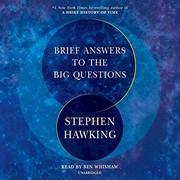
Start with Brief Answers to the Big Questions. It was assembled from his lectures and essays after his death, it is short, and each chapter answers one question in a few pages — so you can put it down and pick it up without losing the thread. That is exactly what most readers cannot do with the famous one.
The obvious starting point is A Brief History of Time, and it is the wrong one. It sold on the order of ten million copies and has a lasting reputation as the most-bought unfinished book in publishing. The reason is structural: the first half is genuinely accessible, then the argument turns and asks for a kind of sustained abstraction the book has not trained you for. Read it second.
The cosmology books, in the order that works
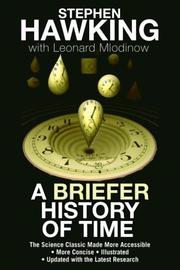
A Briefer History of Time is the rewrite, done with Leonard Mlodinow, and it is not a cash-in — it is the same material reorganised by someone whose job was to notice where readers fall off. If you want one book on the physics, this is the better one.
A Brief History of Time is still worth reading afterwards, for the voice and for the historical moment. Go in knowing that Hawking later changed his mind about one of its central claims: he conceded the black hole information bet in 2004, which the book does not anticipate.
The Universe in a Nutshell is the illustrated follow-up. It is more demanding than its coffee-table presentation suggests, and it is the most dated of the three, because it leans hard on a version of string theory that was more fashionable then than now.
The Grand Design, again with Mlodinow, is the most argumentative. It opens by announcing that philosophy is dead and proceeds to a model-dependent-realism defence of M-theory as an answer to why there is something rather than nothing. Physicists and philosophers pushed back hard on both moves, and that argument is not settled. Read it as a position paper, not a summary of consensus.
The essays and the life
Black holes and baby universes and other essays collects short pieces and lectures. It is the loosest book and the funniest, and the best place to hear him think out loud rather than explain.
My Brief History is his own memoir and it is very short — barely more than a long essay, and notably reticent about his marriages. Travelling to infinity is the counterweight: Jane Hawking wrote it about those same years from inside the marriage, and the film came from it. The two accounts do not agree. Reading them together is more honest than reading either alone.
Stephen Hawking is Leonard Mlodinow's memoir of working with him, not a book by Hawking, whatever our catalogue entry suggests — it is sold as a memoir of friendship and physics. It is the warmest thing on this list and the most useful on how the collaborations actually ran.
Where to stop, and the one book that is not for you
The large scale structure of space-time, co-written with George Ellis, is the real Hawking, and it is a graduate monograph in general relativity. It is not hard the way The Grand Design is hard; it is hard the way a differential geometry course is hard. Without the mathematics it will teach you nothing.
Black holes and time warps is by Kip Thorne, not Hawking, and it is the book to reach for if the popular accounts left you wanting more rigour without more equations. Thorne was present for most of the arguments and is a better narrator of the physics community than Hawking ever tried to be.
Most readers should stop after the essays. The full sequence, and where each book sits in it, is on the path below.
Follow the full ordered path here: Stephen Hawking in Order: Where to Start with His Books.