Best Books on Gravitational Waves and LIGO, in Reading Order
Einstein predicted gravitational waves in 1916, spent decades doubting they were real, and it took a century and a four-kilometre interferometer measuring a displacement a thousandth the width of a proton to prove him right. This path starts with general relativity itself, because the waves are meaningless without it, then reads the fifty-year detection effort, then a sociologist's account of the discovery from inside the collaboration, before ending with the graduate texts on relativity and gravitational-wave theory.
Why spacetime can ripple
BeginnerGrasp what general relativity claims about spacetime curvature, and why a changing mass distribution should radiate
▸ Study plan for this stage
Pace: About 3 weeks. Einstein's Relativity: The Special and General Theory is only 86 pages but is not light reading; take it a section at a time and do the arithmetic he leaves implicit. Wheeler's A Journey into Gravity and Spacetime is a picture-driven Scientific American Library volume, an afternoon or
- The equivalence principle and why free fall is locally indistinguishable from no gravity at all
- Spacetime curvature expressed physically as tidal effects and geodesic deviation, not as a picture of a bent sheet
- The field equation as a two-way relation: matter tells spacetime how to curve, curvature tells matter how to move
- Why gravitational radiation is quadrupolar: mass conservation kills the monopole, momentum conservation kills the dipole
- The long dispute over whether waves were physical or a coordinate artefact, from the Einstein and Rosen 1936 episode to the 1957 Chapel Hill meeting
- Feynman's sticky-bead argument as the demonstration that a wave does mechanical work
- Ferreira's institutional point: general relativity spent decades as a backwater with almost no experimental contact
- Why does electromagnetism radiate at dipole order while gravity cannot, and what does that imply about the sources you can hope to detect?
- What does the equivalence principle forbid you from measuring in a small enough laboratory, and what does that leave measurable?
- State the sticky-bead argument and explain exactly what it settles about the physicality of a wave
- What made general relativity a professional backwater, in Ferreira's account, and what ended that?
- How does geodesic deviation connect to the physical response of an interferometer's mirrors to a passing wave?
- Work through Einstein's own treatment of the clock effect in the appendices of Relativity and restate his argument in your own words, flagging each step where he assumes something he has not derived
- Using Wheeler's grid diagrams, draw how a ring of freely falling test particles deforms under a plus-polarised wave over one full period, then repeat for cross polarisation, and show that the two are related by a 45 degree rotation
- Read the Hulse and Taylor discovery paper on the binary pulsar PSR 1913+16 (ApJ Letters, 1975) and the later Taylor and Weisberg orbital-decay figure, and confirm for yourself that the measured decay matches the quadrupole prediction
- Write 300 words explaining to a non-physicist why the waves are transverse and quadrupolar, without using the word tensor
Next up: With the theoretical claim in hand, the next stage is the fifty-year engineering and institutional effort to measure a strain of one part in ten to the twenty-first.
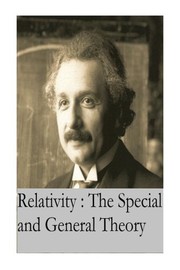
Einstein's own popular exposition, still the clearest short statement of the equivalence principle and what curved spacetime means. Read it first, because the whole path is downstream of the theory it explains.

Wheeler, who coined the term black hole, explaining geometrodynamics with pictures instead of tensors. It builds the geometric intuition that makes the later mathematics feel inevitable rather than arbitrary.

A century of general relativity as intellectual history, including the long period when the field was considered a backwater and when even the reality of gravitational waves was disputed. It sets up why detection took so long.
The fifty-year hunt
BeginnerFollow the detection effort from Weber's resonant bars through LIGO's construction to the September 2015 signal
▸ Study plan for this stage
Pace: Three to four weeks. All three are trade non-fiction with no mathematics: Bartusiak's Einstein's Unfinished Symphony (261 pages), Schilling's Ripples in Spacetime (340) and Levin's Black Hole Blues (256), at roughly 40 pages a day. Read Bartusiak first precisely because it was written before the det
- Weber's resonant bar detectors, his claimed detections, and the failure of other groups to reproduce them
- Michelson interferometry as the alternative, and why kilometre-scale arms are the price of sensitivity
- Strain h as the observable: a fractional length change of about ten to the minus twenty-one
- The noise budget: seismic at low frequency, thermal in the middle, photon shot noise at high frequency, and the design choices aimed at each
- Fabry-Perot arm cavities and power recycling as ways to buy effective arm length and laser power
- Blind injections as an internal discipline against wishful analysis
- GW150914 as the first detection, and GW170817 as the first multi-messenger event with an electromagnetic counterpart
- Why did interferometry win over resonant bars, given that bars are far cheaper?
- Why do you need at least two widely separated detectors, and what does a third add beyond confirmation?
- What is a blind injection, and what problem in the sociology of a large collaboration is it designed to solve?
- What did GW170817 establish that a black hole merger never could?
- How does a strain of ten to the minus twenty-one translate into a physical displacement of LIGO's four-kilometre arms, and how does that compare to a proton's diameter?
- Download the public GW150914 strain data from the Gravitational Wave Open Science Center and follow their quickstart tutorial to whiten and bandpass it until the chirp is visible in your own plot
- Estimate the chirp mass from the observed frequency evolution using the Newtonian chirp formula, and compare your answer to the published component masses of roughly 36 and 29 solar masses
- Read a published LIGO noise-budget plot and identify which physical noise source dominates at 20 Hz, at 100 Hz and at 1 kHz
- List three uncertainties Bartusiak presents as open in 2000 and note, from Schilling, how each was settled
Next up: Knowing what the instruments do and what they found, the next stage asks the harder question of how a thousand-author collaboration converts a wiggle into a claimed discovery.
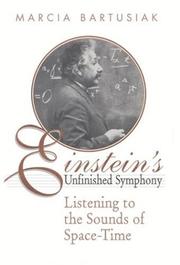
The standard narrative history of the search, covering Weber's contested claims and the origins of LIGO. Read it first here: it was written before the detection, so it conveys how uncertain the whole enterprise looked.

The post-detection survey, covering the 2015 event, neutron-star mergers and the multi-messenger astronomy that followed. It brings Bartusiak's story up to date and is strong on the instrumentation.

Levin's account of the personalities and institutional fights behind LIGO, finished just as the first detection arrived. Read it last in this stage, because it is about the people rather than the physics and lands hardest once you know what was at stake.
How a discovery is actually made
IntermediateUnderstand how a thousand-author collaboration converts a candidate signal into a claimed detection, and what statistical and social machinery that requires
▸ Study plan for this stage
Pace: Two months, and be honest about the size: Gravity's Shadow is 864 pages and is the longest single reading on this path, at 25 pages a day for six weeks. Gravity's Kiss (416 pages) then takes about two weeks. Both are sociology of science, not physics: there are no equations, but the argumentative de
- The experimenter's regress: you cannot tell whether an apparatus works without knowing the answer it should give
- Tacit knowledge, and why building a working detector cannot be transmitted by publication alone
- Evidential individualism versus evidential collectivism as competing norms for when a claim may be made
- Interactional expertise: understanding a field's language fluently without being able to do its experiments
- The five-sigma convention as a socially maintained boundary rather than a purely statistical one
- Authorship, embargo and internal review in a collaboration of a thousand people
- Collins's core-set idea: the small group of people who actually settle a contested claim
- State the experimenter's regress precisely, and show how the Weber episode instantiates it
- Why can statistical significance alone not settle whether a signal is real, on Collins's account, and what does the rest of the work consist of?
- How did the LIGO collaboration organise the months between the September 2015 signal and the public announcement, and what were they protecting against?
- What is interactional expertise, how did Collins test whether he had it, and does the test convince you?
- Where do you think Collins overstates the social contribution, and where does he understate it?
- Read the discovery paper itself (Abbott et al., Observation of Gravitational Waves from a Binary Black Hole Merger, Physical Review Letters 116, 061102) alongside Collins's account of how it was drafted, and mark the sentences where a contested judgement has been rendered invisible
- Take one internal decision Collins describes in Gravity's Kiss and write both the physicists' account of it and Collins's account, then say which explains more
- Write a one-page rebuttal to Gravity's Shadow from the point of view of a working experimentalist who thinks the regress is dissolved by instrument redundancy
- Follow one claim from the Weber era through Shadow and note every mechanism by which the community stopped believing it
Next up: Having seen how the community decides that a signal is real, the next stage covers what the signals are: the astrophysical objects loud enough to reach us.
Collins spent decades embedded in the gravitational-wave community as a sociologist, and this is his history of the field through the failed detections. It is long, and it is the only book that explains why the community distrusted its own instruments for so long.

The sequel: the five months between the September 2015 signal and the public announcement, watched in real time from inside. Read it directly after Gravity's Shadow, whose scepticism it resolves.
The sources
IntermediateKnow what the detectors are listening to: black hole binaries, neutron-star mergers, and why these are the only sources currently loud enough
▸ Study plan for this stage
Pace: About 5 weeks, and the two books are not the same difficulty. Thorne's Black Holes and Time Warps is 619 pages of narrative popular science with no equations, at 40 pages a day. Gubser and Pretorius's The Little Book of Black Holes is only 179 pages but is genuinely technical: it writes down metrics
- The Schwarzschild metric, the event horizon, and the innermost stable circular orbit at six gravitational radii
- The Kerr solution: spin parameter, frame dragging, and the ergosphere
- Inspiral, merger and ringdown as the three phases of a binary coalescence waveform
- Quasi-normal modes: the final black hole rings at frequencies set by its mass and spin alone
- Chirp mass as the best-measured combination of the two component masses, and why the individual masses are harder
- Neutron star mergers, tidal deformability, and the constraint on the dense-matter equation of state
- Kilonova emission and the r-process origin of heavy elements confirmed by GW170817
- What is the innermost stable circular orbit, and why does it set the frequency at which the inspiral signal ends?
- What can you infer about the final black hole from the ringdown alone, and why is that a test of general relativity rather than just an inference?
- Why is chirp mass measured far better than the individual component masses?
- What is the ergosphere, and how does the Penrose process extract energy from a spinning black hole?
- What does the tidal deformability measured in a neutron-star merger tell you about matter at nuclear density?
- Work Gubser and Pretorius's derivation of circular orbits in Schwarzschild and confirm that the innermost stable one sits at r = 6GM/c squared
- Compute the Newtonian orbital frequency of two thirty-solar-mass black holes separated by 350 kilometres, and check that twice that frequency lands near the few-hundred-hertz band where GW150914 peaked
- Pull the public GWTC catalogue of detections and plot component masses against each other; identify where the pre-LIGO mass gap was supposed to be and whether it survived
- Read Thorne's chapter on the predicted waveform and note which of his 1990s expectations the 2015 detection confirmed and which it overturned
Next up: You can now say what the detectors hear and what produces it; the final stage is where you derive it, rather than accept it.
Thorne shared the Nobel for LIGO and this is his account of black hole physics and of the theoretical work that predicted what a merger would sound like. Read it here rather than earlier: it is long and rewards knowing why it matters.

A short, genuinely technical treatment of Schwarzschild and Kerr geometry that stays just below the level of a textbook. It is the most efficient preparation for the graduate books in the final stage.
The theory, at research level
IntermediateDerive the wave solution from the linearised field equations, compute a binary waveform, and read the LIGO literature unaided
▸ Study plan for this stage
Pace: Nine to twelve months, and this stage has real prerequisites: multivariable calculus, linear algebra, Lagrangian mechanics, and electromagnetism at the level of a full undergraduate course. Hartle's Gravity is physics-first, deferring the differential geometry, and takes two to three months. Carroll
- The linearised Einstein equations, the transverse-traceless gauge, and the two independent polarisations
- The quadrupole formula and the resulting scaling of strain with mass, separation and distance
- Detector antenna patterns and why a single interferometer cannot localise a source
- The post-Newtonian expansion, its parameter, and where it stops working
- Numerical relativity and the 2005 breakthrough that made merger waveforms computable
- Matched filtering: templates, signal-to-noise, and the cost of a large template bank
- The Isaacson stress-energy of a wave, and the sense in which a gravitational wave carries energy
- The detector noise curve as the thing that decides which astrophysics is accessible
- Derive the wave equation for the metric perturbation from the linearised field equations, and state what is gauge and what is physical about the result
- Why is the transverse-traceless gauge convenient, and what quantity in it is genuinely observable?
- How does matched filtering recover a signal buried well below the noise, and what does it cost you if your template family is wrong?
- Which physical effect limits LIGO at low frequency, which in the middle band, and which at high frequency?
- Why does the post-Newtonian expansion fail near merger, and what does the field use instead?
- Derive the linearised wave equation from Carroll's chapter 7 with the book closed, then check your derivation against his
- Use the quadrupole formula to compute the expected strain at Earth for GW150914's parameters and confirm you land near ten to the minus twenty-one
- Work Maggiore's problems on detector antenna patterns and produce the sky-sensitivity map for a single L-shaped interferometer
- Implement a matched filter against the GWOSC data using the PyCBC or GWpy tutorials and recover GW150914 yourself from the raw strain
- Take one recent LIGO-Virgo-KAGRA parameter-estimation paper and identify, for each quoted parameter, which of Maggiore's or Andersson's results underlies the measurement
Next up: This is the end of the path: with Maggiore on the shelf and a matched filter of your own running, the next thing you read is the current catalogue papers, and you will be reading them as a colleague rather than a spectator.
Catalogued simply as Gravity. Hartle's physics-first approach gets you to real predictions, including gravitational radiation, before the full differential geometry. The gentlest entry to technical general relativity.

The standard graduate introduction, with the differential geometry done properly and a clear chapter deriving gravitational waves from the linearised Einstein equations. Read it after Hartle.

The definitive treatise, and the record here is Volume 1: Theory and Experiments, covering wave generation, detector response and interferometer noise. This is the reference the field works from.

Focused on the astrophysics rather than the formalism: what merger and supernova signals actually encode about their sources. The right closing book, because it points at the science the detections were built to do.
Discussion
Keep reading
Paths that share books, cover the same subject, or open a related topic.