Best Books on Sports Psychology, in Reading Order
This curriculum takes you from the core mental skills every athlete needs, through the science of motivation and pressure performance, into advanced techniques like imagery, routines, and coaching psychology. Each stage builds the vocabulary and frameworks needed for the next, so by the end you'll have both a deep theoretical grounding and a practical toolkit for training and competing at your best.
Foundations of the Athletic Mind
BeginnerUnderstand the core principles of sports psychology — what it is, why the mental game matters, and how basic mental skills like confidence, focus, and self-talk shape performance.
▸ Study plan for this stage
Pace: 4–5 weeks, ~25–30 pages/day (alternating between both books; complete "10-Minute Toughness" in weeks 1–2, then "The Champion's Mind" in weeks 3–5)
- Mental toughness as a trainable skill: Selk's framework that mental strength is built through deliberate daily practice, not innate talent
- The 10-minute daily routine: Selk's specific protocol combining breathing, visualization, and self-talk to anchor mental performance
- Confidence as a performance lever: How belief in your ability directly influences execution and resilience under pressure
- Focus and attention control: The ability to direct mental energy toward process goals rather than outcomes, and manage distractions
- Self-talk and internal dialogue: How the language you use with yourself shapes emotions, behavior, and performance outcomes
- The champion's mindset framework: Afremow's model of how elite athletes think, prepare, and recover mentally across competition cycles
- Pre-performance routines and rituals: Concrete mental preparation sequences that create consistency and reduce performance anxiety
- Adversity and pressure management: Techniques for reframing setbacks, maintaining composure, and performing when stakes are highest
- What is Selk's definition of mental toughness, and why does he argue it must be practiced daily like a physical skill?
- Describe the core components of Selk's 10-minute toughness routine. How does each element (breathing, visualization, self-talk) contribute to mental readiness?
- How does Afremow explain the relationship between confidence and performance? What role does self-belief play in executing under pressure?
- What is the difference between outcome focus and process focus, and why does Afremow emphasize process-oriented thinking for champions?
- How should an athlete construct an effective pre-performance routine, and what makes it different from superstition or habit?
- According to both authors, how should athletes use self-talk to manage pressure and maintain focus during competition?
- Complete Selk's 10-minute toughness routine daily for 2 weeks: practice the breathing technique (box breathing or similar), spend 3–5 minutes on visualization of successful performance, and craft 2–3 personal power statements for self-talk. Track consistency and note any changes in focus or confidence.
- Record your internal dialogue during a practice or competition: write down the self-talk you naturally use, then reframe negative statements into process-focused, empowering language. Practice the new script for one week and journal the impact.
- Design a personal pre-performance routine (5–10 minutes) based on Afremow's framework: include a physical warm-up element, a mental focus cue, and a confidence-building statement. Test it before three separate performances and refine based on results.
- Identify one high-pressure situation in your sport (e.g., a crucial moment, a skill you struggle with). Use Afremow's adversity-management techniques to create a specific response plan: what you'll think, what you'll do, and how you'll refocus.
- Create a confidence journal: after each practice or competition, write one specific thing you did well and one area of improvement. Review weekly to build evidence of your capability and progress (Afremow's confidence-building method).
- Conduct a focus audit: during one full practice session, note every time your mind wanders from the task at hand. Identify the triggers (fatigue, self-doubt, external distraction) and design one mental cue or routine to redirect focus when it drifts.
Next up: This stage establishes the foundational mental skills and daily practices that elite athletes use; the next stage will deepen these tools by exploring sport-specific applications, advanced visualization techniques, and how to integrate mental training into periodized training plans.
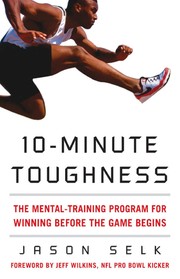
Builds directly on those foundations by giving beginners a simple, repeatable daily mental training routine — bridging the gap between understanding concepts and actually practicing them.

A broad, accessible survey of the mental habits shared by elite athletes; reading it third consolidates beginner vocabulary (process focus, confidence, resilience) before the curriculum goes deeper.
Motivation, Mindset & Mental Toughness
IntermediateDevelop a rigorous understanding of what drives athletes intrinsically, how mindset shapes long-term development, and what mental toughness really means scientifically.
▸ Study plan for this stage
Pace: 8–10 weeks, ~25–30 pages/day (approximately 2–3 weeks per book, with overlap for integration)
- Fixed vs. growth mindset: how beliefs about ability shape effort, resilience, and long-term athletic development
- Intrinsic motivation and the role of deliberate practice: why passion + persistence outweigh raw talent
- Grit as a measurable construct: combining talent, interest, practice, and purpose into sustained excellence
- The psychology of self-talk and internal dialogue: how champions manage doubt and maintain confidence under pressure
- Mental toughness as emotional regulation: responding to adversity, failure, and high-stakes moments with composure
- Purpose-driven goals: connecting individual athletic ambitions to larger meaning and long-term commitment
- The champion's mindset: visualization, process focus, and detachment from outcome anxiety
- Neuroplasticity and skill development: how deliberate practice rewires the brain and sustains improvement
- What is the difference between a fixed and growth mindset, and how does each affect an athlete's response to failure and setbacks?
- According to Duckworth, what are the four components of grit, and how do they interact to predict athletic success?
- How does Rotella define mental toughness, and what specific mental skills do champions use to manage pressure and self-doubt?
- What role does deliberate practice play in developing intrinsic motivation, and why is it more predictive of excellence than innate talent?
- How can an athlete use self-talk and visualization techniques to shift from outcome-focused to process-focused thinking?
- What is the relationship between purpose and persistence, and how can athletes identify and sustain their 'why'?
- Mindset audit: Identify 3–5 fixed mindset beliefs you hold about your athletic abilities (e.g., 'I'm not naturally fast'). Reframe each as a growth mindset statement and track how your effort and attitude shift over one week.
- Grit inventory: Score yourself on Duckworth's grit scale (interest, practice, purpose, hope). Identify the weakest component and design a 2-week intervention to strengthen it (e.g., if purpose is low, write a personal mission statement for your sport).
- Self-talk script: Record or write down your internal dialogue during a challenging training session or competition. Analyze it for fixed mindset language, catastrophizing, or outcome focus. Rewrite 5–10 key phrases using Rotella's champion-mindset language.
- Deliberate practice log: For two weeks, document one focused practice session daily. Note the specific skill, the difficulty level, the feedback received, and how you adjusted. Reflect on how this differs from 'just playing' or casual practice.
- Visualization protocol: Practice Rotella's visualization technique 3–4 times per week for 10 minutes. Visualize a specific high-pressure scenario (e.g., final moments of a game) and mentally rehearse your process-focused response. Journal the mental clarity and confidence shifts you notice.
- Purpose statement: Write a detailed personal purpose statement connecting your sport to larger values (e.g., resilience, community, growth). Share it with a coach or teammate and revisit it when motivation dips.
Next up: This stage builds the psychological foundation—understanding *why* athletes persist and *how* they think—preparing you to explore the practical systems, team dynamics, and environmental factors that amplify or undermine these mental capacities in the next stage.
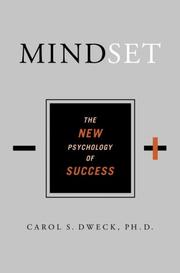
Dweck's growth-vs-fixed mindset framework is foundational to understanding athlete motivation and resilience; it reframes failure as information, which underpins everything in this stage.
Extends the mindset conversation into long-term passion and perseverance, giving a research-backed model of why some athletes sustain effort through adversity — essential for understanding mental toughness.

Rotella synthesizes motivation and confidence into a coherent philosophy used with world-class athletes; it bridges academic concepts from Dweck and Duckworth into real coaching and competitive practice.
Performing Under Pressure
IntermediateUnderstand the psychology of choking, clutch performance, arousal regulation, and the specific mental strategies athletes use to perform at their peak when stakes are highest.
▸ Study plan for this stage
Pace: 4–5 weeks, ~40–50 pages/day. Week 1–2: "Performing Under Pressure" (approx. 250 pages); Week 3–5: "Choke" (approx. 300 pages). Include 2–3 days per week for reflection and exercise completion.
- The pressure paradox: how increased stakes trigger physiological arousal that can either enhance or impair performance depending on mental framing and preparation
- Choking as a breakdown in automaticity: when conscious attention hijacks well-learned skills, causing performance collapse under pressure
- Arousal regulation and the inverted-U relationship: optimal performance occurs at moderate arousal levels, not at extremes of calm or intensity
- Pre-performance routines and mental preparation: structured rituals that anchor attention, build confidence, and buffer against pressure-induced distraction
- Working memory limitations under stress: pressure consumes cognitive resources, making skill execution and decision-making vulnerable to interference
- Reappraisal and mindset shifts: reframing pressure as excitement or challenge rather than threat to maintain performance quality
- The role of practice structure: how deliberate, pressure-simulated training inoculates athletes against choking in real competition
- Emotional regulation and self-talk: specific cognitive techniques to manage anxiety and maintain focus during high-stakes moments
- What is choking, and how does it differ from simply performing poorly? What cognitive mechanisms does Beilock identify as causing skill breakdown under pressure?
- According to Weisinger, what is the pressure paradox, and how can athletes reframe pressure to enhance rather than diminish performance?
- How does the inverted-U relationship between arousal and performance explain why both under-arousal and over-arousal are detrimental?
- What role does working memory play in choking, and why are well-practiced skills particularly vulnerable to pressure-induced interference?
- What are the key components of an effective pre-performance routine, and how does it help athletes maintain automaticity under pressure?
- How can reappraisal techniques (e.g., reframing pressure as excitement) alter the physiological and psychological response to high-stakes situations?
- Design a personal pre-performance routine (3–5 minutes) for a sport or high-pressure activity you engage in; practice it daily for one week and journal how it affects your focus and confidence.
- Conduct a pressure simulation: perform a skill you've practiced (free throws, public speaking, a musical passage) under artificial pressure conditions (time limits, audience, stakes) and analyze where your performance broke down using Beilock's choking framework.
- Create a reappraisal script: write 3–4 statements that reframe pressure as a positive challenge (e.g., 'This pressure means I care' or 'My arousal is energy for peak performance') and practice saying them before a real high-stakes event.
- Map your arousal zones: identify your personal inverted-U curve by reflecting on past performances—at what arousal level did you perform best, and what were the signs (heart rate, breathing, focus) of being under- or over-aroused?
- Practice pressure-inoculation training: deliberately introduce distractions or time pressure during practice sessions (e.g., shooting free throws while someone talks, solving problems with a countdown timer) and track improvements over 2–3 weeks.
- Analyze a choking moment: select a recent performance where you underperformed under pressure, and diagnose it using Beilock's framework—was it skill-focused attention, working memory overload, or emotional dysregulation? Propose a specific intervention.
Next up: This stage equips you with the foundational understanding of pressure's cognitive and physiological mechanisms and practical tools to manage them; the next stage will likely deepen this into sport-specific applications, team dynamics, or long-term mental resilience and recovery strategies.

Directly addresses the science of pressure situations — why performance breaks down and how to prevent it — making it the perfect opening book for this stage.

A cognitive scientist's deep dive into why experts fail under pressure; reading it after the practitioner books adds the neuroscience and psychology of working memory, attention, and skill execution that explains the 'why' behind every technique.
Imagery, Routines & The Zone
ExpertMaster the advanced mental skills of mental imagery, pre-performance routines, and flow states — and understand how to systematically train these skills for consistent peak performance.
▸ Study plan for this stage
Pace: 4–5 weeks, ~25–30 pages/day. Week 1–2: "In Pursuit of Excellence" (focus on imagery and routines chapters). Week 3–4: "Finding Flow" (flow theory and application). Week 5: Integration and advanced practice.
- Mental imagery as a trainable skill: visualization techniques, sensory detail, and the neuromuscular connection between imagined and actual performance
- Pre-performance routines as anchors for consistency: how structured routines reduce anxiety, trigger focus, and prepare the nervous system for peak states
- Flow states (optimal experience): the balance between challenge and skill, loss of self-consciousness, and intrinsic motivation as the foundation of sustained excellence
- Systematic training of mental skills: deliberate practice frameworks for imagery and routines, not one-time techniques but habitual mental patterns
- Individual differences in mental skill development: how athletes discover their own optimal imagery style, routine triggers, and flow conditions rather than following generic templates
- The role of attention and focus in accessing flow: how pre-performance routines and imagery work together to narrow attention and eliminate distractions
- Intrinsic motivation and autotelic experience: understanding why flow-inducing activities sustain long-term commitment better than external rewards
- Integration of mental skills into training and competition: bridging the gap between mental practice and real-world performance under pressure
- What are the key components of effective mental imagery according to Orlick, and how does sensory detail enhance the neuromuscular connection?
- How do pre-performance routines function as tools for managing anxiety and triggering optimal focus states before competition?
- What is flow (optimal experience) as defined by Csikszentmihalyi, and what are the conditions necessary for flow to occur?
- How do challenge-to-skill ratios determine whether an athlete enters flow, boredom, or anxiety, and how can you adjust these variables?
- What is the difference between intrinsic and extrinsic motivation, and why does Csikszentmihalyi argue that flow-based motivation sustains excellence better?
- How can you design a personalized pre-performance routine that integrates imagery and serves as a reliable trigger for flow states?
- Create a detailed mental imagery script for your sport or performance domain: write out a 3–5 minute script that engages all five senses (visual, kinesthetic, auditory, proprioceptive), then practice it daily for 2 weeks and journal how vividness and control improve
- Design and test a pre-performance routine: develop a 5–10 minute sequence (breathing, self-talk, physical cues, imagery), perform it before 5 practice sessions, and track whether it reduces anxiety and improves focus consistency
- Map your personal flow conditions: identify 3 recent moments of flow in your sport/activity, analyze the challenge level, skill level, goals, and feedback present, then identify the common pattern and design practice sessions that recreate these conditions
- Conduct a challenge-skill audit: for your current training, rate the challenge level (1–10) and your skill level (1–10) for 5 different drills or tasks, plot them on Csikszentmihalyi's flow model, and adjust difficulty to move toward the flow channel
- Practice imagery under fatigue: perform your imagery script after intense physical training when mental clarity is harder to achieve, building the skill of accessing mental focus when it matters most in competition
- Integrate imagery into your pre-performance routine: combine your imagery script with your routine sequence, practice the full integration 10 times, and refine timing and triggers until the routine feels automatic and flow-inducing
Next up: This stage equips you with the mental skills and flow-state understanding to perform consistently at your peak; the next stage will likely focus on applying these skills under real competitive pressure, managing setbacks, and building long-term resilience and mental toughness.
Orlick is one of the world's leading applied sport psychologists; this book is the definitive practical guide to mental imagery, focus plans, and pre-competition routines, and is essential reading at this stage.
Csikszentmihalyi's accessible follow-up to his flow research explains how to structure challenges and skills to reliably enter the zone — the ultimate goal of imagery and routine work.
Coaching the Mind
ExpertApply sports psychology from the coach's perspective — how to build psychologically safe environments, develop mental toughness in others, and communicate in ways that unlock athlete potential.
▸ Study plan for this stage
Pace: 4–5 weeks, ~25–30 pages/day (approximately 150–180 pages total)
- Mindfulness as a foundational tool for coaches to model and teach mental clarity and present-moment awareness to athletes
- The role of attention control and focus training in enhancing sport performance and reducing performance anxiety
- Building psychological safety through non-judgmental observation and acceptance-based coaching practices
- Developing mental toughness in athletes by teaching them to work with difficult thoughts and emotions rather than fighting them
- Practical mindfulness techniques (body scans, breathing exercises, visualization) that coaches can integrate into training and competition preparation
- The coach's own mindfulness practice as essential to authentically guide athletes and create emotionally intelligent team environments
- Bridging the gap between mindfulness theory and sport-specific performance contexts (pressure situations, setbacks, peak performance)
- How can coaches use mindfulness to create psychologically safe environments where athletes feel comfortable taking risks and learning from failure?
- What is the relationship between attention control and sport performance, and how can coaches teach athletes to manage their focus during high-pressure moments?
- How does an acceptance-based approach to difficult emotions differ from traditional 'toughening up' methods, and why is it more effective for building lasting mental resilience?
- What specific mindfulness techniques can you teach an athlete to use before competition, during performance, and after setbacks?
- How does a coach's own mindfulness practice influence their ability to communicate effectively and respond rather than react to athlete behavior?
- How can you integrate mindfulness into your coaching philosophy in ways that feel authentic and are tailored to your specific sport and athlete population?
- Establish a personal daily mindfulness practice (10–15 minutes) using body scans or breath awareness; journal how this shifts your awareness and emotional regulation as a coach
- Observe one full practice or training session without judgment, noting moments when you or athletes react impulsively; identify where mindfulness could have changed the response
- Teach one mindfulness technique (e.g., 3-minute breathing space, body scan) to your athletes and document their feedback and any changes in focus or anxiety levels
- Record yourself coaching during a practice or meeting; listen back and identify moments of reactive communication versus responsive communication, then plan how to shift toward mindfulness-based responses
- Design a pre-competition mental preparation routine for a specific athlete or team that incorporates 2–3 mindfulness techniques from the book tailored to their sport
- Conduct a 'psychological safety audit' of your coaching environment by interviewing 3–5 athletes confidentially about whether they feel safe making mistakes and taking risks; use findings to refine your coaching approach
Next up: This stage equips you with the mindfulness foundation and mental skills framework to coach the mind; the next stage will likely deepen your ability to address specific performance challenges (competitive anxiety, team dynamics, resilience under pressure) and integrate these tools into comprehensive, sport-specific mental performance systems.

Brings mindfulness-based psychological skills into a structured coaching and training program, representing the cutting edge of applied sports psychology and providing a fitting capstone to the entire curriculum.
Discussion
Keep reading
Paths that share books, cover the same subject, or open a related topic.