Spenser by Robert B. Parker Reading Order: Where to Start
Robert B. Parker wrote about forty Spenser novels before his death in 2010, and more have appeared since under other hands. Nobody should attempt all of them and no honest reading order pretends otherwise. This path takes the core run in publication order — the first novel, the great stretch from Promised Land to Early Autumn, and the strong middle books — and stops at a defensible point rather than marching to the end.
Start here: the first three
BeginnerMeet Spenser before Parker had fully worked out what the series was, and watch the voice arrive.
▸ Study plan for this stage
Pace: Ten days at most. These are short books — under 200 pages each, mostly dialogue, and a fast reader will finish one in an evening. Read them in this order and do not skip The Godwulf Manuscript on the common advice that it is the weakest; it is, but it is also 190 pages, and the pleasure of the next
- The Chandler inheritance worn openly — a wisecracking Boston private eye, a corrupt institution, a client who lies — and Parker's doctoral work on Hammett and Chandler sitting visibly underneath it
- Dialogue as the actual medium: Parker writes scenes almost entirely in speech, with description reduced to a line, and the rhythm is the reason people read forty of these
- The code arriving before the character does — Spenser's insistence on autonomy, on doing the work himself, and on not being anyone's employee is present from the first chapter of the first book
- Susan Silverman entering in book two and permanently changing what the series is about, from cases to a continuing relationship the cases interrupt
- Mortal Stakes as the first real Spenser novel, where a moral problem has no clean solution and Spenser chooses the option that costs him something
- The dated material, worth naming rather than being surprised by: the first two books carry attitudes to women and to gay characters that were routine in 1973 and read badly now, and Parker's own handling of this changes markedly within a few years
- Boston as a working setting rather than a backdrop — real streets, real neighbourhood politics, and a class geography Parker uses constantly
- What is the moral choice at the end of Mortal Stakes, and why can Spenser not have both things he wants?
- What changes in the prose between The Godwulf Manuscript and Mortal Stakes? Point to a specific difference in how scenes are built.
- What does Susan give the series that a girlfriend character in a 1970s detective novel would normally not?
- Spenser cooks, quotes poetry and lifts weights. What is Parker doing by making a tough guy conspicuously cultured?
- Which attitudes in the first two books have aged worst, and does Parker appear to notice them by book three?
- Read one chapter aloud. Parker's dialogue is built for the ear and the timing is invisible on the page.
- Note the first appearance of each of Spenser's rules — about clients, about lying, about who he works for. The code is stated piecemeal across these three books and never systematically afterwards.
- Count the description sentences on any two facing pages. The ratio is the most concrete fact about Parker's style and it explains the reading speed.
- Write one sentence on what Mortal Stakes is about that does not mention baseball. If you can, you have understood what separates the good Spensers from the routine ones.
Next up: You have the voice and the code; the next stage is where Parker adds the one character who turns a competent detective series into the one people still argue about.
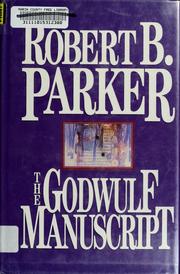
The first Spenser, a stolen-manuscript case at a Boston university. Rougher and nastier than what follows, and it reads like Chandler with the serial numbers barely filed off, but it establishes the wisecracking first person that made the series.
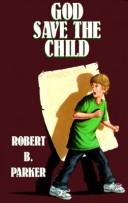
A missing-boy case, and the introduction of Susan Silverman. The domestic material that will define the later books enters here.
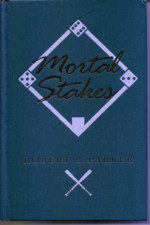
Blackmail inside the Red Sox, and the first genuinely good Spenser novel. The moral problem at the end is the one Parker spent the rest of his career restating.
The peak
BeginnerRead the four-book run most readers name as the best of the series, where the ethical code and the supporting cast lock into place.
▸ Study plan for this stage
Pace: Two to three weeks for four books, and this is the stretch to read consecutively without other novels in between. Promised Land, The Judas Goat, Looking for Rachel Wallace and Early Autumn were published between 1976 and 1981 and they are the reason the series has a reputation. If you only ever read
- Hawk arriving in Promised Land and immediately becoming the series' most interesting problem — a killer for hire who operates by a code as strict as Spenser's and entirely amoral by comparison
- The friendship as an argument: Parker uses Hawk to test whether Spenser's ethics are principles or preferences, and never fully resolves it
- Looking for Rachel Wallace as the outlier — Spenser is hired by someone who finds him ridiculous, is fired by her for being a chauvinist, and is substantially in the wrong for most of the book
- Parker letting his hero lose an argument, which is rare in the genre and is exactly why this novel is the one critics cite
- Early Autumn's central claim that autonomy can be taught — Spenser rebuilds a neglected boy through carpentry, boxing and running, and the book is almost plotless by design
- Competence as a moral quality in Parker: knowing how to do things with your hands is presented as the foundation of not being owned by anyone
- The Judas Goat as the pure entertainment of the four, useful for seeing the Spenser and Hawk partnership at full operating strength without a heavy theme attached
- What does Hawk do in Promised Land that Spenser could not, and what does the series gain by having someone able to do it?
- In Looking for Rachel Wallace, where exactly is Spenser wrong, and does Parker let him admit it?
- Early Autumn has almost no crime in it. What holds it together, and why is it the book fans hand to newcomers?
- Both Rachel Wallace and Early Autumn are about someone refusing to be what others need them to be. Is that the same idea in two forms?
- After these four, how would you state Spenser's code in three sentences — and where does Hawk violate it without losing Spenser's respect?
- Track every scene in which Hawk and Spenser discuss the difference between them. There are only a handful across the four books and together they are the series' philosophy.
- In Early Autumn, list what Spenser actually teaches Paul, in order. The programme is deliberate and it is the book's plot.
- Read Looking for Rachel Wallace immediately after The Judas Goat rather than spacing them out. The contrast between Spenser competent and Spenser wrong-footed is much sharper back to back.
- Write down which of the four you would keep if you could keep one, and why. This is the argument Spenser readers have been having for forty years.
Next up: With the code fully stated and Hawk in place, the next stage is where Parker stress-tests both by putting the relationship that anchors the series under real damage.
Won the Edgar and, far more importantly, introduces Hawk. The series is a different thing after this book, and Hawk is the reason.
Spenser and Hawk hunting terrorists across Europe. Lighter than the others in this stage and useful for seeing the partnership at full strength.
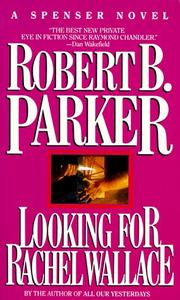
Bodyguarding a lesbian feminist author who despises everything Spenser stands for. Parker's most interesting book because his hero is genuinely and repeatedly wrong in it.
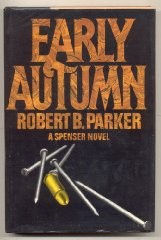
Spenser essentially adopts a neglected teenager and rebuilds him through carpentry and boxing. The purest statement of the series' philosophy of autonomy, and the one to hand someone who asks what all this is about.
The strong middle run
IntermediateContinue through the early eighties, where the books are still ambitious and Parker is stretching the form.
▸ Study plan for this stage
Pace: Three to four weeks. These four are early-to-mid eighties and still ambitious, and Valediction and A Catskill Eagle must be read back to back — they are one story split across two volumes and Valediction on its own is simply bleak. Ceremony works best read soon after Early Autumn, whose questions it
- Ceremony as the counter-case to Early Autumn: another young person who needs saving, but one who declines to be saved on Spenser's terms
- The limits of the code, which is the real subject of this stage — Spenser can rescue people who want what he wants and is useless to people who do not
- A Savage Place as the deliberate experiment: Los Angeles, no Hawk, no Susan, and an ending Parker never repeated because it breaks the series' implicit promise that Spenser's presence is protection
- Valediction's rupture with Susan, and how much a formula series can absorb when its emotional anchor is removed
- A Catskill Eagle pushing Spenser furthest outside the law — he commits serious crimes for personal reasons — and dividing readers permanently on whether the code survives it
- The sequential dependency this stage introduces: for the first time the books stop being interchangeable, and reading them out of order genuinely damages them
- Parker's willingness at this point to make his hero unlikeable, which is precisely what disappears from the later novels
- Why does the girl in Ceremony refuse Spenser's help, and does the novel treat her refusal as a failure of hers or of his?
- What does A Savage Place do that no other book in the series does, and what does its ending say about the value of Spenser's competence?
- In Valediction, is Susan's decision made comprehensible, or does Parker withhold her side of it?
- Does Spenser's conduct in A Catskill Eagle violate his own code, and if so, does the book know it?
- This is the last genuinely ambitious stretch. What do these four books have that the later novels do not?
- Read Valediction and A Catskill Eagle within the same week. Split across a month, the second book reads as excessive rather than as consequence.
- Keep a list of the crimes Spenser commits in A Catskill Eagle. Reading it back afterwards is the fastest way to have the argument the book is designed to start.
- Compare Ceremony's ending with Early Autumn's directly. Parker set them up as a pair and the comparison is the point of having read both.
- Note the length of the Susan scenes across the four books. The proportion of the page count given to the relationship rather than the case is now the defining feature of the series, and it is what later readers most often object to.
Next up: The series never again risks this much, so the final stage is about identifying the last books worth reading in sequence and being straight about where the remaining twenty-five stop earning the effort.
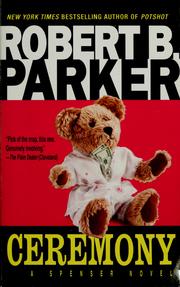
A runaway girl in the Boston sex trade, and the direct sequel to Early Autumn's questions about who gets to be saved.
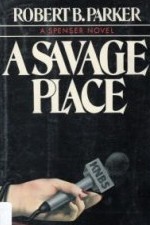
Spenser in Los Angeles without Hawk or Susan, guarding a television reporter. Notable for an ending Parker never repeated.
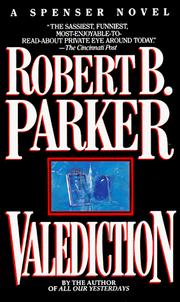
The break with Susan, and the bleakest book of the run. It hits hard only if you have read the earlier novels, which is exactly why the order matters.

The direct sequel, a violent cross-country rescue that pushes Spenser furthest outside the law. Divisive, and the last of the genuinely ambitious ones.
Late Parker, and where to stop
IntermediatePick up the best of the later novels and understand where the series stops rewarding sequential reading.
▸ Study plan for this stage
Pace: Two to three weeks for the three, then a decision. Pale Kings and Princes and Crimson Joy are late eighties and still substantial; Small Vices is 1997 and is the late high point almost everyone names. Stop after Small Vices. That is the honest recommendation of this path, and it is not a slight on w
- The formula fully set — from here a Spenser novel is a case, a Hawk appearance, a Susan dinner, a confrontation, and roughly 280 large-print pages
- Pale Kings and Princes as the last of the socially serious ones, using a Massachusetts mill town and the cocaine trade to say something about a real place
- Crimson Joy running the case through Susan's psychiatric practice, which is the last time the continuing relationships genuinely drive a plot rather than decorate one
- Small Vices as the genuine late peak: a wrongful conviction, a shooting that nearly kills Spenser, and a long recovery that gives the character consequences for the first time in a decade
- Recognising a series that has become a habit rather than a project — the tell is that nothing in a book changes anything in the next one
- The practical arithmetic of stopping: fourteen novels here versus forty-plus in print, and the fact that no reading order for the remainder exists because none is needed
- The posthumous continuations, written by other hands since 2010, which are competent pastiche and outside any sequence Parker built
- What makes Small Vices better than the books immediately around it — is it the plot, the stakes, or simply that Spenser is damaged in it?
- In Crimson Joy, what does routing the case through Susan's practice make possible that a stranger client could not?
- At what point in this stage did you first notice a scene you had effectively read before?
- What would be lost by stopping here, and what specifically would you be hoping to find in book twenty-five?
- Having read fourteen, how would you describe the series to someone deciding whether to start — and which single book would you hand them?
- Read Small Vices last and slowly. It is the best argument for the series' late period and it is wasted if it is book three of a binge.
- Before deciding whether to continue, read the opening chapter of any Spenser novel from the 2000s. It is a fair sample and it will settle the question in fifteen minutes.
- Write your own three-sentence version of Spenser's code as it stands after fourteen books, and compare it with the one you wrote in the first stage. What has moved is the series' actual arc.
- If you want more of this and not more of Spenser, try one of the other Parker series or the acknowledged models — Chandler, whom Parker studied academically and was hired to complete. It is a better use of the next month than book twenty.
Next up: This is the end of the path. Fourteen novels is a complete Spenser: the voice, the peak, the one book where he is wrong, the one where he is broken, and a proper late high point to finish on.
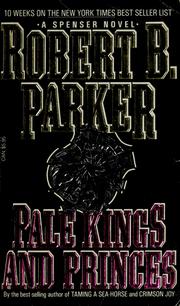
Cocaine in a Massachusetts mill town. From here the books get shorter and more formulaic, but this one still has real weight.

A serial-killer case that runs through Susan's psychiatric practice. The last book where the continuing relationships genuinely drive the plot.
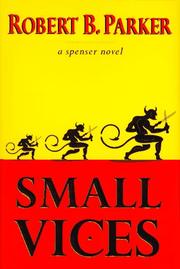
A late high point, with a wrongful conviction and a nearly fatal shooting. A good place to stop: the remaining Parker novels are enjoyable but interchangeable, they can be read in any order or not at all, and the continuation novels written after his death by other authors are a separate proposition entirely.
Discussion
Keep reading
Paths that share books, cover the same subject, or open a related topic.