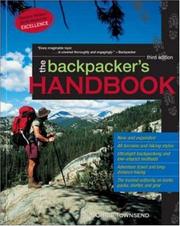
Mountaineering: the skills & the epics
This curriculum moves from foundational skills and safety awareness through iconic expedition narratives and finally into the philosophical and ethical depths of high-altitude mountaineering. Each stage builds on the last — first you learn the language and judgment of the mountains, then you live vicariously through the legends who tested those limits, and finally you wrestle with the profound human questions that only the highest peaks can ask.
Foundations: Skills, Safety & the Mountain Mindset
BeginnerUnderstand the core vocabulary, techniques, hazards, and decision-making frameworks of mountaineering before encountering the dramatic narratives that depend on them.
▸ Study plan for this stage
Pace: 10–12 weeks total. Weeks 1–7: "Mountaineering: The Freedom of the Hills" (~25–30 pages/day, 4–5 days/week — the book is dense with technical diagrams, so budget extra time to study illustrations). Weeks 8–12: "Staying Alive in Avalanche Terrain" (~20–25 pages/day, 4 days/week — pause frequently to r
- The Ten Essentials and the layered logic behind each item — understanding not just what to carry but why each essential addresses a specific category of risk
- Rope team management: belay systems, anchor-building principles, fall-arrest mechanics, and the leader/follower dynamic introduced in Freedom of the Hills
- Route-finding and terrain reading: contour interpretation, identifying objective hazards (rockfall, seracs, crevasses), and choosing a line that balances efficiency with safety
- Leave No Trace ethics and wilderness travel principles as framed by the Mountaineers — treating environmental stewardship as inseparable from mountaineering practice
- Snow and ice travel fundamentals: crampon technique, ice-axe self-arrest, step-kicking, and the progression from walking terrain to steeper alpine slopes covered in Freedom of the Hills
- Avalanche terrain recognition: Tremper's framework for identifying red-flag terrain features — convexities, lee slopes, slope angle sweet spots (35–45°), and terrain traps that amplify consequences
- The human factor in avalanche accidents: Tremper's analysis of heuristic traps (familiarity, commitment, social pressure, expert halo) and how cognitive biases override objective hazard assessment
- The Avalanche Triangle and snowpack layering: understanding how weather, snowpack structure (weak layers, crusts, facets, surface hoar), and terrain interact to create — or suppress — avalanche hazard
- After reading Freedom of the Hills, can you explain the purpose and correct application of at least three different belay methods, and describe when each is appropriate on a mountain route?
- What are the key differences between a slab avalanche and a loose-snow avalanche, and what snowpack conditions — as described by Tremper — make each type likely?
- Freedom of the Hills presents a systematic approach to building anchors. What are the SERENE-A criteria, and how does each letter translate to a physical property of a safe anchor?
- Tremper identifies several heuristic traps that lead experienced people into avalanche terrain. Name at least four, and give a realistic scenario from your own potential climbing context where each could manifest.
- How does Freedom of the Hills recommend a rope team assess and respond to a crevasse fall, and what preparation before the climb reduces the risk of a fatal outcome?
- Using Tremper's Avalanche Triangle, walk through a hypothetical day tour: what weather events in the past 48 hours, what snowpack red flags, and what terrain choices would together push your hazard assessment from 'moderate' to 'high'?
- Diagram drill — Draw from memory the components of a two-bolt equalized anchor and a natural snow anchor (deadman/picket), labeling each element with its SERENE-A function. Compare your drawing to the diagrams in Freedom of the Hills and note any gaps.
- Ten Essentials audit — Pack a daypack as if for a winter approach, then cross-check every item against the Ten Essentials framework in Freedom of the Hills. Write one sentence justifying each item's inclusion and identify any category you initially forgot.
- Topographic map exercise — Print or download a 1:24,000 topo of a local peak. Identify at least three potential route lines, mark objective hazards (avalanche paths, cliff bands, cornices) using the terrain-reading criteria from Freedom of the Hills, and choose a preferred line with a written rationale.
- Avalanche terrain checklist — Using Tremper's red-flag criteria, create a one-page field checklist (slope angle, aspect, recent loading events, terrain traps, escape routes). Take it on a winter hike or snowshoe and fill it out in the field, then debrief what you observed versus what you expected.
- Heuristic trap journal — Over two weeks, keep a brief daily log of any decision you make (not just in the mountains) where you notice a heuristic trap operating. At the end, review the log and write a short paragraph on which trap you are personally most susceptible to and how you will counter it in the field.
- Scenario tabletop — With a partner or study group, use Tremper's decision-making framework to talk through three written avalanche scenarios (one low-hazard, one moderate, one high-hazard day). For each, state your go/no-go decision, the specific evidence that drove it, and one alternative route or timing adjustment that would reduce risk.
Next up: Mastering the technical vocabulary, safety systems, and hazard-assessment frameworks in these two books gives the reader the fluency needed to critically evaluate — rather than simply be swept away by — the high-stakes decisions, near-misses, and tragedies they will encounter in the dramatic first-person narratives and expedition accounts that form the heart of the next stage.

The definitive technical reference for beginners — covers rope work, glacier travel, weather, rescue, and route-finding. Reading this first gives you the vocabulary and safety framework every later book assumes you have.
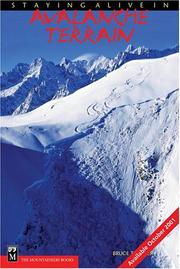
Avalanche risk is the single largest killer in the mountains; this clear, well-illustrated guide builds the judgment needed to assess snowpack and terrain. It belongs early so that avalanche passages in later narratives carry their full weight.
The Classic Accounts: Everest & the Birth of High-Altitude Ambition
BeginnerExperience the landmark expeditions that defined modern mountaineering — their triumphs, their tragedies, and the era of exploration that shaped everything that followed.
▸ Study plan for this stage
Pace: 6–8 weeks total. Week 1–3: "Into Thin Air" (~30 pages/day, ~300 pages); Week 4–5: "The Climb" (~25 pages/day, ~240 pages, read alongside or immediately after Into Thin Air for direct comparison); Week 6–8: "Annapurna" (~20 pages/day, ~250 pages, slower pace to absorb the historical and emotional wei
- The 'Death Zone' (above 8,000m): how extreme altitude affects human physiology, decision-making, and survival instincts, as vividly depicted in Into Thin Air and The Climb
- Conflicting narratives and the subjectivity of truth: Krakauer's and Boukreev's accounts of the same 1996 Everest disaster diverge sharply — understanding why eyewitness accounts differ is central to reading both books critically
- The role of commercial mountaineering: Into Thin Air exposes how paying clients, guided expeditions, and profit motives introduced new ethical and safety tensions on Everest
- Heroism vs. recklessness — the fine line: Boukreev's solo descents and rescue efforts (celebrated in The Climb, criticized in Into Thin Air) illustrate how the same action can be read as courage or negligence depending on perspective
- The pioneering spirit of the early Himalayan era: Herzog's Annapurna (1950) predates commercial climbing entirely — it represents raw national ambition, imperial-era expedition culture, and the cost of being first
- Sacrifice and consequence: Herzog's frostbitten fingers and toes, and the deaths of Scott Fischer and Rob Hall, show that summit success and personal destruction are often inseparable in this literature
- Team dynamics and leadership under crisis: all three books reveal how expedition hierarchies, communication failures, and individual ego shape outcomes at altitude
- The ethics of risk: who is responsible when climbers die — guides, clients, weather, hubris, or fate? Each book offers a different implicit answer
- After reading both Into Thin Air and The Climb, can you articulate at least three specific points on which Krakauer and Boukreev directly contradict each other, and explain whose account you find more credible and why?
- How does Jon Krakauer use his own guilt and self-doubt as a narrative device in Into Thin Air, and how does this shape the reader's sympathy and judgment?
- In The Climb, Boukreev argues that acclimatization and guide responsibility were misunderstood by critics — what is his core defense, and does the evidence he presents support it?
- Herzog's Annapurna was written in a very different era and cultural context than the other two books. How does the French expedition's attitude toward risk, national glory, and individual sacrifice differ from the commercial Everest expeditions of 1996?
- All three books end with profound loss — physical, psychological, or both. Compare how Herzog, Krakauer, and Boukreev each process and communicate that loss to the reader.
- What does this trio of books collectively suggest about the evolution of high-altitude mountaineering — from Herzog's pioneering 1950 ascent to the crowded, commercialized Everest of 1996?
- Dual-narrative journal: While reading Into Thin Air and The Climb simultaneously (or back-to-back), keep a running two-column log of the same events as described by Krakauer vs. Boukreev. Note tone, detail, and what each author omits — this trains close reading and source criticism.
- Draw a timeline: Map all three expeditions (Annapurna 1950, Everest 1996 — both accounts) on a single visual timeline, marking summit attempts, deaths, turning points, and weather events. This builds chronological clarity across the books.
- Character empathy exercise: Choose one figure from each book (e.g., Rob Hall, Anatoli Boukreev, Louis Lachenal) and write a one-page first-person journal entry from their perspective at the most critical moment of their expedition.
- Ethical debate prep: Write a 300-word argument both FOR and AGAINST Boukreev's decision to descend without clients on May 10, 1996, using only evidence from Into Thin Air and The Climb. Then decide your own verdict.
- Contextual research sprint: After finishing Annapurna, spend one session researching the 1950 French Himalayan Expedition online. Compare what Herzog includes vs. omits (note: some details were controversially edited from the original). Reflect on how authorship shapes historical memory.
- Thematic essay (500–700 words): Write a response to the question — 'Is the summit worth the cost?' — drawing on specific scenes, quotes, and characters from all three books. This synthesizes the stage's core ethical and emotional themes.
Next up: Mastering these three foundational accounts — their triumphs, contradictions, and moral weight — gives the reader the historical and emotional baseline needed to engage with more technically demanding or philosophically complex mountaineering literature in the next stage.

The most widely read mountaineering book ever written; Krakauer's first-person account of the 1996 Everest disaster is gripping, accessible, and immediately puts the stakes of high-altitude climbing in human terms. Its familiarity makes it the perfect entry point into expedition literature.
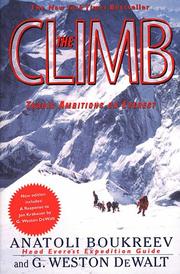
Read directly after Krakauer, Boukreev's counter-account of the same 1996 disaster reveals how two skilled observers can reach opposite conclusions — a crucial early lesson in the subjectivity and complexity of mountain judgment.
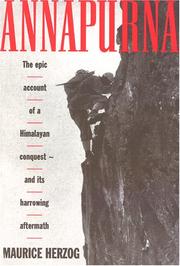
The 1950 first ascent of the world's first 8,000-meter peak, told by the expedition leader — raw, visceral, and historically essential. It shows the pre-commercial era of mountaineering and the extreme cost of ambition at altitude.
Going Deeper: Suffering, Partnership & the Limits of the Possible
IntermediateMove beyond the famous summits into the harder, lonelier, and more technically demanding corners of the sport — understanding what separates survival from disaster and ambition from hubris.
▸ Study plan for this stage
Pace: 6–8 weeks total: Week 1–2 — "Touching the Void" (~25 pages/day, including re-reading the crux chapters on Simpson's solo descent); Week 3–4 — "The Beckoning Silence" (~20 pages/day, pausing to research the 1936 Eiger North Face expedition in parallel); Week 5–7 — "No Shortcuts to the Top" (~20–25 pa
- The psychology of survival decision-making under extreme physical and cognitive impairment — as dramatized by Simpson's solo crawl off Siula Grande in 'Touching the Void'
- Partnership, trust, and the moral weight of the rope: how Joe Simpson and Simon Yates's relationship is tested, broken, and reinterpreted, and what it reveals about loyalty versus self-preservation
- The Eiger Nordwand as a symbol of hubris and national ambition: how 'The Beckoning Silence' uses the 1936 Hinterstoißer party's fate to interrogate the line between bold alpinism and reckless self-destruction
- Collective vs. individual risk cultures: comparing the German/Austrian siege mentality of the 1930s Eiger attempts (The Beckoning Silence) with the measured, iterative professionalism of Ed Viesturs in 'No Shortcuts to the Top'
- The '8000-meter problem' — altitude physiology, acclimatization strategy, and the cumulative toll of repeated extreme-altitude exposure as Viesturs documents across his 14-peak quest
- Turnaround discipline as a philosophy: Viesturs's mantra 'getting to the top is optional, getting down is mandatory' and how it contrasts with the fatal commitment seen in 'The Beckoning Silence'
- Suffering as narrative and meaning-making: how Simpson (in both books) transforms physical agony and historical tragedy into literary arguments about why climbers climb at all
- The evolution of alpine ethics — from the siege tactics and nationalistic pressures of the 1930s to the lightweight, self-reliant style championed by Viesturs — and what 'progress' in mountaineering actually means
- In 'Touching the Void,' Simon Yates cuts the rope connecting him to the injured Simpson — was this the right decision? Use evidence from the book to argue both sides, then explain what Simpson himself ultimately concludes.
- How does Joe Simpson use the story of Toni Kurz and the 1936 Eiger expedition in 'The Beckoning Silence' to make an argument that goes beyond historical retelling? What is he really saying about ambition, media pressure, and the culture of mountaineering?
- Ed Viesturs turned back from summit attempts multiple times across his career documented in 'No Shortcuts to the Top.' Identify at least two specific turnaround decisions he describes and explain the physiological or situational factors that drove each one — then assess whether the same logic was available to the climbers in 'The Beckoning Silence.'
- All three books deal with the question of what separates a 'good' risk from a 'bad' one in the mountains. Compare the risk frameworks — implicit or explicit — of Simpson (as both actor and historian), and Viesturs. Where do they agree, and where do they fundamentally diverge?
- How does the concept of partnership evolve across the three books — from the Yates/Simpson rope team, to the doomed four-man Eiger party, to Viesturs's relationships with his various climbing partners? What does each book suggest a climbing partner owes the other?
- After reading all three books, how would you define 'hubris' in a mountaineering context? Construct a definition grounded in specific moments from at least two of the three books.
- **The Rope-Cut Debate:** Write a 400–600 word position paper arguing either that Yates was justified or unjustified in cutting the rope in 'Touching the Void.' Then write a single paragraph rebutting your own argument. This forces genuine engagement with the moral complexity Simpson presents.
- **Parallel Timeline — The Eiger 1936:** While reading 'The Beckoning Silence,' build a day-by-day timeline of the Hinterstoißer party's ascent and retreat using only the details Simpson provides in the text. Annotate each entry with the decision point and what alternative choices existed. This trains close reading and counterfactual thinking.
- **Viesturs Decision Log:** As you read 'No Shortcuts to the Top,' create a two-column log: on the left, record every go/no-go decision Viesturs describes; on the right, identify the specific factor (weather, team condition, altitude, time of day, gut instinct) that drove it. At the end, look for patterns — what does Viesturs weight most heavily?
- **Cross-Book Risk Matrix:** After finishing all three books, draw a 2×2 matrix with axes 'Objective Hazard (low→high)' and 'Climber Preparedness/Judgment (low→high).' Place at least six specific climbing situations from across the three books into the matrix and write two sentences justifying each placement.
- **Letter Across Time:** Write a one-page letter from Ed Viesturs (using his voice and values from 'No Shortcuts to the Top') addressed to the Hinterstoißer party on the morning they committed to the Eiger's Hinterstoisser Traverse. What would he say? What would they likely reply? This exercise bridges the books and tests whether you've internalized each author's worldview.
- **Personal Threshold Statement:** Draft a 200–300 word 'mountaineering philosophy statement' — even if you are not a climber — articulating where you personally would draw the line between acceptable and unacceptable risk, using the vocabulary and arguments encountered across all three books. Revisit and revise this statement at the end of the entire curriculum.
Next up: By internalizing how suffering, judgment, and partnership operate at the individual and small-team level, the reader is now equipped to zoom out and examine mountaineering as a cultural, historical, and geopolitical phenomenon — the natural focus of the next stage.
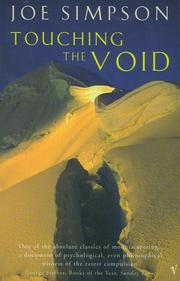
Simpson's account of his near-death survival in the Peruvian Andes is one of the most intense survival narratives ever written. After the Everest books, it shifts focus from large expeditions to the raw two-person partnership and the will to live.

Simpson turns his attention to the lethal history of the Eiger's North Face, blending historical research with personal reflection — deepening the reader's understanding of risk culture and the mountain's psychological grip.
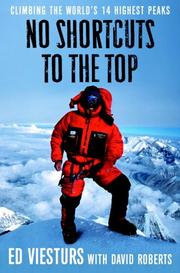
America's foremost high-altitude climber chronicles his 18-year quest to summit all 14 eight-thousanders without supplemental oxygen, offering a master class in patience, risk management, and the discipline of turning back.
The Philosophical Summit: Ethics, Obsession & What the Mountains Mean
ExpertGrapple with the deepest questions mountaineering raises — about mortality, ego, the ethics of risk, and what it means to be fully alive — through the sport's most literary and reflective voices.
▸ Study plan for this stage
Pace: 6–8 weeks total: Weeks 1–4 for The Snow Leopard (~20–25 pages/day, reading slowly and reflectively — this book rewards journaling alongside it); Weeks 5–7 for Eiger Dreams (~30–35 pages/day across its essay-length chapters); Week 8 reserved for synthesis, re-reading marked passages, and completing c
- The journey as spiritual inquiry: Matthiessen uses the trek to Dolpo not merely as physical adventure but as a vehicle for Buddhist practice, grief processing, and ego dissolution — the snow leopard itself becomes a symbol of enlightenment that may never be 'captured'.
- Mortality as teacher: Both books force a reckoning with death — Matthiessen through the recent loss of his wife and the ever-present Himalayan void, Krakauer through unflinching profiles of climbers who died pursuing their obsessions — framing mortality not as tragedy but as clarifying force.
- The ethics of obsession: Krakauer interrogates whether extreme climbing is noble self-actualization or reckless narcissism, especially when risk is imposed on partners, rescuers, and families — a question with no clean answer.
- Ego, ambition, and the 'summit fever' trap: Eiger Dreams dissects how ego and reputation warp decision-making in elite climbing culture, while The Snow Leopard models the counter-ideal of journeying without attachment to outcome.
- Nature as mirror, not backdrop: In both books the mountain environment is not scenery but an active philosophical interlocutor — it reflects the inner state of the observer and refuses to be conquered or fully known.
- Literary form as meaning: Matthiessen's lyrical, meditative prose enacts the stillness he seeks; Krakauer's sharp, journalistic essays enact the kinetic tension of climbing itself — recognizing how style embodies theme is central to reading these books at an advanced level.
- The question of 'why climb?': Both authors circle this unanswerable question from different angles — Matthiessen through Eastern philosophy and grief, Krakauer through character studies of obsessed climbers — and the reader must synthesize their own answer.
- Community, solitude, and the self: The Snow Leopard explores how solitude in wild places strips identity to its core, while Eiger Dreams examines how climbing subculture simultaneously builds fierce community and isolates individuals from ordinary life.
- In The Snow Leopard, Matthiessen never actually sees the snow leopard — what does this deliberate non-climax argue about the nature of spiritual seeking, and how does it reframe what 'success' means on a journey?
- Krakauer profiles climbers in Eiger Dreams who are fully aware their obsession may kill them yet continue anyway — using specific examples from the book, what philosophical or psychological frameworks does Krakauer offer (or refuse to offer) to explain this?
- Both books grapple with grief and loss, but in radically different registers — how does Matthiessen's personal mourning for his wife Deborah shape his perception of the Himalayas, and how does Krakauer's grief (for the climbing community's dead) manifest in his prose tone?
- Krakauer is openly critical of certain aspects of climbing culture in Eiger Dreams — identify at least two ethical tensions he raises and evaluate whether he resolves them or intentionally leaves them open.
- How do Matthiessen and Krakauer each use the concept of 'the present moment' — one through Buddhist philosophy, one through the life-or-death focus of technical climbing — and what do their different approaches suggest about paths to full aliveness?
- After reading both books, how would you personally answer the question 'What do the mountains mean?' — and which author's framing do you find more honest or more useful, and why?
- Philosophical journal: After each reading session in The Snow Leopard, write one paragraph responding to Matthiessen's central question for that section — not summarizing what he said, but answering it yourself. By the end, you will have a personal philosophical document to compare against Krakauer's more skeptical worldview.
- The 'why do it?' stress-test: Choose one climber profiled in Eiger Dreams and write a 400-word defense of their choices, then a 400-word critique — forcing yourself to hold both views simultaneously before settling on your own position.
- Prose style imitation: Write one page of personal nature writing in Matthiessen's meditative style (long sentences, present-tense observation, inner and outer landscape braided together), then rewrite the same scene in Krakauer's journalistic style (punchy, scene-driven, character-focused). Reflect on what each style can and cannot express.
- Mortality mapping: Create a two-column document — one column for every moment either author confronts death directly, one column for how that confrontation changes (or fails to change) the narrator's behavior. Look for patterns: does awareness of mortality produce wisdom, recklessness, or both?
- Ethics debate with a reading partner (or in writing): Stage a structured argument — one person defends the position that extreme climbing is a morally legitimate life choice, the other argues it is ethically indefensible given the costs to others — drawing exclusively on evidence from Eiger Dreams and The Snow Leopard.
- Synthesis essay (600–800 words): Write a response to the prompt: 'Both Matthiessen and Krakauer suggest that mountains reveal something essential about human nature. What is that thing, and do you believe them?' This essay should cite specific passages from both books and arrive at a genuinely argued personal conclusion.
Next up: By wrestling with the deepest 'why' of mountaineering through Matthiessen's spiritual lens and Krakauer's ethical scrutiny, the reader has built the philosophical vocabulary needed to engage with any subsequent stage — whether that means tackling more technically demanding expedition narratives, exploring climbing history, or reading first-person accounts of failure and survival with a fully forme
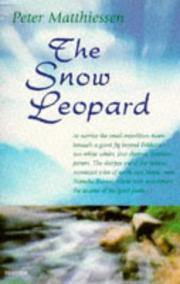
A trek into the Himalayas becomes a meditation on grief, Zen Buddhism, and the nature of seeking — this National Book Award winner asks why humans are drawn to wild, dangerous places and what they find (or don't) when they get there.
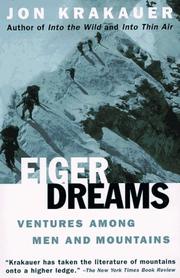
Krakauer's early essay collection ranges from Alaskan solos to Himalayan giants, and his honest self-examination of obsession and ego makes it the ideal capstone — a climber reflecting on why the pull of the mountains is so hard to explain and impossible to resist.
Discussion
Keep reading
Paths that share books, cover the same subject, or open a related topic.