Shirley Jackson Reading Order: Where to Start
Shirley Jackson wrote six novels, a great deal of short fiction and two comic memoirs about raising four children, and readers who know only The Lottery have met about a tenth of her. This path starts with the stories, moves to the two late novels that are her masterpieces, then works backwards through the earlier and stranger books, and finishes with the domestic humour writing that paid the bills and is far odder than it looks.
Start Here
BeginnerRead the story everyone knows in the collection it belongs to, then the novel that is the best thing she wrote.
▸ Study plan for this stage
Pace: 2-3 weeks. Read the stories loose — five or six at a sitting, not thirty — then take We Have Always Lived in the Castle in one or two sittings; it is under 150 pages and loses its spell if you spread it over a fortnight. Note that the Library of America volume listed here, Novels and Stories, also c
- The Lottery is the least representative famous story she wrote — the twenty-four around it, mostly about women being quietly erased in ordinary rooms, are the actual body of work
- Her sentence: flat, polite, domestic, and doing something appalling one clause later without changing register
- Merricat Blackwood as the great unreliable narrator — the reader is inside a mind that has already committed the crime and is not going to mention it
- Sympathy as a trap: Castle makes you side with Merricat against the village, then quietly shows you what siding with her means
- Agoraphobia and psychological confinement as her real subject, drawn from her own life — the barricaded house in Castle is not a metaphor she chose at random
- Her villages and neighbours: collective cruelty presented as ordinary community behaviour, never as monstrousness
- Why she is misread as a horror writer when almost nothing supernatural happens in these two books
- What does Merricat tell you in her first page, and what has she left out that you only assemble later?
- In The Lottery, what does the crowd's ordinariness accomplish that a sinister crowd could not?
- Which stories in the collection use the same move as The Lottery, and which do something quieter and worse?
- By the end of Castle, does the village's behaviour after the fire redeem it or complete the indictment?
- What is the difference between a Jackson narrator who is lying and one who simply cannot see?
- After finishing Castle, reread its first two pages. Every fact about the family is there and you read past all of it.
- Pick three stories from the collection and mark the exact sentence where the tone stops being domestic. In most of them there isn't one — the tone never changes, the content does.
- Write down what actually happens supernaturally in Castle. The list will be empty, which is the point to carry into the next stage.
- Check what edition you own before buying anything else — the omnibus overlaps heavily with the standalone novels.
Next up: Castle establishes the woman who cannot leave the house, which is the exact figure the next two novels put inside buildings that push back.
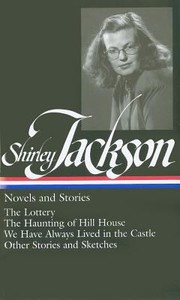
The Lottery caused more mail than The New Yorker had ever received, but the twenty-four stories around it are the real find — quiet pieces about women being slowly erased. Start here; it is the cheapest and fastest way to learn her sentence.
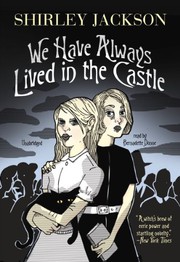
Merricat Blackwood, her sister and their poisoned family, narrated by one of the great unreliable voices. Her last completed novel and the one to read second — short, perfect, and the book most new readers end up loving most.
The Haunted Houses
BeginnerRead the two novels where the building itself is the antagonist, and see how little of the horror is supernatural.
▸ Study plan for this stage
Pace: 2-3 weeks. Hill House in as few sittings as possible and preferably not last thing at night — it works by accumulation and dissipates if you break it up. The Sundial is shorter, funnier and can be read in pieces.
- Hill House is a novel about Eleanor, not about a house — the haunting tracks her loneliness with unnerving precision
- The opening and closing paragraphs of Hill House are the same lines, and they frame the book as a closed circuit nobody escapes
- Ambiguity held to the last page: the book never confirms whether anything supernatural occurred, and every reading that resolves it loses something
- Group psychology in a sealed setting — four strangers, an experiment, and the fastest of them turning on the weakest
- The Sundial as the same architecture played for comedy: a family barricaded against an apocalypse announced by a dead relative, behaving exactly as badly as the Hill House party
- Jackson's houses as instruments for measuring who is already coming apart, rather than as sources of evil
- Why the 1963 film and the later Netflix series both had to invent a literal ghost the novel refuses to supply
- At what point does Eleanor stop being a reliable reporter of events, and can you name a specific page?
- Whose handwriting is on the wall, and what does it cost the novel to leave that open?
- Hill House and The Sundial both end with the group sealed in. What separates the horror of one from the comedy of the other?
- What does Theodora do to Eleanor that the house never has to?
- How does The Sundial treat belief — does anyone in it actually believe the prophecy?
- Track every sentence in Hill House that is unattributed dialogue or thought. Jackson blurs the boundary deliberately and the blurring is the plot.
- Read the last paragraph of Hill House against the first. Say out loud what changed.
- List the Sundial family's preparations for the end of the world. Sorted by usefulness, the list is the joke.
- Compare Eleanor and Merricat as women who cannot leave a house — one is destroyed by it, one wins.
Next up: You have now seen the confinement plot at full strength; the earlier novels show her building it, with the pressure inside a young woman's head rather than inside a building.

Four people spend a summer in a house that may be haunted, or may simply be finding the weakest of them. The most influential haunted-house novel in English; read it after Castle, since both hinge on a woman who cannot leave.

A family barricaded in a mansion awaiting the end of the world announced to them by a dead ancestor. Comic, vicious and the closest thing she wrote to satire — read it third for the same house-as-trap architecture played for laughs.
The Unstable Selves
IntermediateGo back to the earlier novels, which are about young women coming apart rather than houses.
▸ Study plan for this stage
Pace: 4-5 weeks. These three are harder going than the famous novels and it is normal to slow down. Hangsaman especially rewards a steady 20-25 pages a day rather than a binge — its logic is dream logic and it dissolves if you skim. Read The Road Through the Wall last; it is the least like her.
- Hangsaman's central move: Natalie acquires a friend, Tony, whose reality the novel declines to settle — read it as a study of a mind manufacturing company, not as a puzzle
- The party scene early in Hangsaman is an assault written entirely in evasion; Jackson never names it and Natalie's narration steps around it for the rest of the book
- The Bird's Nest as the clinical version of the same disintegration — four personalities, and a doctor whose confident paternalism is treated as its own kind of damage
- Jackson's suspicion of the people who diagnose women, which runs from Doctor Wright here to Doctor Montague in Hill House
- The Road Through the Wall as the social horror of The Lottery worked out at novel length — a respectable suburban street, a dead child, and no supernatural agency anywhere
- Reading these backwards from the masterpieces: you can see her assembling Merricat and Eleanor out of Natalie and Elizabeth
- Why the early novels are less controlled and more exposed — the autobiographical pressure is closer to the surface
- Does the novel ever require Tony to be imaginary, and does it ever require her to be real?
- What happens to Natalie at the party, and how do you know, given that the prose never says?
- In The Bird's Nest, whose interests is Doctor Wright actually serving when he chooses which personality survives?
- The Road Through the Wall is her only novel with a large cast and no central woman. What does she lose and what does she gain?
- Which of Merricat's traits appear first in Natalie, and which in Elizabeth?
- Keep a running list of everything Tony says that no other character reacts to. It is short, and that is the evidence.
- Read the party chapter of Hangsaman twice. The second time, write out in plain words what occurred.
- For The Bird's Nest, chart which personality narrates each section. The structure is doing argumentative work the plot never states.
- Set the last chapter of The Road Through the Wall beside The Lottery. Same community, same mechanism, different length.
Next up: Having seen how much of her own confinement and breakdown went into the fiction, the domestic humour writing stops looking like a separate career.

A girl leaves for college and acquires a friend who may not exist. The strangest book in the catalogue and the one that most rewards a reader who already knows Merricat.
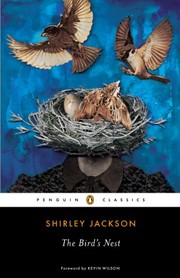
A young woman with four personalities and a doctor who wants to pick which one survives. Read after Hangsaman: the same disintegration, given a clinical frame.

Her first novel, a suburban street's respectable cruelty ending in a child's death. The least characteristic book and the one to leave until late, but it is where the social horror of The Lottery is first worked out at length.
The Other Jackson
BeginnerFinish with the domestic memoirs and the posthumous collection, which change how the fiction reads.
▸ Study plan for this stage
Pace: 3-4 weeks, and much lighter going than the last stage. Life Among the Savages and Raising Demons are short comic sketches — read them in ten-page pieces the way their magazine readers did. Let Me Tell You is a miscellany; skip around, but read the essays and lectures on writing in one block.
- The memoirs are genuinely funny and were the writing that paid the bills — they outsold the fiction in her lifetime
- The persistent undertow: the houses in the memoirs also refuse to behave, the neighbours are also watching, and nothing is ever quite explained
- The narrator of the memoirs is a constructed persona — the harried cheerful mother — and knowing the novels lets you see her being maintained
- Raising Demons is the darker of the two; the cheerfulness gets thinner as the house and the town press harder
- Jackson wrote both registers simultaneously, not in separate phases — the comic sketches and the gothic novels were sold in the same years
- Let Me Tell You includes her own lectures on craft, so you get her account of the method after four stages of feeling it work
- Why the myth of Jackson as a pure gothic writer, or as a witch, does her a disservice her children spent decades correcting
- Where in the memoirs does a scene stop being funny, and what did she change to make that happen?
- How does the house in Life Among the Savages behave compared with Hill House, and how different are the sentences describing them?
- What does the comic persona let her say about domestic life that a serious memoir could not?
- In her lectures, what does Jackson claim she is doing — and does it match what you observed in Castle and Hill House?
- Why is Raising Demons the harder of the two to read once you know the novels?
- Pick one memoir sketch and rewrite its first paragraph in the register of Hill House. Very little has to change.
- In Let Me Tell You, read her craft lecture and then reread a story from the first stage against her stated method.
- Make a two-column list of what the memoirs say about her marriage and household and what the novels imply. The overlap is the argument of this stage.
- Reread The Lottery last of all, having read everything else. It should now look like the most conventional thing in the catalogue.
Next up: This is the end of the path: with the comic writing and her own lectures in hand, you have the whole writer rather than the anthology piece.
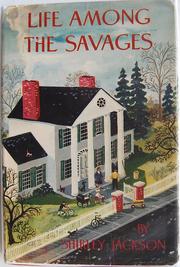
Comic sketches of family life written for women's magazines, and genuinely funny — with a persistent undertow of a house that will not behave. Read it after the novels and the undertow becomes impossible to miss.
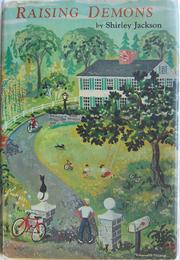
The sequel, and the darker of the two. Together they are the counterweight to the myth of Jackson as a pure gothic writer.
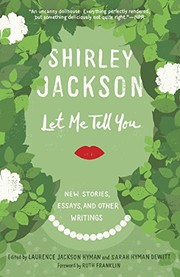
Uncollected stories, essays and lectures assembled by her children fifty years after her death, including her own account of how she wrote. The right final book — she explains the method after you have already felt it.
Discussion
Keep reading
Paths that share books, cover the same subject, or open a related topic.