Percy Jackson Reading Order and Reading Guide
Percy Jackson and the Olympians is five novels published between 2005 and 2009, and they should be read in publication order because they are a single continuous quest with a prophecy that pays off in the last book. That five-book arc is the whole path; everything else Rick Riordan has written in this world is a sequel series or a companion, and belongs after the ending rather than mixed into it. The stages below run through the five, then the companion volumes, then the one pointer you need to keep going.
Start Here
BeginnerMeet Camp Half-Blood, learn the rules of the Greek gods in the modern world, and get to the point where the series' larger prophecy has been named.
▸ Study plan for this stage
Pace: 1–2 weeks for The Lightning Thief (384 pages) and The Sea of Monsters (285). A confident middle-grade reader will take a week or two per book; an adult will read each in a couple of sittings. Worth saying plainly: this is a middle-grade series, written for roughly ages 9–12, with short chapters, jok
- The premise: the Greek gods are alive, have relocated with Western civilisation to the United States, and still have children with mortals; Percy is one of them
- Camp Half-Blood is the series' engine — cabins by divine parent, training, and a claiming ritual that doubles as the plot's identity machinery
- Percy's dyslexia and ADHD are reframed as demigod traits (brains wired for Ancient Greek and for battle), which is the single most-cited reason children love these books
- The Great Prophecy is named in the first two books and is what makes the five novels one story rather than five adventures — everything resolves against it
- Riordan's mythology is accurate in its bones: the monsters, the parentage and the quest structure come from real sources, however modernised the jokes are
- The books are written in a fast first-person voice with very short chapters, which is why reluctant readers finish them
- Read in publication order; the series is a single continuous quest and the prophecy pays off in book five
- What are the rules of Camp Half-Blood — who lives where, who is claimed, and why does the claiming matter?
- How does the series translate a Greek myth into a modern setting? Take one monster and compare it to its source.
- What is the Great Prophecy, and what does it leave deliberately ambiguous?
- How does the book present Percy's dyslexia and ADHD, and what does that framing do for a young reader?
- Who are Percy's two closest allies, and what does each contribute that he cannot?
- Keep a list of gods and monsters encountered with their real mythological role. Half the pleasure of the series is spotting the source.
- Read a straight retelling of one myth Riordan uses and note exactly what he changed to make it fit.
- Track the prophecy's wording as it is quoted; it is repeated with small emphases across the series.
- If you are reading with a child, ask them which cabin they would be in and why. It is the question the series is built to provoke.
Next up: With the camp, the gods and the prophecy established, the middle books widen a single quest into a war and begin taking real losses.

Percy discovers he is a demigod and is accused of stealing Zeus's master bolt. The only correct starting point; it establishes the camp, the cabins and the voice that carries the next four books.
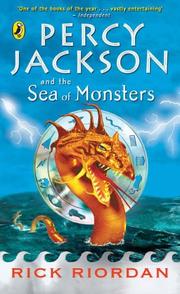
The Golden Fleece and the Bermuda Triangle. The shortest and lightest of the five, but it introduces Tyson and the threat to the camp's borders, both of which matter enormously later.
The Middle Books
BeginnerFollow the series as it darkens — the stakes widen from one quest to a war, and characters begin not coming back.
▸ Study plan for this stage
Pace: 1–2 weeks for The Titan's Curse (320 pages) and The Battle of the Labyrinth (365). Same pace as the first stage. These two darken noticeably — characters die and stay dead — so a younger reader may want them spaced out rather than read back to back.
- The stakes widen from a quest to a war: Kronos's forces assemble, and demigods begin choosing sides
- The Titan's Curse introduces Hunters of Artemis and gives the series its first permanent losses; the tone shifts here more than at any other point
- The Battle of the Labyrinth uses Daedalus's maze as a structural device, letting the plot move anywhere while keeping the sense of being trapped
- Luke's arc is the series' real moral argument — a demigod whose grievance against the gods is presented as legitimate even as his methods are not
- Riordan begins seeding the prophecy's ambiguity: several characters could plausibly be the child it refers to
- The humour continues undiminished alongside the deaths, which is characteristic of the age group and is deliberate rather than tonally confused
- Loyalty as a fatal flaw is stated explicitly in these books and is the key to the ending
- What does Luke want, and how much of his case against the gods does the series concede?
- How does The Titan's Curse handle its first major death, and how does the tone change afterwards?
- What does the Labyrinth allow the plot to do that ordinary geography could not?
- Which characters could the Great Prophecy be about at this point? List the candidates and the evidence.
- What is Percy's fatal flaw, who names it, and how is it likely to matter?
- Write out the prophecy and annotate each line with the possibilities still open at the end of book four.
- List which gods have been helpful, which obstructive, and which absent. The pattern is the series' argument about parenthood.
- Note the moment the humour and the danger first sit uncomfortably together, and decide whether it works.
- For a young reader: talk about why the gods are not simply good, which is the idea these two books introduce.
Next up: Everything now converges on the prophecy that was named in book one, which is the whole reason to read this series in order.

A winter quest west, the Hunters of Artemis, and the first real loss. The tonal turn of the series happens in this book and every later one assumes it.
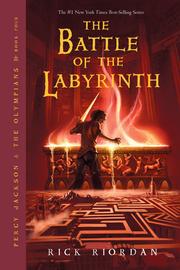
The maze under America and the army assembling in it. Many readers name this the best of the five; it is also the one that makes the finale's geography make sense.
The Ending
BeginnerFinish the arc and see the prophecy set up in book one resolved, which is the entire reason to read the series in order.
▸ Study plan for this stage
Pace: About a week for The Last Olympian (381 pages), and it is the fastest-reading book of the five because the plot is continuous from the first page. Many readers finish it in one or two sittings.
- The Battle of Manhattan runs almost the entire book: a single continuous engagement rather than a quest structure
- The Great Prophecy resolves, and the resolution turns on the interpretation of a single line — which is why it has been quoted so carefully throughout
- Luke's arc completes and the series' judgement of him is more generous than a straightforward villain would receive
- Percy's choice at the end is about the gods' treatment of their children rather than about winning, which is the point the five books have been building
- The ending is genuinely conclusive: the arc closes, and everything Riordan has written in this world since is a sequel or a companion rather than a continuation of this story
- Read the last chapter carefully — it sets up the next series without leaving this one unfinished
- How does the prophecy actually resolve, and were you right about who it referred to?
- What does Percy ask of the gods at the end, and why is that the correct ending for this particular series?
- Is the series fair to Luke in its final judgement?
- How does a book-long battle sustain interest where a quest structure would not?
- What does the last chapter set up, and does it undermine the sense of an ending?
- Go back to your annotated prophecy and check which reading was correct.
- Reread the first chapter of The Lightning Thief immediately after finishing. Riordan plants more than a first-time reader can see.
- Write a two-sentence summary of the whole arc that gives away nothing after book two — useful practice for recommending it.
- If reading with a child, ask them what they would have asked the gods for.
Next up: The main sequence is finished and cannot be spoiled, which is exactly when the companion volumes are worth reading.
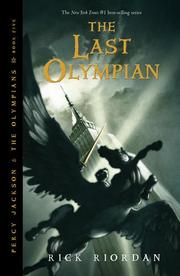
The battle for Manhattan and the fulfilment of the Great Prophecy. Do not read summaries of this one first; the payoff depends on four books of accumulated debts.
The Companions
BeginnerFill in the side material — extra short stories and Riordan's retellings of the myths themselves — now that the main sequence cannot be spoiled.
▸ Study plan for this stage
Pace: 1–2 weeks. The Demigod Files is 156 pages of short stories and extras; Percy Jackson's Greek Gods (406 pages) and Percy Jackson's Greek Heroes (520) are myth retellings that work well dipped into rather than read straight through — a myth or two per sitting.
- The Demigod Files collects three short stories set between the main novels, plus interviews and camp material; it is a bonus volume, not a plot requirement
- Percy Jackson's Greek Gods retells the core myths — creation, the Titans, the Olympians — in Percy's voice, and is genuinely useful as a first mythology reference for a young reader
- Percy Jackson's Greek Heroes does the same for Perseus, Theseus, Heracles, Jason and others, and is the longer and funnier of the two
- Both retellings are irreverent but broadly faithful to the sources, and they are far more likely to be finished by a ten-year-old than a straight mythology handbook
- Reading them after the main series means the jokes about characters you have met land, and none of the novels' surprises are spoiled
- These are the right books to hand to a reader who has finished the series and wants the actual mythology behind it
- Which myths in the retellings were already used in the novels, and what changed between versions?
- Where does Riordan sand down a myth for a young audience, and is the omission fair?
- Do the short stories in The Demigod Files add anything to the main arc, or are they purely extra?
- After the retellings, which Greek hero would make the best Riordan novel, and why?
- Pick three myths from Greek Heroes and compare them to a standard retelling for adults. The differences are instructive about audience.
- Make a family tree of the Olympians from Greek Gods. It clarifies a great deal of the novels retroactively.
- Choose the funniest passage and read it aloud. These books are written for reading aloud and improve enormously that way.
Next up: The last stage is a decision about where to go next in Riordan's world, and the two options are very different in scale.

Three short stories set between the novels, plus camp ephemera. Best read after The Last Olympian even though the stories sit earlier, because one of them touches events you should meet in the novels first.
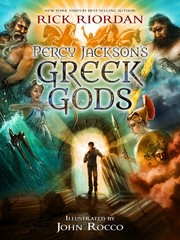
The Greek pantheon retold in Percy's voice. This is the bridge from the series to the actual mythology, and it makes the later series far easier to follow.
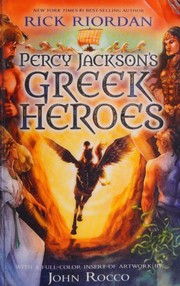
The companion volume covering Perseus, Jason, Theseus and the rest. Read after Greek Gods; between them they cover most of the myths the sequel series draws on.
Where to Go Next
IntermediateChoose your continuation deliberately — the direct sequel to Percy's own story, or the much larger series that expands the world to Rome.
▸ Study plan for this stage
Pace: Open-ended — sample rather than commit. The Chalice of the Gods is 272 pages and reads in a couple of sittings; The Lost Hero is 556 pages and is the start of a five-book series, so it is a much larger decision.
- The Chalice of the Gods is a late return to Percy's own story at a smaller scale — a school-application quest rather than a world-ending one — and is closest in feel to the original five
- The Lost Hero begins the Heroes of Olympus series, which expands the world to the Roman pantheon and runs five books with a rotating cast
- The Lost Hero deliberately withholds Percy for its opening stretch, which surprises readers who arrive expecting a direct sequel
- The Roman material is a genuine expansion rather than a retread — different camp, different culture, different relationship between gods and demigods
- Choose by appetite: a short, warm return to a familiar voice, or a much larger series with a bigger cast and a longer arc
- There is a great deal more Riordan beyond these two, including series drawing on Egyptian and Norse mythology, so this is a branching point rather than an ending
- Does The Chalice of the Gods work as a smaller-stakes story, or does the series need world-ending stakes?
- Why does The Lost Hero delay bringing Percy back, and does the gamble pay off?
- How do the Roman demigods differ from the Greek ones, and what is Riordan arguing with the contrast?
- Which continuation suits the reader you are recommending to — an eleven-year-old who wants more of the same, or one ready for a longer commitment?
- Read the first three chapters of each and then commit to one.
- Rank the original five books and say what makes the best one work.
- Write a one-paragraph recommendation aimed at a specific child you know, naming the book to start with and why.
Next up: This closes the path; from here either continue into the Heroes of Olympus sequence or move to a straight Greek mythology reading path on the site.

A later standalone that returns to Percy and Annabeth in high school, written long after the original five. The gentlest continuation and the closest thing to a sixth Percy Jackson novel.
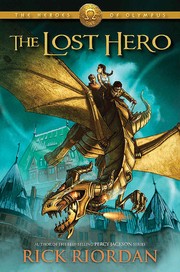
The opening of The Heroes of Olympus, which brings in Roman demigods and a new cast. Start here only after The Last Olympian; it is a separate five-book commitment and a genuinely different series.
Discussion
Keep reading
Paths that share books, cover the same subject, or open a related topic.