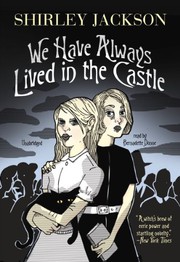
Start with the stories, then read We Have Always Lived in the Castle in one or two sittings. It is under 150 pages and loses its spell if you spread it over a fortnight. The obvious alternative is The Haunting of Hill House, which is the book most readers have heard of — but Castle is the purer introduction to what she actually does, and Hill House is better once you already know how her narrators work.
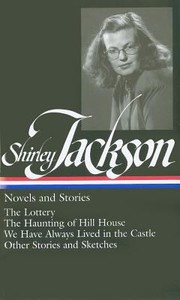
Buy carefully first. The Library of America volume in our catalogue, Novels and Stories, also contains The Haunting of Hill House and We Have Always Lived in the Castle in full — so if you buy it you already own the next stage and can skip the separate editions. Check what you have before ordering anything else.
Read the story portion before the novel either way. The Lottery is the least representative famous story she wrote; the two dozen around it, mostly about women being quietly erased in ordinary rooms, are the actual body of work. Her sentence is flat, polite and domestic, and it does something appalling one clause later without changing register.
We Have Always Lived in the Castle gives you the great unreliable narrator: you are inside a mind that has already committed the crime and is not going to mention it. Merricat makes you side with her against the village and then quietly shows you what siding with her means. When you finish, reread the first two pages — every fact about the family is there and you read past all of it. Note also how little happens supernaturally. The list is empty, which is worth carrying into the next stage.
The haunted houses
The Haunting of Hill House is a novel about Eleanor rather than about a house; the haunting tracks her loneliness with unnerving precision. Read it in as few sittings as possible, because it works by accumulation. Its opening and closing paragraphs are the same lines, framing the book as a closed circuit nobody escapes, and it never confirms whether anything supernatural occurred — every reading that resolves the ambiguity loses something. Both the 1963 film and the later television version had to invent a literal ghost the novel refuses to supply.
The sundial is the same architecture played for comedy: a family barricaded against an apocalypse announced by a dead relative, behaving exactly as badly as the Hill House party. It is shorter, funnier, and takes interruption well.
The unstable selves
These three are harder going than the famous novels and it is normal to slow down. Hangsaman rewards a steady twenty-five pages a day rather than a binge, because its logic is dream logic and it dissolves if you skim. Natalie acquires a friend whose reality the novel declines to settle; read it as a study of a mind manufacturing company rather than as a puzzle. Be aware that an early party scene is an assault written entirely in evasion — Jackson never names it, and the narration steps around it for the rest of the book.
The bird's nest is the clinical version of the same disintegration: four personalities, and a doctor whose confident paternalism is treated as its own kind of damage. Jackson's suspicion of the men who diagnose women runs straight from him to the investigator in The Haunting of Hill House.
Read The road through the wall last of the three. It is the least like her — a large cast, no central woman, a respectable suburban street and a dead child, with no supernatural agency anywhere. It is the social horror of The Lottery worked out at novel length.
The other Jackson, and where to stop
Life among the savages and Raising demons are comic domestic sketches that outsold the fiction in her lifetime, and they are genuinely funny. Read them in ten-page pieces the way their magazine readers did. The undertow is the point: the houses in the memoirs also refuse to behave, the neighbours are also watching, and the harried cheerful mother narrating them is a constructed persona you can watch being maintained. Raising demons is the darker of the two, the cheerfulness thinning as the house and the town press harder. She wrote both registers in the same years rather than in separate phases.
Finish with Let Me Tell You: New Stories, Essays, and Other Writings, a miscellany worth skipping around in — except for the essays and lectures on craft, which should be read in one block. Getting her own account of the method after four stages of feeling it work is the reason it goes last. Then reread The Lottery. It should now look like the most conventional thing in the catalogue, which is the best argument against the myth of Jackson as a pure gothic writer. More reading routes are on Discover.
Follow the full ordered path here: Shirley Jackson Reading Order: Where to Start.
Ready to learn something deeply?
Build a reading path — free