Learn to sculpt: form, material & technique
This curriculum takes a hands-on sculptor from first principles to confident, material-specific practice across four progressive stages. It begins with the universal language of three-dimensional form and moves through clay modeling, carving in stone and wood, and finally the broader artistic and conceptual thinking that separates a craftsperson from a sculptor. Each stage builds the vocabulary, muscle memory, and critical eye needed for the next.
Foundations of Form
BeginnerUnderstand three-dimensional form, proportion, and the sculptor's way of seeing before touching any material seriously.
▸ Study plan for this stage
Pace: 6–8 weeks total. Week 1–4: Read Slobodkin's "Sculpture. Principles and Practice" at a relaxed pace (~15–20 pages/day), pausing frequently to sketch or handle objects. Week 5–8: Work through Nicolaïdes' "The Natural Way to Draw," following his structured daily gesture/contour schedule as written — tr
- Three-dimensional form vs. flat representation: understanding that sculpture occupies real space and must be considered from all angles simultaneously (Slobodkin)
- Mass and volume: the difference between a solid mass and the illusion of volume, and why sculptors think in terms of bulk before detail (Slobodkin)
- Proportion and the human figure: Slobodkin's approach to measuring and relating parts of the body to the whole as the foundation of figurative sculpture
- The sculptor's armature mindset: understanding internal structure as the skeleton that supports form, even before working with material (Slobodkin)
- Gesture as the life-force of form: Nicolaïdes' concept that gesture is not the outline but the action, weight, and thrust of a living thing — directly transferable to three-dimensional work
- Contour drawing as tactile seeing: Nicolaïdes trains the eye and hand to feel edges as if touching them, building the sensitivity a sculptor needs to read surfaces
- Kinesthetic awareness: developing a physical, bodily sense of weight, balance, and movement that informs how a sculptor positions and animates a figure (Nicolaïdes)
- Seeing in planes and cross-contours: using Nicolaïdes' cross-contour exercises to mentally 'wrap' a form and understand its three-dimensional surface topology
- After reading Slobodkin, can you explain in your own words why a sculptor must consider a work from every viewpoint, and how that differs from a painter's concern with a single picture plane?
- What role does proportion play in Slobodkin's practice, and what simple measuring methods does he recommend for a beginner working from a figure?
- What does Nicolaïdes mean by 'gesture,' and why does he insist it must be felt rather than seen? How would this translate to positioning a clay figure?
- How does Nicolaïdes' contour exercise train a kind of 'touch-vision,' and why is that sense of tactile edge especially valuable for a sculptor?
- How do cross-contour lines (Nicolaïdes) relate to the concept of mass and volume (Slobodkin)? Can you describe a form using both frameworks?
- What is the difference between drawing the outline of a form and drawing its weight and balance? Give an example from each book.
- **Daily gesture rounds (Nicolaïdes schedule):** Every morning, spend 15 minutes doing timed gesture drawings (30 sec–2 min) of a person, animal, or even a piece of fruit. After each session, close your eyes and try to physically mime the pose — this bridges Nicolaïdes' kinesthetic principle to sculptural thinking.
- **Blind contour of three-dimensional objects:** Choose a simple object (a shoe, a crumpled cloth, your own hand). Do a slow blind contour drawing as Nicolaïdes instructs, then rotate the object 90° and repeat. Compare the four drawings: notice how each reveals a different 'truth' of the same form — practice Slobodkin's all-angles awareness without clay.
- **Proportion mapping from Slobodkin:** Using his proportion guidelines, measure and diagram a friend or a reference photo of a standing figure. Mark head-lengths, locate the midpoint of the body, note the width-to-height ratios of the torso. Annotate your diagram with written observations.
- **Cross-contour wrapping exercise:** Draw a simple rounded object (an apple, a fist) using only horizontal cross-contour lines spaced evenly, as Nicolaïdes describes. Then draw the same object using only vertical cross-contours. Pin both drawings side by side and write two sentences describing the form's volume as if explaining it to someone who cannot see it — this is the sculptor's verbal model.
- **Armature sketch from Slobodkin:** Before touching any material, read Slobodkin's armature sections and then sketch (on paper) the wire armature you would build for a simple standing figure: mark where the wire bends, where weight is supported, where the center of gravity falls. Label each decision with a reason.
- **'Sculptor's walk-around' drawing:** Place any household object on a turntable or lazy Susan. Draw it from the front, then rotate it 45° and draw again — repeat for a full 360° (8 drawings). Lay them out in sequence and identify which views Slobodkin would call the 'primary,' 'secondary,' and 'accent' views. Write a short paragraph on what you discovered about the form that a single drawing could
Next up: Mastering three-dimensional seeing and proportional awareness through Slobodkin and Nicolaïdes gives the reader the perceptual vocabulary and bodily sensitivity needed to confidently approach actual materials — clay, wax, or stone — in the next stage without being overwhelmed by the physical demands of the medium.
A classic, accessible introduction written by a working sculptor that covers the fundamental concepts of form, mass, and space in plain language — the perfect first book for a complete beginner.
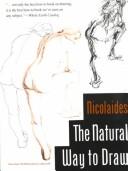
Though focused on drawing, its exercises in gesture, contour, and weight train the eye and hand to perceive three-dimensional form — essential perceptual groundwork before modeling in the round.
Working in Clay
BeginnerBuild real hands-on skill in clay — the most forgiving and fundamental sculptural material — covering modeling, armatures, and the figure.
▸ Study plan for this stage
Pace: 8–10 weeks total. Weeks 1–5: Read "Modeling the Figure in Clay" by Bruno Lucchesi at ~20–25 pages/day, working slowly alongside the hands-on demonstrations. Weeks 6–10: Read "The Technique of Sculpture" by John W. Mills at ~15–20 pages/day, pausing frequently to cross-reference Mills's technical exp
- Clay as a living, additive-and-subtractive material — understanding its plasticity, memory, and limits before committing to a form
- The armature as the skeleton of a sculpture: how Lucchesi's wire-and-pipe internal supports enable the figure to hold weight, gesture, and balance without collapsing
- Building the figure in stages — blocking in masses (head, torso, pelvis, limbs) before refining anatomy, as demonstrated throughout Lucchesi's step-by-step figure sequences
- Surface modeling tools and the hand: when to use fingers, loop tools, wooden modeling tools, and ribs, and what each does to clay texture and form
- Proportion and gesture in the human figure: reading the live or reference pose as a series of rhythmic tilts, thrusts, and counter-balances rather than isolated parts
- Mills's systematic overview of sculptural techniques — understanding how clay modeling fits within the broader family of processes (carving, casting, construction) and why clay is the foundational starting point
- The concept of 'working toward the final material': Mills's explanation of how a clay model is typically a means to an end (bronze, plaster, ceramic) and how that destination shapes decisions made in clay
- Finishing and preserving clay work: keeping clay workable between sessions, knowing when a piece is 'done,' and preparing it for casting or firing
- After studying Lucchesi's process, can you describe — step by step — how to build a simple standing figure armature and why each structural choice (gauge of wire, butterfly supports, pipe base) matters?
- How does Lucchesi approach the relationship between large masses and surface detail? At what stage of the build does he introduce anatomical specifics, and why?
- According to Mills, what distinguishes modeling (clay, wax) from carving (stone, wood) as a working method, and how does that distinction affect the sculptor's mindset and workflow?
- What are the main risks of working in clay over an extended period (cracking, slumping, drying unevenly), and what practical strategies do Lucchesi and Mills each offer to manage them?
- How does an understanding of gesture and weight-shift — as shown in Lucchesi's figure sequences — change the way you read and set up a pose before touching the clay?
- Mills situates clay modeling within a larger map of sculptural processes. Name at least three other processes he covers and explain how knowing them broadens a clay modeler's long-term options.
- Armature-first figure study: Before adding any clay, build a wire armature for a standing figure following Lucchesi's specifications. Pose it, photograph it from front/side/back, and evaluate balance and gesture — only then begin adding clay.
- Mass-blocking drill: Using Lucchesi's additive approach, build a small (6–8 inch) figure using only large, rough masses — no surface detail allowed. Stop when the gesture and proportions read correctly from across the room. Resist the urge to refine.
- Tool inventory exercise: Take a small slab of clay and systematically work across its surface with every tool you own (fingers, loop tool, wooden modeler, rib, fork). Photograph each result and write one sentence describing what each tool is best suited for.
- Sustained figure model (the core project): Following Lucchesi's full figure-building sequence as a guide, complete one finished clay figure (any scale) from armature to refined surface over the course of the Lucchesi reading weeks. Keep a photo journal at each major stage.
- Mills process-mapping exercise: After reading Mills, draw a simple flowchart showing how a clay model can travel through different processes (e.g., clay → plaster mold → bronze casting). Annotate each step with one key decision the sculptor must make.
- Cross-material comparison sketch: Choose one small form (a hand, a head, a simple abstract shape) and model it in clay. Then re-read the relevant section in Mills on carving or construction and write a one-page reflection on how your approach would have differed if you had started in a subtractive or constructed medium.
Next up: Mastering clay modeling and understanding how it connects to casting and other processes — as laid out by Lucchesi and Mills — gives the reader the tactile intuition and technical vocabulary needed to confidently approach more demanding sculptural materials and methods in the next stage.
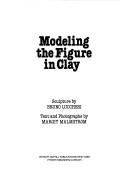
A step-by-step guide by a master figurative sculptor that teaches clay modeling through the human figure, the central subject of Western sculpture — read first for structured technique.
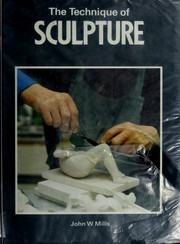
Broadens clay work into a full technical survey of sculptural processes, tools, and armatures, giving the beginner a wider map of what clay can do and where it leads.
Anatomy, the Figure, and Artistic Depth
IntermediateInternalize human anatomy as a sculptural tool and begin thinking about sculpture as expressive art, not just skilled craft.
▸ Study plan for this stage
Pace: 8–10 weeks total. Weeks 1–5: "Anatomy for the Artist" by Sarah Simblet (~20–25 pages/day, including close study of plates and drawings). Weeks 6–10: "The Sculptor's Way" by Brenda Putnam (~15–20 pages/day, with slower reading around technical and expressive chapters). Overlap the two books in week 5
- The skeleton as the primary armature of the human figure — understanding bone landmarks (clavicle, iliac crest, scapula, etc.) as the fixed points that anchor all surface form, as Simblet systematically maps them
- Muscle groups as dynamic, overlapping volumes — learning how flexion and extension change surface topography, not just position, using Simblet's cross-sectional and life-drawing plates
- The figure in movement and repose — how weight shift, contrapposto, and gesture alter the entire silhouette and internal rhythm of a sculpture
- Proportion and its expressive distortion — Simblet grounds the reader in classical canon; Putnam extends this into when and why a sculptor deliberately departs from it for emotional effect
- Putnam's concept of 'the sculptor's eye' — training perception to read three-dimensional form in the round rather than as a flat image, and the discipline of walking around a subject
- Modeling vs. carving as two opposing philosophies of form — Putnam distinguishes additive and subtractive thinking and how each shapes the sculptor's relationship to anatomy
- Surface as the record of structure — understanding that skin, drapery, and texture in sculpture are only convincing when the underlying anatomy is correctly resolved beneath them
- Sculpture as expressive art beyond craft — Putnam's argument that technical mastery of anatomy is the foundation, not the ceiling, of sculptural expression
- After studying Simblet's skeletal plates, can you identify and locate at least ten bony landmarks on a live model or reference photo, and explain how each one influences the surface form visible to a sculptor?
- How does Simblet's treatment of the torso — particularly the ribcage and pelvis as two interlocking masses — change the way you would plan and build the core of a figurative sculpture?
- Using Putnam's framework, what is the difference between copying anatomy accurately and using anatomy expressively — and can you give a concrete example of a sculptural choice that illustrates that difference?
- How does Putnam describe the process of 'seeing in the round,' and what practical habits does she recommend to develop this perceptual skill in the studio?
- In what ways do Simblet's detailed muscle studies of the arm and leg inform Putnam's guidance on modeling limbs — where do the two authors reinforce each other, and where do their emphases diverge?
- What does Putnam mean when she frames sculpture as expressive art rather than skilled craft, and how does a thorough knowledge of human anatomy — as laid out by Simblet — actually enable rather than constrain that expressiveness?
- Skeleton mapping from Simblet: Choose any three full-figure plates from 'Anatomy for the Artist' and, using tracing paper or a digital overlay, isolate only the bony landmarks. Then find a comparable pose in a photo reference and attempt to map the same landmarks onto the photograph — note where the surface form confirms or hides the bone beneath.
- Volume gesture drawing: Before each reading session with Simblet, spend 10 minutes doing 2-minute gesture sketches of the figure using only simple 3D volumes (cylinders, spheres, wedges) — no outlines. After reading, repeat the exercise and compare how your volumetric thinking has shifted.
- Muscle-change study: Select one muscle group covered in Simblet (e.g., the deltoid or the gastrocnemius) and model it in clay in two states — contracted and relaxed. Focus on how the surface form changes, not just the position, to internalize anatomy as a dynamic rather than static system.
- Putnam's 'walk-around' exercise: Using any small figurative sculpture (a reproduction, a museum visit, or your own work), physically walk around it and make a written or sketched record of how the silhouette, masses, and focal points change from every 45-degree increment. Reflect on what this reveals that a frontal view conceals.
- Expressive departure study: Identify a well-known figurative sculpture (e.g., Rodin's figures or a Mannerist work) and, using Simblet's anatomical knowledge as your baseline, write a one-page analysis of where the sculptor departed from strict anatomical accuracy — and argue, using Putnam's framework, whether each departure is expressive or a flaw.
- Integrated clay study: At the midpoint of reading Putnam, build a small (20–30 cm) clay figure from armature outward — first blocking the skeleton's key masses, then adding muscle volumes using Simblet as a reference guide, and finally refining the surface. Write a brief journal entry after completion reflecting on where your anatomical knowledge helped and where it felt limiting.
Next up: Mastering anatomy and expressive intent through Simblet and Putnam equips the reader with the internal logic of the figure, making them ready to engage with the broader history, movements, and conceptual ambitions of sculpture across cultures and eras.
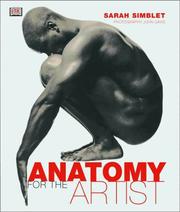
A beautifully illustrated anatomical reference designed specifically for artists, giving the sculptor the deep structural knowledge of bone and muscle needed to move beyond surface imitation.
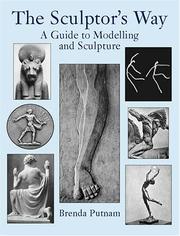
A comprehensive guide by a professional sculptor that bridges technical mastery and artistic intention — ideal at this stage when the student is ready to think about sculpture as a whole practice.
Thinking Like a Sculptor
ExpertDevelop a personal artistic vision by studying how great sculptors think, make decisions, and situate their work within the broader history and conversation of sculpture.
▸ Study plan for this stage
Pace: 10–13 weeks total. Weeks 1–7: "Sculpture in America" by Wayne Craven (~40–45 pages/day, 3–4 days/week), focusing on one historical period per sitting. Weeks 8–13: "The Sculpture of Auguste Rodin" by John L. Tancock (~25–30 pages/day, 3–4 days/week), pausing after each major catalogue section to sket
- The arc of American sculptural identity: how Craven traces the evolution from colonial craft traditions through neoclassicism, the Beaux-Arts movement, and into modernism, revealing how national context shapes artistic vision
- Patronage, commission, and public purpose: understanding how the relationship between sculptor and patron (civic, religious, private) in Craven's survey directly constrained or liberated formal and conceptual choices
- The dialogue between European tradition and American originality: how American sculptors absorbed, resisted, and transformed Old World influences to forge a distinct voice — a tension every advanced sculptor must personally negotiate
- Rodin's process as philosophy: Tancock's catalogue reveals how Rodin treated the studio as a laboratory — accumulating fragments, recombining maquettes, and treating incompleteness as a finished statement rather than a failure
- Surface, texture, and the mark of the hand: Rodin's deliberate exploitation of modeled surfaces (the 'non-finito' effect) as a carrier of emotional and psychological meaning, distinct from the polished idealism of his predecessors
- The single work within a larger conversation: Tancock situates each Rodin piece within the sculptor's evolving body of work and within art-historical discourse, modeling how to read one's own output as an ongoing argument rather than isolated objects
- Material thinking vs. conceptual thinking: contrasting the American tradition's frequent privileging of material mastery and civic legibility (Craven) with Rodin's prioritization of psychological interiority and formal experimentation (Tancock)
- Developing a personal artistic vision: synthesizing lessons from both books — how historical awareness, technical decision-making, and a coherent thematic obsession combine to produce a recognizable sculptural voice
- According to Craven's survey, what were the two or three pivotal turning points in American sculpture's development, and what social or cultural forces drove each shift? How might analogous forces be shaping sculpture today?
- Craven documents many sculptors who were technically accomplished but are now largely forgotten, while others endure. Based on his analysis, what distinguishes a sculptor with lasting impact from a merely competent one — and what does that imply for your own practice?
- Tancock's catalogue of Rodin's work reveals a sculptor who obsessively returned to the same figures, poses, and fragments across decades. What does this pattern of repetition and recombination tell us about how Rodin constructed meaning, and how does it challenge the idea of a 'finished' artwork?
- How does Rodin's treatment of the human body — particularly his use of partial figures, fragmented limbs, and unresolved surfaces — constitute a philosophical position, not merely a stylistic preference? Use at least two specific works discussed by Tancock to support your answer.
- Both Craven and Tancock show sculptors working within and against inherited traditions. What strategies did the most innovative sculptors in each book use to simultaneously honor and subvert their influences, and which strategy feels most relevant to your own artistic goals?
- After reading both books, how would you articulate the difference between a sculptor who reacts to history and one who thinks historically? What habits of mind and practice separate the two?
- Craven's lineage mapping: After completing 'Sculpture in America,' draw a hand-annotated timeline mapping at least 15 sculptors from Craven's survey. For each, note one defining formal choice and one contextual pressure (patron, politics, material availability) that shaped it. Pin this to your studio wall as a living reference.
- The Rodin fragment exercise: Choose one of Rodin's fragmented or partial-figure works discussed in Tancock (e.g., a torso or isolated hand). Produce your own small-scale study (clay, wax, or plaster) that deliberately leaves a portion 'unresolved.' Write a 200-word statement explaining what the incompleteness is doing conceptually — not apologizing for it.
- Comparative formal analysis: Select one American sculptor from Craven and place their work in direct written dialogue with one Rodin work from Tancock that addresses a similar subject (the human figure, monumentality, grief, heroism). Write a 400–500 word comparative analysis focused entirely on formal and conceptual decisions, not biography.
- Personal artistic vision statement draft: Using both books as mirrors, write a 1-page 'position statement' for your own sculptural practice. Identify: (1) which historical lineage you are consciously working within or against, (2) one technical or material obsession you claim as your own, and (3) the central question your work is trying to answer.
- Re-commission exercise: Pick any public monument documented by Craven and re-imagine it as if Rodin had received the commission instead. Produce three thumbnail sketches and a half-page rationale explaining how Rodin's decision-making process (as revealed by Tancock) would have transformed the outcome.
- Studio critique simulation: Present your fragment exercise and your comparative analysis to a peer, mentor, or recorded camera as if in a formal critique. Practice articulating your choices using the critical vocabulary from both Craven (historical context, civic function, material tradition) and Tancock (process, surface, psychological interiority). Review the recording and note where your reason
Next up: By internalizing how great sculptors across American history and Rodin's singular career made deliberate, historically informed decisions, the reader is now equipped to move from studying others' visions to stress-testing and refining their own — making the next stage, focused on contemporary practice and the reader's independent project work, a natural and necessary evolution.

A rigorous historical survey that contextualizes sculptural traditions and movements, helping the advanced student understand where their own work fits in a larger story.
A deep study of the most influential modern sculptor, examining how Rodin solved problems of form, surface, and expression — essential reading for developing a personal sculptural philosophy.
Discussion
Keep reading
Paths that share books, cover the same subject, or open a related topic.