How to Become a School Counselor: Best Books to Read, in Order
This curriculum builds a school counseling career from the ground up across four stages: first understanding how children and adolescents develop, then mastering core counseling skills, then applying those skills in a school-specific context, and finally tackling college advising and career planning. Each stage's books are sequenced so that earlier titles give you the language and concepts needed to get the most out of later ones.
Child & Adolescent Development Foundations
BeginnerUnderstand how children and teenagers think, feel, and grow — the essential backdrop for every counseling conversation you will ever have.
▸ Study plan for this stage
Pace: 8–10 weeks, ~25–30 pages/day (approximately 2–3 weeks per book with time for reflection and exercises)
- Brain architecture and integration: how the left and right hemispheres, upper and lower brain, and logical/emotional centers develop and must work together for healthy functioning
- The adolescent brain transformation: how the prefrontal cortex develops through the teenage years, affecting impulse control, risk assessment, and emotional regulation
- Developmental domains across childhood and adolescence: physical, cognitive, social, emotional, and identity development milestones and variations
- The biopsychosocial model: how biology, psychology, and social context interact to shape behavior and mental health across development
- Lagging skills and unsolved problems: how unmet developmental needs and skill gaps—not willful misbehavior—drive many behavioral and emotional challenges in school settings
- Neuroplasticity and resilience: how the developing brain's capacity for change means intervention and supportive relationships can rewire patterns and build competence
- Attachment, relationships, and safety: how secure relationships and felt safety are foundational to learning, emotional regulation, and healthy development
- How do the left and right hemispheres contribute differently to a child's functioning, and why is integration between them critical for emotional regulation and problem-solving?
- What are the major structural and functional changes in the adolescent brain, and how do these changes explain typical teenage behavior (risk-taking, emotional intensity, peer focus)?
- How would you explain a child's or teen's behavioral or emotional difficulty using a developmental lens rather than a character or willfulness lens?
- What is the difference between a lagging skill and an unsolved problem in Ross Greene's model, and how does this distinction change how a counselor should respond?
- How do attachment relationships and perceived safety influence a young person's ability to learn, regulate emotions, and develop competence?
- What are the key developmental milestones and variations across childhood and adolescence in cognitive, social, emotional, and identity domains, and why do individual differences matter?
- Map your own brain integration: Reflect on a recent emotional moment and trace which brain systems (left/right, upper/lower) were active. How did integration (or lack thereof) affect your response? Write a 1–2 page reflection.
- Observe adolescent brain development in action: Watch a video or read a case study of a teen in a risky or emotionally intense situation. Identify which prefrontal cortex functions (impulse control, consequence prediction, emotional regulation) appear underdeveloped and explain why.
- Reframe a behavioral problem developmentally: Take a real or hypothetical student behavior problem (defiance, withdrawal, aggression). Using Greene's framework, identify possible lagging skills and unsolved problems rather than attributing it to laziness or bad attitude. Write a brief analysis.
- Interview a parent or educator: Ask them to describe a child or teen's developmental strength and a struggle. Map these onto the developmental domains (physical, cognitive, social, emotional, identity). What patterns emerge?
- Create a developmental profile: Choose a child or teen (real or from a case study) and document their developmental status across all domains. Identify where they are on track, where they lag, and how these variations might affect school behavior and relationships.
- Practice integration language: Write three short counselor responses to a child or teen's emotional outburst, using Siegel's integration concepts (naming the feeling, validating both sides of the brain, helping them reconnect). Compare them to non-integrative responses.
Next up: This foundation in how young people develop cognitively, emotionally, and socially equips you to recognize what is *normal* versus what signals distress, and to see behavior through a developmental lens—essential skills for the next stage, where you will learn specific counseling techniques and how to build helping relationships with children and adolescents.

A highly accessible introduction to how the developing brain shapes children's emotions and behavior; gives you immediately usable vocabulary before diving into formal theory.
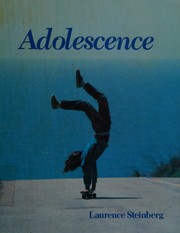
The standard college-level text on adolescent development — covers cognitive, social, emotional, and identity development in the age group school counselors serve most.
Bridges developmental theory and school practice by explaining why kids struggle behaviorally and how adults can respond collaboratively — perfect preparation for the school setting.
Core Counseling Skills
BeginnerBuild the fundamental listening, rapport-building, and helping skills that underpin every counseling approach.
▸ Study plan for this stage
Pace: 8–10 weeks, ~25–30 pages/day (mix of reading and skill practice)
- The microskills hierarchy: attending, paraphrasing, summarizing, reflection, and questioning as building blocks of effective counseling
- Intentional interviewing: matching counselor responses to client needs and developmental stage
- The five-stage interview structure: opening, gathering information, determining outcomes, working toward solutions, and closing
- Motivational interviewing spirit: collaboration, evocation, autonomy, and compassion as core values
- Change talk and sustain talk: recognizing and amplifying client language that supports behavior change
- Reflective listening: simple vs. complex reflections and their role in deepening understanding
- Building and maintaining rapport through congruence, respect, and genuine interest in the client's perspective
- Ambivalence as normal: using MI techniques to help clients explore and resolve mixed feelings about change
- What are the five core microskills in Ivey's hierarchy, and how do they build on each other in a counseling session?
- Describe the five-stage interview structure from 'Intentional Interviewing and Counseling' and explain the purpose of each stage.
- What is the difference between simple and complex reflections in motivational interviewing, and when would you use each?
- How do the four principles of MI spirit (collaboration, evocation, autonomy, compassion) guide a counselor's stance with resistant or ambivalent clients?
- What is change talk versus sustain talk, and why is recognizing the difference important in motivational interviewing?
- How would you apply Ivey's concept of intentional interviewing to adapt your response when a client is in crisis versus when they are exploring a long-standing issue?
- Record yourself conducting a 10–15 minute mock counseling session with a peer or volunteer; listen back and identify which microskills you used and which you missed.
- Practice the five-stage interview structure by conducting three full practice interviews, one focused on each stage, and reflect on transitions between stages.
- Conduct a reflection-only exercise: respond to client statements using only reflections (no questions, advice, or interpretations) for an entire 15-minute session.
- Analyze a recorded or transcribed counseling session (real or role-play) and label each counselor response by microskill type (attending, paraphrasing, summarizing, etc.).
- Practice distinguishing change talk from sustain talk by reading client statements and categorizing them; then role-play responding to each type using MI techniques.
- Conduct a motivational interviewing practice session focused on a low-stakes behavior change (e.g., exercise, sleep habits) and record your use of open questions, affirmations, summaries, and reflections (OARS).
Next up: Mastery of these foundational microskills and MI principles equips you to apply specialized counseling approaches (such as cognitive-behavioral, psychodynamic, or solution-focused therapy) with authenticity and client-centeredness, ensuring that every technique you learn next is grounded in genuine listening and rapport.
The most widely used skills-training text in counselor education programs; teaches microskills (attending, reflecting, questioning) in a clear, step-by-step sequence.
Teaches the evidence-based MI approach for helping resistant or ambivalent clients change — an essential tool when working with reluctant students and families.
School Counseling Theory & Practice
IntermediateApply counseling skills specifically to the K–12 school environment, understand the ASCA National Model, and learn how to design and run a comprehensive school counseling program.
▸ Study plan for this stage
Pace: 4–5 weeks, ~25–30 pages/day
- Group dynamics and stages of group development (forming, storming, norming, performing)
- Core counseling skills applied in group settings (active listening, reflection, reframing, confrontation)
- Group leadership styles and their impact on student outcomes in K–12 contexts
- Ethical and legal considerations specific to group counseling in schools
- Designing and facilitating groups for different student populations (academic, social-emotional, crisis-focused)
- Assessment and evaluation of group counseling effectiveness
- Managing challenging group behaviors and conflict resolution within groups
- How do the four stages of group development manifest in a school counseling group, and what leader interventions are most effective at each stage?
- What are the key differences between individual and group counseling skills, and how do you adapt core counseling techniques for a group environment?
- How do you assess whether a group counseling intervention is working, and what data would you collect to demonstrate impact to school administrators?
- What ethical and legal issues are most critical when running groups with minors in a school setting, and how do you address confidentiality and parental consent?
- How would you design and structure a group counseling program for a specific student need (e.g., social skills, grief, academic motivation) in a K–12 school?
- What strategies do you use to manage difficult group dynamics, such as a dominant member, a silent member, or interpersonal conflict between students?
- Facilitate or observe a live group counseling session in a school setting and document the group's stage of development and leadership interventions used
- Design a complete group counseling curriculum for one student population (e.g., 6th-grade social anxiety group, high school grief support group) including goals, session outlines, and evaluation methods
- Practice core group counseling skills (reflection, reframing, confrontation) through role-play with peers, with feedback on how well you adapted individual skills to a group context
- Analyze a case study of a struggling school counseling group and propose specific interventions to address the presenting problems (e.g., low engagement, conflict, dropout)
- Create a group assessment and evaluation plan that includes pre/post measures, session feedback, and outcome metrics relevant to school counseling outcomes
- Develop a parent communication and consent protocol for a school-based group, addressing confidentiality, goals, and how you'll report progress
Next up: Understanding group counseling theory and practice in schools equips you to implement one of the core pillars of the ASCA National Model and prepares you to design comprehensive, multi-tiered school counseling programs that serve diverse student needs at scale.

School counselors routinely run small groups; this is the clearest, most practical guide to planning and facilitating effective group sessions with students.
College Advising & Career Development
IntermediateGuide students through the college search, application, and financial aid process, and help them connect academic choices to long-term career goals.
▸ Study plan for this stage
Pace: 8–10 weeks, ~25–30 pages/day, with 1–2 reflection days per week
- Crafting authentic, compelling college essays that reveal genuine voice and self-awareness
- Identifying colleges that align with individual values, learning styles, and long-term goals rather than prestige alone
- Understanding the college application timeline, requirements, and strategic planning process
- Navigating financial aid, scholarships, and cost-benefit analysis in college selection
- Connecting academic major selection to realistic career pathways and labor market realities
- Applying career development theory (trait-factor, developmental, social-cognitive models) to guide student decision-making
- Assessing student strengths, interests, and values to inform both college and career choices
- Building a counselor toolkit for supporting students through transitions from high school to college to career
- What are the core elements of a strong college application essay, and how do you help a student find their authentic voice?
- How do you guide a student to evaluate colleges beyond rankings and prestige—what criteria matter most?
- What is the relationship between a student's academic major choice and their long-term career trajectory?
- How do you help students understand and navigate the financial aid process, and what role does cost play in college selection?
- What career development theories are most useful when counseling students, and how do you apply them in practice?
- How do you support a student in connecting their college experience (coursework, internships, activities) to career readiness?
- Read and analyze 3–5 sample college essays from McGinty's book; identify strengths and weaknesses in voice, structure, and authenticity
- Conduct a mock college search for a fictional (or real) student using Pope's criteria; create a balanced list of reach, target, and safety schools with written justifications
- Draft a personal college essay on a meaningful experience; exchange with a peer for feedback on voice, clarity, and impact
- Interview 2–3 college counselors or admissions officers about their approach to helping students find the right fit
- Create a financial aid comparison worksheet for 3–4 colleges, calculating net cost and ROI based on career outcomes
- Map a student's interests and strengths to 2–3 potential majors and career paths using Brown's career development frameworks
- Develop a sample college-to-career advising plan for a hypothetical student, including major selection, internship strategy, and post-graduation goals
- Reflect in writing on your own college and career decision-making process; identify what you wish you'd known and how that informs your counseling approach
Next up: This stage equips you with concrete strategies for guiding students through pivotal transitions—from high school to college to career—preparing you to address the advanced challenges of supporting students through major life decisions, identity development, and long-term planning in the next stage.
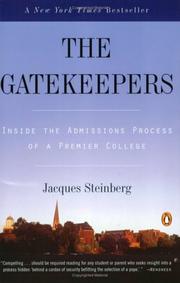
A counselor-friendly guide to the most anxiety-producing part of the college process; helps you coach students on crafting authentic, compelling personal statements.

Expands students' and counselors' view of 'good fit' beyond brand-name schools — essential for advising a wide range of students with diverse goals and abilities.

A comprehensive, research-grounded text on career theory and practice; gives you the theoretical tools (Holland, Super, social cognitive career theory) to connect college planning to lifelong career development.
Discussion
Keep reading
Paths that share books, cover the same subject, or open a related topic.