Navigate college admissions & financial aid
This four-stage curriculum takes a beginner from "how does college admissions even work?" all the way through strategic list-building, crafting a compelling application, and financing college without crushing debt. Each stage builds on the last: you need to understand the landscape before you can strategize, strategize before you can execute, and execute before you can pay smartly.
The Landscape: How Admissions Really Works
BeginnerUnderstand the modern admissions ecosystem — who the gatekeepers are, what they actually look for, and how the process has changed — so you can approach it without myths or panic.
▸ Study plan for this stage
Pace: 6–8 weeks total: Weeks 1–4 for "The Gatekeepers" (~25–30 pages/day, reading in tandem with note-taking on admissions officer decision-making); Weeks 5–8 for "Where You Go Is Not Who You'll Be" (~20–25 pages/day, a lighter read best absorbed slowly with reflection journaling). Allow 1–2 buffer days p
- The admissions officer's perspective: Steinberg's embedded look at Wesleyan reveals that admissions decisions are deeply human, contextual, and committee-driven — not algorithmic or purely merit-based.
- Holistic review in practice: 'The Gatekeepers' shows how factors like geography, legacy status, athletic recruitment, institutional need, and 'demonstrated interest' all quietly shape who gets in alongside grades and scores.
- The myth of the 'perfect applicant': Both books dismantle the idea that there is a single winning profile; Steinberg's real applicants are flawed, complex, and often surprising in their outcomes.
- Prestige anxiety and its origins: Bruni traces how the hyper-focus on elite brand-name schools is a historically recent and largely media-driven phenomenon, not a reflection of how success actually works.
- Outcome data vs. outcome mythology: Bruni marshals evidence — from CEOs to senators to artists — showing that graduates of non-elite schools achieve at the highest levels, undermining the 'name = destiny' narrative.
- The college list as strategy, not status: Together the books argue that fit, financial reality, and personal growth matter far more than a school's U.S. News ranking.
- How admissions has changed: Both authors document the rise of the Common App, score inflation, early decision pressure, and the college-ranking industry as forces that transformed (and distorted) the process since the 1990s.
- Emotional and psychological stakes: Steinberg humanizes both the applicants and the gatekeepers, while Bruni addresses the anxiety epidemic among students and families — framing stress management as part of college planning.
- After reading 'The Gatekeepers,' can you describe at least four non-academic factors that Wesleyan's admissions officers weighed when evaluating applicants, and explain why each one mattered to the institution?
- How does Steinberg's portrayal of the admissions committee process challenge the common belief that college admissions is a straightforward meritocracy?
- What specific evidence does Bruni provide in 'Where You Go Is Not Who You'll Be' to support his claim that attending an elite university is not a prerequisite for professional success or personal fulfillment?
- How do the two books complement each other — where does Steinberg's inside view of the process connect with or complicate Bruni's broader argument about prestige?
- What forces — economic, technological, and cultural — do both authors identify as having intensified college admissions pressure over the past few decades, and are those forces still active today?
- Based on both books, what would you say is the single biggest myth a first-generation or middle-income student might hold about college admissions, and how would you counter it?
- Admissions Officer Role-Play: After finishing 'The Gatekeepers,' pick two or three of Steinberg's real applicants and write a 1-page mock admissions committee memo for each, arguing for or against admission using the criteria the book reveals. Compare your decisions to what actually happened.
- Myth Inventory: Before starting Bruni's book, write down 5–10 beliefs you (or your family) hold about elite colleges and success. After finishing, revisit each belief and annotate it with evidence from the book that confirms, complicates, or refutes it.
- Success Story Research: Bruni cites numerous accomplished people who attended non-elite schools. Choose three figures he mentions, research their careers independently, and write a short paragraph on what factors — beyond college brand — seem to explain their success.
- Timeline of Admissions Evolution: Using details from both books, build a visual timeline (on paper or a tool like Canva) marking key shifts in the admissions landscape from the 1980s to today — e.g., rise of rankings, Common App expansion, early decision growth, score-optional movement.
- Personal 'Fit' Reflection Journal: Drawing on Bruni's framework, write a 1–2 page reflection answering: What kind of learner am I? What environment helps me thrive? What do I want college to do for me — beyond a name on a diploma? Use this as a foundation for your college list work in later stages.
- Stakeholder Mapping: Create a simple diagram listing every 'player' in the admissions ecosystem mentioned across both books (students, parents, admissions officers, counselors, coaches, development offices, ranking publishers, etc.) and draw arrows showing how each influences the others.
Next up: Having dismantled the myths around who gets in and why, the reader is now ready to move from understanding the system to actively working within it — building a strategic, personalized college list and crafting a compelling application.
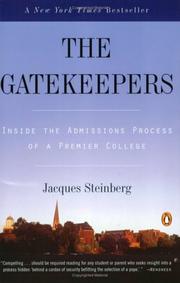
A journalist shadows a Wesleyan admissions officer for a full cycle, giving an unvarnished, insider view of how real decisions get made. Reading this first destroys common myths and builds an honest mental model of the process.

Counters the prestige obsession that distorts most families' thinking. Reading it second resets expectations and frees the student to build a genuinely smart, fit-based college list rather than a status-driven one.
Strategy: Building a Smart College List
BeginnerLearn how to research colleges systematically, evaluate fit across academic, social, and financial dimensions, and construct a balanced list of reach, match, and likely schools.
▸ Study plan for this stage
Pace: 5–6 weeks total: Weeks 1–3 cover "Colleges That Change Lives" (~20–25 pages/day, reading profiles and Pope's philosophy chapters deliberately); Weeks 4–6 cover "The College Solution" (~20–25 pages/day, pausing after each financial aid and strategy chapter to take notes and apply concepts to a person
- The 'fit over prestige' philosophy: Pope's argument in 'Colleges That Change Lives' that lesser-known liberal arts colleges often produce better educational and life outcomes than elite brand-name universities
- The 40 CTCL colleges as a model for identifying high-quality, student-centered institutions outside the U.S. News rankings spotlight
- Academic fit dimensions: evaluating teaching philosophy (professor-led vs. TA-led instruction), undergraduate research opportunities, academic culture, and learning environment as profiled in 'Colleges That Change Lives'
- Social and community fit: using Pope's college profiles to assess campus culture, student collaboration vs. competition, and sense of belonging
- The reach/match/likely framework: O'Shaughnessy's guidance in 'The College Solution' on building a balanced list that manages risk while maximizing opportunity
- Financial fit as a non-negotiable dimension: O'Shaughnessy's distinction between sticker price and net price, and why a school's generosity with merit and need-based aid must be evaluated alongside academic fit
- How to research a college's financial aid practices: O'Shaughnessy's tools for identifying schools with strong financial aid track records, including endowment size, percent of need met, and average merit awards
- Systematic college research methodology: combining qualitative fit signals (from 'Colleges That Change Lives' profiles) with quantitative financial and statistical data (from 'The College Solution') to make well-rounded decisions
- According to Loren Pope in 'Colleges That Change Lives,' why does he argue that the Ivy League and other highly selective universities are often a poor fit for many students, and what evidence does he offer?
- After reading the college profiles in 'Colleges That Change Lives,' what 3–5 specific qualities of a college community (academic, social, or cultural) resonate most with you personally, and why?
- How does Lynn O'Shaughnessy in 'The College Solution' define 'net price,' and why does she argue it is a more meaningful number than a college's published sticker price?
- What criteria does O'Shaughnessy recommend using to identify colleges that are likely to offer strong merit aid, even to students who do not demonstrate financial need?
- How would you categorize a list of 12–15 colleges into reach, match, and likely schools using the frameworks from 'The College Solution,' and what data points would you use to make those classifications?
- How do the qualitative, student-experience-focused insights from 'Colleges That Change Lives' complement the financial and statistical research strategies in 'The College Solution' when building a college list?
- Pope's Profile Reflection Journal: After reading each college profile in 'Colleges That Change Lives,' write 3–5 sentences answering: 'Could I see myself thriving here, and why or why not?' At the end of the book, identify your top 5 profiled schools and articulate what they reveal about your personal definition of 'fit.'
- Build Your Fit Rubric: Drawing on Pope's dimensions (teaching style, campus culture, student collaboration, undergraduate focus), create a personal weighted rubric with 6–8 criteria and assign each a score of 1–3 for importance to you. Use this rubric throughout the rest of the stage to evaluate every college you research.
- Net Price Calculator Sprint: Using O'Shaughnessy's guidance in 'The College Solution,' visit the Net Price Calculator on the websites of at least 8 colleges (including 2–3 CTCL schools and a mix of public/private). Record the estimated net price for your family and compare it to the sticker price. Note the gap and what it tells you about each school's generosity.
- Draft Your Balanced College List: Using O'Shaughnessy's reach/match/likely framework, compile a working list of 12–15 colleges. For each school, record: acceptance rate, your estimated net price, at least one 'fit' reason from your rubric, and its reach/match/likely designation. Aim for roughly 3–4 likely, 5–7 match, and 3–4 reach schools.
- Financial Aid Generosity Research: For 5 colleges on your draft list, research the following data points highlighted in 'The College Solution': endowment per student, percentage of demonstrated need met, average merit award for non-need students, and whether the school is need-blind or need-aware. Summarize findings in a simple comparison table.
- Prestige Audit: Make a list of any colleges you initially wanted to apply to purely because of name recognition or rankings. For each, apply Pope's 'fit' questions and O'Shaughnessy's net price analysis. Decide whether each school stays on your list, is removed, or is reclassified — and write one sentence justifying each decision.
Next up: Completing this stage gives the reader a concrete, balanced, and financially informed college list — the essential raw material for the next stage, which focuses on the application process itself, including crafting compelling essays and presenting a student's story to the specific schools on that list.

Profiles 40 lesser-known colleges that produce outstanding outcomes, expanding the student's universe well beyond the U.S. News top 20 and teaching the vocabulary of 'fit' in concrete terms.

A practical, data-driven guide to evaluating colleges on merit aid, graduation rates, and net price — the financial and strategic lens that should sit alongside any academic list-building.
Execution: Applications, Essays & the Common App
IntermediateCraft a cohesive application narrative, write authentic and compelling essays, and manage deadlines and logistics across multiple schools without burning out.
▸ Study plan for this stage
Pace: 8–10 weeks total; Week 1–3: Bauld's "On Writing the College Application Essay" (~20–25 pages/day, re-reading key chapters on voice and authenticity); Week 4–6: McGinty's "The College Application Essay" (~25 pages/day, pausing to draft and revise alongside each chapter); Week 7–10: Springer's "Admiss
- Finding and preserving your authentic voice — Bauld's central argument that admissions essays fail when students write what they think readers want to hear rather than what is genuinely true to them
- The 'small moment, big meaning' technique — Bauld's insistence on specificity and concrete detail over grand, sweeping topics to reveal character
- Essay architecture and structure — McGinty's framework for opening hooks, narrative arc, and closing resonance that ties the essay back to a central insight
- Matching tone and content to school culture — McGinty's guidance on tailoring supplemental essays to each institution's identity without losing a unified personal narrative
- The cohesive application narrative — treating the Common App essay, supplements, activities list, and recommendations as interlocking pieces of a single story rather than isolated documents
- Deadline and logistics management — Springer's system for tracking Early Decision, Early Action, Regular Decision, and rolling admission deadlines across multiple schools simultaneously
- Understanding the holistic review process — Springer's explanation of how admissions officers weigh essays alongside GPA, test scores, and extracurriculars, so students can calibrate effort appropriately
- Avoiding common pitfalls — the 'resume in prose' essay, the tragedy narrative without reflection, and the generic 'why us' supplement identified across all three books
- According to Bauld, why do most college essays fail, and what is the single most important quality an essay must have to succeed?
- What does McGinty identify as the structural elements of a strong opening, and how should the conclusion echo or reframe the essay's central insight?
- How do Bauld and McGinty together suggest a student should approach a 'Why This College?' supplement while maintaining the authentic voice developed in the main essay?
- According to Springer's 'Admission Matters,' what is the difference between Early Decision and Early Action, and what strategic and financial-aid implications does each carry?
- How does Springer recommend a student build and manage a balanced college list, and how does that list shape which essays and supplements demand the most energy?
- Across all three books, what are the most frequently cited essay mistakes, and what concrete revision strategies are offered to fix them?
- Voice audit (Bauld): Write a 300-word freewrite about a mundane, specific moment from the past year — no grand themes allowed. Then highlight every sentence that sounds like 'you' versus every sentence that sounds like a generic applicant. Revise until the ratio is 90% authentic voice.
- Small-moment brainstorm (Bauld): List 20 hyper-specific moments, objects, or recurring habits from your life. Circle the three that surprise even you. Use one as the seed for a full Common App essay draft.
- Structural reverse-outline (McGinty): Take your existing essay draft and write a one-sentence summary of each paragraph. Check whether the opening creates a hook, the middle develops a single insight, and the closing reframes — not just restates — the opening image or idea.
- Supplement matrix (McGinty + Springer): Build a spreadsheet with every school on your list, their supplement prompts, word limits, and due dates. For each 'Why Us?' prompt, write one paragraph that cites a specific program, professor, or tradition — nothing that could apply to another school.
- Application narrative audit (Springer): Lay out your Common App essay, activities list, and one recommendation letter side by side. Identify what each reveals about you. Flag any important dimension of your character that appears in none of the three, and decide where to surface it.
- Deadline war-game (Springer): Using Springer's decision-plan framework, map every deadline on a single calendar (ED, EA, RD). Work backward to set personal draft-done, revision-done, and submission-ready dates for each school, building in a 72-hour buffer before every real deadline.
Next up: Mastering the application narrative and logistics here sets the foundation for the next stage — understanding how admissions decisions are actually made and how financial aid packages are evaluated — because students who know how their story is read holistically are better equipped to compare offers, negotiate aid, and make a fully informed enrollment decision.
The classic, no-nonsense guide to the personal essay — written by a former admissions officer and English teacher. It should be read before drafting a single word, as it reframes what the essay is actually for.
Complements Bauld with a more structured, step-by-step process for generating topics, drafting, and revising. Reading it second gives the student both the philosophy and the practical workflow.
A comprehensive guide to the full application — activities list, recommendations, interviews, and strategy — tying together everything from list-building into a coherent execution plan.
Paying for College: Aid, Merit & Avoiding Debt
IntermediateDecode the financial aid system (FAFSA, CSS Profile, EFC/SAI), distinguish need-based from merit aid, compare real net prices, and make a final enrollment decision that avoids ruinous debt.
▸ Study plan for this stage
Pace: 6–8 weeks total: Weeks 1–4 cover "Paying for College Without Going Broke" (~25–30 pages/day, including time to pause and apply FAFSA/CSS concepts to your own situation); Weeks 5–8 cover "Debt-Free U" (~20–25 pages/day, with slower reading during chapters on ROI and college rankings to allow for crit
- FAFSA vs. CSS Profile: what each form measures, which colleges require which, and how to submit them strategically (Chany)
- Expected Family Contribution (EFC) / Student Aid Index (SAI): how it is calculated from income, assets, and household data, and why it often differs from what families actually pay (Chany)
- Institutional methodology vs. federal methodology: how private colleges use their own formulas to assess need differently from the federal government (Chany)
- Need-based aid vs. merit aid: structural differences, how colleges package them together, and why 'full-ride' offers are rarer than marketed (Chany & Bissonnette)
- The real net price vs. sticker price: how to read and compare award letters across schools to find the true cost of attendance (Chany)
- Professional judgment and appeals: the legitimate process of asking a financial aid office to reconsider your package based on special circumstances (Chany)
- The student-loan debt trap: Bissonnette's core argument that borrowing heavily for a prestigious brand-name school rarely produces a financial return that justifies the cost (Bissonnette)
- Selectivity vs. value: why a less-selective school that offers generous merit aid or where you rank in the top of the class can outperform an elite school financially and academically (Bissonnette)
- After completing both books, can you walk through every line of a financial aid award letter and calculate the true net price a family would pay, including loans that must be repaid?
- What is the difference between the federal EFC/SAI and an institutional EFC, and why might the same family receive very different aid packages from a public university versus a private college?
- According to Bissonnette, what is the '1/10th rule' for student borrowing, and how does it translate into a concrete dollar cap on total debt for a given career path?
- What asset-sheltering and income-timing strategies does Chany describe as legal ways to improve your aid eligibility, and what are the ethical boundaries around them?
- How should a student use the net price calculator on a college's website before applying, and what are its known limitations according to Chany?
- What evidence does Bissonnette present against the assumption that attending a highly selective, expensive college produces better lifetime earnings than attending a lower-cost alternative?
- Net Price Audit: Pull the award letters (real or sample) from three colleges at different price points. Using Chany's framework, strip out all loans and work-study, calculate the true grant-only net price for each, and rank them by actual cost to the family.
- FAFSA/CSS Simulation: Use the Federal Student Aid Estimator (studentaid.gov) and at least one college's net price calculator to compute a sample SAI. Then adjust one variable at a time (e.g., move savings into a retirement account) and record how the SAI changes, connecting each change to Chany's asset-treatment rules.
- Debt-to-Income Stress Test (Bissonnette's framework): Research the median starting salary for three intended majors. Apply Bissonnette's 1/10th rule to set a maximum borrowing ceiling for each, then check whether the net prices from your Exercise 1 schools fall above or below that ceiling.
- Award Letter Appeal Draft: Using Chany's chapter on professional judgment, write a one-page appeal letter to a fictional financial aid office citing a legitimate special circumstance (job loss, medical expense, change in family size). Identify exactly which data points you would ask them to reconsider and why.
- Rankings vs. Value Comparison: Choose one school from the US News Top 30 and one school ranked 50–100 that offers you a significant merit scholarship. Build a side-by-side 4-year cost comparison and a projected 10-year loan repayment schedule, then write a one-paragraph verdict using Bissonnette's ROI logic.
- Concept Vocabulary Flashcards: Create a set of at least 20 flashcards covering key terms from both books (e.g., verification, professional judgment, institutional methodology, COA, unmet need, front-loading, merit stacking) and quiz yourself until you can define and apply each without the book.
Next up: Mastering the financial mechanics of aid and debt in this stage gives the reader the quantitative foundation needed to evaluate the broader college-fit and application strategy questions that come next — because knowing exactly what you can afford transforms every subsequent decision about where to apply, how to position yourself, and which offers to accept.
The most thorough, annually updated guide to maximizing financial aid — covers FAFSA strategy, the CSS Profile, and how to appeal award letters. This is the definitive reference and should be read as award letters arrive.
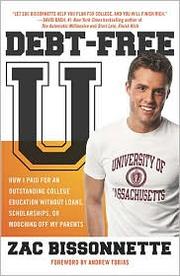
A blunt, student-centered argument for choosing colleges based on net cost and avoiding parent-plus and private loan traps. It reframes the final enrollment decision around long-term financial health, the perfect capstone to the whole curriculum.
Discussion
Keep reading
Paths that share books, cover the same subject, or open a related topic.