Private investigation is far more mundane and far more skilled than fiction suggests: it is database work, careful surveillance, patient interviews, and staying scrupulously within the law. Beginners often fixate on tradecraft without realizing that most PI work is licensed, regulated, and built on knowing what you legally can and cannot do.
The order that works starts with the overall craft, moves through the practical skills — surveillance, locating people, open-source research — and finishes with interviewing and running an actual business. Reading builds real competence, but licensure requirements vary by state and country, and you must meet yours before taking paid work.
The craft overall
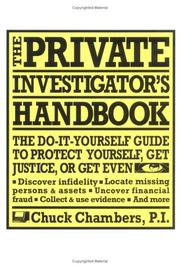
Start with the wide view. The Encyclopedia of Private Investigation by Steven Kerry Brown is a broad reference to the whole field, from case types to legal boundaries, and it grounds every specialty that follows. The Private Investigator Handbook by Chuck Chambers is the practical companion, walking through how real cases are actually worked. Introduction to Private Investigation by Andrew Benson then fills in the professional fundamentals and standards you are expected to uphold.
The core skills
Next, the hands-on techniques. The Art of Surveillance by Dale Doyle teaches the discipline of watching and following without being detected, done legally and safely. How to Find Anyone Anywhere by Ralph Thomas is a classic on skip tracing — locating people through public records and databases — which is the bread and butter of much PI work. Open source intelligence techniques by Michael Bazzell is the modern essential, a deep guide to gathering information from online sources, and The investigator's little black book 3 by Robert Scott is the well-worn directory of resources and contacts investigators keep close.
Interviewing and the business
The final arc turns skill into a livelihood. Practical homicide investigation by Vernon Geberth is the authoritative reference on serious-crime scenes, valuable for investigators who work with attorneys and law enforcement. Interviewing and Interrogation for Law Enforcement by John Hess teaches how to elicit accurate information ethically, a skill every case depends on. Finally, Start Your Own Private Investigation Business by Entrepreneur Press covers the reality that most PIs are self-employed, from licensing to clients to cash flow.
Read in this order and private investigation becomes a real, teachable profession rather than a fantasy. Follow the full path, then meet your jurisdiction's licensing, training, and insurance requirements before you accept a single paid assignment.
Follow the full reading path →
Ready to learn something deeply?
Build a reading path — free