Kids and screen time: books for healthy digital habits
This curriculum moves from foundational child development and screen-time basics, through the science of digital habits and design, to advanced frameworks for setting practical, compassionate family boundaries. Each stage builds the vocabulary and conceptual grounding needed for the next, so readers arrive at the more research-dense and nuanced books fully prepared to apply them at home.
Foundations: Understanding Kids & Screens
BeginnerGrasp the core concerns around children and screen time, understand basic child development milestones, and replace panic with informed perspective.
▸ Study plan for this stage
Pace: 4–5 weeks, ~25–30 pages/day (approximately 150–180 pages total across both books)
- Screen time exists on a spectrum—quality, context, and co-viewing matter more than total hours
- Child development stages shape how kids interact with screens and what content is appropriate
- Parental anxiety about screens often stems from fear rather than evidence; balanced media literacy is key
- Active parenting strategies (like 'duct tape' principles of natural consequences and minimal nagging) work better than screen bans
- The goal is informed decision-making, not perfection—families need personalized media plans that fit their values
- Screens can be tools for learning and connection when used intentionally alongside real-world play and relationships
- What is the difference between passive screen consumption and intentional, quality screen use, and why does this distinction matter for child development?
- How do children's developmental stages (toddler, preschool, school-age) affect their ability to understand and learn from screens?
- What are the core principles of 'duct tape parenting' and how do they apply specifically to screen time conflicts?
- How can you create a family media plan that reflects your values rather than defaulting to either total restriction or unlimited access?
- What role does parental modeling and co-viewing play in shaping healthy screen habits?
- What are evidence-based concerns about screens versus common myths or exaggerations?
- Create a 1-week media diary: log your family's actual screen use (type, duration, context, who's present). Analyze patterns without judgment.
- Draft a family media plan that specifies which screens are allowed when, what content is acceptable by age, and what non-screen activities you'll prioritize.
- Choose one screen-time conflict in your household and apply a 'duct tape parenting' strategy (natural consequences, minimal reminding) for 2 weeks; document what happens.
- Co-view a show or app with your child for 20–30 minutes and practice pausing to ask questions or make connections to real life; reflect on what you learned about their thinking.
- Interview another parent about their screen rules and reasoning; compare their approach to yours and identify one principle you might adopt.
- Identify three 'quality screen' options (educational apps, shows, or videos) that align with your child's interests and developmental level; test one and evaluate it.
Next up: This foundation equips you with evidence-based perspective and practical strategies, preparing you to dive deeper into specific challenges (managing resistance, addressing addiction-like behaviors, or navigating social media) and more advanced parenting techniques in the next stage.

A journalist and parent synthesizes the actual research in plain language, making it the perfect first read to separate myth from evidence and set a calm, non-judgmental tone for the whole curriculum.

Establishes a foundational philosophy of stepping back and building children's autonomy and self-regulation — skills that underpin every healthy technology habit discussed in later books.
Child Development & the Digital Brain
BeginnerUnderstand how children's developing brains interact with technology, and why age and developmental stage matter enormously when setting limits.
▸ Study plan for this stage
Pace: 4–5 weeks, ~25–30 pages/day. Start with "Thirty Million Words" (2 weeks), then "The Whole-Brain Child" (2–3 weeks). Allocate 2–3 days per book for review and integration.
- The 30-million-word gap: how early language exposure (especially conversational interaction) shapes brain development and long-term outcomes
- The three Ts framework from 'Thirty Million Words': Tune in, Talk more, Take turns—practical strategies for enriching children's language environment
- Brain architecture basics: how the developing brain builds neural connections through experience, and why early childhood is a critical window
- Integration of left and right brain hemispheres: how the logical left brain and emotional right brain must work together for healthy development
- The 'upstairs' and 'downstairs' brain: prefrontal cortex (decision-making, impulse control) vs. limbic system (emotions, survival instincts), and why screens can hijack the downstairs brain
- How screens affect language development and parent-child interaction compared to live conversation
- Developmental readiness: why the same screen exposure has different effects at age 2 vs. age 8 vs. age 14
- Practical strategies for using screens intentionally rather than reactively, aligned with what we know about brain development
- What is the 30-million-word gap, and what does research show about its long-term impact on children's development and achievement?
- Explain the three Ts (Tune in, Talk more, Take turns) and give concrete examples of how each one supports brain development.
- How do the left and right hemispheres of the brain develop differently, and why is integration between them crucial for children's emotional and cognitive health?
- What is the difference between the 'upstairs brain' and 'downstairs brain,' and how does this framework help explain why young children struggle with impulse control around screens?
- How does passive screen consumption differ from interactive conversation in terms of neural development, and why does this matter for language acquisition?
- Why does developmental stage matter when setting screen limits? Give examples of how screen exposure might affect a 3-year-old differently than a 10-year-old.
- Audio diary: Record yourself during a 15-minute interaction with a child (or observe one). Count the number of back-and-forth conversational turns. Reflect on how the three Ts show up (or don't) in the interaction.
- Brain mapping activity: Draw or diagram the 'upstairs' and 'downstairs' brain. Label key structures (prefrontal cortex, amygdala, etc.) and write one example of how each region influences screen behavior in children.
- Screen audit: Track one child's screen time for 3 days, noting the type of content (passive vs. interactive), duration, and context. Then redesign the schedule using principles from both books—e.g., replacing 30 minutes of passive video with 15 minutes of co-viewing plus 15 minutes of conversation.
- Three Ts practice plan: Choose one area where you interact with children (home, classroom, etc.). Design a specific intervention using all three Ts—e.g., 'I will tune in by putting my phone away during meals, talk more by narrating what we're doing, and take turns by asking open-ended questions.' Implement for one week and journal observations.
- Developmental stage matrix: Create a chart showing how different screen recommendations might apply at ages 2, 5, 8, and 12, based on what you've learned about brain development. Justify each recommendation using concepts from the books.
- Whole-brain integration scenario: Write out a script for how you'd handle a child's meltdown over screen time limits, using the 'upstairs/downstairs brain' framework to explain what's happening and how to respond with empathy while maintaining boundaries.
Next up: This stage establishes the *why* behind screen limits by grounding them in neuroscience and language development; the next stage will move into the *how*—practical strategies, family systems, and real-world implementation across different ages and contexts.

Grounds the reader in how early language and interaction shape brain development, providing essential context for why passive screen consumption is a different experience than active conversation.

Explains brain development in accessible terms, giving parents a mental model for why children react to screens the way they do and how to respond with empathy rather than conflict.
The Digital Environment: Design, Addiction & Influence
IntermediateUnderstand how apps, games, and social platforms are deliberately engineered to capture attention, and what that means specifically for children and adolescents.
▸ Study plan for this stage
Pace: 6–7 weeks, ~25–30 pages/day. "Hooked" (3 weeks, ~20 pages/day); "iGen" (4 weeks, ~30 pages/day). Include 2–3 days per week for reflection and exercises.
- The Hook Model: how trigger, action, variable reward, and investment create habitual product use (Eyal's framework for understanding app and game design)
- External vs. internal triggers: the difference between notifications/cues and emotional drivers that prompt app engagement
- Variable rewards and psychological reinforcement: why unpredictable outcomes (likes, notifications, loot boxes) are more addictive than predictable ones
- Investment mechanics: how apps encourage users to invest time, data, and effort to increase switching costs and habit formation
- Generational differences in screen exposure: how iGen (born 1995–2012) experiences fundamentally different developmental contexts than previous generations due to smartphone ubiquity
- Mental health correlations in adolescence: the documented rise in anxiety, depression, and loneliness alongside increased screen time and social media use in iGen
- Sleep disruption and circadian effects: how evening screen use and notifications interfere with adolescent sleep cycles and development
- FOMO, social comparison, and identity formation: how platform design exploits adolescent developmental needs (peer belonging, identity exploration) in ways that amplify psychological vulnerability
- Explain Nir Eyal's Hook Model in detail: what are the four phases, and how does each phase work to create habit formation?
- What is the difference between external and internal triggers, and why are internal triggers more powerful for long-term habit formation?
- How do variable rewards function psychologically, and why are they more addictive than fixed or predictable rewards? Give examples from apps or games.
- According to Twenge in 'iGen,' what are the key differences between iGen's relationship with screens and that of previous generations (Millennials, Gen X)?
- What correlations does Twenge document between increased screen time/social media use and mental health outcomes in adolescents? What are the limitations of these correlations?
- How do the design principles described in 'Hooked' specifically exploit developmental vulnerabilities in adolescents, according to 'iGen'?
- What does the research in both books suggest about the relationship between evening screen use, sleep, and adolescent well-being?
- Map the Hook Model onto a specific app or game you use regularly (or observe a teen using): identify the trigger, action, variable reward, and investment for each. Write a 1-page analysis.
- Keep a 3-day 'trigger log': every time you reach for your phone or open an app, note whether it was an external trigger (notification, time of day) or internal trigger (boredom, anxiety, habit). Categorize and reflect on patterns.
- Audit one social media platform for variable reward mechanics: document how likes, comments, notifications, algorithmic feeds, and streaks create unpredictability. Screenshot examples and annotate.
- Interview a teenager (or reflect on your own adolescence if you're older) about their phone/social media habits: ask about FOMO, sleep disruption, comparison, and identity exploration. Synthesize findings in a 2-page reflection.
- Design a 'hook-free' version of a popular app: remove one or more elements of the Hook Model and explain how it would change user behavior and engagement.
- Create a visual timeline comparing screen adoption and mental health trends in iGen vs. previous generations, using data points from 'iGen.' Annotate with explanations of causation vs. correlation.
Next up: This stage equips you to recognize *how* and *why* digital products are engineered to capture attention and how that design disproportionately affects developing brains; the next stage will likely explore practical strategies, policies, and interventions to mitigate these effects and foster healthier digital habits in children and families.

Written by a product designer, this book reveals the exact psychological loops tech companies use to build habit-forming products — essential knowledge for any parent trying to understand what they're up against.

Uses large-scale generational data to show how the smartphone era has shifted adolescent mental health, social behavior, and sleep — providing the empirical backbone for why limits matter for tweens and teens.
Practical Frameworks for Balanced Family Tech Habits
IntermediateTranslate research into concrete, flexible strategies for setting screen-time boundaries, having productive family conversations, and modeling healthy digital habits yourself.
▸ Study plan for this stage
Pace: 4–5 weeks, ~40–50 pages/day (accounting for reflection and note-taking on practical strategies)
- Screenwise parenting: moving from fear-based restriction to intentional mentorship and media literacy coaching
- The concept of 'tech-wise' family culture as a shared value system rather than rules imposed from above
- Practical boundary-setting techniques: conversation starters, negotiation frameworks, and age-appropriate autonomy
- Modeling and presence: how your own digital habits directly shape your children's relationship with technology
- The role of family rituals and tech-free spaces in building connection and reducing screen dependency
- Addressing specific challenges: social pressure, FOMO, gaming, social media, and online safety in real family contexts
- Flexibility and iteration: treating screen-time boundaries as living agreements that evolve with your child's development
- What is the difference between a 'screenwise' approach and a purely restrictive or permissive approach to kids' screen time, and why does Heitner argue mentorship matters more than rules?
- How does Andy Crouch define a 'tech-wise family,' and what are the core practices that distinguish it from families that simply limit screen time?
- What are 3–4 concrete conversation starters or negotiation techniques you could use to involve your child in setting screen-time boundaries?
- How should your own digital habits change if you want to model healthy tech use, and what specific barriers might you face in doing so?
- What role do family rituals and tech-free zones play in both books, and how would you design one for your own family?
- How would you address a specific real-world scenario (e.g., your child wanting social media, peer pressure around gaming, or bedtime screen use) using frameworks from both books?
- Audit your own screen habits for one week: track daily usage, emotional triggers, and moments when you model poor digital behavior. Reflect on how your children might be internalizing these patterns.
- Read and annotate the 'conversation starter' sections in Screenwise; then conduct one actual family meeting using Heitner's framework to discuss current screen-time concerns and invite your child's input.
- Map out your family's current tech landscape: devices, apps, time spent, and existing rules. Identify one area of friction and design a 'tech-wise' alternative using Crouch's principles (e.g., replacing a banned activity with a shared ritual).
- Create a family media agreement or tech covenant inspired by both books: include boundaries, but frame them as shared values and include flexibility for renegotiation as your child grows.
- Identify and establish one tech-free family ritual (meal without phones, device-free hour, outdoor activity) and practice it for two weeks; journal on how it affects connection and behavior.
- Role-play or write out a response to a real challenge your family faces (social media pressure, gaming addiction, bedtime screens) using specific language and strategies from both Heitner and Crouch.
Next up: This stage equips you with concrete, flexible strategies grounded in research and real-world family dynamics; the next stage will likely deepen your ability to address specific developmental stages, emerging technologies, or more complex family situations (such as managing screens during stress, navigating peer influence, or supporting digital citizenship in school).

Offers a mentorship-over-monitoring approach, giving parents specific scripts and strategies for guiding kids through the digital world rather than simply restricting it.
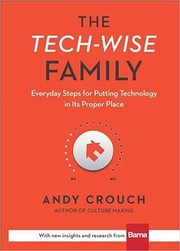
Provides a practical, values-driven framework for creating intentional household rhythms around technology, with actionable rules that are easy to adapt to any family's culture.
Advanced Perspectives: Adolescence, Social Media & Long-Term Wellbeing
ExpertEngage with the most current and contested research on social media, adolescent mental health, and how to raise digitally resilient young people who can self-regulate into adulthood.
▸ Study plan for this stage
Pace: 8–10 weeks, ~40–50 pages/day (mix of reading and reflection; expect slower pace due to dense research and contested claims)
- The 'phone-based childhood' model: how the shift from play-based to phone-based social environments correlates with rising anxiety and depression in Gen Z
- Social comparison and algorithmic amplification: how social media platforms are engineered to trigger comparison, FOMO, and compulsive use in adolescents
- The critical window of adolescence: why ages 10–14 are particularly vulnerable to social media's effects on identity formation, peer relationships, and mental health
- Digital resilience vs. digital literacy: the distinction between knowing how to use technology and having the psychological tools to self-regulate and resist manipulation
- Parental presence without surveillance: balancing protection with autonomy-building and modeling healthy tech habits
- The role of unstructured play and offline relationships: why face-to-face interaction and boredom are essential for developing emotional regulation and resilience
- Institutional and design-level solutions: how platforms, schools, and parents can collectively shift toward child-centered digital environments
- Long-term wellbeing framework: connecting adolescent digital habits to adult mental health, relationships, and self-regulation capacity
- What does Haidt mean by the shift from 'play-based childhood' to 'phone-based childhood,' and what evidence does he present linking this shift to rising anxiety and depression?
- How do social media algorithms specifically target adolescent psychology, and why are teens more vulnerable to social comparison and FOMO than adults?
- What is the distinction between digital literacy and digital resilience, and why does Graber argue that resilience is more critical for long-term wellbeing?
- What role do unstructured play and offline peer relationships play in developing self-regulation and emotional resilience, according to both authors?
- How can parents and caregivers balance protection from harmful digital content with fostering autonomy and healthy tech habits in adolescents?
- What systemic changes (at the platform, school, and policy level) do Haidt and Graber propose to create safer digital environments for young people?
- Track your own or a teen's social media use for one week: log time spent, emotional state before/after, and patterns of comparison or FOMO. Reflect on whether Haidt's observations match your data.
- Conduct a 'design audit' of one social media platform: identify 3–5 features engineered to increase engagement (notifications, infinite scroll, likes, algorithmic feeds). Discuss how each exploits adolescent psychology.
- Interview 2–3 adolescents (with parental consent) about their digital habits, peer relationships online vs. offline, and moments of anxiety around social media. Map their responses to Haidt's and Graber's frameworks.
- Create a 'digital resilience plan' for a specific teen (real or hypothetical): define offline activities, conversation starters about social media, boundaries, and how you'd model healthy tech use as a parent/mentor.
- Host a family or peer discussion using Graber's 'Raising Humans' framework: pick one chapter and discuss how its principles could reshape your household's relationship with screens.
- Analyze a case study of a teen struggling with social media anxiety: diagnose the issue using both Haidt's 'phone-based childhood' model and Graber's resilience framework, then propose interventions.
Next up: This stage equips you with evidence-based critiques of social media's impact and practical frameworks for building resilience; the next stage will likely focus on implementing these insights at scale—through policy, institutional design, or community-level interventions—or deepening expertise in specific populations (e.g., vulnerable teens, neurodevelopment, or cross-cultural contexts).

Haidt's rigorous synthesis of the latest social science on smartphones and the adolescent mental health crisis is the most current and debated book in the field — best read last, when you have the developmental and design context to evaluate it critically.

Closes the curriculum with a forward-looking, skills-based roadmap for teaching digital citizenship, empathy, and critical thinking — turning everything learned into a long-term parenting practice.
Discussion
Keep reading
Paths that share books, cover the same subject, or open a related topic.