Nobody reads about schizophrenia neutrally. Most people arrive because someone they love has been diagnosed, or because they have been diagnosed themselves, and what they need first is practical: what the illness is, what the treatments do, how the system works, and what happens next.
The complication is that this literature contains a genuine and unresolved disagreement about long-term outcomes and medication, argued in print by serious people with different readings of the same studies. It is better to know that going in than to read one side and mistake it for consensus. This article describes the disagreement; it does not settle it. And the standing caveat is not a formality: these are books, not care. Treatment decisions belong with a psychiatrist who knows the person, and no one should change or stop medication because of something they read.
Start with the practical manual
Surviving Schizophrenia by E. Fuller Torrey is the standard family handbook and the right first book for most readers. It covers symptoms, differential diagnosis, what antipsychotics do and what their side effects are, how hospitalisation and commitment work, and how families can navigate services. Torrey holds strong, well-known views — particularly on assisted treatment and on the consequences of deinstitutionalisation — and he does not hide them. Read it for the practical scaffolding, and note where a position is his rather than settled fact.
Then the argument about treatment
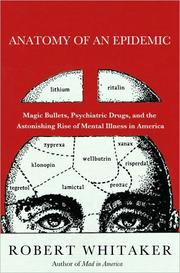
Anatomy of an Epidemic by Robert Whitaker is the most substantial challenge to the standard account, arguing from long-term outcome studies that continuous antipsychotic use may worsen outcomes for some patients over decades. It has been influential and it has been seriously contested — critics argue it misreads the direction of causation, since sicker patients stay on medication longer. Whitaker's earlier Mad in America gives the historical context: a genuinely grim account of American psychiatric treatment across two centuries.
Read both, read the published criticism of them, and hold the question open. What is not in dispute is that outcomes vary widely between individuals and that side effects are real and undertreated. What is in dispute is what follows from that.
The problem that makes everything harder
I am not sick I don't need help by Xavier Amador addresses the single most common practical crisis: a person who does not believe they are ill. Amador frames this as anosognosia, a neurological feature of the illness rather than denial or stubbornness, and teaches the LEAP approach — listen, empathise, agree, partner — as a way to preserve the relationship and reach agreement on treatment. Many families report it is the most immediately useful book they read. It is a communication method, not a substitute for clinical care.
First-person and reported accounts
The Soloist by Steve Lopez is a journalist's account of a Juilliard-trained musician living with schizophrenia on the streets of Los Angeles — as much about the failures of housing and services as about the illness itself.
The Center Cannot Hold by Elyn R. Saks is the essential memoir: a law professor's account of her own psychosis, hospitalisations, and eventual life, written with unusual precision about what disordered thought feels like from inside. Me, myself, and them by Kurt Snyder pairs a young man's own story with clinical commentary, which makes it the better choice for a newly diagnosed teenager or their parents.
Close with A Beautiful Mind by Sylvia Nasar, the biography of mathematician John Nash — valuable, and worth reading with the caveat that recovery of Nash's kind is uncommon and the film differs substantially from the book.
If you are in crisis, contact local emergency services or a crisis line rather than a reading list. Follow the full path to read these in order.
Follow the full ordered path here: Understanding Schizophrenia Through Books: A Reading Order.