Sashiko and Visible Mending: The Best Books to Read, in Order
Sashiko is a running stitch, and visible mending is the decision to let the repair show. This path starts with three books that will get a hole closed this week, moves to the stitch itself and the geometry behind the grids, then to boro and the Japanese cloth tradition sashiko comes out of, and finishes with the slow-stitch and repair-culture writing that explains why any of it matters. Every book here is a manual you work from with cloth in your lap, not a picture book.
Close the first hole
BeginnerRepair a real garment — a knee, an elbow, a worn pocket — with a needle, a scrap of cloth and a running stitch, and stop treating a hole as the end of a piece of clothing
▸ Study plan for this stage
Pace: Two to three weeks, and it is scheduled by garments, not pages. Kit needed before you open a book: a sharp needle, ordinary cotton or perle thread, scissors, a scrap of woven cotton and one worn garment you are willing to change permanently. Katrina Rodabaugh's Mending matters (222 pages) gets you p
- Patch against darn: when to add cloth and when to rebuild the weave
- Choosing thread weight and needle to suit the fabric, which is where most first repairs go wrong
- Working with a backing patch so the stitches have something to hold
- Stitch tension — why a tight repair puckers and then fails at its own edge
- Deciding a repair will be visible before you start, which changes every subsequent choice
- Triage: which garments are worth the hours and which are not
- When is a darn the right answer and when is a patch, on the evidence of the hole in front of you?
- What thread and needle would you choose for denim, for a wool knit and for a shirting cotton, and why?
- Why do stitches close to a worn edge fail, and how do you place them instead?
- What does Khounnoraj cover that Rodabaugh's denim focus leaves out?
- What makes a garment not worth mending?
- Patch a knee or an elbow from Rodabaugh, then wear and wash it three times and inspect where the stitching is moving.
- Repair a knitted item using Khounnoraj's method and note everything that had to change from the woven repair.
- Mend the same kind of hole twice, once as invisibly as you can and once deliberately visibly, and decide which you prefer on your own clothes.
- Write a short triage list of every damaged garment you own, marked repair, alter, or let go.
Next up: You can close a hole; the next stage makes the stitch itself accurate enough to be a pattern rather than a repair.
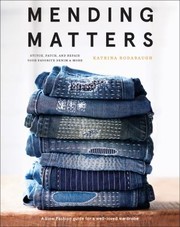
The book that made visible mending a movement in English, and still the most direct on-ramp: patch, darn and stitch a worn pair of jeans in the first thirty pages. Start here because it gives you permission to make the repair obvious before it teaches you anything technical.

Broader in materials than Rodabaugh — knits, woven cloth, felting, patching — and clearer on choosing thread weight and needle for the fabric in front of you. Read second because it fills the gaps the denim-focused first book leaves.

A short illustrated handbook by two sisters that covers the small decisions the bigger books assume you already made: how to thread and knot, how to hold the work, when a garment is worth saving. Deliberately placed here as the reassurance book.
The stitch and the grid
BeginnerStitch hitomezashi and moyouzashi patterns accurately from a marked grid, choose sashiko thread, needle and thimble deliberately, and understand why the stitch length and the spaces between stitches are both part of the pattern
▸ Study plan for this stage
Pace: Four to six weeks with cloth in your lap most evenings — 351 pages between the three books and you will spend far more time stitching than reading. Buy the tools now: sashiko thread, a long sashiko needle, a palm or ring thimble, a marking tool and a ruler, and a piece of plain cotton to practise on
- Hitomezashi as one-stitch grid work against moyouzashi as continuous-line design
- Stitch length and the gaps between stitches as equally part of the pattern
- The palm thimble and the loaded-needle motion, which is what makes long runs even
- Marking a grid accurately, and how a millimetre of drift compounds across a panel
- Sashiko thread and needle as specific tools, not substitutes for embroidery supplies
- Chanin's grid framing: a hundred stitches as variations on a few motions
- What is the practical difference between hitomezashi and moyouzashi when you are actually stitching?
- Why does the space between stitches matter as much as the stitch, and what does it look like when the ratio is wrong?
- What does the palm thimble let you do that a finger thimble does not?
- How does Briscoe recommend marking, and what happens at the edge of a panel when the marking drifts?
- After Chanin, which sashiko patterns can you now see as the same motion in different arrangements?
- Stitch a 10 by 10 centimetre marked grid in plain running stitch and measure your own stitch length variation across it.
- Work one hitomezashi and one moyouzashi pattern from Briscoe on the same cloth and compare how each handles a corner.
- Follow Iiduka's loaded-needle motion for a full evening and count how many stitches you can load reliably by the end.
- Take one stitch from Chanin's grid system and generate three variations of your own before checking whether Briscoe already has them.
Next up: An even stitch is the prerequisite for boro, which is nothing more than layers plus this stitch — and which does not work with an uneven one.

A Japanese practitioner's introduction that treats sashiko as a repair technique rather than decorative embroidery — exactly the bridge from stage one. Covers the palm thimble and the loading-several-stitches-at-once motion that Western books tend to skip.
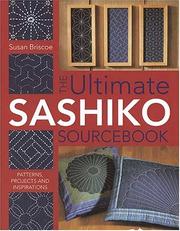
The reference every sashiko stitcher ends up owning: the pattern library, marking methods, and the distinction between the one-stitch hitomezashi grids and the continuous-line moyouzashi designs. Read it as a lookup volume alongside a project, not cover to cover.
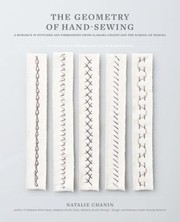
Not a sashiko book, and here on purpose: Chanin reduces all hand stitching to a grid and shows how a hundred stitches are variations on a few motions. It makes the sashiko grids stop looking like patterns to copy and start looking like a system.
Boro and the tradition behind it
IntermediateBuild up a layered, repeatedly patched cloth in the boro manner, and understand that the aesthetic being borrowed came out of rural poverty and cloth scarcity in northern Japan rather than out of a design choice
▸ Study plan for this stage
Pace: Six to eight weeks, because a boro cloth is built up over time by design. Susan Briscoe's Book of Boro (128 pages) is her second appearance on the path and opens the stage: read it in a week, then start a single piece — a cushion panel, a bag, a jacket back — and add to it every session for the rest
- Layering as the structural principle: boro is accumulated repair, not a decorative style
- How layers change the stitching — needle choice, thread tension, and what a thick seam does to evenness
- Indigo and the cloth economy the tradition came from
- Patch placement for strength first and composition second
- Building a piece over months rather than finishing it in a session
- The difference between reproducing a boro look and building a boro cloth
- What does adding a third or fourth layer change about how the stitch behaves?
- Where does a patch go if the aim is strength, and where would it go if the aim were only the look?
- What material conditions produced boro, and what does that mean for a maker buying new indigo cloth to imitate it?
- Which of Marquez's projects teaches a technique you could not get from a repair?
- What in Lewis's book is useful material guidance and what is framing you can ignore?
- Start one boro piece and add a patch to it every week for six weeks, photographing it each time.
- Stitch the same pattern through one layer and through four, and record how your stitch length changed.
- Complete one Make and mend project end to end so you have made something rather than repaired something.
- Source cloth three ways — reclaimed garment, secondhand fabric, new indigo — and stitch a sample of each; write what each was like to work.
Next up: Having built cloth rather than fixed it, the last stage asks what the practice is for beyond your own wardrobe.

Briscoe's second book, published as Book of Boro, on the patched and re-patched indigo textiles of northern Japan and how to build one deliberately. Placed after the stitch stage because boro is layering plus sashiko, and layering only works once the stitch is even.

Project-led sashiko — bags, cushions, garment panels — for when you want to practise the stitch on something other than a repair. The best bridge between the technique books and making something from scratch.

Twenty projects in a Japanese-influenced idiom that put sashiko next to the fabrics it belongs with — indigo, linen, hand-dyed cotton. Read it for material choice; the imperfection framing is honestly more marketing than philosophy.
Slow stitching and the argument for repair
IntermediateSituate your own mending inside the wider case against disposable clothing, and be able to say what mending does and does not achieve — for a wardrobe, for a landfill, and for the person doing it
▸ Study plan for this stage
Pace: Four weeks for 687 pages, and this is the one reading stage on the path — keep a piece in progress but expect to stitch less. Claire Wellesley-Smith's Slow stitch (127 pages) is short and goes first: it names the practice and reframes everything in the earlier stages as a way of working rather than
- Slow stitching as a deliberate pace and a local-materials practice, not a style
- How recently everyday mending skill was lost, and what replaced it
- What mending does and does not achieve for a wardrobe, for waste, and for the person doing it
- Repair beyond textiles — appliances, electronics — and the legal fight over it
- The gap between individual practice and the scale of the problem it responds to
- Reading an advocacy book for its evidence rather than its conclusion
- What is Sekules's actual historical claim about when and why mending stopped, and what evidence does she give?
- What does mending measurably achieve, and where do the environmental arguments overstate?
- How does Wellesley-Smith's account of pace change how you would plan your own projects?
- What does the right-to-repair argument for hardware share with the case for mending clothes, and where do they diverge?
- Which of these three books would you give to someone who does not sew, and why?
- Count and record every garment you have repaired on this path, with the hours each took, and set the total against what replacements would have cost.
- Read Sekules on one historical mending technique and reproduce it on a scrap.
- Visit or find a repair café or a community repair group and take one non-textile item to it.
- Write a half-page statement of your own mending practice — what you will repair, what you will not, and at what standard — and pin it where you sew.
Next up: The path closes here: from this point the practice deepens by repetition and by the cloth you keep, not by another book.

The book that names the practice: mending, dyeing and stitching at a deliberately reduced pace, with local and reclaimed materials. It reframes everything in the earlier stages as a way of working rather than a set of techniques.

The most opinionated book on the list — Sekules writes mending history, technique and polemic together, and is funny about how recently the skill was lost. Read it after you can already mend, so the arguments land against your own experience.

Widens the frame past cloth to repair cafés, right-to-repair legislation and the fixing of everything else. The right last book because it moves you from mending your own jeans to the question of why so little is designed to be mended at all.
Discussion
Keep reading
Paths that share books, cover the same subject, or open a related topic.