Finish your first triathlon
This curriculum takes a complete beginner from "what is a triathlon?" all the way through race-day execution across four tightly sequenced stages. Each stage builds on the last: you first absorb the big picture and mindset, then master each discipline individually, then learn how to fuse them into a structured training plan, and finally sharpen your race-day tactics and long-term athletic identity.
The Big Picture: What Triathlon Is and How It Works
BeginnerUnderstand the triathlon world — distances, gear, culture, and what finishing one actually requires — so every later detail lands in context.
▸ Study plan for this stage
Pace: 4–5 weeks total: Weeks 1–2 read "Triathlon 101" (~25–30 pages/day, including appendices and gear sections); Weeks 3–4 read "The Brave Athlete" (~20–25 pages/day, pausing to journal after each chapter); Week 5 is a review and integration week — no new reading, only reflection, exercises, and self-ass
- The four standard triathlon distances (Sprint, Olympic, Half-Iron, Full Iron) and how each changes the physical and logistical demands — as laid out in Triathlon 101
- Transition zones (T1 and T2): what they are, why they are called the 'fourth discipline,' and how to navigate them efficiently per Mora's breakdown
- Essential gear categories (wetsuit, bike fit, running shoes, race-day kit) and the beginner's priority order for investment described in Triathlon 101
- Race-day logistics and etiquette: wave starts, body marking, racking, and finish-line protocol as Mora demystifies them for first-timers
- The mind–body connection in endurance sport: Marshall's core argument in The Brave Athlete that the 'chimp brain' (emotional, fear-driven) and the 'professor brain' (rational, planning) are constantly at war during training and racing
- Imposter syndrome and self-identity in triathlon: Marshall's insight that many beginners sabotage themselves by not yet seeing themselves as 'a triathlete' — and why fixing that label matters before fixing a training plan
- Suffering tolerance and the difference between quitting because of pain versus quitting because of fear — a foundational mental skill The Brave Athlete introduces early
- How the two books complement each other: Triathlon 101 builds external literacy (what triathlon IS), while The Brave Athlete builds internal literacy (who YOU are as an athlete)
- After reading Triathlon 101, can you explain the key differences between a Sprint and an Olympic distance race — and which one Mora recommends most beginners target first, and why?
- What are the two transition zones, what happens in each, and what are the two or three most common beginner mistakes Mora identifies in them?
- According to Triathlon 101, what is the single most important piece of gear a beginner should prioritize, and what is Mora's reasoning?
- In The Brave Athlete, how does Marshall define the 'chimp brain' vs. the 'professor brain,' and can you give one concrete example of each showing up during a triathlon training session?
- What is the 'athlete identity' concept Marshall introduces, and why does he argue that a weak or absent athlete identity is a performance and consistency problem — not just a confidence problem?
- How would you describe the culture and community of triathlon — the unwritten rules, the spirit of the sport, the inclusivity — drawing on both Mora's practical framing and Marshall's psychological framing?
- Distance reality check: Using the race distances from Triathlon 101, map out each distance (Sprint through Full Iron) on a local map or running app so the numbers become physical and real, not abstract — then write two sentences on which distance feels achievable in 6 months and why.
- Gear audit: Make a two-column list — 'I already own' vs. 'I would need to buy' — for a Sprint triathlon using Mora's gear checklist. Estimate costs and identify your single biggest gap.
- Simulate T1 and T2: Set up a mock transition area in your living room or driveway using your actual gear. Practice the swim-to-bike and bike-to-run transitions three times, timing yourself, then note what felt clumsy.
- Chimp vs. Professor journal: After each workout this week, spend 5 minutes writing which 'brain' was louder during the session (using Marshall's framework), what it was saying, and how you responded. Do this for at least four sessions.
- Athlete identity statement: Following Marshall's identity exercise in The Brave Athlete, write a 3–5 sentence 'I am a triathlete because…' statement. It does not need to be true yet — it needs to be directional. Read it aloud before your next three workouts.
- Watch a beginner triathlon race recap on YouTube (any Sprint or Olympic event) and annotate it using Mora's vocabulary: identify the transition zones, the wave start, body marking, and racking. Write down one thing that surprised you versus what the book led you to expect.
Next up: Having built a clear map of what triathlon is (distances, gear, logistics, culture) and who you are as a beginner athlete (identity, mindset, fear patterns), the next stage can zoom into structured training — swim, bike, and run technique and periodization — with full confidence that every drill and workout fits into a framework you already understand.

The single most beginner-friendly overview of the sport: covers all three disciplines, gear basics, race formats, and first-timer logistics in plain language. Read this first to build a mental map of the whole journey.

Addresses the mental and emotional side of endurance sport that beginners rarely anticipate — fear, self-doubt, and motivation. Reading it early prevents the psychological pitfalls that derail most first-timers before training even gets hard.
Discipline Fundamentals: Swim, Bike, and Run
BeginnerBuild correct technique and basic fitness in each of the three sports independently, eliminating bad habits before they become ingrained.
▸ Study plan for this stage
Pace: 10–12 weeks total (~3–4 weeks per book): Week 1–3: Total Immersion (~20–25 pages/day, paired with pool sessions); Week 4–7: The Cyclist's Training Bible (~25–30 pages/day, paired with bike rides); Week 8–11: Run Less, Run Faster (~20–25 pages/day, paired with structured run workouts); Week 12: revie
- Total Immersion — 'Fishlike' swimming: reducing drag is more important than increasing propulsion for beginner swimmers; balance and streamlining in the water come before stroke power.
- Total Immersion — The 'Sweet Spot' drill and whole-stroke integration: building technique through deliberate, drill-based practice rather than logging mindless laps.
- Total Immersion — Stroke Length (SL) and Stroke Rate (SR): counting strokes per length as a feedback tool to measure efficiency improvements session by session.
- The Cyclist's Training Bible — Training Stress and Periodization: structuring bike training in Base, Build, and Peak phases to develop aerobic fitness progressively without overtraining.
- The Cyclist's Training Bible — Limiters and Abilities: identifying your personal weaknesses (e.g., muscular endurance, climbing, power) and targeting them rather than training everything equally.
- The Cyclist's Training Bible — Metrics and Self-Coaching: using heart rate zones, cadence targets (~90 RPM), and a training journal to make every ride purposeful and measurable.
- Run Less, Run Faster — The FIRST Method (Furman Institute of Running and Scientific Training): replacing high-mileage junk miles with exactly three quality runs per week — a Track workout, a Tempo run, and a Long run.
- Run Less, Run Faster — Pace-based training: every run is prescribed at a specific, calculated pace tied to a goal race time, eliminating the 'comfortable but useless' middle-effort zone.
- After reading Total Immersion, can you explain why Laughlin argues that reducing drag — not pulling harder — is the primary lever for beginner swimmers, and demonstrate at least two drills (e.g., Sweet Spot, Skate) that target balance and streamlining?
- Using the framework from The Cyclist's Training Bible, what are the three training phases Friel describes, and how would you design a 4-week Base phase for a beginner cyclist, including weekly hours and intensity zones?
- What are your personal 'limiters' as a cyclist according to Friel's ability framework, and how does identifying them change how you would allocate training time on the bike?
- From Run Less, Run Faster, what are the three key runs of the FIRST method, and what is the specific purpose (physiological adaptation) of each one?
- How does the concept of pace-prescribed workouts in Run Less, Run Faster differ from training by feel or by heart rate, and what are the trade-offs for a beginner?
- Across all three books, each author uses a different primary feedback tool (stroke count, power/HR zones, prescribed pace). How would you use all three simultaneously in a triathlon training week without letting them conflict?
- SWIM — Drill Ladder (Total Immersion): In each pool session for 3 weeks, spend the first 15 minutes on isolated TI drills in sequence: Floating, Sweet Spot, Skate, then Under-Switch. Log your stroke count per 25m at the start and end of each week to track efficiency gains.
- SWIM — Stroke Count Journal (Total Immersion): After every swim, record strokes per length, perceived effort, and one technique cue you focused on. Aim to reduce strokes per length by 2–3 over the 3-week block.
- BIKE — Limiters Self-Assessment (Cyclist's Training Bible): After reading Friel's abilities chapter, complete his self-assessment worksheet. Write a one-page 'limiter profile' identifying your top 2 weaknesses and draft a 4-week Base plan targeting them with specific zone-based workouts.
- BIKE — Cadence Drill Rides (Cyclist's Training Bible): Once per week, do a 45-minute ride where you spend 3×10-minute blocks at 90–95 RPM in Zone 2 heart rate. Log cadence, HR, and perceived effort to internalize the relationship between cadence, power, and fatigue.
- RUN — FIRST Workout Week (Run Less, Run Faster): Using the pace tables in the book, calculate your prescribed paces for a Track workout (e.g., 6×400m), a Tempo run (20–25 min), and a Long run based on a realistic goal 5K time. Execute all three in one week and journal how each felt versus your normal running.
- CROSS-DISCIPLINE — Weekly Training Log Integration: Starting in Week 8, maintain a single training log that tracks all three sports using each book's primary metric (stroke count for swim, HR zone/cadence for bike, prescribed pace for run). At the end of Week 12, review the log and write a short reflection: where did technique break down under fatigue, and which discipline needs the most attention
Next up: By establishing clean, efficient technique and a measurable baseline in each sport independently, the reader is now ready to tackle the central challenge of triathlon — combining all three disciplines into a structured, periodized multi-sport training plan — which is the focus of the next stage.
The canonical technique-first swimming book; its drills rewire inefficient stroke habits that plague most adult beginner swimmers. Master the concepts here before logging a single yardage-focused workout.

The definitive reference for structured cycling training; even reading the foundational chapters on pedaling efficiency, gearing, and aerobic base gives beginners a huge advantage over riders who just 'go ride.'
Teaches the FIRST program — three quality runs per week — which is ideal for triathletes who cannot afford high run mileage while also swimming and cycling. Introduces pace-based training in an accessible, time-efficient framework.
Putting It Together: Triathlon-Specific Training
IntermediateLearn how to combine all three sports into a coherent weekly schedule, manage fatigue across disciplines, and follow a proven plan to a first finish line.
▸ Study plan for this stage
Pace: 8–10 weeks total: Weeks 1–6 on "The Triathlete's Training Bible" (~25–30 pages/day, focusing on Parts II–IV covering periodization, training stress, and multisport planning); Weeks 7–10 on "Your First Triathlon" (~15–20 pages/day, a faster read designed to be applied immediately to a real race plan)
- Periodization and the Annual Training Plan (ATP): how Friel's Training Bible structures a season into Base, Build, Peak, and Race phases specifically for triathlon
- Training Stress Score (TSS) and the Chronic/Acute Training Load model: quantifying fatigue and fitness across three disciplines simultaneously
- Discipline prioritization: identifying your limiter sport and allocating weekly volume accordingly rather than splitting time equally
- Brick workouts: the purpose, structure, and frequency of bike-to-run sessions for building neuromuscular and metabolic transitions
- Recovery management across three sports: how to sequence swim, bike, and run sessions through the week to avoid accumulated fatigue
- Transitions (T1 and T2): treating them as a fourth discipline with dedicated practice, gear setup, and time goals
- Race-week taper and peaking: Friel's protocol in 'Your First Triathlon' for reducing volume while maintaining intensity in the final 10–14 days
- Race-day execution: pacing strategy, nutrition timing, and mental checkpoints from start to finish line as outlined in 'Your First Triathlon'
- According to Friel's Training Bible, what are the four macro-phases of a triathlon season and what is the primary training objective of each phase?
- How does Friel recommend you identify your 'limiter' discipline, and how should that identification change the ratio of weekly training hours across swim, bike, and run?
- What is the purpose of a brick workout, and how does 'The Triathlete's Training Bible' suggest you progress brick sessions across the Build phase?
- Using the framework in 'Your First Triathlon', what does a well-structured race-week taper look like, and why is maintaining some intensity (not just cutting volume) important?
- How do Friel's guidelines in both books address nutrition and hydration differently for the bike leg versus the run leg of a sprint or Olympic-distance race?
- What transition (T1/T2) mistakes does 'Your First Triathlon' identify as most costly to first-timers, and what practice drills does Friel recommend to eliminate them?
- Build your own Annual Training Plan (ATP) spreadsheet using the periodization template from 'The Triathlete's Training Bible': map out Base, Build, Peak, and Race weeks on a calendar leading to a real target race date.
- Conduct a personal limiter assessment: log three weeks of swim, bike, and run workouts, then score yourself against Friel's ability benchmarks in the Training Bible to identify which discipline deserves the most volume.
- Design and complete three progressive brick workouts over three consecutive weekends (e.g., 30-min bike + 10-min run → 45-min bike + 15-min run → 60-min bike + 20-min run), journaling perceived effort and leg-turnover quality after each run segment.
- Set up a full T1 and T2 transition area in your driveway or a park, then practice the complete sequence (wetsuit removal, helmet on/off, shoe changes) at least five times, timing each attempt and working to reduce it.
- Write a race-day execution plan for your target event using the pacing, nutrition, and mental-cue framework from 'Your First Triathlon': specify target heart-rate or pace zones for each leg, nutrition intake timing, and a keyword mantra for each discipline.
- Track weekly Training Stress Score (or a simplified RPE-based load score) for four consecutive weeks of combined swim/bike/run training, then compare your Acute vs. Chronic load ratio to Friel's recommended 'freshness' window heading into a race week.
Next up: Mastering Friel's structured planning and race-execution fundamentals gives the reader a proven baseline to work from, setting the stage for the next level of study — advanced performance optimization, sport-specific physiology, and data-driven training refinement across longer race distances.
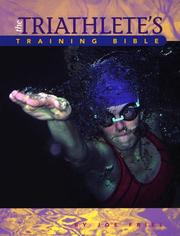
The gold-standard triathlon training manual; it introduces periodization, brick workouts, and multi-sport scheduling. Read after the single-sport books so the integrated concepts click immediately.
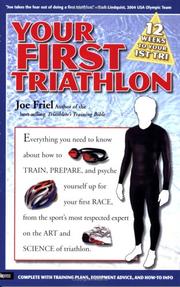
A shorter, action-oriented companion that distills Friel's system into a concrete 12-week sprint-distance plan — perfect for translating the Training Bible's theory into a daily schedule for race day.
Race Day and Beyond: Execution, Nutrition, and Longevity
IntermediateNail race-day execution — pacing, transitions, fueling, and gear — and build the nutritional and recovery habits that sustain a triathlon lifestyle long after the first finish.
▸ Study plan for this stage
Pace: 8–10 weeks total: Weeks 1–4 on "Racing Weight" (~25–30 pages/day, 4–5 days/week), then Weeks 5–10 on "The Well-Built Triathlete" (~20–25 pages/day, 4–5 days/week) — the denser coaching framework in Dixon warrants a slower, more reflective pace.
- Racing Weight's Diet Quality Score (DQS): using food-quality rankings rather than calorie obsession to reach an optimal power-to-weight ratio for race day (Fitzgerald)
- Periodized nutrition: aligning carbohydrate and calorie intake with training load phases — build, peak, and taper — so body composition peaks at race day, not mid-season (Fitzgerald)
- The five-step Racing Weight system: improve diet quality, manage appetite, balance macronutrients, time nutrients around training, and train at the right intensity (Fitzgerald)
- Matt Dixon's 'Four Pillars' framework: training, nutrition, recovery, and lifestyle management as equally weighted pillars that must be balanced for sustainable triathlon performance (Dixon)
- Swim-Bike-Run skill prioritization and the concept of 'limiters': identifying your weakest discipline and structuring training blocks around it without neglecting strengths (Dixon)
- Transition mastery (T1 and T2): treating transitions as a fourth discipline — gear layout, practiced routines, and mental rehearsal that save minutes without extra fitness (Dixon)
- Race-day fueling and pacing strategy: executing a pre-planned nutrition protocol (carbohydrate grams per hour, hydration targets, electrolytes) and negative-split or even-effort pacing across all three legs (Dixon)
- Recovery as a performance tool: Dixon's structured recovery weeks, sleep optimization, and stress accounting to extend a triathlon career and prevent burnout or overtraining
- According to Fitzgerald's Racing Weight system, how should you adjust your carbohydrate intake during a taper week versus a high-volume build week, and why?
- What is the Diet Quality Score, how is it calculated daily, and what practical changes to your current eating habits would raise your score by at least 5 points?
- Using Dixon's Four Pillars model, identify which pillar is currently your weakest and explain how neglecting it undermines the other three.
- How would you design your T1 and T2 transition sequences for an Olympic-distance race, and what specific practice drills does Dixon recommend to automate them?
- What is your target carbohydrate intake per hour on the bike and run legs of your goal race, and how did you arrive at that number using the guidance in these two books?
- How does Dixon define 'lifestyle management' as a pillar, and what two or three concrete changes to your daily schedule would reduce non-training stress and accelerate recovery?
- DQS Food Journal (Weeks 1–2): Log every meal for 14 days using Fitzgerald's Diet Quality Score system. Score each day, identify your three lowest-scoring food categories, and create a one-page swap list replacing low-quality staples with high-quality alternatives.
- Body-Composition Baseline (Week 2): Record current weight, calculate your estimated racing weight using Fitzgerald's formula for your height and sport, and set a realistic, periodized timeline to reach it by your target race — without crash dieting.
- Nutrition Timing Experiment (Weeks 3–4): For four consecutive long training sessions, test different pre-, during-, and post-workout fueling protocols drawn from Fitzgerald's nutrient-timing chapter. Log energy levels, GI comfort, and performance, then select your optimal race-day protocol.
- Four Pillars Self-Audit (Week 5): Using Dixon's framework, rate yourself 1–10 on each pillar (training, nutrition, recovery, lifestyle). Write a one-page honest assessment and draft a 4-week corrective plan that addresses your lowest-scoring pillar without reducing training volume.
- Transition Simulation Drill (Weeks 6–7): Set up a mock T1 and T2 in your driveway or a park. Practice the full sequence — helmet, shoes, rack, run — at least six times across two sessions. Time each attempt and aim to cut 15 seconds per transition by the final run.
- Race-Day Execution Blueprint (Week 9–10): Write a single-page race plan integrating both books: target pace per segment (using Dixon's effort-based pacing), hourly fueling schedule (carbs, fluids, electrolytes from both authors' guidance), transition checklist, and a contingency note for GI distress or weather. Rehearse it mentally three times before a tune-up race or long brick workout.
Next up: By internalizing optimal body composition, race-day execution, and the Four Pillars recovery framework, the reader has the operational foundation to move into advanced periodization and multi-season planning — where longer race distances, age-group podium goals, or coaching others become the natural next challenge.

The leading evidence-based guide to endurance sport nutrition and body composition; teaches triathletes how to fuel training and racing without fad dieting, a critical skill once weekly volume rises.

Focuses on sustainable performance — balancing training stress with recovery, sleep, and real-life demands. The ideal capstone book that reframes triathlon as a long-term lifestyle rather than a single event.
Discussion
Keep reading
Paths that share books, cover the same subject, or open a related topic.