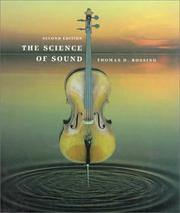
Room Acoustics and Noise Control: The Best Books to Read, in Order
Two problems get confused constantly: making a room sound good inside, and stopping sound getting in or out. They need different materials, different money and different books. This path separates them — first how rooms and ears actually behave, then treatment you can build in a weekend, then isolation, which is structural and expensive, then noise control as an engineering discipline, and finally the physics the practical books are compressing.
How rooms and ears behave
BeginnerExplain reverberation time, modal behaviour, early reflections and the difference between absorption and isolation, and stop attributing to a room problems that are really loudspeaker or hearing problems
▸ Study plan for this stage
Pace: Eight to ten weeks for 1,461 pages, and they are three different kinds of book. F. Alton Everest and Ken C. Pohlmann's Master Handbook of Acoustics (452 pages) is a practitioner's reference and unusually readable: start with the small-room chapters, because those are the ones that apply to a spare b
- Reverberation time and what it does and does not tell you about a small room
- Room modes: axial, tangential and oblique, and why they dominate below the Schroeder frequency
- Early reflections, the precedence effect, and what the ear fuses rather than hears separately
- Absorption against isolation as physically different problems requiring different materials and budgets
- Masking and localisation as perceptual effects that get misdiagnosed as room problems
- What controlled listening tests establish that opinion cannot, which is Toole's whole contribution
- Why is a single reverberation-time figure a poor description of a small room?
- Where are your room's lowest modes, and how would you predict them from its dimensions?
- Which of your listening complaints are room effects, which are loudspeaker effects, and which are perceptual?
- What is the difference in material, mass and cost between something that absorbs and something that isolates?
- Which widely repeated studio-building claim does Toole's evidence contradict?
- Measure your room's frequency response and decay at the listening position and at two other positions, and keep the file as a baseline.
- Calculate the first three axial modes from the room's dimensions and check them against the measurement.
- Move the listening position half a metre and remeasure; write down what changed and what did not.
- Take one claim you believed about room treatment and find where Everest, Howard and Angus, or Toole supports or refutes it.
Next up: With a measurement of your own room in hand, the next stage is what you can actually build to change it.

The reference the whole field starts from, and unusually readable for one: room modes, reverberation, absorbers, diffusion and small-room behaviour, with the maths kept to what you need. Read the small-room chapters first — they are the ones that apply to a spare bedroom.

Howard and Angus pair the physics of sound in rooms with what the ear and brain do with it — masking, localisation, the precedence effect. Placed second because half of what people call a room problem is a perception effect, and this is the book that tells you which half.

Toole's research at the National Research Council and Harman is the strongest evidence base anyone has on how rooms and loudspeakers interact and what listeners actually prefer. The corrective to a lot of confident folklore in the studio-building literature; read it before you spend money.
Treat the room you have
IntermediateMeasure a real room and fix it with absorbers, bass traps and diffusion you build yourself — knowing which frequencies each treatment actually reaches and where thin foam does nothing
▸ Study plan for this stage
Pace: Two to three months, scheduled by panels built rather than by the 1,102 pages. F. Alton Everest's Sound studio construction on a budget (298 pages) opens the stage and is the practical companion to his handbook — buildable absorbers and traps, real budgets — and reads in a fortnight. Rod Gervais's H
- Porous absorption and the quarter-wavelength rule that explains why thin panels do nothing low down
- Membrane and Helmholtz absorbers as the answer where porous depth is impossible
- Bass traps in corners: why that is where the pressure is
- Diffusion as a distinct function from absorption, and when a room is too small to want it
- Gas-flow resistivity and density as the specification that actually matters when buying wool
- Measure, treat, measure again as the working loop
- How thick must a porous absorber be to work at 100 Hz, and what does that imply about foam tiles?
- When is a membrane or Helmholtz absorber the right answer instead of more thickness?
- What density and flow resistivity should you be asking for when buying mineral wool?
- In a small room, what does diffusion buy you and at what distance does it start to work?
- What did your measurement show after the first two panels, and did it match what you predicted?
- Build two broadband absorbers to Everest's or Gervais's plan, measure before and after, and write down the actual change.
- Build one bass trap, place it in a corner, and measure the effect on the modes you identified in stage one.
- Use Cox and D'Antonio to predict the absorption coefficient of a panel you built, then compare against your measurement.
- Place the same panel at three positions in the room, measuring each time, and keep the position the data supports rather than the one that looks right.
Next up: Treatment changes how the room sounds inside it; the next stage is the entirely separate and far more expensive problem of sound getting in and out.
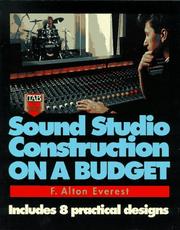
Everest's practical companion to the Master Handbook: real rooms, real budgets, buildable absorbers and traps. The right first book of this stage because it keeps the treatment separate from the construction, which is the whole distinction the path turns on.
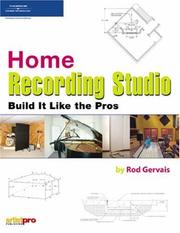
Published as Home Recording Studio: Build It Like the Pros. Gervais is a builder rather than an engineer and is blunt about what works — mass, decoupling and airtightness for isolation, and mineral wool rather than foam for treatment. The most useful single book for a domestic room.
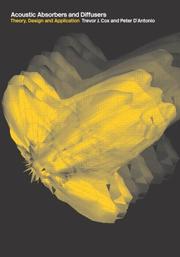
The specialist text on the two devices the previous books tell you to install: how porous, membrane and Helmholtz absorbers work, and what a diffuser is really doing. Read it when you want to design treatment instead of copying a plan.
Isolation and building the room
IntermediateUnderstand transmission loss, decoupling, flanking paths and airtightness well enough to specify a room-within-a-room — and to judge honestly whether the isolation you want is affordable in the building you have
▸ Study plan for this stage
Pace: Three to four months of reading against a real building — 2,039 pages, and the two large books are professional references rather than reads. Jeff Cooper's Building a recording studio (209 pages) goes first and takes a week: it is dated on equipment and still correct on structure, and it is where th
- Transmission loss, mass law, and why doubling mass buys less than people expect
- Decoupling: the room-within-a-room, and what a single rigid connection does to it
- Flanking paths — floors, ceilings, ducts, shared studs — as the usual reason isolation underperforms
- Airtightness as a first-order effect: a small gap dominates a large partition
- HVAC as an acoustic problem, with silencers, duct routing and velocity limits
- Judging honestly whether the isolation you want is achievable in the building you have
- How much transmission loss do you actually need, and against what source level and target level?
- What single detail most often defeats a decoupled wall in practice?
- How does a duct short-circuit an otherwise good partition, and what fixes it?
- Where does Newell say the received wisdom is wrong, and on what evidence?
- Given your building, its structure and your budget, what isolation figure is realistically reachable?
- Measure the actual sound level difference between your room and the space next to it, at several frequencies, and compare with the transmission loss you assumed.
- Draw your room's construction in section and mark every flanking path you can identify from Long.
- Specify, on paper, a room-within-a-room for your space with mass, cavity depth and decoupling method stated, then cost it.
- Seal one obvious air path — a door undercut, a socket box, a duct — and measure the level difference again.
Next up: Isolation for a listening room is a small case of a much larger discipline, which the next stage treats as engineering.
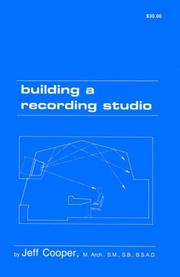
The 1978 book that taught a generation the room-within-a-room principle and the arithmetic of transmission loss. Dated on equipment and still correct on structure, which is what this stage is about.

Newell has designed studios worldwide and argues from measured results, including where the received wisdom is wrong. Far more demanding than Cooper and the natural second book once you accept isolation is a construction problem.

The professional consultant's text: partitions, floating floors, HVAC noise, flanking transmission and the ratings that specifications are written in. Read it for the parts of a building that quietly ruin a good design — ducts, doors and joints.
Noise control as engineering
IntermediateTreat noise at source, path and receiver as a designed system — enclosures, barriers, silencers, vibration isolation — and read and apply the standards a real noise assessment is written against
▸ Study plan for this stage
Pace: Four to six months, and 2,828 pages of which nobody reads more than a fraction. David A. Bies's Engineering Noise Control (676 pages) is the standard text for the discipline and the one to actually work through: sources, paths, enclosures, mufflers, vibration isolation and the criteria noise limits
- Source, path and receiver as the three places any noise problem can be attacked
- Enclosures and insertion loss, including the ventilation problem an enclosure creates
- Barriers, and the diffraction limit on what a barrier can achieve
- Silencers and mufflers: dissipative against reactive, and where each belongs
- Vibration isolation and structure-borne transmission as a separate path from airborne
- Noise criteria and the standards a real assessment is written against
- For a given machine, which of source, path and receiver gives the cheapest useful reduction?
- What limits the insertion loss of an enclosure in practice, and what almost always compromises it?
- Why can a barrier only achieve a bounded reduction regardless of its mass?
- When is a reactive silencer the right choice and when is a dissipative one?
- Which standard would a noise assessment for your situation be written against, and what does it actually require?
- Take one real noise source and write a source-path-receiver analysis with an estimated reduction and cost for each option.
- Work through Barron's insertion-loss calculation for an enclosure, then predict and measure the result on a small real one.
- Measure a noise level at three distances from a source and check the fall-off against what theory predicts.
- Look up the criteria that apply to a room or a site you know and write what would have to change for it to comply.
Next up: Everything so far has quoted results; the last stage derives them.

Bies and Hansen is the standard text for the discipline: sources, paths, enclosures, mufflers, vibration isolation and the criteria noise limits are set by. This is where room acoustics stops being about listening rooms and becomes about machinery and buildings.

Resolves to Barron's Industrial Noise Control and Acoustics, which is the published title. More worked-example driven than Bies and better for someone who wants to calculate an enclosure's insertion loss rather than derive it.
An enormous edited reference covering everything the other two leave out — community noise, transport, hearing damage, measurement instrumentation. Not a book to read through; the right thing to own when a specific problem arrives.
The physics underneath
IntermediateDerive rather than look up the results the practical books quote — wave behaviour in enclosures, statistical and geometric room acoustics, and the limits of reverberation-time formulas in small rooms
▸ Study plan for this stage
Pace: Four to six months, and the shortest stage by pages — 835 — and by far the hardest. Both are academic texts and both assume calculus and comfort with complex exponentials; neither is a practical book and neither belongs on the bench. Heinrich Kuttruff's Room acoustics (319 pages) is the scholarly tr
- The wave equation in an enclosure and the modal solution it produces
- Statistical room acoustics and the assumptions under which it holds
- Geometric acoustics, ray tracing, and where the approximation fails
- The Schroeder frequency as the boundary between modal and statistical behaviour
- Why Sabine's formula misdescribes small rooms, derived rather than asserted
- Radiation, impedance and transmission through a partition from first principles
- Under what assumptions is a statistical description of a room valid, and which of them fail in a bedroom?
- Where does the Schroeder frequency fall in your own room, and what does that mean for how you should treat it?
- Derive, rather than look up, why a doubling of absorption does not halve reverberation time in a small room.
- What does the wave solution predict that a ray-tracing model cannot?
- Which result you have been using from Everest can you now derive from Kinsler?
- Derive the modal frequencies of a rectangular room from the wave equation and check them against your stage-one measurement.
- Work a full chapter of Kinsler's end-of-chapter problems rather than reading the chapter twice.
- Compute the Schroeder frequency for your room and mark it on your measured response.
- Rewrite one rule of thumb from Everest or Gervais as a derivation, and state the conditions under which it holds.
Next up: The path ends here: from this point the useful work is measurement, design and a real room, with these two texts as the place you go when a result does not make sense.
The scholarly treatment of the subject: wave, geometric and statistical approaches to sound in enclosures, and honest about where Sabine's formula stops being valid. The book that explains why small rooms misbehave in ways the handbooks only describe.

Kinsler and Frey is the classic undergraduate text on acoustics from first principles — waves, radiation, transmission, absorption. Placed last because everything earlier in the path is an application of it, and it reads far better once you know what the applications are.
Discussion
Keep reading
Paths that share books, cover the same subject, or open a related topic.