Robert Louis Stevenson in Reading Order: Beyond Treasure Island
Stevenson is shelved with children's writers on the strength of one book about a treasure map, and that filing has cost him roughly a century of serious readers. The path uses the famous books as the entrance they genuinely are, then turns immediately toward the Scottish novels, where the same adventure machinery is used to write about divided loyalty and inherited guilt, and finishes with the travel writing and the unfinished last novel that show what he was becoming when he died at forty-four.
Start Here: The Two Everyone Knows
BeginnerRead the two short books that made Stevenson's name, and notice how little of either is actually simple.
▸ Study plan for this stage
Pace: About two weeks, and genuinely light going — Treasure Island runs around 250 pages of fast chapters, and Jekyll and Hyde is under a hundred. Read Treasure Island across a week at forty pages a sitting, then read Jekyll and Hyde in one or two evenings, because its whole effect depends on the lawyer's
- Long John Silver as an unresolved moral object — Stevenson never settles whether he is charming or murderous, and the refusal to settle him is what separates the book from every imitation it produced
- Jim Hawkins as an unreliable narrator by virtue of age rather than dishonesty: he reports what he sees and consistently misreads what it means
- The map as a plot engine that generates the entire adventure genre — treasure, X marks, marooned sailor, mutiny, black spot — most of which Stevenson invented rather than inherited
- Jekyll and Hyde is structured as a detective story told by a lawyer, Utterson, and only becomes a confession in the final chapter — a structure no film adaptation attempts
- Doubleness as Stevenson's permanent subject: Silver is two men in one body before Jekyll is, and the pirate book set the pattern the horror novella completes
- Respectability as the thing under pressure in Jekyll and Hyde — the horror is social exposure at least as much as physical transformation
- Stevenson's sentence rhythm: short clauses, concrete nouns, almost no interiority, which is why both books read fast and why critics mistook the speed for shallowness
- At what points does Jim Hawkins report something he does not understand, and what does the reader see that he does not?
- Where exactly does Treasure Island invite you to like Silver, and where does it show you what he is? Can you find a paragraph doing both at once?
- Why does Stevenson give Jekyll and Hyde to Utterson rather than to Jekyll, and what would be lost if the confession came first?
- What in Jekyll's account is self-serving? He is writing his own explanation, so which parts should you decline to accept?
- Both books turn on a man who is two men. What does each book conclude about whether the second man is a separate creature or the same one unsupervised?
- Mark every scene in Treasure Island where Silver changes register — cook to captain, friend to threat — and write one sentence on what triggers each switch. You will end with a short list that is the whole characterisation.
- Read the final chapter of Jekyll and Hyde, Henry Jekyll's Full Statement, twice: once as truth, once as a defence written by a man arranging his own reputation. Note three sentences that read differently the second time.
- Summarise Jekyll and Hyde's plot in 200 words without using the word transformation. It forces you to describe what the book actually shows, which is a series of doors, letters and refusals to explain.
- Time yourself on the first thirty pages of Treasure Island and count how many days pass in the story. Stevenson's compression is the technical skill that made his reputation and it is invisible until measured.
Next up: You now know the two books everyone has heard of and have seen that neither is simple, which is the exact readiness the Scottish novels require — they use the same adventure machinery on material Stevenson cared about far more.

Still the right first Stevenson, and not because it is easy. Long John Silver is a genuinely unstable moral object — charming, murderous, and never resolved — and the book's refusal to settle him is the thing that separates it from every imitation it spawned.

Under a hundred pages and read second because it is the same doubleness with the adventure stripped away. Almost everyone knows the twist and almost nobody has read the book; the structure is a detective story told by a lawyer, which the films never attempt.
The Scottish Novels
BeginnerMove from adventure to history and see Stevenson's real subject: two men bound together who cannot agree, set against the wreckage of Jacobite Scotland.
▸ Study plan for this stage
Pace: Five to six weeks. Kidnapped is short and quick; its sequel is slower and more legal; The Master of Ballantrae is the hard one and deserves three weeks on its own at thirty pages a sitting. Read them in the listed order and do not skip the sequel — the second half of David Balfour's story is where S
- The Appin Murder as a real historical case — Stevenson is fictionalising an actual 1752 killing and a real judicial hanging, which is why the sequel turns into a courtroom problem
- David Balfour and Alan Breck as the template Stevenson reuses everywhere: two men who need each other, cannot agree, and are on opposite sides of a settled political question
- Jacobite Scotland as wreckage rather than romance — the Highlands in Kidnapped are a defeated country under occupation, and Stevenson shows the occupation
- The pivot in the sequel from chase to conscience: David spends the second book trying to save a man by testifying, and discovers that the law is not interested
- The Master of Ballantrae's narrator, Ephraim Mackellar, as the most important technical device in the path — a steward who is inside the story, partisan, and cannot see his own complicity
- Inheritance and divided loyalty as the real subject: brothers on opposite sides of the 1745 rising, one of whom survives, neither of whom can let go
- Stevenson writing Scots dialogue against standard English narration, so that the language itself carries the political division
- Kidnapped and The Master of Ballantrae use the same historical rising. Why does one read as sunlit and the other as catastrophic — what did Stevenson change?
- Where does Mackellar's account stop being reliable in The Master of Ballantrae? Find a passage where his own conduct is worse than he thinks it is.
- In the sequel, David has the truth and the law will not take it. What does Stevenson conclude about justice, and does he let David off?
- Alan Breck is a fugitive, a killer by reputation, and the most attractive person in the book. Is that a moral failure of the novel or its point?
- By the end of The Master of Ballantrae, which brother has the reader's sympathy — and can you identify the chapter where it moved?
- Draw the Kidnapped route across the Highlands on any map of Scotland as you read. The geography is real, the flight is continuous, and the book becomes much clearer once you can see it.
- Keep a two-column list for The Master of Ballantrae: what Mackellar says happened, and what you believe happened. The gap between the columns is the novel.
- Summarise the Appin Murder problem in the sequel in 200 words — who is accused, who knows what, and why the testimony does not help. It is the clearest statement of what Stevenson thought about institutions.
- After finishing all three, reread the last chapter of Kidnapped. Knowing where David's story goes changes what that ending is doing.
- Read one page of Alan Breck's dialogue aloud. The Scots is not decorative and hearing it is the fastest way to stop skimming it.
Next up: Having watched Stevenson hide himself behind narrators for three novels, you are positioned to hear the undisguised first-person voice in the travel books, which came first chronologically and is where the tricks were learned.
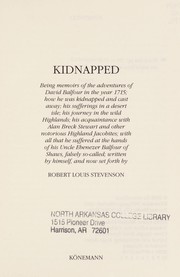
The bridge book. Structured as a chase across the Highlands after the Appin Murder, but the engine is the friendship between cautious Lowland David Balfour and the Jacobite Alan Breck. Read third: it converts the adventure reader into a Stevenson reader.

The direct sequel, picking up minutes after Kidnapped ends and going somewhere unexpectedly legal and adult. Catalogued as Catriona / David Balfour — it was published under the second title in America, which is why editions carry both names.

The dark one, and the argument for Stevenson as a major novelist. Two brothers on opposite sides of the 1745 rising destroy each other over decades and three continents, narrated by a steward who cannot see how much he is implicated. Read after Kidnapped, whose sunlit version of the same material it inverts.
The Travel Writing
IntermediateRead the non-fiction that made his reputation before the novels did, and hear the first-person voice that the fiction keeps disguising.
▸ Study plan for this stage
Pace: Three weeks, and much lighter than the stage before — all three books are short, and the donkey walk in particular is best read in daily instalments at roughly the pace Stevenson walked. Read Travels with a Donkey first even though the canoe trip was published earlier; it is the better book and it s
- The travel books came first — Stevenson was known as a personal essayist before he was known as a novelist, and the fiction inherits the essayist's voice
- Modestine the donkey as a comic antagonist and a genuine ethical problem the book does not resolve: Stevenson beats her, says so, and lets the reader judge
- Self-mockery as method — the narrator is consistently the least competent person in the book, which is the technique most modern walking literature took from him
- An Inland Voyage as apprentice work: a canoe trip through Belgium and France where the voice is audible but the material is thin, and it is instructive to see the difference
- The Silverado Squatters as the hinge — a honeymoon spent squatting in an abandoned Californian mining camp, written by a sick man far from Scotland for the first time
- Landscape written for atmosphere rather than information, which is the same descriptive habit that makes the Highland chase in Kidnapped work
- Illness as the unspoken condition beneath all three books: Stevenson travelled partly in search of air he could breathe, and the cheerfulness is a decision
- What does Stevenson want from the Cévennes walk, and does he say so directly or only show it? Compare his stated reasons with what the book spends its pages on.
- How does he handle his own cruelty to Modestine — does he excuse it, and what does his handling tell you about the persona he is constructing?
- An Inland Voyage and Travels with a Donkey are the same kind of book by the same man. What specifically is better in the second one?
- The Silverado Squatters is about squatting in someone else's ruin. How much does Stevenson notice about the people already in California, and where does he stop looking?
- Which of the three narrators sounds most like the narrator of the novels you have already read, and what do they share?
- Read the Cévennes book at one day's walking per sitting, following his stages. It is designed to be read at that pace and collapses when read in one gulp.
- Pick any two paragraphs of landscape description from Travels with a Donkey and rewrite them as plain information — distances, terrain, weather. What is lost is exactly what Stevenson is doing.
- Find the passage in An Inland Voyage that most resembles a scene in Kidnapped and write two sentences on the resemblance. The apprenticeship is visible if you look for it.
- Summarise The Silverado Squatters in 200 words as biography rather than travel — where he is, why, with whom, and in what health. That summary explains the last stage of this path before you reach it.
Next up: With the undisguised voice in your ear, the short fiction and verse become legible as experiments in form by a writer who already knew exactly how he sounded.

Twelve days walking through the Cevennes with a recalcitrant donkey called Modestine, published when he was twenty-eight. Funny, self-mocking, and the ancestor of most modern travel writing about walking. Catalogued with the accent-free spelling Cevennes.
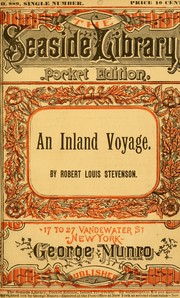
His first book: a canoe trip through Belgium and France, slighter than the donkey walk but the place where the voice is first fully audible. Read the pair together and the order barely matters.
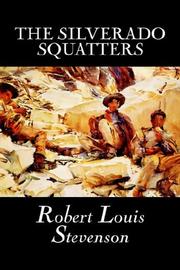
A honeymoon spent squatting in an abandoned California mining camp. Placed here because it is the hinge between the young European wanderer and the man who would spend his last years in the Pacific.
The Short Fiction and the Verse
IntermediateFill in the forms Stevenson worked in alongside the novels, including the poetry that keeps him on children's shelves and the late Pacific story that should have taken him off them.
▸ Study plan for this stage
Pace: Three to four weeks, read in any order within the stage — these are three different Stevensons and they do not build on each other. New Arabian Nights is a collection of linked stories best taken two or three at a time; A Child's Garden of Verses is a book to keep by the bed for a fortnight rather t
- New Arabian Nights, and The Suicide Club within it, as arguably the first modern short stories in English — urban, absurd, linked by recurring characters, and uninterested in delivering a moral
- The frame-story structure borrowed from the Thousand and One Nights and relocated to London, which is the joke the title is making
- A Child's Garden of Verses as the book that fixed Stevenson's reputation as a children's writer, written by a chronically ill adult reconstructing a bedridden childhood
- The verse's technical simplicity as deliberate: short lines, exact rhymes, a child's eye level held consistently, which is much harder than it reads
- The Beach of Falesá as the strongest argument for late Stevenson — a novella about trade, fraud and marriage in the Pacific, told by a trader who is himself part of the exploitation
- Wiltshire's narration as the technique from The Master of Ballantrae pushed further: a narrator whose racism is on the page and whose partial self-knowledge is the story
- The Pacific written as a working place with commerce, missionaries and law, rather than as scenery — which is what made it unlike anything else in Victorian fiction
- What holds New Arabian Nights together if not a plot — recurring characters, a tone, a joke? Try to state the organising principle in one sentence.
- The Suicide Club is absurd and also genuinely unsettling. Which is Stevenson primarily after, and how can you tell?
- Whose childhood is A Child's Garden of Verses remembering, and what does knowing the author's health change about poems like The Land of Counterpane?
- In The Beach of Falesá, how much does Wiltshire understand about his own position, and where does the novella let you see past him?
- The Beach of Falesá was censored at first publication. Reading it now, what do you think an editor would have wanted removed, and why would removing it damage the book?
- Read The Suicide Club as a unit and write down its rules — how the club works, what its members agree to. The absurd machinery is precise, and writing it out shows how carefully constructed the comedy is.
- Learn one poem from A Child's Garden of Verses by heart. It takes ten minutes and it is the only way to feel how tight the metre is.
- Read The Beach of Falesá in one sitting, then write 200 words summarising the plot as Uma would tell it. The gap between your version and Wiltshire's is the whole point of the narration.
- Compare the opening page of New Arabian Nights with the opening page of The Beach of Falesá. Same author, roughly a decade apart — note three concrete differences in sentence and subject.
Next up: The Beach of Falesá shows Stevenson working in a new register in the last years of his life, which is precisely the question the final stage asks you to judge on the evidence of the book he died writing.

Linked stories including The Suicide Club, and arguably the first modern short stories in English — urban, absurd, and entirely uninterested in a moral. Read them before the late work; they show how early he could write.
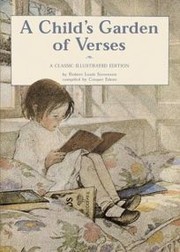
Included honestly rather than dutifully: it is the book that fixed his reputation as a children's writer, and it is also very good. Read it knowing that most of it was written by a chronically ill adult remembering a bedridden childhood.

A novella of trade, fraud and marriage in Samoa, censored on first publication and unlike anything else in Victorian fiction for its treatment of the Pacific. The single strongest argument that Stevenson was moving into a new register when he died.
The Unfinished Last Book
BeginnerFinish where Stevenson finished, mid-sentence, and judge for yourself what the late work was heading toward.
▸ Study plan for this stage
Pace: Two to three weeks, and read Weir of Hermiston first even though it is the fragment. It is short, it breaks off mid-sentence, and it should be read in as few sittings as possible so the momentum is not lost at the point where the manuscript stops. In the South Seas is longer, assembled from cruise j
- Weir of Hermiston as a fragment — he was dictating it on the afternoon he died, and it stops mid-sentence, so any judgement of it is a judgement of an unfinished thing
- The hanging judge and the son who cannot live with him: Stevenson's father-son material stated more directly than anywhere else in his work
- The hardest Scots prose he attempted, used for the judge's speech, so that the father's power and the son's alienation are enacted in language rather than described
- The Master of Ballantrae as the necessary comparison — Weir revisits divided family and inherited guilt without the adventure scaffolding
- In the South Seas as journalism and ethnography rather than narrative, gathered from years of cruising and living in Samoa
- A European writer trying to stop being a tourist, with mixed success — the book's honest failures are as informative as its insights
- The critical argument worth knowing you are entering: many readers hold that the fragment is his best work, and the claim is unfalsifiable because the book has no second half
- On the evidence of what exists, what kind of novel was Weir of Hermiston going to be — and what makes you confident, given that you have only a fragment?
- How does Stevenson use Scots for the judge and English for the narration, and what does that division do to your sympathy?
- Is the claim that Weir is his best book a literary judgement or a romantic one about a writer dying mid-sentence? Argue it either way and notice which evidence you reach for.
- In the South Seas is a European's account of Pacific societies. Where does Stevenson genuinely revise his assumptions, and where does he simply restate them more politely?
- Having read the whole path, does the late work represent a new direction or a continuation? Cite two books on each side before deciding.
- Read Weir of Hermiston through to the break without stopping, then write down in 200 words what you think happens next. Stevenson left notes and others have guessed; make your own guess first.
- Set the judge's longest speech in Weir beside a page of Alan Breck's dialogue from Kidnapped. Same author writing Scots roughly a decade apart — describe the difference in three sentences.
- In the South Seas is assembled rather than composed. Read any three consecutive chapters and note where the seams are — what changes between them in voice, subject or intended reader.
- Write a one-page ranking of the twelve books on this path with a sentence of justification each. Doing this is the only way to find out what you actually think about Stevenson rather than what the reputation says.
- Return to Treasure Island's first chapter and read it after Weir. It is the same writer at the two ends of a short career, and the continuity is more visible than the reputation suggests.
Next up: This is the end of the path; the natural next step is not another Stevenson but the Scottish novels reread with the fragment in mind, which is where the inherited-guilt material he died working on is already fully present.
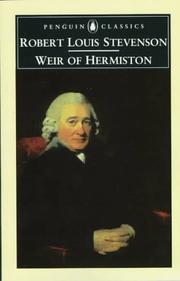
He was dictating this on the afternoon he died, and it breaks off unfinished. A hanging judge and the son who cannot live with him, written in the hardest Scots prose he ever attempted. Many readers think the fragment is the best thing he wrote — read it last, and only after The Master of Ballantrae.
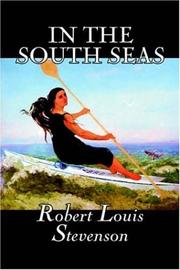
The Pacific writing assembled from his cruises and his years in Samoa. Not a finished book, and better for it: it is the record of a European writer trying, with mixed success, to stop being a tourist.
Discussion
Keep reading
Paths that share books, cover the same subject, or open a related topic.