Robert Frost in Order: Reading the Collections, Not the Anthology Pieces
Frost is read in fragments — four anthology pieces about roads and snowy woods — and the fragments produce a genial New England sage who never existed. Read the books instead, in the order he published them, and a different poet appears: an experimental prosodist who taught himself to write in the actual cadence of spoken talk, and who got steadily darker, stranger and more sceptical for fifty years. This path follows the individual collections rather than a Selected, then ends with the prose that explains the technique.
The First Two Books
BeginnerMeet Frost as a beginner and then as a sudden master, and learn to hear the sound of sense — his own term for the sentence-tune audible through a closed door — which is the whole basis of his verse.
▸ Study plan for this stage
Pace: Three to four weeks, and poetry is the one place on this site where a page count is a bad guide to time. A Boy's Will is a slim book of short lyrics and should take a week, read a few poems an evening, aloud. North of Boston is longer and much slower: its dialogue poems run several pages each and Ho
- The sound of sense — Frost's own term for the sentence-tune you can hear through a closed door when the words are indistinct. He claimed the poem's real music is this speech intonation strained across a fixed metre, and everything else about his technique follows from it
- A Boy's Will as an honest apprentice book: lyrical, late-Georgian, sometimes over-pretty, published in England at thirty-eight after a decade of rejection. Its purpose here is to let you hear what changes
- The leap to North of Boston, which is one of the great second books in English and arrives without a visible transition
- The blank-verse dialogue as Frost's invention: two people talking in a farmhouse, in metre, at length, with the drama entirely in what is not said
- Mending Wall's argument, which is routinely quoted backwards — the neighbour says good fences make good neighbours, and the speaker does not agree with him
- Home Burial as the darkest poem in early Frost: a marriage failing over a child's grave, conducted almost entirely in interruptions and refusals
- The Death of the Hired Man and its two competing definitions of home, given to a husband and a wife, with the poem declining to choose
- Frost's rural people as neither quaint nor noble — North of Boston is a book about isolation, obstinacy and grief that has spent a century being mistaken for pastoral
- Read Mending Wall and say, precisely, who believes what. Then ask why the poem is so often quoted as though the speaker endorses the neighbour's line.
- In Home Burial, what does the husband do wrong, and what does the wife? The poem gives each of them a case and refuses to resolve it — can you state both without taking a side?
- Pick one poem from A Boy's Will and one from North of Boston and describe the difference in the speaking voice. Not the subject: the voice.
- What does Frost mean by the sound of sense, and can you find a line in North of Boston where the natural speech rhythm pulls hard against the iambic pentameter?
- The Death of the Hired Man contains two famous definitions of home. Which one does the poem endorse? Consider that the answer may be neither.
- After North of Boston, what would you say Frost's subject is? Write it in one sentence before the anthology version has a chance to reassert itself.
- Read Home Burial aloud, taking both parts, in one unbroken run. It takes about eight minutes and it is the single most useful thing you can do on this path.
- Take twenty lines of any North of Boston dialogue and mark the metrical stresses, then mark where you would naturally stress the words in speech. The places where the two disagree are where Frost is doing his work.
- Write out one poem from A Boy's Will and one from North of Boston by hand, one under the other. The change in line length, diction and punctuation is much more visible in your own handwriting than in print.
- Count how many poems in North of Boston contain a death, an abandonment or a person alone in a house. The proportion is the fastest correction to the genial-sage reputation.
- Pick the poem in A Boy's Will you find weakest and say what is wrong with it. Being able to fault early Frost is what makes the praise of the later work mean something.
Next up: You now know what Frost sounds like when nobody is quoting him, which is exactly the equipment needed for the middle books — where the four most famous poems in American verse turn out to be doing something other than what they are famous for.

The first book, published in England at thirty-eight after a decade of rejection, and openly a young man's book: lyrical, Georgian, sometimes over-pretty. Read it first precisely because it is not yet the mature Frost, so you can hear the change happen.
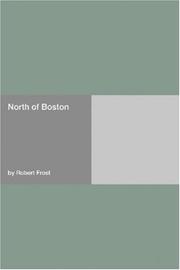
The leap, and one of the great second books in English. Long blank-verse dialogues between farm people — Mending Wall, Home Burial, The Death of the Hired Man — that read as overheard speech and are anything but genial. If you read only one Frost book, this is it.
The Middle Books
BeginnerFollow Frost through the years of his greatest fame, and notice how often the famous, quotable poems are quietly doing the opposite of what they are quoted for.
▸ Study plan for this stage
Pace: Four to five weeks. Mountain Interval is around 110 pages and can be read in ten days. New Hampshire needs longer than its size suggests, because the title poem is a long, digressive, prose-adjacent performance with mock footnotes that has to be read in one sitting to work at all — set an evening as
- Mountain Interval read whole as the fastest cure for greeting-card Frost — the volume is full of accident, mutilation and loss, and The Road Not Taken sits inside it rather than floating free
- The Road Not Taken's standard reading, which is that it is a gentle joke at a friend's expense about the habit of retrospectively dignifying arbitrary choices. The poem says the roads were worn about the same; the sigh in the last stanza is the giveaway
- Out, Out — a boy's hand taken by a buzz saw and the appalling last line about the others turning to their affairs. Frost at his coldest, in the same book as the road poem
- Birches as the volume's argument about escape and return, and the fact that it explicitly rejects the escape it spends forty lines enjoying
- New Hampshire's formal range: a long satirical title poem with footnotes, alongside Stopping by Woods and Fire and Ice. Anyone calling Frost a simple poet has not opened this book
- Stopping by Woods by Evening read in context, where its promises and its repeated last line are considerably less cosy than the anthology suggests
- West-Running Brook's turn toward the cosmic and the bleak — Once by the Pacific, Acquainted with the Night — which is the hinge into the late work
- The pattern worth naming: Frost's most quotable lines are almost always the ones his poems are arguing against
- Read The Road Not Taken and count how many times the poem says the two roads were different, and how many times it says they were the same. What does the count do to the popular reading?
- Out, Out and The Road Not Taken are in the same volume. What does that fact alone tell you about how the anthologies have handled Frost?
- Birches begins by imagining an escape and ends by refusing it. Where exactly does the poem turn, and what line does the turning?
- The title poem of New Hampshire is arguably not a poem at all in the sense the rest of the book is. What is it doing, and does the book need it?
- In Stopping by Woods on a Snowy Evening, what are the promises and why is the last line repeated? Give the plainest reading you can and then the darkest, and say which the poem supports.
- Acquainted with the Night is a terza rima sonnet about walking alone in a city. What has happened to the New England farmer, and is this the same poet?
- Read Mountain Interval cover to cover in one sitting, all of it, in order. Then read The Road Not Taken again on its own. The recontextualisation is the entire exercise and it only works in that order.
- Write 200 words on Out, Out addressed to someone who thinks Frost is comforting. Quote the last two lines.
- Read the title poem of New Hampshire aloud with the footnotes. It is funnier and stranger than it looks and it is unreadable at silent-skim speed.
- Take Acquainted with the Night and diagram its rhyme scheme. Then find one other poem on this path in a demanding fixed form. Frost claimed free verse was tennis without a net; the forms are where he was proving it.
- Make a list of the four or five Frost poems you knew before starting this path, and beside each one write what the full volume did to your reading of it. That list is the honest measure of what reading the books instead of the anthology has bought.
Next up: West-Running Brook turns toward cosmic bleakness with the technique fully intact, which is exactly the combination the late books sustain — the tone goes much darker and the craft does not loosen at all.

The book containing The Road Not Taken, Birches and Out, Out. Reading it whole is the fastest cure for the greeting-card Frost, because the road poem is a joke at a friend's expense and the volume around it is full of accident and mutilation.

The Pulitzer volume, and the strangest of the middle books — a long, sly, prose-adjacent title poem with mock footnotes, then Stopping by Woods and Fire and Ice. The formal range on display here is the argument against Frost as a simple poet.

Shorter and more philosophical, with Once by the Pacific and Acquainted with the Night. The turn toward cosmic bleakness begins here, which makes it the hinge into the late work.
The Darker Later Books
IntermediateRead the collections written through the Depression, the deaths of four of his children and his wife, and the war, and be able to describe how the tone changes without the technique loosening.
▸ Study plan for this stage
Pace: Six to eight weeks for four collections, and this stage should be read slowly because the poems are shorter and harder rather than longer. A Further Range wants two weeks and is best read alongside some of the 1936 criticism it provoked. A Witness Tree is the last great book and deserves three weeks
- The biographical context, which the poems never state and always know: Frost outlived four of his six children and his wife, and wrote through the Depression and a second war
- A Further Range as the most contested volume in his career — attacked by left-wing critics in 1936 as politically reactionary and defended by others as nothing of the kind. The dispute is genuine and worth reading from both sides rather than settled
- Design as the coldest poem he wrote: a fourteen-line sonnet on a white spider, a white moth and a white flower, which raises the question of a designing intelligence and then leaves the worse possibility standing
- Desert Places and its final turn inward — the emptiness between stars is nothing next to the emptiness the speaker can produce at home
- A Witness Tree, his fourth Pulitzer, as the last great book: The Silken Tent, a single-sentence sonnet, and The Most of It, which asks the universe for an answer and gets a large animal instead
- The Subverted Flower and the late willingness to write about sexual shame and cruelty, material the earlier books kept off the page entirely
- Directive in Steeple Bush — a poem about walking back into a vanished village to drink from a hidden brook, ranked by many critics with anything he wrote, and evidence that a thin book can hold a major poem
- In the Clearing, published at eighty-eight, holding the public sage and the private sceptic in one volume without reconciling them
- Read Design and state what it actually proposes. There are two possibilities in the last two lines and most readers notice only one.
- Desert Places ends by comparing an outer emptiness with an inner one. Is the comparison a consolation or the opposite?
- A Further Range was attacked as politically reactionary. Read the poems that drew the attack and the objections to them. What is being claimed on each side, and are the critics and the defenders even reading the same poems?
- The Most of It asks for a response from the world and receives one. Is what arrives an answer, a refusal, or something the poem cannot classify?
- In Directive, what is the destination and what is the instruction? The poem is a set of directions and the last lines are a genuine command.
- Compare a poem from A Witness Tree with one from North of Boston. What has changed in the technique, and what has stayed exactly the same for thirty years?
- Read Design twice in a row and write a 250-word account of its argument. This is the most compressed poem on the path and the exercise is worth more than reading three more volumes.
- Read the 1936 criticism of A Further Range alongside the poems and write out both cases at their strongest without declaring a winner. It is an unresolved argument about a poet's politics and the discipline of holding it open is the point.
- Read Directive aloud, following the instructions as a set of directions rather than as a metaphor. The poem is unusually literal about its own route and it changes shape when read that way.
- Take The Silken Tent and mark where the single sentence could have ended and did not. It is one sentence over fourteen lines and the syntax is the poem.
- List the poems in these four books that mention a person alone. Set the number against the same count from North of Boston. The subject has not changed; the temperature has.
- Read In the Clearing last and write one paragraph on whether it should have been published. There is a real case both ways and forming it is a fair test of how much of Frost you now hold.
Next up: You now have fifty years of the poems in the order they appeared, which is the only condition under which Frost's own prose account of his technique can be checked rather than merely believed.
The most contested volume — attacked by left-wing critics in 1936 as politically reactionary, and containing Desert Places and Design, two of the coldest poems he ever wrote. Read the criticism and the poems against each other.

The last great book and his fourth Pulitzer, with The Silken Tent, The Most of It and The Subverted Flower. Written after catastrophic personal loss, and the poems know it without ever saying so.

Late, uneven and worth reading for Directive alone, which many critics rank with anything he wrote. A good demonstration that a thin book can hold a major poem.
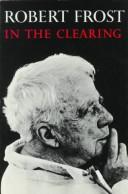
The final collection, published at eighty-eight the year before he died. Slight as poetry and valuable as an ending — the public sage and the private sceptic in the same volume, unresolved.
The Prose, the Letters and the Life
BeginnerGet behind the poems to Frost's own account of how they work, and to a biography that finally replaced the hostile portrait that dominated for decades.
▸ Study plan for this stage
Pace: Two to three months, and none of these three should be read straight through except the biography. Robert Frost on Writing is about 190 pages of essays, prefaces and talks — read one piece at a time and test each claim immediately against a poem you know. The Selected Letters runs to 645 pages and i
- The sound of sense in Frost's own words, now checkable — he explains the closed-door theory directly, and you have five hundred pages of evidence to test it against
- The figure a poem makes: begins in delight and ends in wisdom, a claim that sounds like a platitude and turns out to be a technical description of how his own poems are built
- His refusal of free verse and the tennis-without-a-net line, argued in the prose with considerably more sophistication than the epigram suggests
- Frost as a combative letter-writer, working out the theory in real time and years before the essays state it cleanly
- The ruthlessness the public persona existed to conceal — the letters show a man managing a career with great deliberateness, which is neither a scandal nor consistent with the genial sage
- Lawrance Thompson's official biography and its notoriously vindictive portrait, which dominated the reputation for decades — you do not need to read it, but you need to know it exists
- Parini's Life as the corrective, and the reason to read it last: with your own reading of the poems formed, a biography informs rather than dictates
- The general lesson this stage teaches about poets' prose — that a writer's account of his own method is evidence, not testimony, and is most useful when you can catch it being partly wrong
- Take Frost's account of the sound of sense and test it against Home Burial. Does the poem work the way he says his poems work?
- What does begins in delight and ends in wisdom actually describe? Find a poem where the structure is visible and one where it plainly is not.
- In the letters, where do you find him doing something the public persona would not admit to? Be specific about the letter and the act.
- Frost's arguments against free verse are usually reported as a joke. Read them at length — what is the serious version of the claim, and does it survive?
- Where does Parini disagree with the Thompson portrait, and what evidence does each side rest on? You are not in a position to settle it, but you can say what the disagreement is about.
- Having read the prose, is Frost a reliable critic of his own work? Name one place where his account improves your reading and one where it seems to be a defence.
- Read one essay from Robert Frost on Writing, then immediately reread a poem it describes, then write two sentences on whether the description fits. Do this five times. It is the whole method of this stage.
- Find the letters written around the publication of North of Boston and read them as a group. Watching a writer know he has just made the leap is rare and this is one of the clearest instances in English.
- Write 400 words on Frost's case against free verse, stated as strongly as you can. Then write the best two-sentence reply. He would have expected the reply.
- Go back to the one-sentence answer you wrote at the end of the first stage about what Frost's subject is. Revise it now. The distance between the two versions is what fifty years of the collections did.
- Choose the single volume on this path you would give someone who knows only the four anthology poems, and defend the choice in a paragraph against North of Boston, which is the standard answer. A reasoned alternative is proof you read the shelf rather than the reputation.
Next up: This is the end of the path. The natural continuation is sideways rather than onward — Edward Thomas, whose friendship produced the road poem, or the American contemporaries Frost defined himself against, read now that you can hear what he was doing instead.
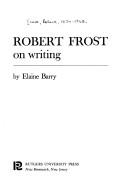
The essays, prefaces and talks in which Frost explains the sound of sense, the figure a poem makes and why he refused free verse. Read after the collections, when every claim can be tested against a poem you know.
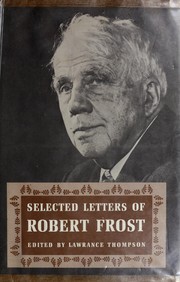
Frost was a superb and combative letter-writer, and the correspondence is where the theory is worked out in real time. It also shows the ruthlessness the public persona was built to hide.

The corrective biography, written against Lawrance Thompson's notoriously vindictive official life. Read it last, once you have your own reading of the poems, so the biography informs rather than dictates.
Discussion
Keep reading
Paths that share books, cover the same subject, or open a related topic.