Revelation Space Reading Order: Publication or Chronological?
Revelation Space is the rare series where the reading-order argument is real: internal chronology puts the Prefect Dreyfus books first, but publication order is still the better experience, because Alastair Reynolds wrote the later books assuming you had met the universe through the earlier ones. This path takes publication order as the spine — the founding novel, then the Inhibitor arc to its end — and treats the chronologically-earliest Dreyfus novels as a self-contained detective sequence you can pick up at any point after. The collections come last, when you have enough context for them to land as depth rather than confusion.
Start Here
IntermediateEnter the universe the way it was written, and get the two novels that establish its physics, its factions and its tone.
▸ Study plan for this stage
Pace: 5-6 weeks for about 1,170 pages (Revelation Space 560, Chasm City 608). Revelation Space is the slowest book in the sequence and the one people abandon: three separate storylines run on different timescales for the first two hundred pages and do not obviously connect, and Reynolds withholds the join
- This path takes publication order as its spine, and the reason is specific: Reynolds wrote the later books assuming you met the universe through the earlier ones, so revelations are staged for a publication-order reader
- The chronological alternative is real, not imaginary - the Prefect Dreyfus novels are set generations earlier - and this path does not deny it, it demotes it to a later stage
- The Fermi question is the sequence's engine: the galaxy is old and empty, and the books are an answer to why
- Hard-SF constraints are enforced throughout - no faster-than-light travel, relativistic time dilation with real consequences, and crew who age differently from the worlds they visit
- The Melding Plague has wrecked the setting's most advanced technology before the story starts, which is why a spacefaring civilisation looks decayed
- Lighthuggers, Ultras and Conjoiners are the three factions you must be able to tell apart by the end of the first novel
- Chasm City advances no arc at all and is still essential: it builds the setting's texture and explains half the people in the next book
- Reynolds's tone is cold, gothic and archaeological rather than heroic; if that register does not appeal, this stage is where you find out
- What are the three storylines in Revelation Space and at what point do they intersect? Was the withholding worth it?
- What is the Amarantin question, and what does the answer imply about every other civilisation in the setting?
- How does the Melding Plague change what a spacefaring society looks like, and why does Reynolds want it broken?
- Chasm City is a standalone revenge story. What does it contribute to the sequence that a plot-advancing sequel could not?
- Having read both, why do you think this path recommends publication order over chronology? Argue against it if you can.
- Keep a faction sheet - Ultras, Conjoiners, Demarchists, Skyjacks - with one line on what each wants. Reynolds never recaps and later books assume fluency.
- Note the dates and the subjective ship-time in Revelation Space. Relativistic lag is a plot mechanism here, not flavour, and tracking it explains several apparent inconsistencies.
- After the first two hundred pages of Revelation Space, write down your best guess at how the three threads connect, then check it at the end. The guess is more instructive than the answer.
- In Chasm City, mark every point where the city's pre-plague and post-plague states are described. The book is doing worldbuilding archaeology and the contrast is the method.
Next up: You now have the physics, the factions and the tone the main storyline assumes, and Redemption Ark begins on the assumption that all three are in place.
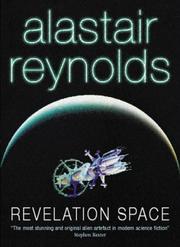
The founding novel: an archaeologist on a dead world, a lighthugger crew, and the question of why the galaxy is so quiet. Cold, slow-burning and structurally demanding, and every later book assumes it.
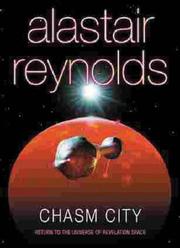
A standalone revenge story in the plague-ruined city, and the best pure novel in the sequence. Second by publication and second by design: it fleshes out the setting without advancing the main arc.
The Inhibitor Arc
IntermediateFollow the main storyline of the series to its conclusion, including the novel Reynolds wrote eighteen years later to finish it properly.
▸ Study plan for this stage
Pace: 7-9 weeks for about 1,710 pages (Redemption Ark 608, Absolution Gap 672, Inhibitor Phase 432). Redemption Ark moves fastest of the three - it is the most conventionally thriller-shaped book Reynolds wrote in this universe. Absolution Gap is the hardest going: a long cathedral storyline runs in paral
- The Inhibitors are the answer to the Fermi question the first novel posed, and this arc is the consequence of that answer arriving
- The scale escalates from archaeology to a species-level extinction event, and the human response is fleet-scale rather than heroic
- Redemption Ark is a direct sequel to Revelation Space and depends on Chasm City for half its cast, which is exactly why the previous stage was ordered that way
- Conjoiner politics and hell-class weapons drive the middle of the arc, and the moral question is who gets to decide what humanity survives as
- Absolution Gap's cathedral storyline and its ending are the most divisive things in the sequence; going in knowing that the disagreement exists makes it easier to read on its own terms
- Reynolds left the arc effectively unfinished in 2003 and returned to it in 2021 with Inhibitor Phase, which does give it a real ending
- Inhibitor Phase is a direct continuation despite the eighteen-year gap, and reading it out of place would destroy the entire sequence
- What do the Inhibitors want, and why is their behaviour better described as maintenance than as malice?
- How does Redemption Ark change the scale of the threat, and what does the change cost in terms of individual characters mattering?
- What is the cathedral storyline in Absolution Gap actually doing, and does it earn its length?
- Why is Absolution Gap's ending so contested? State the case for it before stating the case against.
- Does Inhibitor Phase resolve the arc or reframe it? Would the sequence be better or worse without it?
- Track the Conjoiner weapons across Redemption Ark: who holds them, who wants them, and what each party intends. It is the cleanest plot spine in the arc.
- In Absolution Gap, read the cathedral chapters as a separate book - note where they would sit if they had been published alone. It clarifies what Reynolds was attempting.
- Before Inhibitor Phase, write a page summarising where the Inhibitor conflict stood at the end of Absolution Gap. Eighteen years passed between the books and the new one does not hold your hand.
- After finishing the arc, revisit your answer to the Fermi question from the first stage. The sequence's answer is more specific and less consoling than most readers predict.
Next up: The main storyline is now complete, which is precisely what makes the chronologically earliest books worth reading next - you will know what happens to the civilisation they are set in.

The direct sequel to Revelation Space, escalating from archaeology to a fleet-scale response to the Inhibitors. Do not read this before Chasm City, which explains half the people in it.
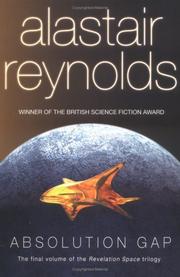
The original conclusion of the trilogy, and the most divisive book in it — the cathedral storyline and the ending are argued over to this day. Read it anyway; the argument is part of the experience.

Written long after the trilogy to give the arc a real ending, and it succeeds. Published late but placed here because it is a direct continuation, and it spoils all three earlier books completely.
The Prefect Dreyfus Books
IntermediateRead the chronologically earliest strand, a police procedural set in the Glitter Band before everything went wrong.
▸ Study plan for this stage
Pace: 5-6 weeks for about 1,280 pages (The Prefect 416, Elysium Fire 432, Machine Vendetta 432). These are the fastest-reading novels in the sequence: tight investigative plots, a consistent cast, and far less of the cosmic-timescale structure that slows the main arc. Read them in this order and consecuti
- These are police procedurals in science-fictional clothing - a locked-system murder investigation across ten thousand habitats - and the genre shift is deliberate
- The Glitter Band is the setting at its height, generations before the Melding Plague, which is why the books read as elegiac to anyone who has finished the main arc
- Chronology-first readers want to start here, and the reason this path does not is poignancy: the books' emotional charge comes from knowing what happens to this civilisation
- Demarchist democracy - continuous polling, engineered consent - is examined seriously here rather than used as background
- Dreyfus is a conventional investigator protagonist, which makes these the most accessible books in the sequence and a legitimate entry point for a reader who bounced off Revelation Space
- Artificial intelligence and its policing is the long thread across the three books, and Machine Vendetta is where it pays off
- Elysium Fire is tighter and more political than The Prefect; the series gets better rather than thinner as it goes
- What makes the Glitter Band a good setting for a detective story specifically?
- How does knowing the Melding Plague is coming change how you read the Band at its height?
- What is Reynolds's assessment of Demarchist democracy, and does he argue it or assume it?
- How does Dreyfus differ from the protagonists of the main arc, and what does a competent institutional investigator let Reynolds do that a lone survivor could not?
- Having read them last, do you now think a chronology-first reader would get more or less out of these books? Be specific about what they would gain.
- Note every reference to something you recognise from the main arc. The density of them is the argument for reading these second.
- Map the investigative structure of The Prefect - the murder, the constraint, the deadline - and check whether Elysium Fire uses the same skeleton. Reynolds is working in a genre with rules here.
- Write one paragraph on what the Glitter Band gets right that the post-plague setting lost. It is the sequence's only sustained picture of a functioning society.
- Decide, having read all three, what you would tell a friend who wanted to start with The Prefect. The honest answer has changed for many readers by this point.
Next up: With both the main arc and the Dreyfus strand complete, the short fiction has somewhere to land - every reference in it now has a context.
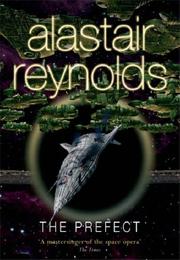
A locked-system murder investigation across ten thousand habitats, set generations before Revelation Space. It is the book chronology-first readers want to begin with, and it works far better as a return trip, since its poignancy comes from knowing what happens to this civilisation.

The second Dreyfus case, tighter and more political than the first. Read straight after The Prefect; the continuity between them is close.

The third Dreyfus novel, which pays off long-running threads about the artificial intelligences policing the Band. Requires both earlier Prefect books and rewards knowledge of the main sequence.
The Completist Tail
IntermediateFill in the shorter fiction, which supplies backstory the novels only gesture at.
▸ Study plan for this stage
Pace: 2-3 weeks for about 620 pages (Diamond Dogs, Turquoise Days 236, Galactic North 384). Two novellas and then a collection, both of which can be read in pieces without losing anything. Diamond Dogs in particular is a single sustained descent and is best read in one or two sittings; it is short and it
- Diamond Dogs is a brutal puzzle-box descent through an alien tower that mutilates its solvers, and it is among the best things Reynolds has written
- Turquoise Days is the quieter and stranger companion piece, working the same first-contact material at a much lower temperature
- Galactic North collects the Revelation Space short fiction and covers the setting's full span, including material the novels only gesture at
- The Conjoiner origin material in the collection explains a faction the novels treat as already-established
- Short fiction is where Reynolds tests ideas the novels then build on, so several stories read as prototypes
- Reading these last means every reference has somewhere to land, which is the entire justification for putting the completist material at the end
- The title story of the collection pushes the timeline further forward than any novel, and is the actual last word on the universe
- What is the tower in Diamond Dogs testing, and what does the story argue about the cost of solving a problem for its own sake?
- How does Turquoise Days handle first contact differently from the novels, and is the quieter register more or less effective?
- Which stories in Galactic North read as prototypes for material the novels developed, and what changed between versions?
- What does the collection's far-future material do to the emotional weight of the Inhibitor arc's ending?
- Having finished everything, would you now recommend publication order to a new reader, or has the sequence changed your mind?
- Build a rough timeline of the whole setting using the collection's stories as anchors. Reynolds's universe rewards this and it is much easier to do at the end than at the start.
- Read Diamond Dogs in a single sitting. It is engineered as an escalating sequence of costs and breaking it up defuses it.
- For each story in Galactic North, note which novel it most closely relates to. Several of them silently fill gaps you noticed and forgot.
- Write a short reading-order recommendation of your own, with the publication-versus-chronology argument stated fairly on both sides. Having read all fourteen books you are now in the small group of people who can actually settle it for yourself.
Next up: The sequence is complete here; from this point the natural next step is Reynolds's other universes, which assume the same hard-SF discipline without the Inhibitor backstory.
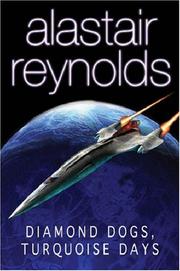
Two novellas — one a brutal puzzle-box descent through an alien tower, the other quieter and stranger. Diamond Dogs is among the best things Reynolds has written and needs the universe already in place.
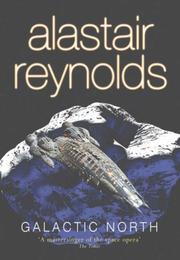
The collected Revelation Space short fiction, spanning the whole history from the Conjoiner wars to the far future. Best read last, when every reference has somewhere to land.
Discussion
Keep reading
Paths that share books, cover the same subject, or open a related topic.