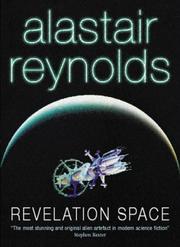
Start with Revelation Space, the novel the sequence is named after, and read in publication order.
That is a position, not a neutral summary, so here is the reason. Alastair Reynolds wrote the later books assuming you met this universe through the earlier ones. Revelations are staged for a publication-order reader: the Melding Plague is presented as a fact about a decayed setting long before you see the civilisation it destroyed, and the Prefect Dreyfus novels, set generations earlier at that civilisation's height, get most of their charge from your already knowing what happens to it. Read chronologically and you spend three excellent books not understanding why they feel elegiac.
The counter-case is real. Chronological order gives you a rising curve rather than a flashback, and The Prefect is a far more accessible novel than Revelation Space — a tight investigative plot with a conventional protagonist. If you have bounced off Revelation Space once already, starting with The Prefect is a defensible rescue plan. As a first choice it trades a lot of payoff for a little comfort, so this path demotes the Dreyfus books to stage three rather than promoting them to stage one.
Start here
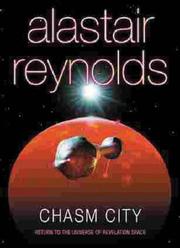
Revelation Space, then Chasm City.
An honest warning about the first novel: it is the slowest book in the sequence and the one people abandon. Three separate storylines run on different timescales for the first two hundred pages and do not obviously connect, and Reynolds withholds the join deliberately. Budget three weeks and resist rereading the opening chapters looking for a link that has not been planted yet.
Chasm City is the opposite — a single revenge plot with a strong forward pull, and most readers take it at twice the speed. It advances no arc at all and is still essential, because it builds the setting's texture and explains half the cast of the next novel.
By the end of this stage you should be able to tell lighthuggers, Ultras and Conjoiners apart without effort. Reynolds enforces hard-SF constraints throughout: no faster-than-light travel, relativistic time dilation with real consequences, crews who age differently from the worlds they visit.
The Inhibitor arc
Redemption Ark, Absolution gap, Inhibitor Phase. This is the spine of the sequence and the answer to the question the first novel posed: the galaxy is old and empty, and something is keeping it that way.
Redemption Ark is the most conventionally thriller-shaped book Reynolds wrote in this universe and moves fastest of the three. Absolution gap is the hardest going and the most argued-about: a long cathedral storyline runs in parallel with the main plot and does not converge until very late, and its ending divides people sharply. Push through rather than skipping — knowing the disagreement exists makes it much easier to read the book on its own terms.
Inhibitor Phase was written eighteen years later, reads far more smoothly, and spoils all three earlier books completely. Its placement here is not negotiable.
The Prefect Dreyfus books
The Prefect, Elysium fire, Machine Vendetta, in that order and consecutively. These are police procedurals in science-fictional clothing — a locked-system murder investigation across ten thousand habitats — and they are the fastest-reading novels in the sequence.
One edition trap worth checking before you buy: the first of the three has been published under two different titles, so confirm you are getting the Dreyfus novel and not a second copy of something you already own.
The completist tail
Diamond Dogs, Turquoise Days and Galactic North. The first is a brutal puzzle-box descent through an alien tower that mutilates its solvers, and it is among the best things Reynolds has written. The collection spans the setting's full history, from the Conjoiner wars to the far future, so read it story by story and check where each one sits.
Where to stop
Inhibitor Phase is a real ending to the main arc and a clean exit. Stopping there means missing the Dreyfus novels, which are the most purely enjoyable books in the sequence — so the better advice is to stop after Machine Vendetta and treat the short fiction as optional.
More science fiction paths are on Discover.
Follow the full ordered path here: Revelation Space Reading Order: Publication or Chronological?.