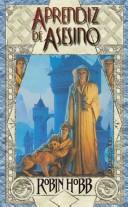
Start with Assassin's Apprentice. There is no serious argument for anywhere else. It is the first book Robin Hobb published under that name, it introduces FitzChivalry Farseer as a six-year-old dumped at a stable door, and the entire sixteen-book structure is built on you meeting him there.
The one thing worth knowing before you begin: publication order is the correct order, and it is also chronological order. Unlike most long fantasy sequences, there is no reshuffling to argue about. What there is instead is a genuine and much-argued question about whether one sub-series can be skipped. The answer is no, and the reason is the best thing about the whole sequence.
The sub-series, in order
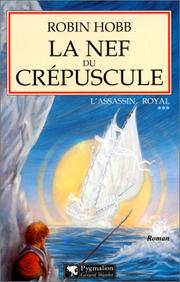
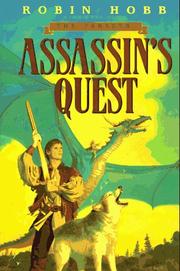
The Farseer Trilogy — Assassin's Apprentice, then Royal Assassin, then Assassin's Quest. Our catalogue currently carries the middle book only as the French edition, L'Assassin royal, tome 3; the English Royal Assassin is the one you want and it is easy to find.
The Liveship Traders — Ship of Magic, Mad Ship, Ship of Destiny. A different continent, a different cast, talking ships, and not a single appearance by Fitz.
The Tawny Man — Fool's Errand (Tawny Man, Book 1), Golden Fool (The Tawny Man, Book 2), Fool's fate. Fitz returns, fifteen years older.
The Rain Wild Chronicles — Dragon keeper, Dragon Haven, then City of Dragons and Blood of Dragons, which are not currently in our catalogue.
Fitz and the Fool — Fool's Assassin, then Fool's Quest, which we hold only inside the Fool's Assassin / Fool's Quest omnibus, then Assassin's Fate.
Can you skip Liveship Traders?
This is the real controversy and it comes up constantly, because readers arrive for Fitz, hit Ship of Magic, and find themselves on a boat with a family of merchants they have never heard of. Plenty of people skip it. Do not.
The case for skipping: it is a slow start, Malta Vestrit is genuinely unlikeable for most of the first book, and none of it appears to connect. The case against, which is stronger: every major revelation about dragons, Elderlings and what the Fool actually is comes out of this trilogy, and the final books are close to unreadable without it. Assassin's Fate pays off threads planted in Ship of Magic twenty years earlier. Skip it and the ending is noise.
The Rain Wild Chronicles is the one you could genuinely trim, and if something has to go, that is it — it is the weakest of the five and the most padded. But Assassin's Fate leans on it too, so you will be reading summaries instead.
Honest warnings
Assassin's Quest has a notoriously slow middle. Fitz spends a very long time walking, alone, in poor condition, and the book does not hurry. Many readers stall here. It is worth knowing that the last quarter is one of the strongest stretches in the sequence.
Royal Assassin opens with a long stretch of court politics at a crawl. Hobb writes misery patiently and at length; if you want brisk fantasy, this is not it.
And Fitz is a first-person narrator who makes the wrong decision, repeatedly, for sixteen books. That is the design. It also means the books are frustrating in a specific way that some readers never forgive.
Where to stop
After Fool's fate is a legitimate ending. It closes the Fitz story with something like peace, and a large number of readers stop there deliberately and are glad they did. Assassin's Fate is a superb book and it is devastating in a way that is hard to un-read. Choose knowingly. More ordered reading paths are here when you surface.
Follow the full ordered path here: Realm of the Elderlings Reading Order.